Note: This guide is written as a clean, publication-ready HTML article based on verified gameplay information, real Grow Island solution orders, and practical player experience.
Introduction: Welcome to the Tiny Island That Judges Your Life Choices
If you have ever opened Grow Island, clicked a few cute icons, watched a tiny world evolve, and then wondered why your island looks like a half-finished science fair project after a small earthquake, congratulations: you have met the charming chaos of the GROW series. Grow Island is a browser puzzle game by EYEZMAZE where the entire challenge depends on one deceptively simple idea: choose the right order.
There are no boss fights, no complicated keyboard combos, and no dramatic inventory full of mysterious keys. You simply click eight panels. That is it. Of course, those eight clicks can turn your peaceful island into a fully developed little society, a weird failed experiment, or a cosmic surprise involving aliens. The game looks adorable, but underneath the cute animations is a clever logic puzzle about cause and effect.
This guide explains how to beat Grow Island, including the exact order for the normal “all levels max” ending, the special alien ending, and the reasoning behind why the sequence matters. We will also cover common mistakes, puzzle-solving tips, and real player experiences that make this little Flash-era classic surprisingly memorable.
What Is Grow Island?
Grow Island is part of the larger EYEZMAZE GROW series, a collection of minimalist point-and-click puzzle games built around sequencing. In each game, you choose objects or panels one by one. After each choice, previously selected items grow, upgrade, combine, or interact with new elements. The trick is that every item needs enough turns to reach its maximum level, and some items only become useful if other items are already in place.
In Grow Island, the theme is education and engineering. Each panel represents a field of knowledge or technology, such as mechanical engineering, civil engineering, architecture, computer science, electrical engineering, chemistry, environmental engineering, and transportation-related engineering. The game turns those subjects into a miniature animated civilization. Roads appear. Buildings rise. A family forms. Machines evolve. Chemicals bubble. Trains move. Nature returns. It is basically a tiny university brochure, but with more volcanoes and less student debt.
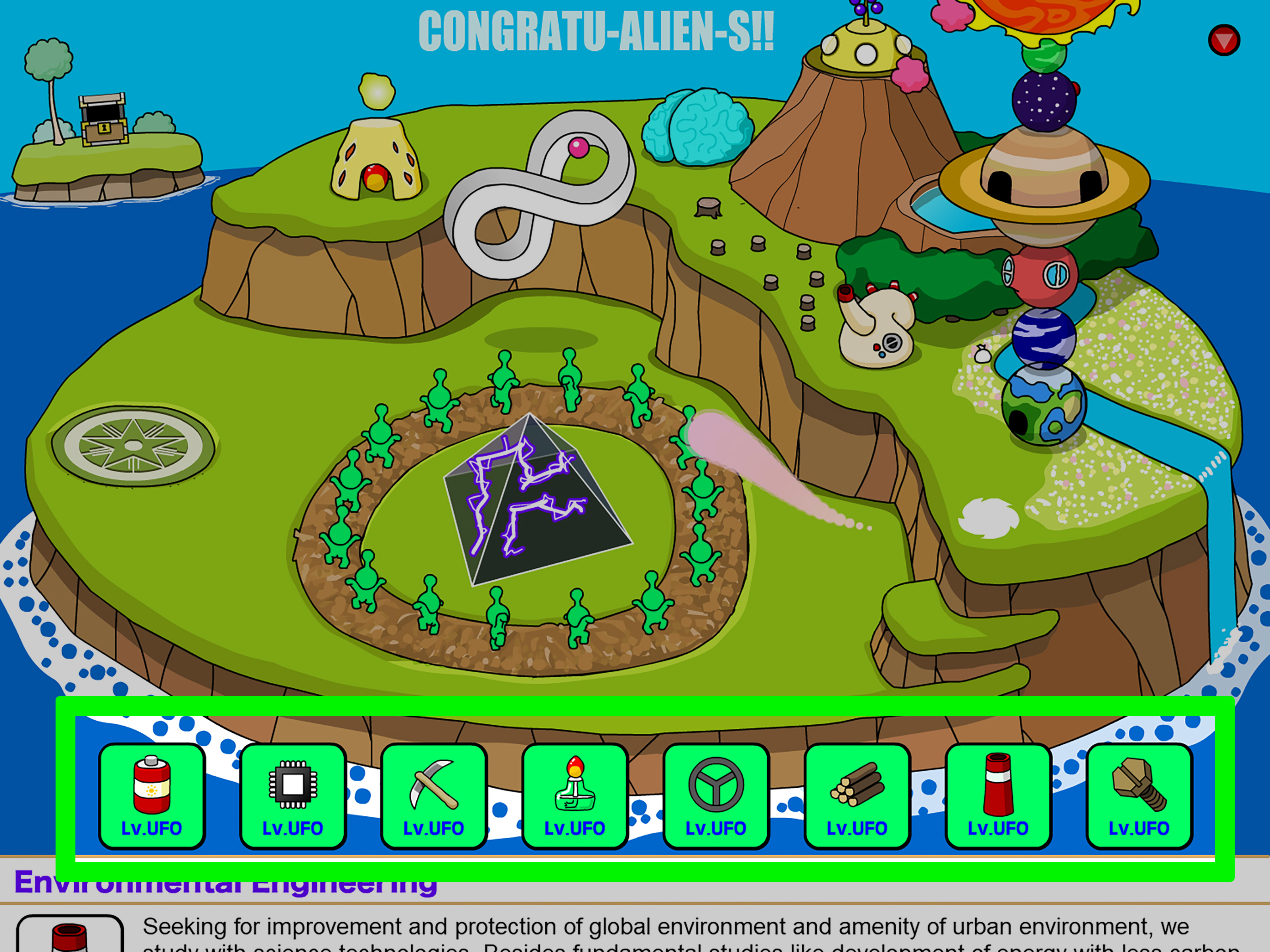
The goal is to click the panels in the correct order so that every category reaches its maximum level. When everything is maxed, the game rewards you with the full successful ending. There is also a hidden UFO-style ending, which uses a different order and gives players a second reason to replay the game.
The Fast Answer: Grow Island Walkthrough Order
If you just want the winning order, here it is. To beat Grow Island with the standard maximum-level ending, click the panels in this order:
- Mechanical Engineering – Screw or bolt icon
- Civil Engineering – Pickaxe icon
- Architecture – Logs or wood icon
- Aeronautics, Marine, and Automotive Engineering – Steering wheel or pad icon
- Environmental Engineering – Chimney or smokestack icon
- Electrical Engineering – Battery icon
- Computer Science – Computer chip icon
- Applied Chemistry – Beaker icon
Follow that sequence and you should reach the main “Congratulations” ending with all panels at maximum level. Yes, it is that specific. No, the game does not care that you personally believe chemistry should come earlier. The island has spoken.
Step-by-Step Guide to Beating Grow Island
Step 1: Start with Mechanical Engineering
The first click should be the screw or bolt, which represents mechanical engineering. This choice is important because the mechanical object needs many turns to evolve through its forms. Starting with it gives the machine enough time to become useful later in the chain.
Think of this as laying the foundation for every future tool, road, and mechanical upgrade. If you wait too long to choose mechanical engineering, it will not have enough time to reach its most important stage before the game ends.
Step 2: Choose Civil Engineering
Next, click the pickaxe. Civil engineering shapes the island’s infrastructure. The worker starts modifying the land, creating paths and preparing the environment for later development. This is where the island begins to feel less like a lonely rock and more like a place someone might accidentally build a town on.
Civil engineering works well after mechanical engineering because the later mechanical upgrades help improve what the civil engineer creates. The game rewards this kind of dependency: one system strengthens another.
Step 3: Add Architecture
The third choice is architecture, shown as logs or wood. This creates buildings and eventually a home. Architecture needs enough time to develop through several stages, and it also connects to character events in the game.
If you add architecture too late, the house cannot reach its final form. If you add it too early without the right supporting systems, other events may not line up properly. In the correct order, the buildings grow alongside the island’s roads, machines, and environmental features.
Step 4: Pick the Steering Wheel or Pad
The fourth click is the steering wheel, sometimes described as the pad. This represents aeronautics, marine, and automotive engineering. It introduces transportation upgrades, including vehicles and later more advanced travel.
This panel is one of the most fun to watch because it helps connect different parts of the island. It also plays an important role in retrieving materials and triggering late-game progress. The game is quietly teaching you that transportation matters. It is also loudly teaching you that tiny animated vehicles are always better than a spreadsheet.
Step 5: Choose Environmental Engineering
The fifth choice is environmental engineering, usually shown as a chimney or smokestack. At first, it may look like a simple industrial object, but it eventually helps balance the island’s development and protects the environment.
This is one of the clever jokes inside Grow Island. A chimney might make you think of pollution, but the environmental panel develops into systems that support safety, cleanliness, and harmony. The game’s successful ending is not just about machines and buildings; it is about making the whole island work without turning it into a smoking crater with a mailbox.
Step 6: Add Electrical Engineering
The sixth click is the battery. Electrical engineering powers later systems and helps other advanced features reach completion. By this point, the island already has infrastructure, buildings, transportation, and environmental support. Electricity now enters at the right time to push the system toward its final phase.
This is a common place where players make mistakes. Many people assume electricity should come earlier because modern life runs on power. That logic makes sense in the real world, but Grow Island is about turn-based growth. The battery does not just need to exist; it needs to appear at the moment when other systems are ready to use it.
Step 7: Choose Computer Science
The seventh panel is the computer chip. Computer science arrives near the end because it supports advanced coordination and final upgrades. When placed correctly, it connects with other late-stage technologies and helps the island reach its polished final state.
Place the chip too early and it may sit there like a very expensive computer in a room with no electricity, no desk, and possibly no roof. Place it at the right moment and it becomes part of the island’s final technological leap.
Step 8: Finish with Applied Chemistry
The final click is the beaker, representing applied chemistry. This may surprise players because chemistry seems like a basic science that should arrive early. In the normal winning order, however, chemistry is the finishing touch. It completes the final chain of reactions and helps bring the island into its maximum-level ending.
After this click, the game should unfold into the complete “Congratulations” sequence. Every panel reaches its highest level, the island becomes fully developed, and you can finally stop blaming the poor pickaxe guy for everything.
Grow Island Alien Ending Order
Grow Island also has a special alien or UFO-style ending. To unlock it, use this order:
- Aeronautics, Marine, and Automotive Engineering – Steering wheel or pad
- Civil Engineering – Pickaxe
- Architecture – Logs or wood
- Computer Science – Computer chip
- Electrical Engineering – Battery
- Mechanical Engineering – Screw or bolt
- Applied Chemistry – Beaker
- Environmental Engineering – Chimney or smokestack
This ending does not follow the same “balanced development” logic as the normal ending. Instead, it sends the island down a stranger path. The result is one of the reasons players remember Grow Island years after playing it. A normal puzzle game gives you a score. Grow Island gives you a tiny civilization and then asks, “Would you also like some aliens with that?”
Why the Order Matters So Much
The core mechanic of Grow Island is growth over time. Every object upgrades after each later click. That means the first object you choose receives the most opportunities to evolve, while the last object receives the fewest. The correct order is not random; it is based on which systems need the most growth time and which systems depend on earlier systems.
Mechanical engineering must start early because its upgrades affect later development. Civil engineering comes next because paths, tunnels, and construction support other events. Architecture needs time to create homes and trigger character interactions. Transportation arrives once there is enough infrastructure to connect. Environmental systems help stabilize the developed island. Electricity and computer science appear later because they support advanced technology. Chemistry finishes the sequence by completing late-stage reactions.
In other words, beating Grow Island is not about clicking the “best” icon first. It is about understanding the chain. The game is a toy-sized lesson in systems thinking: every part matters, but timing matters more.
Common Mistakes Players Make
Choosing Cool Icons Too Early
Many first-time players click the computer chip or battery early because they look important. That is understandable. In most games, advanced technology equals progress. In Grow Island, however, advanced technology without infrastructure is just a fancy paperweight.
Ignoring the Visual Clues
The game gives clues through animation. If an object upgrades but then fails to interact properly, that usually means another panel was chosen too late or too early. Watch what breaks, what stalls, and what almost works. The island is basically giving you feedback, just in a cute silent-film language.
Assuming There Is Only One Ending
Some players stop after the normal ending and never discover the alien ending. Others find a strange ending first and assume they failed completely. Grow Island rewards experimentation, so it is worth trying different combinations even after you know the winning order.
Restarting Without Learning
Random clicking can be fun, but if you want to solve the puzzle yourself, take mental notes. Which items maxed out? Which ones stayed underdeveloped? Which events looked promising before collapsing into adorable disaster? Each failed attempt teaches you something.
Tips for Solving Grow Island Without a Walkthrough
If you want to enjoy the puzzle before using the exact solution, try grouping the panels by how foundational they seem. Objects that create tools, land development, or structures usually need more time. Objects that represent advanced systems often work better later. This does not solve the whole puzzle instantly, but it gives you a smarter starting point.
Another useful method is to change only one or two clicks per attempt. If you completely scramble the order every time, you will have no idea what caused the improvement. Treat it like a tiny experiment. Make one adjustment, watch the result, and then adjust again. Suddenly, you are not just playing a browser game; you are doing research. Very small, very cute research.
Finally, pay attention to whether each panel reaches max level. If most objects max out but one falls short, that object probably needs to be moved earlier. If an object evolves early but cannot interact correctly, another supporting object may need to come before it.
What Makes Grow Island Still Fun Today?
Grow Island comes from an era when browser games were often strange, experimental, and wonderfully compact. You did not need a download, a login streak, a battle pass, or a seventy-page tutorial. You clicked, watched, failed, laughed, restarted, and slowly learned the logic.
The game still works because it respects curiosity. Even failure is entertaining. A wrong order does not simply display “Game Over.” Instead, it produces a different little story. Maybe the environment does not recover. Maybe the technology does not connect. Maybe something collapses. The game makes failure feel like discovery, which is one of the best qualities a puzzle game can have.
It is also visually charming. The tiny characters, vehicles, buildings, and machines all have personality. The animations are simple, but they are packed with cause-and-effect humor. Watching the island transform feels satisfying even when you are not winning.
Specific Example: Why Mechanical Engineering Comes First
Let’s say you start with the battery because power seems important. The battery will grow, but the island may lack the mechanical and civil systems needed to use that power correctly. Now try starting with mechanical engineering. The machine has more turns to evolve, and later the civil engineer can use those mechanical upgrades to build paths and structures. The difference is not just level count; it changes what interactions become possible.
This is the heart of Grow Island. Every icon is part of a dependency chain. The winning order creates a smooth progression from tools to infrastructure, from infrastructure to homes, from homes to transportation, and from transportation to advanced science. The island grows because each layer supports the next.
Experience Section: Lessons From Playing Grow Island
Playing Grow Island for the first time can feel like being handed control of a tiny planet by a committee that forgot to include instructions. You click the screw, something happens. You click the beaker, something else happens. Then a volcano shakes, a structure fails, and you sit there wondering whether your engineering degree from the University of Random Clicking has been revoked.
One of the best experiences with the game is realizing that failure is not wasted time. In many puzzle games, a wrong move simply blocks progress. In Grow Island, a wrong move creates a miniature alternate timeline. You still get animations, surprises, and sometimes genuinely funny outcomes. That makes experimentation feel rewarding. You are not punished harshly; you are invited to observe.
A helpful habit is to play once with no guide at all. Click whatever seems logical. Maybe you choose architecture early because people need a place to live. Maybe you choose electricity because modern civilization loves outlets. Maybe you pick chemistry because bubbling liquids look important and slightly dangerous. Your first attempt probably will not be perfect, but it will teach you how the island thinks.
On later attempts, the game becomes more strategic. You begin to notice that some objects need many turns to mature, while others serve as final triggers. You notice that transportation is more useful after paths and structures exist. You notice that computer science does not do much if the rest of the island is not ready for it. Slowly, the puzzle stops feeling random and starts feeling like a little machine.
Another memorable part of Grow Island is how much story it creates without dialogue. Tiny characters meet, build, travel, work, and change the landscape. The island becomes more than a puzzle board; it becomes a living cartoon. When the correct sequence finally plays out, the ending feels earned because you have already seen so many almost-right versions. The successful run is satisfying not only because everything reaches max level, but because the whole island finally feels harmonious.
The alien ending adds another layer of delight. After solving the normal ending, you might assume you have seen everything. Then the special order reveals that the game has been hiding one more joke in its pocket. It is classic EYEZMAZE design: simple controls, surprising outcomes, and a strange sense of wonder that makes you want to show the game to someone else immediately.
For modern players, the biggest lesson is patience. Grow Island is not difficult because it demands speed. It is difficult because it asks you to observe relationships. That makes it a refreshing break from noisy games filled with timers and flashing rewards. Here, the reward is understanding. Also, tiny animated engineering chaos. Mostly understanding, but the chaos helps.
If you are writing about, streaming, or introducing Grow Island to someone new, avoid spoiling the order immediately. Let them try first. The wrong endings are part of the charm. Then, when they are ready to stop accidentally ruining civilization, hand them the correct order and let them enjoy the full sequence. It is one of those games where the journey and the solution are both worth seeing.
Conclusion: The Best Way to Beat Grow Island
To beat Grow Island, use the correct sequence: Mechanical Engineering, Civil Engineering, Architecture, Aeronautics/Marine/Automotive Engineering, Environmental Engineering, Electrical Engineering, Computer Science, and Applied Chemistry. This order lets every panel grow at the right pace and creates the main maximum-level ending.
For the special alien ending, use the alternate sequence: Aeronautics/Marine/Automotive Engineering, Civil Engineering, Architecture, Computer Science, Electrical Engineering, Mechanical Engineering, Applied Chemistry, and Environmental Engineering. Both endings are worth watching because they show the clever design that made Grow Island a memorable browser puzzle classic.
The real magic of the game is not just knowing the answer. It is understanding why the answer works. Grow Island turns eight clicks into a lesson about timing, dependency, experimentation, and the joy of watching a tiny world come alive. Not bad for a game that starts with a lonely island and a handful of mysterious icons.