Note: This article is written for web publication and synthesized from U.S. transportation safety agencies, insurance research groups, consumer safety organizations, academic studies, and real-world autonomous vehicle deployment data.
Self-driving vehicles have been “almost here” for so long that they now qualify for their own punchline. Every few years, someone announces that robotaxis are about to transform traffic, eliminate crashes, and make parallel parking as ancient as dial-up internet. Then a headline appears about a confused automated vehicle blocking traffic, a driver misusing partial automation, or a robotaxi incident that reminds everyone: roads are not tidy spreadsheets. Roads are wet, weird, crowded, emotional, and occasionally occupied by a raccoon with the confidence of a Supreme Court justice.
So, will self-driving vehicles ever be safe? The expert answer is not a simple “yes” or “no.” It is more like: yes, in certain places, under specific conditions, with strong oversight, transparent data, conservative design, and no marketing department allowed within 500 feet of the word “autonomous.”
The future of autonomous vehicles is not really about whether machines can drive. They already can, in limited areas. The real question is whether they can drive safely enough, consistently enough, and honestly enough to earn public trust.
The First Thing Experts Want You to Know: “Self-Driving” Is Not One Thing
One of the biggest safety problems in the autonomous vehicle world is language. People hear “self-driving” and imagine a car that can handle anything from a sunny highway to a snowstorm, a construction detour, and a cyclist carrying a full-length mirror. In reality, driving automation exists on a spectrum.
At one end are driver-assistance features such as adaptive cruise control, lane centering, blind-spot warnings, and automatic emergency braking. These systems can be helpful, but they are not replacements for a human driver. Many vehicles sold today offer partial automation, often described as Level 2 technology. That means the system may control speed and steering at the same time, but the human must supervise constantly.
At the higher end are automated driving systems designed to perform the full driving task within a defined operational area. A Level 4 robotaxi, for example, may operate without a human driver in mapped neighborhoods, under certain weather conditions, and at certain speeds. That is very different from a personal car that can drive anywhere, anytime, under all conditions. That dream belongs closer to Level 5 automation, and Level 5 is still the unicorn in the garage.
This distinction matters because many crashes and public fears involve confusion between partial automation and actual driverless operation. If a system still needs a human supervisor, calling it “full self-driving” creates expectations the technology may not meet. Safety experts are blunt about this: misunderstanding automation is not just a branding issue. It is a road hazard.
What Does “Safe” Actually Mean?
No transportation system is perfectly safe. Human-driven cars certainly are not. In the United States, traffic crashes still kill roughly 39,000 people a year, even with seat belts, airbags, stability control, crash testing, and decades of public safety campaigns. That brutal number is why autonomous vehicles remain so appealing. If machines could remove drunk driving, distracted driving, fatigue, rage-driving, and the classic “I can totally make this yellow light” decision, the safety payoff could be enormous.
But “safer than humans” is not as easy to prove as it sounds. Humans drive trillions of miles. Serious crashes are rare compared with total miles traveled, which means a company may need huge amounts of evidence to prove its system is safer than a human driver in a statistically meaningful way. RAND researchers famously warned that road testing alone would require an impractical number of miles to demonstrate safety at high confidence levels. Translation: you cannot just drive around Phoenix for a while and declare victory with confetti cannons.
Experts increasingly argue that safety must be built from multiple layers: simulation, closed-course testing, public-road testing, independent audits, transparent crash reporting, cybersecurity reviews, strong driver-monitoring rules for partial automation, and clear limits on where the vehicle can operate. In safety engineering, this is often called a “safety case”a structured argument, backed by evidence, showing that the system is acceptably safe for its intended use.
Why Autonomous Vehicles Could Become Safer Than Human Drivers
Self-driving systems have obvious advantages. They do not text. They do not fall asleep. They do not get behind the wheel after two margaritas and a speech about how “I know these roads.” They can look in multiple directions at once, process sensor data rapidly, and react consistently when designed well.
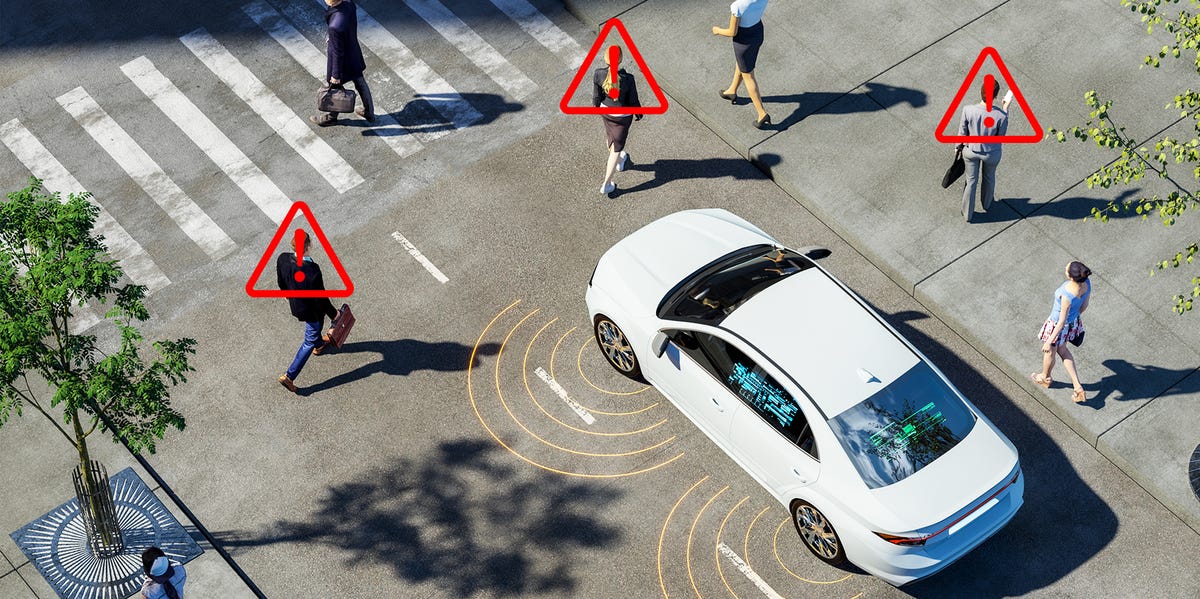
Modern autonomous vehicles use combinations of cameras, radar, lidar, high-definition maps, GPS, inertial sensors, and onboard computing to understand their surroundings. The best systems are built with redundancy, meaning they do not rely on a single sensor or a single point of failure. If rain affects one sensor, another may still help the vehicle detect objects. If a map is uncertain, the vehicle should slow down or stop rather than improvise like a teenager borrowing the family car.
There is also growing evidence that carefully deployed robotaxis can perform well in specific conditions. Waymo, for example, has reported large numbers of rider-only miles in cities such as Phoenix, San Francisco, and Los Angeles. Independent and peer-reviewed analyses of its operations have found lower rates in several crash and injury-related categories compared with matched human driving benchmarks. That does not mean every self-driving car is safe everywhere. It means a highly controlled, geofenced, heavily tested system can show promising safety performance.
Another reason for optimism is that some automated safety features are already reducing risk. Automatic emergency braking, especially when it detects vehicles and pedestrians, is becoming a standard safety expectation. Federal rules now push the auto industry toward stronger crash-avoidance systems. These features are not full autonomy, but they are stepping stones toward vehicles that can prevent more crashes before they happen.
Why Self-Driving Safety Is Still So Hard
Driving is not just steering between painted lines. It is negotiation, prediction, ethics, weather reading, social awareness, and occasionally decoding the body language of someone who is half-stepping into a crosswalk while staring at a burrito.
Autonomous vehicles struggle most with the “long tail” of rare events. A normal left turn is easy to practice. A left turn during road construction, at dusk, with a cyclist approaching, a delivery truck blocking the view, and a police officer waving traffic through? That is where things get spicy.
Safety experts often focus on edge cases because edge cases reveal whether a system truly understands the road or is merely very good at common situations. Human drivers are not perfect, but humans can sometimes generalize from messy context. A person may see a ball roll into the street and immediately expect a child to follow. A robot must be trained, tested, and validated to anticipate similar scenarios reliably.
The 2023 Cruise pedestrian incident in San Francisco became a major case study for the industry. A human-driven car first hit a pedestrian, pushing the person into the path of a Cruise robotaxi. The robotaxi then performed a post-crash maneuver and dragged the pedestrian about 20 feet before stopping. The incident raised serious questions not only about technical decision-making after a collision, but also about corporate transparency and regulator reporting. For experts, the lesson was harsh but useful: autonomous vehicle safety is not just software. It is also organizational culture.
The Difference Between Robotaxi Safety and Consumer Car Hype
One reason the public debate gets messy is that robotaxis and consumer driver-assistance systems are often thrown into the same bucket. They should not be.
A robotaxi fleet can be managed centrally. It can be limited to certain streets. It can avoid bad weather. It can receive constant software updates. It can be monitored remotely. If a situation exceeds the system’s capability, the company can pull the fleet from service. That is not perfect, but it is controllable.
A privately owned car with partial automation is a different beast. It may be used by a tired driver at 11:30 p.m. in heavy rain on a road the system was never meant to handle. If the driver thinks the car is more capable than it really is, the safety risk increases. This is why driver monitoring matters so much. The Insurance Institute for Highway Safety has repeatedly emphasized that partial automation needs strong safeguards: attention reminders, escalation when the driver is distracted, and emergency procedures when the driver fails to respond.
Consumer Reports has also rated active driving assistance systems partly on whether they keep drivers engaged and communicate limitations clearly. The best systems are not necessarily the ones that feel the most magical. They are the ones that prevent misuse. In other words, a responsible system should sometimes be annoying. A car that nags you to watch the road may be less glamorous, but glamour does not prevent rear-end collisions.
Public Trust Is a Safety Feature, Too
Public confidence in autonomous vehicles remains fragile. AAA surveys have found that many U.S. drivers are still afraid to ride in a fully self-driving vehicle, while only a small minority say they would trust one. That fear is not irrational. People are being asked to trust a technology they cannot easily inspect, operated by companies that may have incentives to move quickly.
Trust will not be won by slogans. It will be won by boring things: clear definitions, honest limitations, public safety data, independent investigations, strong recall processes, and companies admitting problems quickly. Boring is underrated. Boring is how airplanes became safer. Boring is how elevators stopped needing operators. Boring is how medicine cabinets got childproof caps. The road to trust is paved with audits, not hype videos.
When an autonomous vehicle company says its system is safer than a human, the next questions should be: safer in what city, on what roads, in what weather, at what speeds, compared with which drivers, measured by what crash types, and verified by whom? Without those details, “safer than humans” is a bumper sticker, not a safety argument.
What Experts Say Must Happen Before Self-Driving Cars Are Truly Safe
1. Clear Operational Limits
Autonomous vehicles should know where they can and cannot operate. A system designed for mapped urban streets in fair weather should not behave as if it is ready for a mountain pass during a blizzard. Geofencing, weather restrictions, speed limits, and conservative fallback behavior are not weaknesses. They are signs of engineering maturity.
2. Better Safety Metrics
Miles driven are useful, but they are not enough. A million easy miles on wide sunny roads do not prove much about rare dangerous situations. Experts want richer metrics: crash severity, near-miss behavior, disengagement context, vulnerable road user performance, post-crash response, and how the system handles unusual scenarios.
3. Stronger Regulation and Reporting
Federal crash reporting for vehicles with automated systems is an important start, but safety advocates continue to call for more transparency. Regulators need enough data to compare systems fairly, investigate failures, and require recalls when software creates unreasonable risk.
4. Independent Verification
Companies should not be the only judges of their own safety. Independent researchers, insurers, regulators, and standards organizations all have roles to play. The public does not need every line of proprietary code, but it does need credible evidence that safety claims are more than marketing glitter.
5. Conservative Behavior Around Pedestrians and Cyclists
A vehicle that is slightly cautious may irritate impatient drivers, but a vehicle that is too aggressive around vulnerable road users is unacceptable. Robotaxis must handle pedestrians, cyclists, scooter riders, emergency responders, road workers, and people who behave unpredictably. In cities, unpredictability is not an exception. It is Tuesday.
Will Fully Self-Driving Cars Be Everywhere Soon?
Probably not. The safer bet is gradual expansion. Robotaxi services will likely grow first in mapped urban zones with favorable weather and supportive regulations. Autonomous trucking may expand on specific highway corridors where conditions are more predictable than dense city streets. Personal vehicles will continue adding advanced assistance features, but truly driverless consumer cars that work anywhere remain much farther away.
This slower rollout may frustrate people who expected a Jetsons-style commute by now, but it is probably healthier. Safety-critical technology should not scale like a social media app. A bad photo filter annoys people. A bad vehicle decision can kill them.
Real-World Experiences: What Self-Driving Safety Feels Like From the Street
One of the most interesting things about autonomous vehicles is that safety does not always feel the way people expect. A human driver may feel “safe” because they accelerate confidently, squeeze through gaps, and make eye contact at intersections. A robotaxi may feel strange because it waits longer, brakes earlier, or refuses a maneuver a human would attempt. To a passenger, that can feel awkward. To a safety engineer, it may look like caution doing its job.
Imagine riding in a driverless car for the first time. The empty front seat is the first psychological hurdle. Your brain keeps searching for a driver, because for your whole life cars have been operated by someone with hands, eyes, and possibly a questionable playlist. Then the vehicle pulls away smoothly. It stops for pedestrians. It signals. It keeps a legal speed. After ten minutes, the novelty fades and the ride becomes almost boring. That boredom is actually the product people are paying for. The goal is not to make passengers gasp, “Wow, the robot is brave.” The goal is to make them forget the robot is there.
Now imagine the same vehicle from the perspective of a pedestrian. You approach a crosswalk and see no human face behind the windshield. With a human driver, you might look for a nod, a wave, or some tiny social cue that says, “Go ahead.” With a driverless car, that conversation changes. The vehicle may stop correctly, but people still need to learn what its behavior means. This is why external signals, predictable stopping, and conservative movement matter. Safety is not only avoiding contact; it is helping humans understand what the machine intends to do.
Drivers sharing the road with robotaxis have another experience. Some complain that autonomous vehicles are too cautious, especially when they pause for unusual objects or hesitate in complex intersections. That can be annoying. But annoyance is not the same as danger. In fact, one of the great design challenges is balancing caution with traffic flow. A robotaxi that freezes too often can create hazards. A robotaxi that rushes too often can create worse ones. The sweet spot is a vehicle that behaves predictably, legally, and smoothly enough that other road users do not need to guess.
Emergency responders have their own concerns. If a police officer directs traffic, if firefighters block lanes, or if an ambulance needs to pass, an autonomous vehicle must respond appropriately. That requires not only sensors and software, but also procedures, training, remote support, and coordination with local agencies. The vehicle cannot simply say, “Sorry, this scenario was not in the tutorial.”
For everyday people, the best experience with self-driving vehicles will probably be uneventful. A safe autonomous ride should feel like a good elevator ride: you get in, it works, you arrive, and nobody writes a dramatic diary entry afterward. But earning that ordinary feeling will require extraordinary engineering. It will require companies to slow down when the evidence says slow down, regulators to demand proof, and the public to understand that “autonomous” does not automatically mean “invincible.”
The Verdict: Yes, But “Safe” Will Arrive in Stages
So, will self-driving vehicles ever be safe? Yes, but not in the fantasy version where every car suddenly becomes a flawless robot chauffeur. The realistic future is more practical and more incremental. Some autonomous vehicles will be safe enough in specific places before they are safe everywhere. Some driver-assistance features will prevent crashes while still requiring human supervision. Some companies will earn trust through transparent performance, while others may lose it through overpromising.
The expert view is cautiously optimistic. Self-driving technology has real safety potential, but it must be judged by evidence, not excitement. The safest autonomous vehicle is not the one with the flashiest demo. It is the one that knows its limits, handles rare events carefully, reports problems honestly, and improves without treating the public road like a beta-test playground.
In the end, the question is not whether machines can become better drivers than humans. In many controlled situations, they already may be. The bigger question is whether the companies building them, and the regulators overseeing them, can be disciplined enough to make safety the product rather than the slogan.
If that happens, self-driving vehicles may one day become not just safe, but boringly safe. And on American roads, boring would be a beautiful upgrade.