Old Air Force planes are not just retired machines with faded paint and heroic jawlines. They are flying history books, metal time capsules, engineering experiments, museum celebrities, and sometimes, surprisingly, still-working members of the team. Some were born in the age of slide rules and cigarette smoke in design offices, yet their stories still shape modern aviation. Others sleep under desert sunshine, waiting to become museum displays, spare-parts donors, or restoration miracles.
The phrase “old Air Force planes” can mean many things. It might describe World War II giants like the B-29 Superfortress, Cold War icons like the B-52 Stratofortress and F-86 Sabre, hard-working cargo haulers like the C-47 Skytrain and C-130 Hercules, or long-serving jets like the KC-135 Stratotanker, T-38 Talon, A-10 Thunderbolt II, U-2 Dragon Lady, F-4 Phantom II, and F-15 Eagle. They do not all belong in the same decade, but they do share one thing: they proved useful enough, tough enough, or beloved enough to survive far longer than anyone in a neat conference room probably expected.
Why Old Air Force Planes Still Matter
Modern aircraft get the glossy headlines. Stealth shapes, digital cockpits, advanced sensors, and futuristic names tend to attract attention. But old Air Force planes explain how the United States built the airpower it has today. They show the evolution from propellers to jets, from visual navigation to sophisticated avionics, from short-range missions to global reach, and from simple metal airframes to complex flying networks.
These aircraft also remind us that “old” does not automatically mean “obsolete.” A vintage aircraft may be retired from frontline service, yet its design may have influenced generations of planes after it. Some old aircraft remain useful because their basic purpose has not disappeared. Cargo still needs to move. Pilots still need training. Tankers still need to refuel aircraft. Reconnaissance still matters. In military aviation, a good airframe can become like a reliable pickup truck: maybe not glamorous, but when the job is hard, everyone looks for its keys.
The B-29 Superfortress: A World War II Giant
The Boeing B-29 Superfortress was one of the most advanced bombers of World War II. It represented a major leap in range, altitude, crew comfort, and complexity. The B-29 introduced features that were remarkable for its time, including pressurized crew areas and remote-controlled defensive systems. In plain English, it was not just big; it was “engineers stayed up too late and changed aviation history” big.
Today, B-29s are closely associated with museum preservation and public memory. Aircraft such as Enola Gay and Bockscar remain among the most historically significant airplanes ever built, not simply because of their engineering, but because of the enormous moral, political, and human questions tied to the end of World War II. Looking at a B-29 in a museum is not like admiring a sports car. It is more like standing beside a machine that forces history class to stop being theoretical.
The C-47 Skytrain: The Workhorse With Wings
The Douglas C-47 Skytrain, adapted from the DC-3 airliner, became one of the most recognizable transport aircraft of the 20th century. During World War II, C-47s carried cargo, moved personnel, towed gliders, dropped paratroopers, and helped evacuate wounded service members. It earned the affectionate nickname “Gooney Bird,” which sounds silly until you realize this bird helped carry entire operations on its back.
Unlike flashier fighters or bombers, the C-47 became famous by being useful everywhere. It did not need to be glamorous. It needed to arrive, land, unload, and do it again. That is why old military transport aircraft deserve more attention: wars, humanitarian missions, and emergency operations often depend less on drama and more on logistics. The C-47 proved that sometimes the most important airplane is the one bringing fuel, food, people, and spare parts.
The F-86 Sabre: Jet-Age Style With Sharp Elbows
The North American F-86 Sabre helped define the early jet age for the U.S. Air Force. With its swept-wing design, it became one of the most famous fighters of the Korean War era. The Sabre looked fast even when parked, which is not a scientific measurement, but aviation fans understand it perfectly.
The F-86 mattered because it showed how quickly air combat changed after World War II. Piston-engine fighters had dominated the skies only a few years earlier. Suddenly, jet speed, high-altitude performance, and aerodynamic research became essential. The Sabre was not merely an old fighter; it was a symbol of the moment when aviation stepped through the jet-age doorway and did not look back.
The B-52 Stratofortress: The Grandparent That Still Goes to Work
Few old Air Force planes are as legendary as the B-52 Stratofortress. First flown in the 1950s, the B-52 has become one of the most recognizable military aircraft in the world. Its long wings, eight-engine layout, and unmistakable profile make it look like something designed by people who believed subtlety was for curtains.
The B-52’s real achievement is longevity. The last B-52H models were delivered in the early 1960s, yet the aircraft has remained relevant through repeated upgrades. Its mission, systems, engines, and electronics have evolved over time. The result is an aircraft that began life in the Cold War and is still discussed in the context of future service. That kind of lifespan is rare in aviation, where technology usually ages about as gracefully as a banana left in a gym bag.
The KC-135 Stratotanker: The Flying Gas Station
The KC-135 Stratotanker may not have the celebrity status of a fighter jet, but it is one of the most important old Air Force planes ever built. Its mission is aerial refueling, which allows other aircraft to fly farther, stay airborne longer, and operate across global distances. Without tankers, many air missions become shorter, harder, or impossible.
The KC-135 first entered service in the late 1950s, and like the B-52, it has stayed useful through modernization. Think of it as a flying gas station with discipline, altitude, and much better paperwork. While newer tanker aircraft are entering the force, the KC-135 remains a classic example of how a well-designed support aircraft can influence airpower for generations.
The C-130 Hercules: The Cargo Plane That Refuses to Quit
The C-130 Hercules is one of the most beloved and durable aircraft in military aviation. First flown in the 1950s, it became famous for tactical airlift, rough-field operations, cargo delivery, troop transport, medical evacuation, disaster response, and countless other missions. If aircraft had job resumes, the C-130’s would require a stapler, a binder, and possibly a small forklift.
What makes the C-130 special is not just its age, but its adaptability. Different versions have served different roles, and the aircraft’s basic design has proven astonishingly flexible. Its ability to operate from rough or short runways makes it valuable in places where polished airport infrastructure is unavailable. The Hercules is not old in the tired sense. It is old in the “knows every road in town and still beats you there” sense.
The U-2 Dragon Lady: High, Strange, and Still Fascinating
The U-2 Dragon Lady is one of the most unusual old Air Force planes. Designed during the Cold War for high-altitude reconnaissance, it has a long, slender-winged appearance that makes it look almost like a glider that joined a spy novel. Its role has always centered on intelligence, surveillance, and reconnaissance, and it remains one of the most iconic aircraft associated with the secretive world of Cold War aviation.
The U-2’s endurance in service shows that specialized aircraft can remain valuable when their mission remains important. Satellites, drones, and newer platforms changed the intelligence world, but the Dragon Lady kept adapting. It is a reminder that old aircraft can survive not by doing everything, but by doing one difficult thing extremely well.
The T-38 Talon: Training Generations of Fast-Jet Pilots
The T-38 Talon is another long-serving classic. This sleek supersonic trainer first flew in the late 1950s and helped train generations of Air Force pilots. Many aviators who later flew fighters, bombers, and advanced aircraft spent part of their training journey in the T-38.
Training aircraft rarely become household names, but they are essential. A fighter pilot does not magically appear in a flight suit with perfect reflexes and cool sunglasses. Training takes time, structure, repetition, and aircraft built for the job. The T-38 became famous inside aviation circles because it gave pilots experience with speed, formation flying, instrument procedures, and high-performance handling.
The F-4 Phantom II: Loud, Powerful, and Impossible to Ignore
The F-4 Phantom II began as a Navy aircraft but became an important U.S. Air Force fighter as well. It served in multiple roles, including fighter, attack, and reconnaissance missions. With its twin engines and muscular shape, the Phantom looked like it was designed by someone who answered every design question with, “More power, please.”
The F-4 represented an era when speed, missiles, radar, and multi-role flexibility reshaped fighter aviation. It served during the Vietnam War and remained in various roles for decades. Today, museum examples of the Phantom attract attention because the aircraft feels dramatic even when silent. It is big, bold, and very much not interested in being described as delicate.
The A-10 Thunderbolt II: The Warthog With a Fan Club
The A-10 Thunderbolt II, widely known as the Warthog, is one of the most recognizable older Air Force aircraft from the 1970s generation. Built for close air support, the A-10 earned a reputation for toughness, simplicity, and survivability. Its appearance is unusual enough that even people who love it admit it did not win a beauty contest. Then again, bulldogs are not aerodynamic either, and people adore them.
The A-10’s long career shows how emotional aircraft debates can become. To some, it is an aging platform that must give way to newer aircraft. To others, it is a trusted specialist with a record of supporting troops on the ground. Either way, the Warthog has earned a permanent place in Air Force history and aviation culture.
The F-15 Eagle: Old Enough to Be Classic, Strong Enough to Stay Relevant
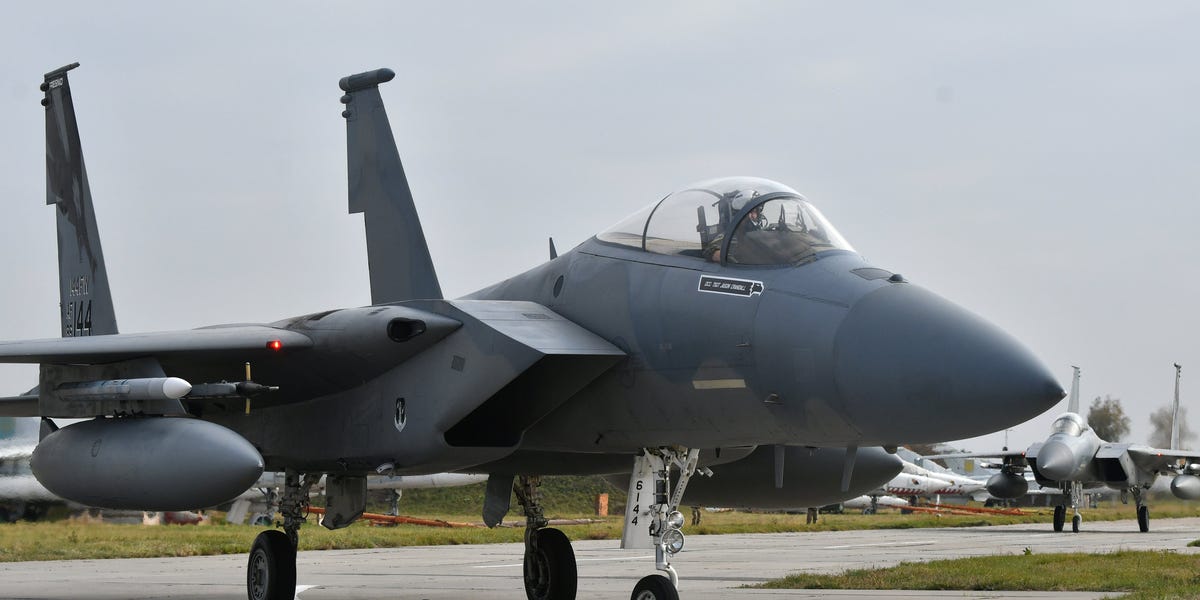
The F-15 Eagle first flew in the early 1970s and entered operational service later that decade. Although it is not “old” in the World War II sense, it has crossed into classic status. The F-15 became famous as an air-superiority fighter, combining powerful engines, maneuverability, radar capability, and a design focused on controlling the skies.
Its continued relevance comes from upgrades and newer versions that build on the original design. The F-15 proves that an older aircraft family can remain important when its structure, performance, and modernization path still make sense. In aviation terms, it is like a classic athlete who keeps changing training methods and somehow still shows up ready to compete.
Why Some Old Air Force Planes Keep Flying
Old Air Force planes keep flying for several reasons. First, the original design may be excellent. A strong airframe with room for upgrades can stay useful long after its first generation of equipment becomes outdated. Second, replacing aircraft is expensive. Designing, testing, purchasing, and fielding a new fleet takes years and huge budgets. Third, some missions do not require a brand-new aircraft shape. A tanker, trainer, or cargo plane may remain valuable if it can be safely maintained and modernized.
There is also an industrial reason. Aircraft are ecosystems. They involve pilots, maintainers, spare parts, training programs, supply chains, simulators, technical manuals, and bases. Replacing an aircraft means replacing much more than metal. It means changing habits, infrastructure, and budgets. Sometimes the old plane stays because it still does the job and everyone knows how to keep it alive.
The Challenge of Aging Aircraft
Of course, old Air Force planes are not magic. Age brings real problems. Metal fatigue, corrosion, obsolete parts, outdated wiring, and maintenance complexity can make older aircraft harder and more expensive to keep ready. A plane may look impressive at an airshow, but behind the scenes it may require thousands of maintenance hours, specialized inspections, and parts that are no longer easy to find.
This is where sustainment becomes crucial. The Air Force and maintenance organizations must decide which aircraft deserve upgrades, which should be retired, and which can serve in limited roles. The decision is rarely simple. Retire too quickly, and capability may disappear before replacements are ready. Keep aircraft too long, and maintenance costs can climb like a squirrel on espresso.
The Boneyard: Where Old Planes Go to Wait
Many old military aircraft eventually arrive at storage facilities, especially the famous aircraft “Boneyard” at Davis-Monthan Air Force Base in Arizona. The dry desert climate helps preserve aircraft by reducing corrosion. Some planes are stored for possible future use, some provide spare parts, and others eventually become museum pieces or are disposed of.
The Boneyard is often described like an airplane graveyard, but that is only partly true. It is also a warehouse, repair resource, historical holding area, and recycling center. A parked aircraft may look finished, but parts from that aircraft may help keep another plane flying. In that sense, even retired old Air Force planes can continue serving in quiet, practical ways.
Museums, Restoration, and the Power of Seeing the Real Thing
Museums play a huge role in preserving old Air Force planes. The National Museum of the U.S. Air Force, the Smithsonian National Air and Space Museum, and many regional aviation museums help visitors understand aircraft beyond photos and statistics. Standing beside a B-29, C-47, F-86, or F-4 changes the experience. Size, smell, rivets, cockpit layout, landing gear, and worn paint all make history feel physical.
Restoration work is slow, careful, and often expensive. It may require research, missing parts, old technical documents, corrosion repair, repainting, and thousands of volunteer or specialist hours. But the result is worth it. A restored aircraft does not merely decorate a hangar. It teaches engineering, history, teamwork, sacrifice, and the strange human habit of building impossible machines and then asking them to fly.
Experiences With Old Air Force Planes: What It Feels Like Up Close
Seeing old Air Force planes in person is different from reading about them. Online, a B-52 is a set of numbers and a black-and-white photograph. In person, it is enormous. Its landing gear looks industrial, its wings seem to stretch into another zip code, and its fuselage makes you wonder how something so large ever became airborne without negotiating with gravity first.
Walking through an aviation museum also changes how you think about time. One moment you are looking at a World War II transport with round windows and a narrow cabin. A few steps later, you are staring at a Cold War jet with sharp angles and a cockpit full of switches. Then you reach a modern aircraft display and realize that every “advanced” machine eventually becomes a historical artifact if it survives long enough. Aviation history is basically a relay race, except the batons are wings, engines, and maintenance manuals.
Old Air Force planes also make maintenance feel heroic. Visitors often admire pilots first, and pilots certainly deserve respect. But when you look at older aircraft closely, you begin noticing access panels, rivet lines, tires, hydraulic areas, faded markings, and patched surfaces. You realize that every flight depended on maintainers who worked in heat, cold, noise, pressure, and tight spaces. A vintage aircraft is not just a pilot story. It is also a crew chief story, an engineer story, a parts clerk story, and a “who borrowed my tool cart?” story.
Another memorable experience is the sound. Even if you never fly in a vintage aircraft, hearing one start up at an airshow can be unforgettable. Older piston engines rumble with a deep mechanical personality. Early jets have a raw, piercing character. Large transport aircraft create a vibration you feel in your chest. Modern aircraft can be impressive, but old aircraft sound like history clearing its throat.
For many people, the emotional impact comes from imagining the young crews who once operated these machines. A museum placard may list dates and specifications, but the aircraft itself suggests long nights, difficult missions, training flights, mistakes, repairs, fear, boredom, skill, and pride. It is easy to joke about old planes having wrinkles, but those wrinkles are part of the point. They show use. They show survival.
Old Air Force planes are also great teachers for younger aviation fans. They make engineering visible. You can see how designers solved problems before computers did so much of the invisible work. You can compare propellers with jet intakes, analog gauges with digital displays, fabric-era thinking with high-speed metal construction. Even without becoming an engineer, a visitor can understand progress by walking from one aircraft to the next.
The best experience, though, is the quiet moment after the excitement fades. You stand under a wing, look up, and realize that this machine once had a job. It crossed oceans, trained pilots, carried cargo, watched borders, refueled aircraft, or represented national strategy. Now it stands still so people can learn from it. That is a good retirement. Honestly, many humans would accept the same deal: a climate-controlled building, regular admiration, and no more Monday meetings.
Conclusion: Old Wings, Long Shadows
Old Air Force planes matter because they connect technology with memory. They show how aircraft design evolved, how military needs changed, and how certain machines lasted far beyond expectations. From the C-47 Skytrain to the B-52 Stratofortress, from the F-86 Sabre to the A-10 Thunderbolt II, each aircraft tells a story about problem-solving under pressure.
Some old Air Force planes are preserved in museums. Some rest in desert storage. Some continue flying through upgrades, inspections, and the stubborn brilliance of maintainers. Together, they prove that aviation history is not only about speed and power. It is about usefulness, adaptation, and legacy. Old aircraft may no longer be new, but the best of them still have plenty to say.