Editor’s note: This article is based on publicly available information from U.S. defense, NASA, aerospace industry, and reputable space-reporting sources. It is written as original, publication-ready content without embedded source links.
A Small Space Station With a Very Big Job
The phrase “tiny space station” sounds like something sold in a toy aisle next to glow-in-the-dark planets and a suspiciously cheap astronaut helmet. But the Pentagon’s interest in a small orbital outpost is not science fiction, and it is definitely not a novelty project. It is part of a larger shift in how the United States thinks about space: not just as a place to explore, but as a place to operate, repair, test, protect, and respond.
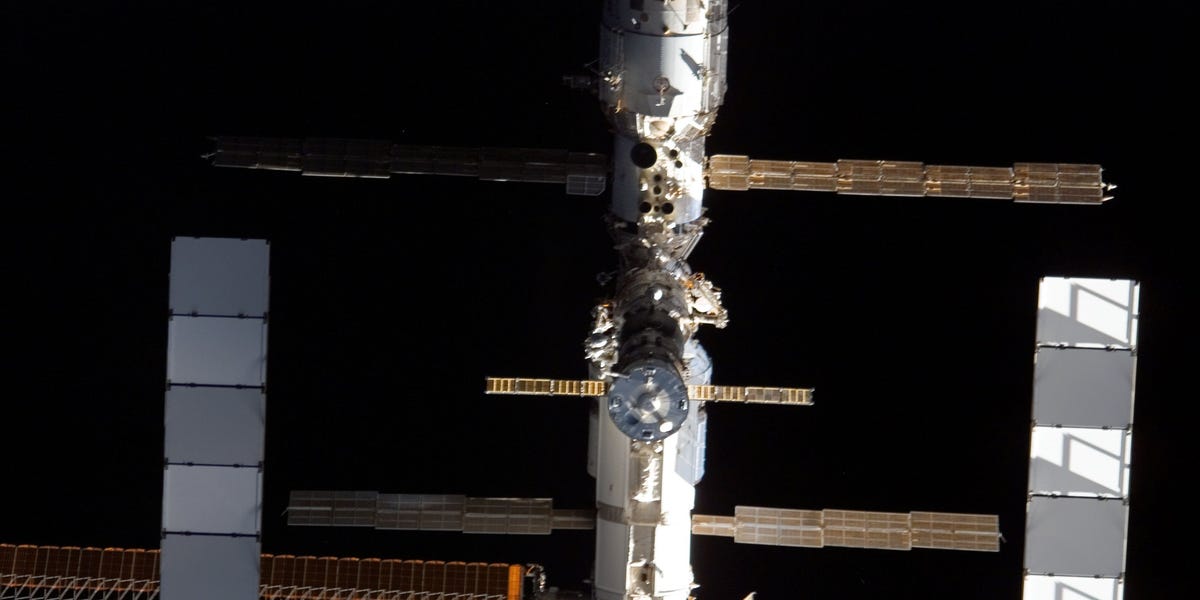
The idea centers on an unmanned, free-flying orbital outpostessentially a compact space station designed for experiments, logistics demonstrations, payload hosting, space assembly, and possibly future human-related capabilities. Think of it less like the International Space Station and more like a high-tech orbital garage: smaller, more specialized, and built for work that does not need a full crew of astronauts floating around with pouches of rehydrated coffee.
The Pentagon’s Defense Innovation Unit, often called DIU, began publicly exploring the concept several years ago. The original vision asked commercial companies to propose a self-contained orbital platform that could operate in low Earth orbit, support payloads, provide power, and eventually connect with other spacecraft. It would be autonomous at first, but the long-term design language included features that could support more ambitious use cases, including docking, robotic operations, resupply, and human-rating considerations.
That last detail is what made people sit up. A Pentagon-linked platform in orbit that is potentially designed with human compatibility? That is the kind of sentence that makes both engineers and headline writers reach for stronger coffee.
Why the Pentagon Wants an Orbital Outpost
Space is no longer just a peaceful backdrop for weather satellites, GPS signals, and gorgeous photos of hurricanes that look like angry cinnamon rolls. Modern military operations rely heavily on satellites for navigation, communication, missile warning, surveillance, timing, and intelligence. If those systems are disrupted, jammed, damaged, or destroyed, the effects on Earth can be immediate and serious.
A small Pentagon space station could help the Department of Defense test technologies directly in orbit without relying entirely on the International Space Station or waiting for traditional satellite missions. That matters because space hardware behaves differently once it is exposed to microgravity, radiation, extreme temperature swings, and the unforgiving reality that there is no “restart router” button in orbit.
The platform could serve several practical roles. It could test new sensors, host classified or sensitive payloads, support robotic assembly, evaluate in-space manufacturing, store equipment, and demonstrate logistics concepts. It might also help with satellite servicing, refueling, inspection, and rapid deployment of small spacecraft. In military terms, that means better responsiveness. In normal-human terms, it means not having to launch a whole new mission every time something needs testing, fixing, or moving.
The “Tiny” Part Is Strategic
The proposed outpost is not meant to compete with the International Space Station in size, comfort, or floating laboratory glamour. The ISS is a massive, crewed, multinational research platform. A Pentagon orbital outpost would be leaner, more modular, and more focused. Small size can be an advantage because it reduces launch costs, shortens development timelines, and makes the system easier to replace or upgrade.
Early requirements discussed in public reporting pointed to a compact internal volume, the ability to carry payloads, continuous power, controlled pressure options, maneuverability, and quick deployment after contract award. The Pentagon was not asking for a luxury hotel with orbital room service. It was asking for a practical platform that could get to orbit, do useful work, and support a growing menu of defense-related experiments.
In other words, the Pentagon does not need a space mansion. It needs a workshop with Wi-Fi, power outlets, robotic arms, and a very serious security badge.
From Concept to Contract: The Shooting Star Connection
One of the most important steps in the mini space station story came when Sierra Nevada Corporation, now closely associated with Sierra Space, was selected to study and develop an unmanned orbital outpost concept using its Shooting Star transport vehicle. Shooting Star was originally designed as a cargo module for the Dream Chaser spaceplane, which was developed for NASA cargo resupply missions.
That made Shooting Star an attractive starting point. It was not a random metal tube with a dream journal. It was already designed around space logistics, payload capacity, power, and operations near orbital destinations. Repurposing existing commercial hardware is exactly the kind of shortcut defense innovation officials like: faster than building from scratch, cheaper than a custom government-only system, and more flexible if the commercial market keeps evolving.
The proposed Shooting Star-based outpost would operate initially in low Earth orbit. It could host payloads and support demonstrations involving assembly, microgravity research, logistics, manufacturing, training, testing, and evaluation. Future versions could potentially move beyond low Earth orbit into medium Earth orbit, geosynchronous orbit, or even cislunar spacethe region between Earth and the Moon.
Why Reusing Commercial Hardware Matters
The Pentagon’s interest reflects a broader defense trend: do not build everything alone if the commercial sector is already moving quickly. SpaceX changed launch economics. Planet Labs changed Earth observation expectations. Commercial satellite communications now play a major role in global connectivity. NASA itself is transitioning from owning every major human-spaceflight asset to buying services from private operators.
Using a commercial spacecraft bus or cargo module as the foundation for a military orbital outpost fits that pattern. The government can define the mission needs, while industry provides adaptable hardware. That is faster than the old model of designing a bespoke space system over a decade, watching the budget grow a beard, and finally launching something that may already feel outdated.
The ISS Is Retiring, and Low Earth Orbit Is Changing
The timing matters. NASA plans to transition from the International Space Station to commercially owned and operated space stations around the end of the ISS operational era. The agency has supported commercial low Earth orbit destinations involving companies and projects such as Axiom Space, Blue Origin’s Orbital Reef, Starlab, and Vast’s Haven concepts. The government’s role is shifting from landlord and builder to anchor customer.
This creates a new environment where the Pentagon may not need to own a giant orbital laboratory. It may need access to specialized platforms, secure hosted payloads, and mission-focused infrastructure. Some work could happen on commercial stations. Other work may require a separate, dedicated military or dual-use platform where security, scheduling, and mission control are tighter.
A tiny Pentagon space station could therefore become one piece of a larger low Earth orbit economy. Civil agencies may use commercial research labs. Private companies may manufacture materials, test pharmaceuticals, or host tourists. Defense users may need classified experiments, rapid response capabilities, or secure logistics hubs. The same orbital neighborhood could support very different tenants, from scientists studying protein crystals to military operators testing next-generation sensors.
What Could the Pentagon Do With a Tiny Space Station?
The most obvious use is experimentation. Space systems are expensive, and ground tests can only simulate so much. A dedicated orbital platform gives engineers a place to validate hardware in the actual environment where it must survive. That could include sensors, robotics, propulsion components, communications equipment, thermal systems, autonomous navigation software, and materials designed to resist radiation or temperature extremes.
Another use is logistics. Space logistics is becoming one of the most important ideas in modern orbital strategy. If satellites can be refueled, repaired, upgraded, repositioned, or inspected, they become more resilient. A small outpost could act as a depot, staging platform, or testbed for those activities. Imagine a satellite needing a new component. Today, that usually means launching another satellite or accepting the loss. Tomorrow, orbital servicing could make space assets more like aircraft: maintained, upgraded, and kept useful for longer.
The outpost could also support in-space assembly and manufacturing. Large structures are hard to launch fully assembled because rockets have size limits. But if parts can be launched separately and assembled in orbit, the United States could build larger antennas, telescopes, power systems, or defense-related platforms than would otherwise fit inside a rocket fairing.
Robotics May Be the Real Star
Humans are wonderful, but in orbit they are also expensive, fragile, and annoyingly dependent on oxygen. Robotic systems do not need snacks, sleep, or emotional support after accidentally losing a wrench into the void. For a Pentagon orbital outpost, robotics could be the main workforce.
Robotic arms could move payloads, attach modules, inspect spacecraft, support repairs, and help assemble structures. Autonomous systems could perform routine operations while ground controllers supervise. This matters because response time in space is critical. A platform that can act without waiting for astronauts or complex crewed mission planning would give the military more flexibility.
How This Connects to the Space Force and New Orbital Infrastructure
The Pentagon’s tiny space station idea also fits into the U.S. Space Force’s larger push toward responsive and resilient space operations. In recent years, the Space Force and related organizations have shown growing interest in commercial partnerships, rapid launch, on-orbit servicing, maneuverable spacecraft, and platforms that can pre-position assets in space.
One modern example is Gravitics’ Orbital Carrier concept, which received Space Force-backed funding to demonstrate a platform that could pre-position multiple maneuverable space vehicles for rapid deployment. The company has described the idea using an aircraft carrier analogy: place assets close to where they might be needed, then deploy them quickly. That is not exactly the same as the original DIU mini station concept, but it shows how the thinking has evolved. Space is becoming less about single-use satellites and more about networks, depots, carriers, servicing nodes, and modular infrastructure.
For decades, a satellite was often treated like a sealed appliance: launch it, use it, and eventually let it die. The new model imagines space assets as part of an operational ecosystem. They may be serviced, protected, refueled, upgraded, moved, or replaced more quickly. A tiny space station is not just a platform; it is a signpost pointing toward that future.
Is This a Military Space Station?
Yes and no. It depends on what people mean by “military space station.” The Pentagon’s early orbital outpost concept was unmanned and focused on experiments, logistics, and demonstrations. That is not the same thing as a crewed battle station from a movie where someone in a cape presses a giant red button. There is no public evidence that this concept is meant to become a weaponized crewed fortress.
However, it is absolutely military-relevant. A dedicated defense outpost could support national security missions, sensitive payloads, space-domain awareness, satellite servicing, and rapid-response experiments. Even if it never carries humans, it could still become strategically important.
The more accurate phrase may be “dual-use orbital infrastructure.” Many technologies useful for peaceful commercial space operations are also useful for defense. Robotic arms can assemble a telescope or inspect a suspicious satellite. Refueling can extend the life of a weather satellite or a military communications spacecraft. In-space manufacturing can support scientific research or future defense systems. The tool is not always the issue; the mission is.
The Big Questions: Cost, Safety, Law, and Space Traffic
A Pentagon mini station raises practical and policy questions. First is cost. Even a “tiny” space station is not cheap. Space hardware must survive launch vibration, vacuum, radiation, thermal cycling, orbital debris risks, software faults, and years of remote operation. The word “tiny” does not magically turn space engineering into a weekend craft project.
Second is safety. Low Earth orbit is already crowded with satellites, spent rocket stages, debris, and growing mega-constellations. Any new orbital platform must be trackable, maneuverable, and designed to avoid creating debris. A defense outpost that can dock, move, and host payloads must be especially careful because proximity operations in orbit are technically demanding.
Third is international perception. Space is a domain where intentions can be hard to read. A platform designed to inspect or service satellites might look threatening to rivals, especially if it can maneuver near other spacecraft. The United States will need to balance capability with transparency, norms of responsible behavior, and clear communication.
Finally, there is the question of whether commercial stations will make a dedicated Pentagon outpost unnecessary. If secure commercial platforms can meet defense needs, the Pentagon may buy services instead of operating its own hardware. But if certain missions require exclusive access, special security, or rapid tasking, a dedicated outpost may still make sense.
Why This Matters for the Future of Space
The Pentagon’s interest in a tiny space station is not just about one platform. It represents a major change in how space infrastructure is imagined. The old model was: launch satellites, operate them from Earth, replace them when they fail. The new model is: build an orbital ecosystem where spacecraft can interact, adapt, and support one another.
That future could include commercial stations, military testbeds, fuel depots, robotic repair vehicles, free-flying labs, satellite carriers, and manufacturing platforms. Low Earth orbit may become more like a working industrial zone than a distant research frontier. That sounds less poetic than “the final frontier,” but it is probably more accurate. Space is becoming a place where people do business, run experiments, protect assets, and maintain infrastructure.
For the Pentagon, the appeal is obvious. The country that can operate flexibly in orbit has an advantage on Earth. Communications, missile warning, navigation, intelligence, and command systems all depend on space. A small orbital outpost could help test the tools needed to keep those systems working under stress.
Experience-Based Perspective: What a Tiny Space Station Teaches Us About Building in Orbit
Looking at the Pentagon’s tiny space station idea from a practical, experience-based perspective, the most interesting lesson is not that the military wants something in orbit. The military has relied on space for decades. The real lesson is that space operations are becoming more hands-on. Instead of treating orbit as a place where machines go to be alone forever, planners are starting to treat it like a place where machines can meet, dock, exchange cargo, get serviced, and continue working.
Anyone who has followed spaceflight closely knows that the hardest part is rarely the glamorous concept art. It is the plumbing, power, software, docking alignment, thermal control, and thousands of small details that must behave perfectly while traveling at about 17,500 miles per hour. A tiny space station sounds simple until you remember that even a shoebox in orbit needs power management, communications, attitude control, fault protection, orbital tracking, and a safe end-of-life plan.
This is where the Pentagon’s approach makes sense. Start small. Use commercial hardware where possible. Test real systems in real conditions. Learn what fails, what survives, and what can scale. Space programs often get into trouble when they try to leap directly to the grand version. A compact outpost offers a more realistic path: demonstrate the basics first, then add capability.
There is also an operational lesson. A dedicated orbital platform gives mission planners a place to practice. In aviation, ships, and ground operations, training environments matter. You do not wait for a crisis to learn how to refuel, repair, inspect, or deploy equipment. Space should be no different. A small outpost could become a training ground for procedures that later support larger commercial stations, lunar infrastructure, or national security missions in higher orbits.
From an industry perspective, the concept also sends a signal. The Pentagon is not only buying satellites; it is interested in infrastructure. That is a big deal for startups and established aerospace companies alike. If the government becomes a customer for orbital hosting, logistics, robotic servicing, and modular platforms, private companies have a stronger reason to invest. The result could be a healthier space economy where defense, civil, and commercial customers share some of the same foundations.
Of course, experience also teaches caution. Space projects can overpromise. A tiny station can become expensive fast. A “simple demonstration” can turn into years of integration work. Commercial partnerships can accelerate progress, but they do not remove physics, regulation, or risk. The best version of this idea is disciplined: clear mission goals, realistic budgets, responsible orbital behavior, and technology that solves actual problems rather than chasing shiny press releases.
The Pentagon’s tiny space station is fascinating because it sits at the intersection of imagination and practicality. It is not a moon base, not a Mars ship, and not a Hollywood battle station. It is something more immediate: a toolbench in orbit. And sometimes, a toolbench is exactly what changes the future, because before anyone builds the next great machine, they need a place to test the parts.
Conclusion
The Pentagon’s pursuit of a tiny space station shows how quickly the space domain is evolving. What once sounded like far-off speculation is becoming a logical next step in military and commercial space operations. A compact orbital outpost could support experiments, logistics, satellite servicing, robotics, manufacturing, and rapid-response missions. It could also help the United States learn how to operate in orbit with more flexibility and resilience.
The most important point is this: the future of space may not be defined only by giant stations or heroic deep-space missions. It may also be shaped by small, practical platforms that quietly make everything else possible. The Pentagon’s tiny space station may never become famous like the ISS, but if it works, it could become something just as importanta workshop, depot, and test range for the next generation of orbital operations.