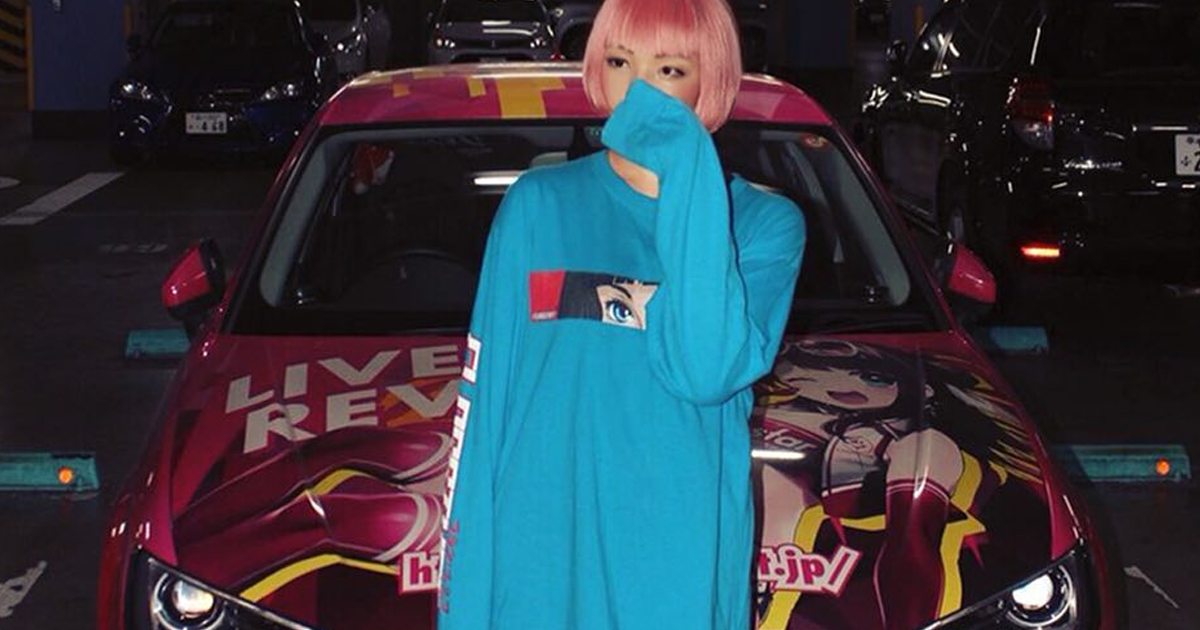
Some influencers wake up, choose an outfit, check the lighting, spill coffee on a sleeve, and then pretend the whole morning was effortless. Imma skips most of that. She does not need sleep, coffee, a ring light, or a patient photographer waiting while she asks, “Can we do one more?” Yet she has become one of the most recognizable faces in digital fashion: a pink-bobbed, street-style-loving, computer-generated influencer from Japan who looks real enough to make your thumb pause mid-scroll.
Imma is not a human model with a strong filter game. She is a virtual human, a carefully designed digital persona produced by Tokyo-based Aww Inc., a company focused on virtual humans and AI-driven digital character experiences. Known online as @imma.gram, she appears in fashion shoots, brand campaigns, lifestyle posts, digital art projects, and experimental retail activations. Her look is instantly memorable: bubblegum-pink bob, polished skin, cool-girl wardrobe, and the calm expression of someone who has never had to find parking in Shibuya.
But Imma is more than a “pretty CGI face.” She represents a major shift in influencer marketing, digital fashion, brand storytelling, and the way audiences think about authenticity online. In an era when real people sometimes look unreal and unreal people sometimes look very real, Imma stands right in the middle of the conversation, blinking perfectly.
Who Is Imma?
Imma is widely described as Japan’s first virtual model. Her name comes from the Japanese word “ima,” meaning “now,” which is fitting because she feels built for the present moment: part influencer, part fashion model, part tech experiment, and part mirror held up to social media culture.
Created as a computer-generated character, Imma lives primarily through digital platforms. Her Instagram feed blends fashion editorials, casual lifestyle moments, brand partnerships, artistic visuals, and scenes that look like snapshots from a stylish Tokyo life. The twist, of course, is that there is no biological person behind the face. There is a creative team, visual design, 3D modeling, styling direction, storytelling, and brand strategy. In other words, she is not “fake” in the lazy sense. She is constructed, like a movie character, a luxury campaign, or that one friend’s “candid” brunch photo that somehow took 47 attempts.
Imma’s official profile from Aww Inc. emphasizes her identity as a virtual model with a signature pink bob and a presence that can be difficult to distinguish from reality. That near-real quality is part of her appeal. She looks human enough to be relatable, stylized enough to be memorable, and digital enough to open creative doors that ordinary influencers cannot walk through without a green screen and a large production budget.
How a Computer-Generated Influencer Works
A virtual influencer like Imma is usually made through a combination of CGI, 3D modeling, digital compositing, photography, styling, animation, and human creative direction. Some virtual humans may also use AI tools for interaction, content planning, or real-time experiences, but it is important not to assume that every post is generated automatically by artificial intelligence. In many cases, the “magic” comes from a highly coordinated team of artists, producers, writers, technologists, and brand strategists.
CGI Gives Her a Face
Imma’s human-like appearance depends on detailed computer graphics. Artists design facial structure, skin texture, hair, expressions, clothing, lighting, and body placement. The goal is not simply to create a cartoon. The goal is to create a digital person who can appear inside real-world photography, campaign visuals, and social media environments without immediately triggering the viewer’s “something is off” alarm.
Storytelling Gives Her a Personality
Without personality, Imma would just be a beautiful render. Her posts and campaigns give her tastes, moods, values, interests, and a sense of lifestyle. She is associated with fashion, culture, art, technology, and contemporary Japanese style. Her brand identity is not random. It is built carefully, post by post, like a character arc wearing better sneakers than most of us.
Brands Give Her a Stage
Imma has collaborated with major names across fashion, retail, beauty, and lifestyle. Industry coverage has connected her with brands such as IKEA Japan, Porsche Japan, Dior, Puma, Nike, Valentino, Amazon Fashion, Calvin Klein, Coach, Burberry, and others. These collaborations show why virtual influencers attract marketers: they can be placed in imaginative settings, remain visually consistent, and support campaigns that merge digital culture with real-world products.
Why Imma Became Famous
Imma became famous because she arrived at the intersection of several powerful trends: influencer culture, CGI realism, fashion’s love of novelty, and social media’s obsession with visual identity. She is strange enough to be newsworthy but polished enough to be brand-friendly. That combination is rare.
Her pink bob is not just hair; it is a logo. In a feed packed with beige outfits, smoothie bowls, and suspiciously clean apartments, her look creates instant recognition. Good influencer branding needs a visual hook, and Imma’s hook is sharper than a fresh pair of hair-cutting scissors.
She also benefits from cultural timing. Audiences are already used to avatars in gaming, filters on social media, virtual idols, anime characters, digital fashion, and AI-generated images. Imma did not appear in a world that needed to be taught what a digital persona was from scratch. She appeared in a world already halfway there.
The IKEA Harajuku Campaign: When Imma Moved Into the Real World
One of Imma’s most famous projects was the IKEA Harajuku campaign in 2020. To promote IKEA’s city shop in Harajuku, the campaign gave Imma a physical-looking home inside the store window. For 72 hours, passersby could watch her “live” in a staged apartment environment that blended real furniture, LED screens, livestreaming, and social media storytelling.
The campaign worked because it turned an abstract idea into a public spectacle. Instead of simply posting a digital model sitting on a sofa, IKEA and its creative partners built an experience where the virtual and physical worlds appeared to overlap. Imma could do normal home-life activitiesreading, relaxing, cooking, exercisingwhile the furniture around her remained real and shoppable. It was part retail display, part performance art, part influencer campaign, and part “wait, did that digital woman just do yoga in a shop window?”
This project also showed why virtual influencers can be especially useful for experiential marketing. A human influencer can visit a store. A virtual influencer can “move into” a store, become part of the architecture, appear on screens, interact with social media, and remain perfectly on-brand every second. No jet lag. No bad angles. No awkward moment where someone asks where the restroom is during a livestream.
Why Brands Like Virtual Influencers
Brands are interested in virtual influencers because they offer control, flexibility, novelty, and long-term intellectual property potential. Human creators bring personal experience, emotional warmth, and real trust. Virtual influencers bring consistency, creative possibility, and fewer unpredictable human complications. Both can be valuable, but they work differently.
Creative Freedom
A virtual influencer can appear in a futuristic city, a fantasy landscape, a tiny apartment, a digital runway, or a real-world photo shoot blended with CGI. If a concept is visually possible, the character can probably go there. That makes virtual influencers attractive for fashion, gaming, beauty, tech, and lifestyle brands that want campaigns to feel fresh.
Brand Safety and Control
Because Imma is a managed character, her voice, visuals, and behavior can be carefully planned. She will not suddenly post a messy apology video from a kitchen floor at 2 a.m. That does not eliminate risk, but it changes the type of risk. The challenge becomes creative ethics, transparency, representation, and audience trust rather than the unpredictable personal life of a celebrity.
Always-On Availability
Virtual influencers do not age in the ordinary sense, do not get tired, and do not require travel logistics. For global campaigns, that flexibility can be powerful. A virtual model can be adapted across markets, languages, formats, and platforms with fewer physical constraints.
The Big Question: Is Imma Authentic?
Authenticity is the spicy jalapeño in the virtual influencer burrito. Can a character be authentic if she is not human? The answer depends on what audiences expect from her.
If followers expect Imma to describe the lived experience of wearing shoes all day, dealing with skin problems, or testing a product in a human body, then there is an obvious limitation. A virtual model cannot genuinely “try” a moisturizer, feel fabric, or get tired after walking in heels. Any campaign implying real personal experience must be handled carefully.
But authenticity can also mean consistency, transparency, and creative honesty. Imma does not need to pretend to be a regular person secretly photographed on a perfect day. Her appeal comes partly from the fact that she is openly virtual. Audiences can enjoy her as a digital character, fashion muse, and storytelling device. In that sense, she may be more honest than some human influencer content that claims to be spontaneous while looking suspiciously like a perfume commercial filmed by a crew of twelve.
Ethics, Disclosure, and Trust
Virtual influencers raise important questions for brands, platforms, and audiences. When a digital persona promotes a product, the relationship should be clear. In the United States, influencer marketing is shaped by Federal Trade Commission guidance that emphasizes honest disclosure when there is a material connection between an endorser and a brand. The same basic principle should apply to virtual influencers: people deserve to know when they are being advertised to.
There is also the question of beauty standards. Imma is designed, not born. Her face, body, skin, hair, and wardrobe are all creative decisions. That makes her visually powerful, but it also means brands should think carefully about what kind of “ideal” they are presenting. If digital humans become too perfect, they may intensify the pressure already created by edited photos and filtered videos.
The best use of virtual influencers is not to trick audiences. It is to tell better stories, create imaginative campaigns, and be transparent about what is real, what is digital, and what is sponsored. The future of this space depends less on how realistic virtual humans become and more on how responsibly they are used.
Imma and the Future of Fashion
Fashion has always loved fantasy. Runways, editorials, luxury campaigns, and magazine covers are built on mood, styling, aspiration, and theatrical presentation. In that context, Imma makes sense. She is a digital extension of fashion’s oldest habit: turning a look into a story.
Digital fashion also opens new possibilities. Clothing can exist as physical garments, augmented-reality filters, gaming skins, virtual collectibles, or CGI-only editorial pieces. A virtual model can wear outfits that would be impossible, expensive, or wasteful to produce physically. That matters in an industry increasingly concerned with sustainability, overproduction, and the environmental cost of constant novelty.
Of course, digital fashion is not a magic solution. Servers use energy. Visual production still requires labor. And digital clothes do not replace the human need for real garments. But virtual models like Imma allow designers and brands to test visual ideas without always creating physical samples first. In the right hands, that can support experimentation and reduce some waste. In the wrong hands, it can simply create more content noise with shinier pixels.
How Imma Compares With Other Virtual Influencers
Imma belongs to a broader world of virtual influencers that includes well-known digital personalities such as Lil Miquela, Shudu, Noonoouri, and newer AI-generated social media figures. Each has a different style. Lil Miquela is often associated with music, streetwear, and social commentary. Shudu is known for high-fashion digital modeling. Noonoouri leans into animated luxury fashion fantasy. Imma stands out through her Japanese cultural context, hyperreal visual style, and her memorable pink bob.
What makes Imma especially interesting is her balance between realism and stylization. She does not look like a simple cartoon, but she also does not disappear completely into ordinary humanity. That slight tension is part of the fascination. Viewers are invited to ask: Is she real? Does it matter? Why am I emotionally invested in someone who cannot forget her password?
What Marketers Can Learn From Imma
Imma’s rise offers several lessons for brands and creators. First, visual identity matters. Her pink bob creates immediate recognition, which is essential in crowded feeds. Second, novelty alone is not enough. A virtual influencer needs a coherent world, personality, and reason to exist. Third, transparency builds trust. Audiences may accept artificial characters, but they generally dislike feeling fooled.
Fourth, virtual influencers work best when the concept fits the brand. A tech company, fashion label, gaming platform, beauty brand, or design retailer may naturally benefit from a digital persona. A product that depends heavily on real human experience, such as wellness advice or medical claims, requires much more caution. Nobody wants a CGI character saying, “This supplement changed my life.” What life, exactly?
Finally, virtual influence should not be treated as a cheaper replacement for human creativity. Imma exists because many real people are doing creative work behind the scenes. Artists, designers, writers, producers, technologists, and strategists make the character possible. The future is not simply “humans versus virtual influencers.” It is more likely to be a hybrid world where human creators use digital tools, virtual characters support storytelling, and audiences reward the projects that feel meaningful rather than gimmicky.
Experiences Related to Imma and Computer-Generated Influencers
Following a computer-generated influencer like Imma can feel surprisingly normal at first. You scroll, see a stylish person in a great outfit, admire the composition, and only after a few seconds remember that the person does not physically exist. That delayed realization is the heart of the experience. It is not just about being fooled. It is about noticing how much of influencer culture was already constructed before CGI entered the chat.
Many people who encounter Imma-style content have a similar reaction: curiosity first, skepticism second, and then a strange kind of acceptance. The brain says, “This is not a real person.” The eyes reply, “Yes, but the jacket is excellent.” That tension makes virtual influencers powerful. They invite audiences to think about identity, beauty, creativity, and marketing while still enjoying the surface-level pleasure of fashion content.
From a reader’s perspective, Imma also makes social media feel more like a designed universe. Human influencers often build personal brands that are partly real and partly staged. They choose locations, lighting, captions, poses, and partnerships. Imma simply makes that construction visible. She reminds us that online identity is edited, arranged, filtered, and performed. The difference is that her performance starts from pixels instead of a person standing in front of a camera.
From a brand perspective, working with a virtual influencer offers a very different creative experience. Instead of asking, “Where can we send the influencer?” teams can ask, “What world should we build around this character?” That changes the campaign process. The influencer becomes part of the set design, product story, visual effects, and audience interaction. A campaign can be planned with cinematic precision, and every detail can support the brand’s message.
From a creator’s perspective, Imma is also a reminder that digital talent is still talent. The character may be artificial, but the craft behind her is not. Someone designs the face. Someone adjusts the lighting. Someone writes the caption. Someone chooses the clothes. Someone decides whether the mood should feel playful, futuristic, elegant, rebellious, or softly mysterious. The final image may look effortless, but effortless content usually has a long line of tired professionals hiding behind it.
The most useful experience Imma offers is not the fantasy of replacing humans. It is the chance to expand storytelling. A virtual influencer can make campaigns more imaginative, but the audience still wants clarity, emotion, and purpose. When the content feels transparent and creative, people are willing to play along. When it feels deceptive or empty, they scroll away faster than you can say “uncanny valley.”
In everyday terms, Imma changes how viewers read a social media feed. She turns a simple fashion post into a question: What makes an influencer influential? Is it a real body? A consistent personality? A good story? A loyal audience? A strong visual brand? Imma suggests that influence is not created by biology alone. It is created by attention, trust, aesthetics, repetition, and cultural relevance. That may be slightly unsettling, but it is also fascinating. And yes, the pink hair helps.
Conclusion
Imma is one of the clearest examples of how computer-generated influencers are reshaping digital culture. She is not just a novelty character with excellent hair. She is a case study in CGI storytelling, virtual fashion, influencer marketing, brand safety, audience curiosity, and the blurry line between real and digital identity.
Her success shows that people are willing to engage with virtual humans when the concept is visually strong, openly presented, and creatively useful. At the same time, Imma also reminds brands that transparency matters. A virtual influencer can inspire, entertain, and sell, but she cannot replace real human experience. The smartest future will not choose between people and pixels. It will use both thoughtfully.
So, who is Imma? She is a computer-generated influencer, a pink-haired virtual model, a digital fashion icon, and a very stylish signpost pointing toward the next stage of online identity. She may not be real in the traditional sense, but the questions she raises are very real. Also, somehow, her hair still looks better than ours on a humid day. Technology can be cruel like that.
Note: This original article is synthesized from publicly available information about Imma, Aww Inc., virtual influencer marketing, brand campaigns, disclosure guidance, and digital fashion trends. No source links or citation markers are embedded in the article body.