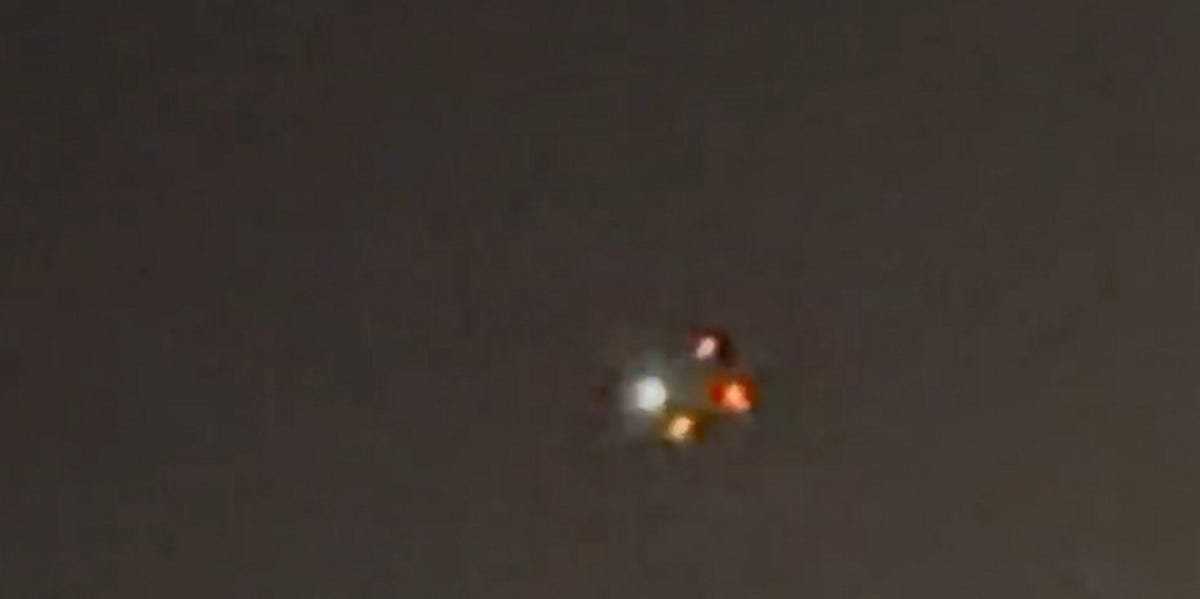
For a few weeks in late 2024, New Jersey became the unofficial capital of “What on earth is that thing in the sky?” Residents reported clusters of lights, large objects, strange flight patterns, and nighttime buzzing over neighborhoods, highways, reservoirs, military sites, and critical infrastructure. The sightings sparked federal investigations, press briefings, local frustration, social media sleuthing, and enough conspiracy theories to make a group chat spontaneously combust.
So what were the New Jersey drone sightings? The honest answer is not as dramatic as some headlines suggested, but it is still interesting. Federal agencies said they found no evidence of a national security threat, no confirmed foreign link, and many reports appeared to involve lawful aircraft, hobby drones, commercial drones, law enforcement activity, helicopters, stars, planets, or simple misidentification. Later, the White House said many of the drones had been authorized by the FAA for research and other purposes, while others were operated by hobbyists and private individuals.
That does not mean every single sighting was imaginary. Some military facilities acknowledged drone activity, and authorities did deploy detection technology, request public tips, and temporarily restrict drone flights near sensitive sites. The more useful question is not “Was everyone wrong?” but “What combination of explanations best fits the evidence?” Here are nine possible explanations for the drone sightings over New Jersey, ranked and analyzed in plain English.
1. FAA-Authorized Research or Government-Approved Flights
The most grounded explanation is that at least some of the objects were drones authorized by the Federal Aviation Administration for research, testing, or other approved operations. In January 2025, the White House said many of the drones spotted over New Jersey and the East Coast had been authorized by the FAA and were not connected to an enemy or hostile operation.
This explanation fits several parts of the story. New Jersey sits near dense airspace, major transportation corridors, military installations, ports, research institutions, and critical infrastructure. It is not hard to imagine authorized aerial work happening in the region, especially as drone technology expands into surveying, mapping, infrastructure inspection, emergency response, and advanced flight testing.
The catch is that the phrase “authorized by the FAA” does not explain every light someone saw. FAA authorization can cover certain operations, but it does not automatically identify each object in every phone video. Still, as a broad explanation, approved drone flights are highly plausible. Sometimes the truth is less “alien invasion” and more “paperwork was filed.” Less exciting, yes. But paperwork has ended more mysteries than we like to admit.
2. Misidentified Airplanes and Helicopters
One of the strongest explanations is also the least cinematic: many sightings were probably planes and helicopters. Federal officials repeatedly said that a significant share of reports appeared to be manned aircraft operating lawfully.
New Jersey is surrounded by busy aviation activity. Newark Liberty International Airport, LaGuardia, JFK, Teterboro, Philadelphia International, regional airports, medevac routes, police helicopters, news helicopters, and private aircraft all contribute to crowded skies. At night, an aircraft flying toward an observer can appear to hover. Its landing lights may look unusually bright. Its movement may seem slow or strange because the viewer has no easy reference point.
This is especially true when people are already primed to look for drones. Once a story becomes viral, ordinary aircraft suddenly become suspicious. A blinking light that nobody noticed last month becomes “definitely a drone” this month. The sky did not necessarily get weirder; people started watching it like it owed them money.
3. Hobbyist and Recreational Drone Operators
Another likely explanation is that hobbyists and recreational drone pilots contributed to the wave. Once the sightings became famous, curiosity probably increased the number of people launching their own drones to investigate, record footage, or simply participate in the moment.
This creates a feedback loop. People report drones, the story spreads, more people fly drones to see what is happening, then more people see those drones and report them too. Suddenly, the original mystery has a sequel, a spin-off, and a director’s cut.
Hobby drones are common in the United States, and many can fly at night when operated according to rules. Some have bright anti-collision lights. From the ground, even a normal consumer drone can look larger than it is, especially in darkness. Distance is difficult to judge at night, and a small object with bright lights can easily seem like something much bigger.
That said, hobbyist drones cannot explain every report, especially those involving sensitive sites or alleged long-duration flights. But as part of the larger New Jersey drone sightings story, recreational operators almost certainly played a role.
4. Commercial Drone Operations
Commercial drones are increasingly used for photography, mapping, inspections, construction monitoring, agriculture, public utilities, insurance assessments, and infrastructure work. New Jersey has plenty of bridges, power facilities, rail lines, warehouses, ports, pipelines, and industrial sites where drones may be useful.
A commercial drone flight can look mysterious to someone who does not know what it is doing. It may fly slowly, stop, hover, follow a grid pattern, or return along the same path. Those movements can seem deliberate and suspicious, even when the mission is ordinary. A drone inspecting a tower or surveying land is not trying to be spooky; it just has the social skills of a Roomba with wings.
Commercial operators also tend to use larger, more capable drones than casual hobbyists. Some models have better batteries, stronger lights, and more stable flight. That could explain reports of objects that seemed bigger or more organized than typical recreational drones.
Still, legal commercial operations should follow FAA rules and avoid restricted airspace unless properly authorized. The confusion in New Jersey shows why public communication matters. When legitimate operations are invisible to the public, people may fill the information gap with fear, guesswork, and blurry zoomed-in videos.
5. Law Enforcement and Public Safety Drones
Federal agencies also mentioned law enforcement drones as part of the mix. Police, fire departments, emergency managers, and other public safety agencies use drones for search and rescue, traffic incidents, disaster response, crowd monitoring, tactical awareness, and scene documentation.
During a period of intense public concern, it would not be surprising for some official drones to be in the air helping authorities assess reports. That can create another loop: agencies launch drones to investigate drone sightings, residents see those official drones, and the number of sightings grows. It is the aviation version of looking for your glasses while wearing them.
Public safety drones are often flown at night and may use visible lights. They may also operate near places where residents are already alert, such as reservoirs, highways, substations, or large public areas. Because agencies do not always announce every flight in real time, people may see the operation without knowing its purpose.
6. Military-Site Drone Incursions or Security-Related Activity
The most serious part of the New Jersey drone story involves reports near military installations, including Picatinny Arsenal and Naval Weapons Station Earle. Officials acknowledged confirmed drone sightings near some military facilities, while also saying there was no evidence that the activity represented a direct threat or came from a foreign adversary.
This matters because drones near military sites are not treated the same as lights over a shopping center. Even small unmanned aircraft can raise security concerns if they enter restricted or sensitive airspace. Military facilities have procedures for responding to drone reports, and officials have repeatedly said unauthorized drone activity around bases is a real issue across the country.
However, “confirmed sightings near military sites” does not automatically mean spy drones, foreign surveillance, or a secret operation. It means security teams took the reports seriously. Some may have been ordinary drones flown where they should not have been. Others may have been misidentified aircraft. The key point is that military-related reports deserve more scrutiny than casual neighborhood sightings, but they still require evidence before jumping to dramatic conclusions.
7. Stars, Planets, Satellites, and Optical Illusions
Yes, some “drones” may have been stars. Before anyone laughs too hard, the night sky is surprisingly good at fooling people. Bright planets like Venus or Jupiter can appear intense and unfamiliar. Satellites can move steadily across the sky. Aircraft lights can blend with stars. Atmospheric conditions can make lights shimmer. Add anxiety, social media, and a shaky phone camera, and the universe suddenly looks like it has propellers.
Federal officials included stars among the objects mistakenly reported as drones. This does not mean people were foolish. It means nighttime observation is hard. Humans are excellent at spotting patterns, but not always excellent at identifying them correctly from miles away in the dark.
Phone cameras make the problem worse. Digital zoom can turn a distant light into a pulsing blob. Autofocus hunts. Exposure changes. A tiny movement of the hand makes the object appear to dart around. The final video may look dramatic even when the original object was stationary or ordinary.
8. Rumors, Social Media Amplification, and Mass Attention
The New Jersey drone sightings became a perfect case study in how public attention can multiply uncertainty. Once the story spread, people began scanning the sky more often. Local Facebook groups, TikTok videos, news segments, Reddit threads, and neighborhood texts helped turn scattered reports into a statewide event.
This does not mean everyone imagined everything. It means attention changes perception. If someone tells you to look for red cars, you suddenly see red cars everywhere. If everyone is talking about drones, every light in the sky gets a promotion from “probably a plane” to “possible mystery aircraft.”
Social media can also flatten quality differences between evidence. A clear official statement, a blurry video, a confident rumor, and a wild theory may all appear side by side in the same feed. The brain treats repetition as importance. If enough people say “drones,” the word starts to feel like proof.
The lesson is not that people should ignore unusual sightings. It is that reporting should be careful. Location, time, direction, altitude estimate, flight path, sound, weather, and nearby airports matter. “I saw something weird” is a useful starting point. “Therefore, secret mothership” is where the wheels leave the runway.
9. Foreign Adversaries or Secret Operations
The most dramatic theory was that the drones were linked to a foreign adversary. One widely discussed claim suggested an Iranian “mothership” off the U.S. coast. The Pentagon rejected that claim and said there was no evidence supporting it. Officials also said they had no evidence of a foreign nexus behind the reported New Jersey sightings.
Could hostile drone activity ever happen in the United States? In a general sense, yes. Drones are a real security challenge, and sensitive sites need better detection, reporting, and response systems. But a possibility is not the same as proof. In the New Jersey case, federal agencies consistently said the evidence did not support a foreign-attack explanation.
Secret U.S. government operations were another popular theory. Some people suspected classified testing, surveillance, or emergency searches. One rumor linked the sightings to missing radioactive material, but officials rejected that connection. The missing item involved medical equipment material, and authorities said drones were not used to search for it.
These theories became popular because they offered a single dramatic answer to a messy situation. But the best explanation is probably not one giant secret. It is more likely a combination of authorized flights, ordinary aircraft, hobby drones, commercial operations, official drones, real but limited incursions, and a wave of public attention.
Why the New Jersey Drone Sightings Felt So Unsettling
The sightings struck a nerve because drones sit at the intersection of privacy, security, technology, and trust. People are used to planes. They understand helicopters. But drones feel different. They can hover. They can be quiet or difficult to locate. They can carry cameras. They can appear close to homes, schools, reservoirs, and military sites. Even when legal, they can feel invasive.
The timing also mattered. The reports came during a period of heightened concern about foreign surveillance, domestic security, and rapidly evolving technology. When officials said there was no known threat but could not identify every object immediately, many residents heard the message as, “We do not know, but please relax.” That is not always comforting. It is like a mechanic saying, “Your car is making a strange noise, but it probably will not explode.” Technically reassuring. Emotionally, not ideal.
The federal response also showed a communication gap. Agencies may have been investigating carefully, but the public wanted faster, clearer explanations. Local leaders wanted more authority and better tools. Residents wanted to know whether the lights over their neighborhoods were legal, dangerous, or just the world’s most annoying holiday decorations.
What Residents Should Do During Future Drone Sightings
If you see a suspicious drone or unknown object, avoid shining lasers, firing weapons, or trying to interfere with it. Many “drones” may be manned aircraft, and pointing lasers at aircraft is dangerous and illegal. Instead, record useful details: the time, location, direction of travel, approximate altitude, sound, lighting pattern, and duration. If possible, compare the sighting with flight-tracking apps, satellite trackers, and local airport paths.
Report serious concerns to local law enforcement or the appropriate federal tip line if one is active. Be especially careful with sightings near airports, military facilities, power plants, reservoirs, bridges, or emergency scenes. A calm, detailed report is far more useful than a viral clip titled “ALIENS OVER MY DECK???” even though, admittedly, the second one may get more clicks.
Experience Section: What It Was Like to Live Through the New Jersey Drone Mystery
For many residents, the New Jersey drone sightings were not just a news story. They became part of daily life. Imagine stepping outside after dinner because your neighbor texted, “Look north.” You walk onto the porch, and there it is: a blinking light moving slowly over the tree line. Is it a plane? A drone? A helicopter? A planet? You open your camera app, zoom in too far, and now the object looks like a glowing jellybean having a nervous breakdown.
The experience was confusing because most people are not trained aircraft observers. At night, distance becomes slippery. A plane several miles away may look close. A helicopter may sound distant but appear nearby. A drone may be smaller than expected but look huge because its lights dominate the view. When several people are watching together, confidence can spread quickly. One person says, “That is definitely hovering,” and suddenly the whole group sees hovering.
Neighborhood conversations added another layer. Some residents compared videos. Others checked flight apps. A few insisted the objects were too large to be hobby drones. Parents wondered whether it was safe for kids to play outside. People near military facilities or reservoirs felt especially uneasy. Even those who were skeptical could understand the concern. When the sky becomes a question mark, curiosity and anxiety tend to share the same jacket.
Local officials were under pressure too. Residents wanted answers, but mayors and police departments did not always have access to federal aviation data, classified security information, or advanced detection tools. That created frustration on both sides. The public wanted certainty. Officials had partial information. Federal agencies were careful with wording. Social media was not careful with anything.
The most realistic experience was probably a mix of wonder, annoyance, and uncertainty. Some people saw ordinary aircraft and later realized it. Others may have seen actual drones. Some saw official activity. Some saw lights they still cannot explain. The important point is that uncertainty does not make a sighting meaningless, but it also does not make the wildest explanation correct.
In a future event, the best approach is practical curiosity. Watch, document, compare, and report when appropriate. Use flight trackers, note exact times, and avoid spreading claims before checking them. A community that gathers good information can help authorities far more than a community that turns every blinking dot into an international incident.
The New Jersey drone mystery was a reminder that modern skies are busier than most of us realize. Drones, aircraft, satellites, emergency flights, and commercial operations now share the air above ordinary neighborhoods. The technology is moving fast, and public understanding is trying to catch up while holding a phone camera at 18x zoom. That gap between what is flying and what people can identify is where mystery grows.
Conclusion
The drone sightings over New Jersey were not easily explained by one simple answer. The most likely reality is a blend of FAA-authorized flights, lawful commercial drones, hobbyist drones, law enforcement operations, misidentified planes and helicopters, celestial objects, military-site concerns, and the powerful effect of public attention. Federal agencies found no evidence of a foreign threat or public safety danger, but the episode exposed real challenges in drone detection, public communication, and airspace transparency.
The good news is that the sky was probably not under attack. The less comforting news is that drone confusion will likely happen again as unmanned aircraft become more common. The solution is not panic; it is better reporting, clearer communication, stronger detection systems, and a public that knows the difference between a suspicious drone and Venus minding its own business.
Note: This article is based on official public statements and reputable U.S. reporting about the New Jersey drone sightings, FAA restrictions, federal investigations, and later explanations from government officials.