Finding area sounds like one of those math skills that only wakes up during homework season, but it is far more useful than it first appears. Area helps you figure out how much carpet a room needs, how much paint a wall requires, how much grass seed will cover a yard, or how much pizza is actually on your plate. Yes, math can protect you from unfair pizza division. That alone deserves applause.
In simple terms, area is the amount of space inside a flat, two-dimensional shape. It is measured in square units, such as square inches, square feet, square centimeters, or square meters. Unlike perimeter, which measures the distance around a shape, area measures the space within the shape. Think of perimeter as the fence and area as the lawn inside it.
This guide explains 10 ways to find area, from basic shapes like rectangles and triangles to trickier figures like irregular shapes, circles, composite figures, and even shapes under curves. Each method includes formulas, examples, and practical tips so you can choose the right approach without staring at the page like it owes you money.
What Does “Area” Mean in Math?
Area describes the surface covered by a plane figure. A plane figure is a flat shape, such as a square, rectangle, triangle, parallelogram, trapezoid, or circle. If you can cover the shape with tiny unit squares, the total number of squares gives you the area. For example, if a rectangle can be covered by 24 one-inch squares, its area is 24 square inches.
The most important rule is this: area is always written in square units. A room might be 120 square feet, a garden bed might be 18 square meters, and a notebook cover might be 96 square inches. If you forget the “square” part, the math police probably will not show up, but your teacher might raise an eyebrow with Olympic-level disappointment.
1. Find the Area of a Rectangle
The rectangle is the friendly neighborhood superhero of area formulas. It is simple, practical, and shows up everywhere: doors, walls, books, phone screens, tables, rooms, and most boxes that arrive at your house with mysterious online shopping energy.
Formula for Rectangle Area
Area = length × width
If a rectangle is 12 feet long and 8 feet wide, multiply:
12 × 8 = 96 square feet
So, the area is 96 square feet. This method works whenever the opposite sides are equal and all angles are right angles. For real-life measuring, make sure both dimensions use the same unit before multiplying. If length is in feet and width is in inches, convert first. Math dislikes mixed units the way cats dislike surprise baths.
2. Find the Area of a Square
A square is a special rectangle with four equal sides. Because every side is the same length, finding its area is even faster than finding the area of a rectangle.
Formula for Square Area
Area = side × side or Area = side²
If one side of a square is 9 inches, calculate:
9 × 9 = 81 square inches
The area is 81 square inches. Squares appear in floor tiles, game boards, sticky notes, windows, and plenty of geometry tests that pretend to be innocent but are definitely plotting something.
3. Find the Area of a Triangle
A triangle is basically half of a rectangle or parallelogram when measured by base and height. That is why the area formula includes one-half.
Formula for Triangle Area
Area = 1/2 × base × height
Suppose a triangle has a base of 10 centimeters and a height of 6 centimeters. Multiply the base and height first:
10 × 6 = 60
Then take half:
60 ÷ 2 = 30 square centimeters
The area is 30 square centimeters. The height must be perpendicular to the base, meaning it meets the base at a right angle. Slanted side lengths are not always the height, which is a classic geometry trap wearing a tiny villain cape.
4. Find the Area of a Parallelogram
A parallelogram looks like a rectangle that leaned too hard on a windy day. Opposite sides are parallel, but the corners do not have to be right angles. Thankfully, the area formula is still straightforward.
Formula for Parallelogram Area
Area = base × height
If the base is 14 meters and the vertical height is 5 meters, the area is:
14 × 5 = 70 square meters
The key is using the vertical height, not the slanted side. Imagine cutting a triangle from one end of the parallelogram and moving it to the other side. The shape becomes a rectangle, which explains why the formula works.
5. Find the Area of a Trapezoid
A trapezoid has one pair of parallel sides, usually called the bases. Since the two bases may have different lengths, the formula uses their average.
Formula for Trapezoid Area
Area = 1/2 × (base 1 + base 2) × height
If the bases are 12 inches and 8 inches, and the height is 5 inches, calculate:
1/2 × (12 + 8) × 5
1/2 × 20 × 5 = 50 square inches
The area is 50 square inches. This method is useful for calculating land plots, ramps, roof sections, and odd-looking diagrams that seem designed by someone who had one ruler and a deadline.
6. Find the Area of a Circle
Circles are smooth, round, and mathematically dramatic. Unlike polygons, they have no straight sides. To find the area of a circle, you need the radius, which is the distance from the center of the circle to its edge.
Formula for Circle Area
Area = πr²
Here, r means radius, and π is approximately 3.14. If a circle has a radius of 7 feet, calculate:
Area = 3.14 × 7²
Area = 3.14 × 49 = 153.86 square feet
The area is about 153.86 square feet. If you are given the diameter instead, divide it by 2 to find the radius. A diameter of 14 feet means the radius is 7 feet. Circles appear in tables, wheels, pools, clocks, plates, and cookies. Especially cookies. Geometry has priorities.
7. Find the Area of a Rhombus
A rhombus is a four-sided shape with all sides equal. It may look like a diamond, although your math worksheet will not sparkle nearly as much. There are two common ways to find the area of a rhombus.
Formula Using Base and Height
Area = base × height
This works much like a parallelogram. If the base is 10 inches and the height is 6 inches, the area is:
10 × 6 = 60 square inches
Formula Using Diagonals
Area = 1/2 × diagonal 1 × diagonal 2
If the diagonals are 12 centimeters and 9 centimeters, calculate:
1/2 × 12 × 9 = 54 square centimeters
The diagonal method is especially helpful when the height is not shown. Diagonals are the lines that connect opposite corners. In a rhombus, they cross inside the shape, giving you another path to the area without begging the diagram for more information.
8. Find the Area of a Regular Polygon
A regular polygon has equal sides and equal angles. Examples include regular pentagons, regular hexagons, and regular octagons. To find the area, you can use the perimeter and the apothem. The apothem is the distance from the center of the polygon to the midpoint of one side.
Formula for Regular Polygon Area
Area = 1/2 × perimeter × apothem
Suppose a regular hexagon has a perimeter of 48 inches and an apothem of 7 inches. Calculate:
1/2 × 48 × 7 = 168 square inches
The area is 168 square inches. This method works because a regular polygon can be divided into congruent triangles. Find the total area of those triangles, and you have the area of the entire polygon. It is like slicing a pizza into equal pieces, except nobody argues over the last slice.
9. Find the Area of Composite Figures
A composite figure is made of two or more basic shapes. These are common in real-world problems because real life refuses to be a perfect rectangle. A backyard may include a rectangular lawn plus a semicircular patio. A floor plan may combine rectangles, triangles, and trapezoids.
How to Find Composite Area
To find the area of a composite figure, break it into familiar shapes. Find the area of each part, then add the results.
For example, imagine a shape made from a rectangle and a triangle. The rectangle is 10 feet by 6 feet, and the triangle has a base of 10 feet and a height of 4 feet.
Rectangle area:
10 × 6 = 60 square feet
Triangle area:
1/2 × 10 × 4 = 20 square feet
Total area:
60 + 20 = 80 square feet
The composite figure has an area of 80 square feet. Labeling each part before calculating helps prevent mistakes. Give every mini-shape a name if needed: Rectangle A, Triangle B, Trapezoid C. Geometry suddenly becomes less scary when everything has a name tag.
10. Find the Area of Irregular Shapes
Irregular shapes do not match one neat formula. They may have uneven sides, curved edges, missing sections, or strange outlines. To find their area, use one of several strategies depending on the information available.
Break the Shape Apart
If the irregular figure can be divided into rectangles, triangles, circles, or trapezoids, split it into those shapes. Calculate each area and add them together. If there is a missing section, find the area of the large shape and subtract the missing part.
Use Grid Counting
For rough estimates, place the shape on grid paper. Count the full squares inside the shape, then estimate the partial squares. This method is especially useful for maps, drawings, leaves, or oddly shaped garden beds.
Use Calculus for Curved Regions
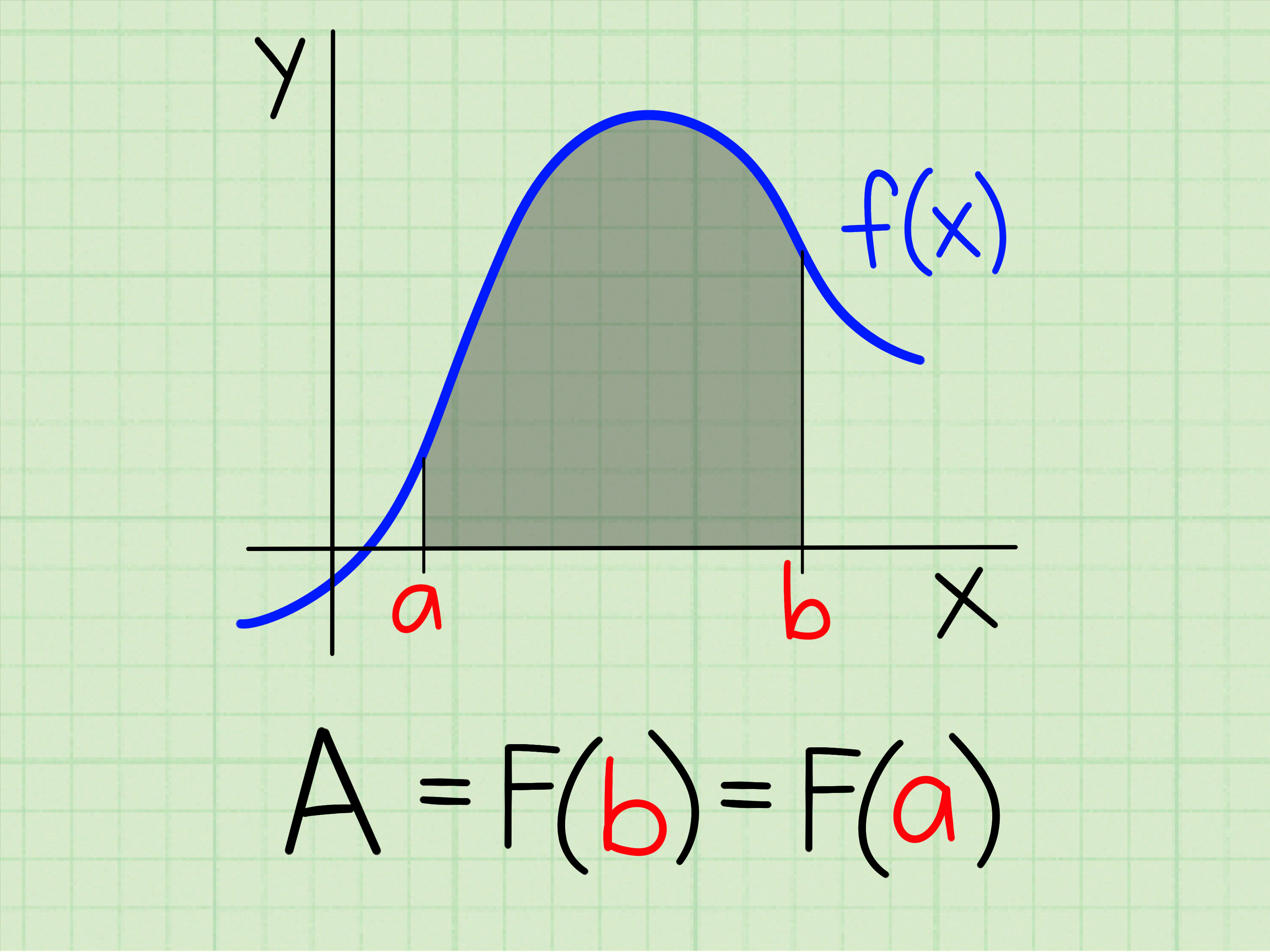
For advanced problems involving curves, calculus can find exact or approximate area under a curve. The basic idea is to divide the curved region into many thin rectangles, add their areas, and use limits or integration to refine the answer. In everyday terms, it is like measuring a curved shape by using increasingly skinny slices until the estimate becomes extremely accurate.
Quick Area Formula Reference Table
| Shape | Area Formula | Best Used When |
|---|---|---|
| Rectangle | A = length × width | You know the length and width |
| Square | A = side² | All sides are equal |
| Triangle | A = 1/2 × base × height | You know the base and perpendicular height |
| Parallelogram | A = base × height | You know the base and vertical height |
| Trapezoid | A = 1/2 × (b1 + b2) × h | You know both bases and the height |
| Circle | A = πr² | You know the radius |
| Rhombus | A = 1/2 × d1 × d2 | You know both diagonals |
| Regular Polygon | A = 1/2 × perimeter × apothem | The polygon has equal sides and angles |
| Composite Figure | Add areas of smaller shapes | The figure combines basic shapes |
| Irregular Shape | Estimate, divide, subtract, or integrate | No single basic formula fits |
Common Mistakes When Finding Area
Even when the formulas are simple, area problems can still cause chaos if you rush. One common mistake is confusing area with perimeter. Perimeter measures around; area measures inside. Another mistake is using the slanted side instead of the vertical height in triangles, trapezoids, and parallelograms. The height must be perpendicular to the base.
Students also forget to square the units. If you multiply feet by feet, the answer is square feet. If you multiply centimeters by centimeters, the answer is square centimeters. Finally, always check whether the measurements use the same unit. A length in feet and a width in inches must be converted before multiplying.
How to Choose the Right Area Method
Start by identifying the shape. If it is a rectangle, square, triangle, circle, trapezoid, parallelogram, or rhombus, use the matching formula. If the shape is made from several familiar shapes, split it into smaller pieces. If the figure has missing space, subtract the empty area from the larger shape. If the shape is curved and advanced math is allowed, use approximation or calculus.
A helpful habit is to write down what you know before calculating. List the length, width, base, height, radius, diameter, diagonals, or perimeter. Then choose the formula that uses those measurements. This approach keeps your work organized and prevents the classic “I used every number in the problem and hoped for the best” strategy. Brave, yes. Reliable, no.
Real-Life Uses of Area
Area is not trapped inside textbooks. Homeowners use area to buy flooring, carpet, tile, paint, wallpaper, sod, mulch, and fabric. Builders use area to estimate materials. Farmers use area to plan fields. Artists use area to size canvases and murals. Designers use area to plan rooms, screens, posters, and layouts. Even bakers use area when choosing pan sizes or comparing round and rectangular cakes.
Understanding area also helps with budgeting. If tile costs $4 per square foot and your bathroom floor is 60 square feet, the tile alone costs about $240 before extra materials. If one gallon of paint covers 350 square feet and your walls total 700 square feet, you likely need two gallons. Area turns “I hope this is enough” into “I did the math, and my wallet has been warned.”
Extra Experiences and Practical Lessons About Finding Area
One of the best ways to understand area is to connect it to ordinary situations. Imagine helping someone repaint a bedroom. At first, the job seems simple: buy paint, open the can, roll it on the wall, feel like a home improvement champion. But then you realize every wall has dimensions, windows take away paintable space, doors create missing rectangles, and the ceiling may need a separate calculation. Suddenly, area is not just a school topic; it is the difference between buying enough paint and making a second emergency trip to the store wearing paint-speckled shoes.
A useful experience is measuring a room for flooring. Suppose a bedroom is shaped like a rectangle, 12 feet long and 10 feet wide. The area is 120 square feet. But flooring is often sold in boxes that cover a certain number of square feet. You may also need extra material for cuts, mistakes, and corners that refuse to cooperate. In real projects, people often add a small percentage of extra material. That practical step shows how math answers guide decisions, but real life adds a little wiggle room.
Gardening is another area lesson disguised as a relaxing hobby. If you want to cover a rectangular garden bed with mulch, you need the area of the bed. If the garden is circular, you need the circle formula. If the garden is an odd shape, you may divide it into smaller sections or estimate using a grid. This is where the idea of irregular area becomes useful. You are not always handed a perfect diagram with friendly labels. Sometimes you are standing outside with a tape measure, a bag of mulch, and a strong suspicion that nature did not study geometry.
Area also matters in cooking and baking. A round pizza with a 14-inch diameter has a radius of 7 inches, so its area is about 153.86 square inches. A 12-inch square pizza has an area of 144 square inches. That means the round pizza is slightly larger. This kind of comparison is fun because it proves that area is not only about passing tests. It can also support deeply important research, such as determining who got more pizza.
In classrooms, students often learn area faster when they build it visually. Counting unit squares on grid paper helps make the concept concrete. After that, formulas feel less like random rules and more like shortcuts. A rectangle formula works because it counts rows and columns of equal squares. A triangle formula works because a triangle can be understood as half of a related rectangle or parallelogram. A trapezoid formula makes sense because it averages two parallel bases. Once learners see the structure, memorization becomes much easier.
Another practical lesson is that precision matters. Measuring a wall as “about 10 feet” may be fine for a rough estimate, but a construction project needs more exact numbers. Small errors can grow quickly when multiplied. If you measure one side incorrectly, the area may be too high or too low, which can affect cost, material quantity, and project planning. That is why professionals measure carefully, write units clearly, and often check calculations more than once.
The biggest experience-based takeaway is this: finding area is not about memorizing ten disconnected formulas. It is about recognizing space, breaking problems into manageable pieces, and choosing the right tool. Whether you are planning a room, designing a poster, installing tile, comparing pizza sizes, or solving a geometry problem, area gives you a reliable way to measure what fits inside a boundary.
Conclusion
Learning 10 ways to find area gives you a flexible math toolkit. You can calculate the area of rectangles, squares, triangles, parallelograms, trapezoids, circles, rhombuses, regular polygons, composite figures, and irregular shapes. Some problems need a simple formula. Others need you to divide, subtract, estimate, or think creatively. The trick is not to memorize blindly, but to understand what each formula measures and when to use it.
Area is one of the most practical ideas in geometry. It helps with schoolwork, home projects, design, construction, landscaping, shopping, and even food comparisons that may or may not become emotionally serious. Once you know how to find area, flat shapes stop being mysterious and start becoming measurable, useful, and occasionally delicious.