Every parent eventually meets the public diaper-change boss battle. It usually arrives at the worst possible time: one baby is crying, another is strapped to your body like a tiny emotional backpack, the diaper bag has somehow become a portable junk drawer, and the nearest changing table is either missing, broken, or located in the one restroom you cannot reasonably use. That is the chaotic stage behind the viral story of a dad who asked whether he was wrong for making a woman cry after she told him how to wipe and tried to dress his baby daughter.
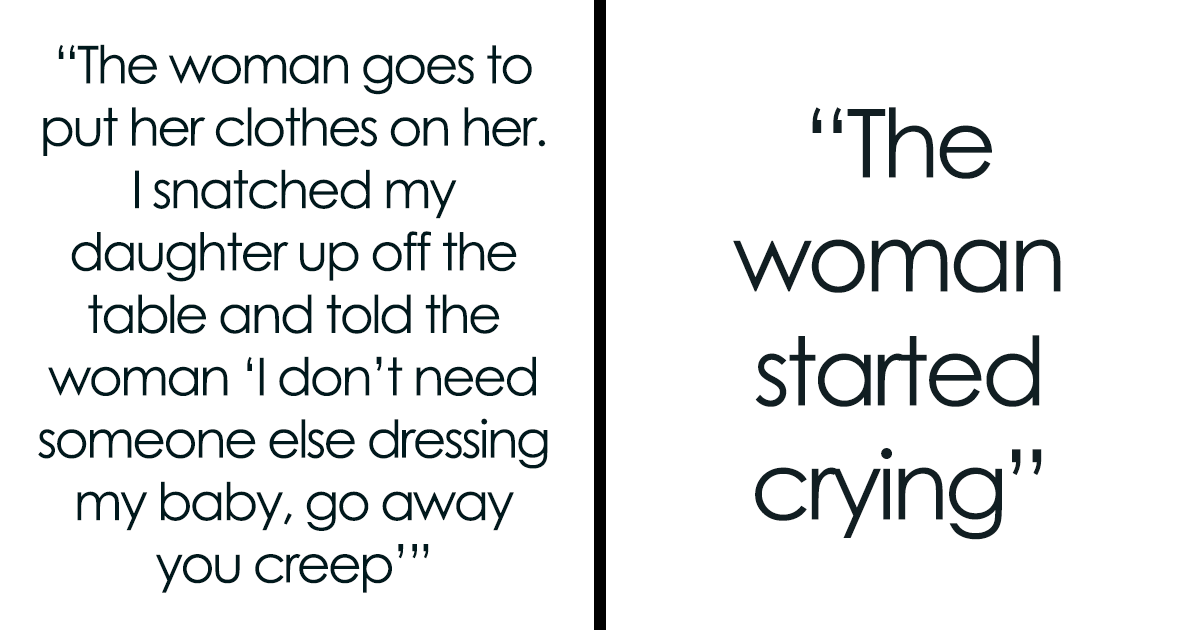
The short version: a father took his three-month-old twins to the supermarket while his wife got a well-earned break. Then his baby daughter had a serious blowout. The men’s restroom had no changing table, and there was no family bathroom. He asked a Starbucks employee inside the store whether he could use a table in the back, used his own blanket and changing pad, and started handling the situation. Then an older woman approached, commented on how he should wipe his daughter, continued critiquing him, and finally reached toward the baby to help dress her. The dad grabbed his daughter away and called the woman a creep. She cried. People nearby thought he overreacted. The internet, naturally, put on its judge wig.
The Real Conflict Wasn’t Just A Diaper Change
At first glance, this looks like another “Am I the jerk?” parenting drama. But underneath the poop-related panic is a serious question: when does help stop being help?
The dad was not upset because someone said, “Need a hand?” That would have been normal. Parents with twins may not always need help, but they usually understand why someone would offer. The problem was that the woman reportedly moved from advice to interference. She commented on the baby’s private area, criticized the father’s technique, and then tried to dress an undressed infant without permission.
That is where many readers sided with the dad. A stranger touching a baby, especially while the baby is partially undressed, crosses a bright red line for many parents. Even if the woman truly meant well, good intentions do not automatically come with a backstage pass to someone else’s child.
Was The Dad Wrong For Calling Her A Creep?
The dad’s word choice was sharp. “Creep” is not exactly the Hallmark version of conflict resolution. It is more like pressing the emergency button with your elbow while holding a diaper wipe in your teeth. Still, the context matters.
He was managing two infants in public, cleaning a messy blowout, dealing with a lack of proper facilities, and trying to protect his daughter’s privacy. In that moment, a stranger reached toward his baby’s clothes. A parent’s protective instinct can go from zero to thunderstorm very quickly, especially when the child is vulnerable.
A calmer sentence might have been, “Please don’t touch my baby.” But parenting in public is not a scripted customer-service seminar. When a stranger steps into a private caregiving task, the parent is allowed to set a firm boundary. The woman crying afterward does not automatically make the dad wrong. Tears can show embarrassment, surprise, hurt feelings, or guilt. They do not erase the boundary that was crossed.
Why The “Dad Doesn’t Know What He’s Doing” Assumption Needs To Retire
One of the most frustrating parts of the story is the assumption that a father changing his baby daughter must need supervision. The woman’s advice may have come from a place of concern, but it also echoed an old stereotype: mom is the default expert, dad is the substitute teacher trying to find the crayons.
Modern fatherhood does not fit that joke anymore. Fathers change diapers, pack diaper bags, wash bottles, schedule pediatric appointments, wear babies, survive 3 a.m. mystery crying, and develop the thousand-yard stare of people who have compared seven brands of wipes. Many dads are highly competent caregivers, not backup dancers in the parenting routine.
That does not mean every father knows everything. No parent does. Mothers, fathers, grandparents, nannies, and pediatricians all learn as they go. But correcting a dad in public simply because he is a dad can feel patronizing. It turns caregiving into a performance where strangers grade the parent instead of respecting the child.
The Wiping Advice Wasn’t The Main Problem
For baby girls, pediatric guidance commonly recommends wiping from front to back to reduce the chance of moving bacteria toward the urinary tract. That is useful information. But useful information still needs the right delivery.
There is a major difference between sharing a tip with a struggling new parent who asks for help and hovering over a stranger while he changes his daughter. In public, especially during a diaper change, privacy and dignity matter. A person who genuinely wants to help can say, “Do you need anything?” and then accept the answer.
Advice becomes intrusive when it keeps coming after the parent says they have it handled. It becomes even more intrusive when the advice turns into physical action.
Public Diaper Changes Are A Bigger Problem Than One Viral Post
This story also exposes a frustrating design failure: many public places still do not provide equal diaper-changing access for all caregivers. When changing tables exist only in women’s restrooms, dads, grandfathers, uncles, and male guardians are left improvising. That usually means changing a baby in a car, on a lap, on a floor, or in another awkward spot where everyone loses.
Some federal buildings and certain local jurisdictions have pushed toward more accessible changing stations, but many private businesses still lag behind. The result is predictable: parents end up making imperfect choices under pressure. In this case, the dad admitted that using a table was not ideal, but he also said he had no car, no family bathroom, no men’s-room changing table, and a baby who should not have been left sitting in stool.
That does not mean a restaurant or café table is a good changing station. Food surfaces and diaper messes should not mingle. Nobody ordered a latte with a side of biohazard. But when businesses fail to provide safe, sanitary, gender-inclusive changing areas, they help create these messy public dilemmas.
What The Dad Did Right
First, he responded quickly to a soiled diaper. Leaving a baby in stool can irritate sensitive skin and contribute to diaper rash. Second, he used a changing pad and blanket rather than placing the baby directly on a public surface. Third, he asked an employee for permission instead of simply taking over the nearest table like a diaper pirate. Fourth, he protected his daughter when a stranger reached toward her.
Those are not small details. They show that he was trying to manage hygiene, safety, and privacy in a bad setup. Parenting twins in public is already a full-contact sport. Doing it with a blowout and no changing table is basically the Olympics, except everyone smells worse.
What He Could Have Done Differently
The dad’s reaction was understandable, but there were still better options. He could have used a more direct boundary before things escalated: “Please step back,” “Please don’t comment on my daughter’s body,” or “I’m not comfortable with you being this close.” Clear language can stop a situation before it becomes emotional fireworks.
He also might have asked a store employee whether there was a private office, nursing room, fitting room, or staff-approved area away from food surfaces. If a women’s restroom had a changing station, he could have asked staff to temporarily clear or monitor the space while he changed the baby. That may feel awkward, especially for a large man worried about intimidating people, but staff assistance can help prevent misunderstandings.
Still, hindsight is a luxury. In the moment, he was juggling two infants and one diaper disaster. The internet often grades parents as if they had a conference room, a legal team, and twenty minutes to brainstorm. Real parenting decisions often happen in ten sweaty seconds.
How Strangers Should Help Parents In Public
There is a simple rule: offer, don’t interfere. If you see a parent struggling, try a respectful sentence such as, “Would you like me to grab an employee?” or “Can I hand you a wipe?” Then wait. If the parent says no, the helping is over. Congratulations, you have completed the entire course.
Do not touch the child. Do not touch the child’s clothing. Do not comment on the child’s private body parts. Do not stand close enough to supervise the diaper change like a tiny royal inspection. If a safety concern is immediate, such as a baby about to roll off a surface, speak quickly and clearly. Otherwise, give the family space.
Parents are already aware that public parenting attracts opinions. They do not need a live commentary track.
How Parents Can Set Boundaries Without Starting A Scene
Parents do not owe strangers unlimited politeness when their child’s safety or privacy is involved. But having a few ready-made phrases can help. Try:
- “Please give us some privacy.”
- “I’ve got it handled, thank you.”
- “Please don’t touch my baby.”
- “I know you’re trying to help, but I need you to step back.”
- “An employee is helping us, thank you.”
These phrases are firm without being dramatic. They also leave less room for debate. The goal is not to win an argument; the goal is to protect the child and finish the diaper change before the baby discovers a new way to kick the wipes onto the floor.
The Privacy Issue Matters Even With Babies
Some people dismiss baby privacy because babies cannot understand what is happening. But adults still have a responsibility to treat infants with dignity. A diaper change involves a child’s private body parts. That means the circle of involvement should be small: parent, guardian, caregiver, medical professional, or someone the parent clearly authorizes.
Teaching body boundaries starts long before children can explain them. Parents model those boundaries by saying who can touch the child, when, and why. A stranger does not get to bypass that simply because the baby is young or the parent appears overwhelmed.
Why The Internet Mostly Backed The Father
Many commenters focused on the same point: the woman did not merely offer help; she tried to involve herself physically. That distinction shaped the public reaction. People may disagree about whether the dad should have used a table. They may debate whether he should have asked to use the women’s restroom changing station. But when it came to a stranger trying to dress his baby, many readers believed he was justified in reacting strongly.
The story became popular because it hits several modern parenting nerves at once: fathers being underestimated, public spaces failing families, strangers feeling entitled to comment on children, and the awkward line between community support and personal boundaries.
The Best Verdict: Not Wrong, But Not Perfect
So, was the dad wrong? Mostly, no. He was right to protect his daughter and stop a stranger from touching her. He was right to be upset when advice turned into unwanted involvement. He was also right to question why a men’s restroom had no changing table in the first place.
Was “creep” the gentlest possible word? No. Was it understandable? Absolutely. Parents do not always speak in polished sentences when their child is exposed, vulnerable, and being approached by someone who will not back off.
The better lesson is not “never help parents.” The lesson is “help with consent.” Offer assistance, respect the answer, and remember that a baby’s parent is not required to surrender authority because a stranger feels confident with diapers.
Related Experiences And Practical Takeaways
Many parents have a story like this, even if it does not involve a viral post. A dad takes his baby to a mall and finds three changing tables in the women’s restroom but none in the men’s. A mom tries to change a toddler in an airport bathroom while another traveler loudly critiques her wipes, bag, stroller, and possibly her horoscope. A grandparent offers help in a grocery store and accidentally becomes too hands-on. Public parenting creates strange little collisions because babies have needs on baby time, while public spaces are often designed as if only mothers perform caregiving.
One common experience is the “friendly stranger escalation.” It starts with a smile at the baby. Then comes a comment: “She’s cold,” “He needs socks,” “You should hold her differently,” or “That diaper looks too tight.” Sometimes the advice is harmless. Sometimes it is useful. But when a parent is tired, rushed, or dealing with a mess, even mild criticism can feel like someone tapping a spoon against a glass inside their brain.
The best public interactions are small and respectful. Holding a door for a parent with a stroller? Great. Picking up a dropped pacifier and handing it to the parent instead of popping it back into the baby’s mouth? Excellent. Asking, “Would you like me to call an employee?” That is helpful. Reaching for the child without permission? That is where the music stops.
Parents can also prepare for imperfect spaces. A compact changing mat, extra plastic bags, backup clothes, hand sanitizer, and a few disposable liners can turn a disaster into a manageable inconvenience. When entering a store, it can help to mentally note where the bathrooms, customer service desk, fitting rooms, or quiet corners are. Parents of twins or multiple young children may also benefit from asking staff for help early rather than waiting until the situation becomes urgent.
Businesses should take this story seriously too. A safe changing station is not a luxury; it is basic family infrastructure. It helps mothers, fathers, grandparents, guardians, and caregivers. It protects babies from unsafe surfaces. It protects customers from seeing diaper emergencies unfold next to coffee cups and pastry cases. It also sends a clear message: caregiving belongs to everyone, not just women.
Finally, this story is a reminder that public kindness needs boundaries. The woman may have believed she was helping. The dad may have spoken more harshly than necessary. But the baby’s safety and privacy mattered most. When in doubt, the rule is simple: ask first, accept the answer, and keep your hands to yourself unless the parent clearly says yes.
Conclusion
The viral story of the dad who made a woman cry after she told him how to wipe and tried to dress his baby daughter is not just a messy supermarket tale. It is a snapshot of modern parenting in public: dads still get underestimated, babies still need care at inconvenient times, and strangers sometimes confuse concern with permission.
The father’s wording may have been blunt, but his boundary was valid. A stranger should not touch or dress someone else’s baby without consent, especially during a diaper change. At the same time, public spaces need to do better by providing safe, clean, accessible changing areas for all caregivers. Until then, parents will keep improvising, strangers will keep having opinions, and babies will continue choosing the worst possible moment to create a diaper situation worthy of emergency lighting.