There are two kinds of people in this world: those who hear a floorboard creak at midnight and calmly blame the house, and those who immediately assume a Victorian ghost has entered the chat. This challenge is for both groups. Whether you love spooky stories, creepy drawings, haunted-looking shadows, foggy photos, strange dolls, suspicious staircases, or pumpkins that look like they know your secrets, the idea is simple: draw something scary or share a photo of something scary.
The fun of a scary art challenge is not about creating the most terrifying thing ever seen by human eyes. Please do not make your audience throw their phone into a bowl of soup. It is about mood, imagination, storytelling, and the delicious little shiver that comes from seeing something ordinary become just a bit unsettling. A coat on a chair can become a monster. A hallway can become a portal. A cat staring at an empty corner can become a full paranormal investigation, starring Mr. Whiskers as the unpaid night guard.
Online creative communities have always loved prompts because they remove the most annoying part of making art: deciding what to make. A challenge like this gives artists, photographers, doodlers, hobbyists, and brave phone-camera warriors one shared theme. Everyone starts with the same invitation, but the results can be wildly different. One person draws a foggy graveyard. Another photographs a spiderweb on a porch. Someone else turns a banana peel into a cursed relic. That is the magic.
Why Scary Art Challenges Are So Addictive
Scary content works because fear is powerful when it is controlled. A horror movie, a haunted house, a creepy illustration, or a spooky photo gives people a chance to feel suspense without being in real danger. The viewer can step away, laugh, comment, share, or say, “Nope,” with great personal dignity. This safe distance is exactly why people enjoy creepy entertainment. It lets the brain explore danger while the body remains comfortably located on the couch, ideally with snacks.
For artists, scary prompts are especially useful because they encourage strong choices. A cheerful landscape can be lovely, but a scary landscape asks more questions: What is hiding behind that tree? Why is the moon so low? Why does the abandoned house have one light on? Good horror art does not always show the monster. Sometimes it simply hands the viewer a flashlight with weak batteries and says, “Good luck, buddy.”
What Counts as “Something Scary”?
Scary does not have to mean graphic, shocking, or extreme. In fact, the best scary drawings and photos are often subtle. A slightly open door can be scarier than a giant monster if the viewer’s imagination does the heavy lifting. A blurry shape in the background can make people zoom in, squint, and regret having eyeballs. That is the sweet spot.
Scary Drawing Ideas
If you want to draw something scary, start with a familiar subject and twist it. A teddy bear with one missing button eye. A streetlamp that lights up nothing except a pair of shoes. A forest path that bends the wrong way. A mirror that reflects a room that is not yours. These ideas work because they begin in normal life and then quietly remove one screw from reality.
Beginners can keep it simple. Draw a haunted window, a lonely scarecrow, a crooked shadow, a monster under a bed, or a friendly ghost who has clearly had a long week. More advanced artists can play with perspective, negative space, exaggerated proportions, and symbolic details. A tiny character standing before a huge dark doorway instantly creates scale and vulnerability. A face hidden by hair or shadow creates mystery. A hand reaching from beneath a curtain creates a strong visual question: “Why is that there, and can I move to another country?”
Scary Photo Ideas
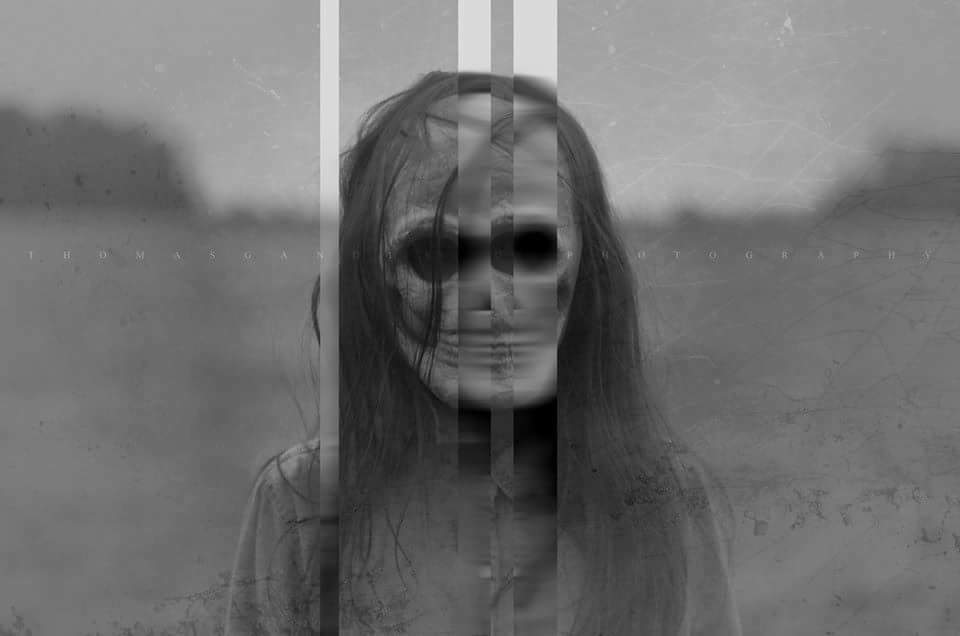
If photography is more your style, your best friend is light. Shadows can make ordinary objects look strange, dramatic, or almost alive. A lamp placed low on the floor can turn a chair into a creature. A flashlight under the chin can make a pumpkin look like it has a law degree in villainy. Black-and-white editing can remove distractions and make shapes feel sharper and more mysterious.
Look for texture: peeling paint, cracked sidewalks, dusty shelves, old fences, bare branches, fog, rain on glass, or reflections in puddles. You do not need a professional camera. A phone, a weird angle, and a little patience can create a very effective creepy photo. The trick is to make the viewer feel that something happened just before the picture was takenor something is about to happen right after.
The Secret Ingredient: Atmosphere
Atmosphere is the invisible sauce of scary art. Without it, a drawing of a haunted house is just real estate with commitment issues. With atmosphere, the house feels like it remembers everyone who ever entered. To create mood, think about five elements: lighting, composition, color, texture, and story.
Lighting controls emotion. Bright, even light feels safe. Harsh side light, deep shadow, and backlighting feel uncertain. Composition tells the eye where to go. If your subject is placed at the edge of the frame, the empty space beside it can feel suspicious. Color can set the temperature of the scene. Cold blues and grays feel lonely, while sickly greens and deep reds can feel unnatural. Texture gives the image physical presence. Story gives it a reason to matter.
Here is a simple example: a drawing of a hallway is not automatically scary. But make the hallway too long, add one crooked picture frame, place a small toy in the middle, and leave the far end dark. Now the viewer has questions. Who left the toy? Why is the frame crooked? What is waiting at the end? Congratulations, your hallway has become emotionally unemployed and deeply suspicious.
How to Make a Scary Drawing Without Overthinking It
Start with a basic prompt: “Something is wrong here.” Then choose one normal subject. A bedroom. A school locker. A garden. A family photo. A birthday cake. Next, change one detail. Maybe the candles on the cake burn downward. Maybe the locker has scratch marks inside. Maybe every flower in the garden faces the same empty corner. That one strange detail becomes the hook.
Sketch lightly first. Do not worry about perfection. Scary art often benefits from roughness because imperfect lines can feel nervous, handmade, and alive. Use dark shapes to guide the eye. Add contrast where you want attention. Leave some details unfinished so viewers can imagine the rest. The unknown is usually scarier than the fully explained.
For a fun challenge format, try making three versions of the same idea: cute-scary, mysterious-scary, and nightmare-scary. A cute ghost holding a tiny teacup is not the same as a silent figure standing behind frosted glass, but both can fit the theme. This gives artists of different comfort levels a way to join without feeling pressured to create something too intense.
How to Take a Scary Photo Safely
A scary photo should not require risky behavior. You do not need to climb abandoned buildings, enter unsafe places, trespass, scare strangers, or do anything that could turn a creative challenge into a local news segment. The best spooky photos can be made at home, in a backyard, on a safe sidewalk, or with objects you already own.
Try photographing a shadow on the wall, a handprint on fogged glass, a toy placed in an unexpected spot, a silhouette behind a curtain, or a reflection that appears slightly distorted. Use safe props, natural shadows, and editing tools. Move slowly, check your surroundings, and avoid sharing anything that reveals private information such as street signs, school names, house numbers, license plates, or someone else’s face without permission.
Privacy matters. A scary photo might be funny today, but the internet has the memory of an elephant with a filing cabinet. Before posting, ask: Does this show someone who did not agree to be included? Does it reveal where I live or go to school? Could it embarrass someone? If the answer is yes, crop it, blur it, choose another image, or keep it in your personal spooky archive.
Respect the Artist, Respect the Photo
Sharing creative work online is exciting, but credit and permission are important. If you draw it, say it is yours. If you use someone else’s photo as reference, be careful not to copy it too closely unless you have permission or the image is clearly licensed for that use. If you share a photo taken by someone else, credit the creator and follow the license terms. “Found it online” is not a source; it is a tiny copyright goblin wearing a fake mustache.
For community challenges, the cleanest rule is simple: post original work or clearly credited work you have permission to share. That keeps the challenge fair, respectful, and more enjoyable for everyone. It also encourages people to show their own ideas instead of recycling the same spooky image that has been haunting the internet since 2009.
Community Rules Make the Challenge Better
A challenge like “draw something scary or share a photo of something scary” works best when the mood is playful, not cruel. Scary art can be weird, dark, funny, eerie, or mysterious, but it should not be used to harass, shame, or target real people. A creepy drawing of a haunted mirror is cool. Posting an edited photo to embarrass a classmate is not creativity; it is a red flag in a trench coat.
Good community guidelines can be short and clear: keep it original, keep it safe, avoid graphic content, respect privacy, credit creators, and give kind feedback. Comments should focus on the work, not attack the person. Instead of saying, “This is bad,” try, “The shadow idea is strong; adding more contrast could make it even creepier.” Feedback is allowed to have a spine without having fangs.
Scary Can Also Be Funny
Not every scary submission needs to make people sleep with the lights on. Horror and humor are cousins who both show up uninvited. A monster afraid of a toaster, a ghost trying to assemble furniture, or a vampire checking his reflection in a spoon can be wonderfully memorable. Funny-scary art is great for people who enjoy the spooky theme but prefer their fear served with a side of giggles.
This is also where Bored Panda-style community creativity shines. The best posts often feel personal, surprising, and slightly chaotic in the best way. Someone might submit a dramatic charcoal drawing that looks ready for a museum wall. The next person might post a blurry photo of their laundry pile at 2 a.m. with the caption, “I thought this was a demon.” Both belong. One has technique. The other has emotional truth.
Examples of Scary Challenge Prompts
If the main title feels too broad, try using mini-prompts. These help people jump in faster and make the challenge easier to organize. Here are a few ideas:
- The thing in the corner: Draw or photograph something barely visible in a room.
- Friendly but wrong: Create something cute with one unsettling detail.
- Shadow creature: Use a shadow as the main subject.
- Haunted object: Turn an ordinary item into something mysterious.
- Last photo on the camera roll: Create an image that feels like it has a backstory.
- The door should not be open: Draw or photograph a doorway, gate, or window with suspense.
These prompts are simple, flexible, and open to many styles. They let beginners, photographers, illustrators, digital artists, and casual doodlers all join the same conversation.
Why This Challenge Is Great for Creativity
Creative challenges build momentum. Instead of waiting for the perfect idea, participants respond to a theme and see what happens. That lowers pressure. It also creates a shared gallery where people can compare different approaches, learn from each other, and discover styles they might not have tried before.
Drawing something scary can teach composition, contrast, anatomy, storytelling, and emotional tone. Taking a scary photo can teach lighting, framing, timing, and observation. Even a quick five-minute doodle can help train the imagination. Not every piece needs to be polished. Sometimes the messy sketch has the best energy, like it crawled out of a notebook and demanded snacks.
Art communities are strongest when they celebrate process as much as results. A beginner who posts a wobbly ghost should feel welcome. A photographer experimenting with shadows should feel encouraged. A professional illustrator should be able to share advanced work without making others feel small. The goal is not to crown the Supreme Ruler of Spookiness. The goal is to make, share, laugh, improve, and maybe side-eye a hallway or two.
of Personal-Style Experience: What It Feels Like to Join a Scary Art Challenge
The first time you join a scary drawing or photo challenge, you may think the hardest part will be making something scary. It is not. The hardest part is usually posting it. Your brain suddenly becomes a tiny dramatic art critic wearing a scarf. “Is this scary enough?” it whispers. “Is the shadow too shadowy? Is the ghost too round? Will people think my haunted tree looks like broccoli with emotional problems?”
That feeling is normal. Creative sharing can be awkward because you are not just showing an image; you are showing a little window into how your imagination works. But that is also why these challenges are fun. Once people begin posting, the nervousness usually turns into curiosity. You see how someone else used the same theme completely differently. You notice that one person made a terrifying forest with only three colors. Another person photographed their basement stairs and somehow made the carpet look guilty. Someone else drew a monster that is technically scary but also looks like it needs a nap.
One of the best experiences in a scary challenge is discovering that fear does not have one shape. Some people are scared by darkness. Some are scared by dolls, masks, empty rooms, deep water, old photographs, abandoned places, strange smiles, or the suspicious silence after a loud noise. Others are scared by realistic things, like opening the fridge and realizing someone finished the last slice of cake. Horror is personal, which means the artwork becomes personal too.
When creating a scary photo, the most memorable moments often happen by accident. Maybe you point your camera at a harmless curtain, and the fold looks like a face. Maybe your pet walks through the frame at exactly the wrong time and becomes a blurry cryptid. Maybe a streetlight flickers while you are taking a picture, and suddenly the whole scene feels like the opening shot of a mystery. These accidents are gifts. Scary art loves imperfection.
Drawing has its own surprises. You may begin with a monster and end with a lonely creature that looks more sad than dangerous. You may start drawing a haunted house and realize the scariest part is the empty chair by the window. You may discover that leaving something unfinished creates more tension than adding every detail. In scary art, what you hide can matter more than what you show.
The comment section can become part of the experience too. People might interpret your work in ways you never planned. A shadow you drew as a monster might remind someone else of a childhood hallway. A blurry photo might inspire five different backstories. That is the fun of sharing scary art: once the image leaves your hands, the audience brings its own imagination. Your little ghost goes on a field trip.
By the end of the challenge, you may not have created a masterpiece, and that is perfectly fine. You will have practiced noticing mood, using light, building suspense, and turning ordinary things into stories. You may also develop a new habit of looking at the world more closely. A cracked wall becomes a map. A pile of laundry becomes a beast. A quiet room becomes a stage. And yes, you may occasionally scare yourself with your own drawing at midnight, which is embarrassing but also a sign of success.
Conclusion: Let the Spooky Creativity Begin
“Hey Pandas!! I Challenge You To Draw Something Scary Or Share A Photo Of Something Scary.” is more than a fun title with enthusiastic punctuation. It is an invitation to experiment with fear, humor, atmosphere, and imagination. You can draw a haunted portrait, photograph a dramatic shadow, create a cute monster, or capture an everyday object that suddenly feels suspicious. The best scary submissions do not rely on shock. They rely on mood, mystery, and the viewer’s imagination doing a little unpaid overtime.
Keep the challenge safe, original, respectful, and fun. Credit what is not yours. Protect privacy. Avoid risky locations and harmful pranks. Encourage beginners. Celebrate weird ideas. And remember: sometimes the scariest thing in the room is not a ghost, a monster, or a shadow. Sometimes it is the blank page staring back at you. Draw on it anyway.