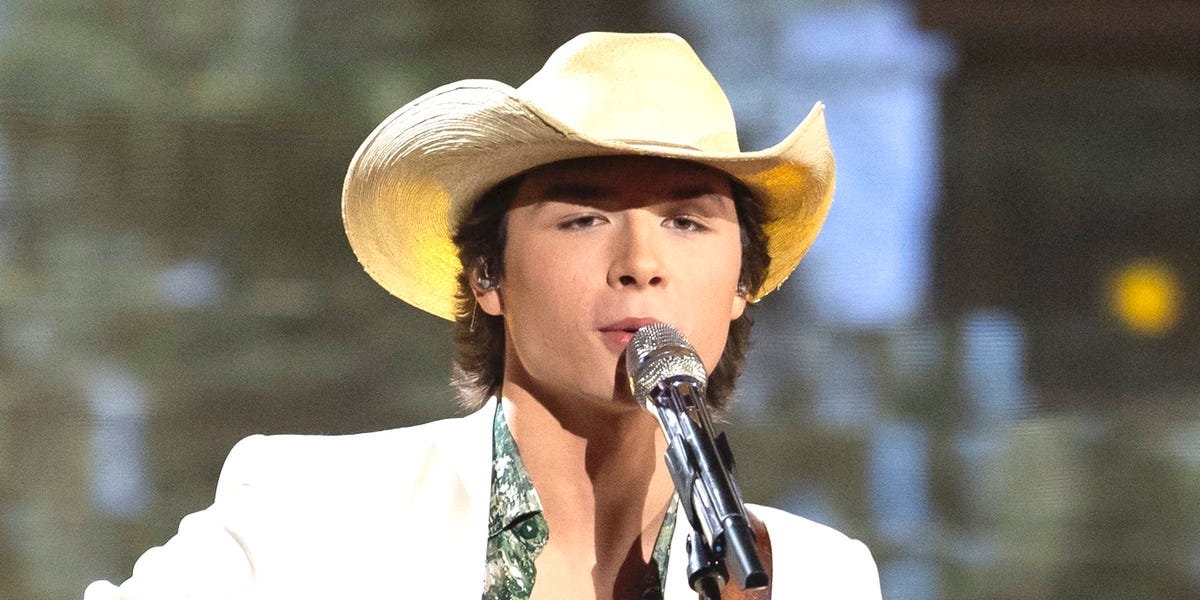
John Foster may not have walked away from American Idol with the confetti crown, but he did leave with something arguably more useful for a young country artist: momentum, a fast-growing fan base, and a very clear next step. Actually, make that several next steps. After finishing as runner-up on Season 23, the Louisiana singer-songwriter quickly shifted from reality-TV contestant to working country performer, and he seems determined not to let the “post-show glow” fade into the same closet where old voting graphics and backstage lanyards go to retire.
For fans asking what John Foster is doing after American Idol, the answer is simple: music, shows, studio time, and more music. Foster has been leaning hard into the traditional country lane that made him stand out on the show. His voice, stage presence, and small-town storytelling helped him become one of the most talked-about contestants of the season, and his post-Idol path suggests he is treating second place not as a consolation prize, but as a launchpad.
From Runner-Up to Rising Country Artist
Foster finished behind Jamal Roberts in the Season 23 finale, with Breanna Nix placing third. The finale gave Foster a national spotlight, but more importantly, it gave country fans a clear idea of who he is: a young artist with an old-soul sound, Louisiana roots, and a preference for songs that carry weight. While some reality-show contestants spend months figuring out their next move, Foster appeared ready almost immediately.
His first major post-show message centered on gratitude, but it also came with a promise: new country music and show dates were coming. That matters because the first few months after a televised singing competition can be tricky. A contestant has visibility, but visibility is like a campfire in a rainstorm. It needs fuel. Foster’s fuel appears to be live performance, original songwriting, and a steady push into Nashville’s country ecosystem.
New Music Is at the Center of His Plan
The clearest part of John Foster’s next chapter is his commitment to recording and releasing more music. During and after American Idol, he pointed fans toward “Tell That Angel I Love Her,” an emotional original connected to the loss of his friend Maggie Dunn. The song became a defining moment in his Idol journey because it showed more than vocal ability. It showed authorship, sincerity, and emotional control.
That is important for Foster’s long-term career. In country music, especially the traditional and neo-traditional side of the genre, listeners often care as much about truth as they do about vocal gymnastics. Foster’s strength is not just that he can sing a classic country line; it is that he sounds like he understands why the line matters. His post-Idol focus on original songs gives him the chance to move beyond “former contestant” and become a recognizable artist with his own catalog.
Why “Tell That Angel I Love Her” Matters
“Tell That Angel I Love Her” works as more than a debut-era song. It functions as a musical introduction. It tells fans Foster is not chasing trends for the sake of it. He is interested in stories, grief, faith, memory, and the kind of plainspoken emotion that classic country has always handled well. For a young singer trying to build credibility, that is a smart foundation.
It also gives him a natural lane. Instead of trying to out-pop country-pop or out-party the party-country crowd, Foster can build around sincerity. That does not mean every song needs to be heavy enough to require a tissue box and a quiet porch swing. But it does mean his audience likely expects him to keep writing from real experience. In a streaming world full of disposable hooks, honesty can still be a competitive advantage.
Live Shows Are Becoming the Real Test
One of Foster’s biggest moves after American Idol has been getting back in front of live audiences. His first post-show public appearance came quickly, and his calendar has continued to expand with performances in Louisiana, Nashville, and other markets. That is exactly what a young country singer needs. Television creates familiarity, but touring creates loyalty.
Live shows reveal things a televised performance cannot. Can the artist hold a room for more than three minutes? Can he connect between songs? Can he make a crowd laugh, cry, clap, and buy a T-shirt before the parking lot empties? Foster’s old-school country style is well suited to this test because it does not depend on massive production tricks. A sturdy voice, a good band, and a song with a backbone can go a long way.
The Grand Ole Opry Milestone
Among Foster’s most meaningful post-Idol milestones was performing at the Grand Ole Opry. For a country artist, the Opry is not just another venue. It is the genre’s living scrapbook, church, family reunion, and final exam all rolled into one. Foster’s debut there signaled that Nashville was paying attention. His return appearances suggested that the first invitation was not a fluke.
For Foster, who has publicly shown deep respect for country music history, the Opry stage fits his brand almost perfectly. He is not presenting himself as someone trying to reinvent country music by throwing a banjo into a blender with a laptop. He is presenting himself as a student of the genre who wants to carry tradition forward. That positioning gives him a clear identity, and in the modern music business, identity is half the battle.
John Foster’s Sound: Classic Country With Young Energy
Foster’s appeal comes from contrast. He is young, but his musical taste leans older. He carries himself like someone who has spent more time listening to George Strait, Randy Travis, and Willie Nelson than chasing whatever happens to be trending for twelve seconds on social media. That throwback quality became one of his biggest strengths on American Idol.
At the same time, he cannot simply be a museum exhibit in boots. The challenge now is to turn his admiration for classic country into fresh songs that feel alive in 2026 and beyond. The best version of Foster’s future is not karaoke nostalgia. It is new material that uses traditional country tools: clear storytelling, melody, emotional detail, and a vocal delivery that does not need to shout to be heard.
Why Neo-Traditional Country Could Work for Him
Country music has been experiencing a noticeable appetite for authenticity, roots-driven production, and artists who sound connected to place. Foster fits that moment well. He is from Addis, Louisiana, and his background gives him a regional flavor that can help him avoid sounding like a factory-made Nashville template. A little Cajun seasoning never hurt a country career, either.
If Foster and his team make smart choices, his music could appeal to older country listeners who miss traditional sounds and younger fans discovering them for the first time. That combination is powerful. It allows him to perform for families, country festivals, theaters, and Opry-style audiences without confusing people about what he represents.
What About an Album?
Fans are naturally wondering when John Foster will release a full album. As of now, the safest answer is that more music is clearly part of the plan, while a debut album timeline has not been fully locked into public view. That is not unusual. New artists often test singles, build live demand, gather stronger songs, and spend time in the studio before committing to a full-length project.
A smart debut album for Foster would need to do three things. First, it should include the heartfelt storytelling fans already associate with him. Second, it should show range: a few mid-tempo songs, a couple of emotionally rich ballads, and at least one upbeat track that proves he can energize a crowd without losing his identity. Third, it should avoid over-polishing his sound. If the production becomes too shiny, it could sand away the very charm that made people vote for him.
Tour Dates and Bigger Stages Are Part of the Next Chapter
Foster’s schedule has included notable public appearances and listed 2026 performances, including dates connected to major country audiences. Ticket listings have shown him appearing on bills with established country names, while event pages describe him as a rising Nashville recording artist with a classic country direction. That language is not accidental. It positions him as someone moving from television fame into the actual country touring circuit.
He has also been connected to high-visibility events such as the Rose Parade and CMA Fest-related activity. These stages matter because they expand his audience beyond weekly Idol viewers. A parade performance reaches casual viewers. A country festival reaches genre fans. A theater show reaches ticket buyers. Each setting teaches a different skill, and Foster is now in the phase where every stage is both an opportunity and a classroom.
Why Finishing Second May Actually Help Him
There is a funny thing about American Idol: winning is wonderful, but it is not the only route to success. The show’s history is packed with finalists and runners-up who turned exposure into lasting careers. Foster’s runner-up status gives him a strong story without trapping him under the immediate pressure of being “the winner.” He can grow, experiment, and build his audience while still benefiting from the national attention.
Second place may also fit his personality. Foster’s public comments after the finale were not bitter or dramatic. He sounded grateful, focused, and ready to work. That kind of attitude plays well in country music, where humility is not just a virtue; it is practically part of the dress code. Boots, belt buckle, gratitude. The holy trinity.
The Fan Base Is Still Growing
One of the most valuable things Foster gained from American Idol is a fan base that feels emotionally invested in him. Viewers did not just hear him sing; they watched him develop. They saw nerves, growth, personal stories, hometown pride, and the kind of family-friendly charm that makes people say, “That kid was raised right,” even if they have never met his parents.
That emotional investment can translate into real career support. Fans stream songs, buy tickets, share clips, comment on posts, and bring friends to shows. But maintaining that connection requires consistency. Foster will need to keep communicating with his audience, releasing music at a steady pace, and showing that the artist they voted for is still the artist they believed in.
Challenges Ahead for John Foster
Of course, the path ahead is not all bright lights and perfectly tuned guitars. Foster faces the same challenges every young artist faces after a major TV breakthrough. He must prove he can sustain attention after the show’s news cycle moves on. He must find the right songs. He must balance tradition with freshness. He must grow as a performer while staying authentic. And he must do all of this in a music market where listeners have more choices than a buffet line at a Southern church potluck.
The biggest challenge may be patience. A long career is built slowly, even when the launch looks fast. Foster has already made impressive steps, but the real work is repetition: write, record, rehearse, perform, travel, meet fans, improve, and do it again. If he embraces that grind, his post-Idol story could become much bigger than one season of television.
Experience: What John Foster’s Next Chapter Feels Like for Fans and Young Artists
Watching John Foster move into life after American Idol offers a useful experience for anyone who follows music careers closely. The weeks after a televised competition are exciting, but they are also revealing. Some artists wait for the industry to hand them a plan. Foster appears to be doing the opposite: stepping into rooms, taking stages, promoting songs, and letting fans know that the journey is not ending just because the finale credits rolled.
For fans, that creates a special kind of connection. Supporting a rising artist after a show like American Idol feels different from discovering someone who is already famous. You get to watch the scaffolding go up. You see the first announcements, the early tour dates, the emotional posts, the small wins, and the big milestones. When Foster steps onto a historic stage like the Opry or performs in front of a broader national audience, longtime supporters can say, “We were here when this started.” That feeling is powerful, and it is one reason reality-show alumni can build such loyal communities.
For young artists, Foster’s path is also a lesson in clarity. He did not leave the show trying to become everything at once. His brand is readable: Louisiana roots, classic country influence, heartfelt songwriting, faith, gratitude, and respect for tradition. That clarity helps fans explain him to other people. In music marketing, that matters more than many newcomers realize. If a listener can describe an artist in one sentence, the artist has a better chance of traveling by word of mouth.
There is also an important lesson in using emotional material responsibly. Foster’s most personal songs have connected because they feel sincere, not calculated. Audiences can usually tell when an artist is turning pain into a gimmick. Foster’s challenge will be to keep writing honestly without feeling pressured to make every song a tearjerker. A balanced catalog should include sorrow, joy, humor, memory, love, and a few songs that simply make people want to roll the windows down.
The experience of following Foster now is a reminder that the real career begins after the applause fades. Television can introduce an artist, but it cannot do the daily work for him. Foster’s next chapter will be shaped by song choices, live performance growth, fan relationships, and the team around him. So far, the signs point in a promising direction. He has the voice, the story, the audience, and the work ethic. Now comes the part where a promising contestant becomes a durable artist.
Conclusion: What’s Next for John Foster?
John Foster’s post-American Idol future looks focused and busy. He is pursuing new country music, building a live-performance calendar, stepping onto respected stages, and leaning into the traditional sound that made fans notice him in the first place. The most encouraging part is that he seems to know who he is. That may sound simple, but in the music business, it is a superpower.
If Foster continues developing his songwriting, choosing strong material, and connecting with audiences beyond the Idol bubble, his runner-up finish could become just the opening chapter. He does not need to outrun his American Idol story. He simply needs to build on it. And judging by his next moves, that is exactly what he plans to do.