There are few household sounds more impressive, more mysterious, and more wildly annoying than one cricket chirping somewhere inside a building at 2:17 a.m. It is not loud enough to count as an emergency, but it is loud enough to make you question your life choices, your furniture layout, and whether the cricket has a tiny amplifier hidden behind the baseboard.
The good news is that catching a cricket indoors is usually simple once you stop chasing it like a cartoon character. Crickets are fast, jumpy, and excellent at disappearing into dark gaps, but they are not masterminds. They follow predictable habits: they like warmth, darkness, moisture, clutter, cracks, and quiet hiding places. With a calm approach, a few common household tools, and a little patience, you can remove the cricket without smashing your room, terrifying your pets, or turning your living room into an Olympic long-jump arena.
This guide explains how to catch a cricket inside a building in 8 practical steps. It also covers prevention, safe handling, common mistakes, and real-life experience-based tips for offices, apartments, basements, kitchens, garages, classrooms, and other indoor spaces.
Why Crickets Come Inside Buildings
Before grabbing a cup and launching a search mission, it helps to understand why the cricket is inside in the first place. Crickets often enter buildings through open doors, gaps under doors, torn screens, foundation cracks, basement windows, garage doors, vents, or spaces around pipes and utility lines. They may wander in while looking for warmth, shelter, moisture, or food.
House crickets, field crickets, and camel crickets are among the common indoor visitors. House and field crickets are the familiar chirpers. Camel crickets, sometimes called cave crickets or spider crickets, are the silent, hunchbacked jump-scare specialists often found in basements, crawl spaces, garages, and other damp areas.
One cricket is usually just a nuisance. Several crickets may suggest there are easy entry points, moisture issues, outdoor clutter near the foundation, or indoor hiding places that need attention. The goal is not only to catch the current tiny musician, but also to make sure its cousins do not book the same room next weekend.
What You Need to Catch a Cricket Indoors
You do not need fancy equipment. In most cases, the best cricket-catching tools are already in your home or office.
- A clear cup, jar, or plastic container
- A stiff piece of paper, thin cardboard, or junk mail
- A flashlight
- A broom or soft towel
- A vacuum with a hose attachment
- Sticky traps for monitoring, if needed
- Weather stripping or caulk for prevention later
A clear container works best because you can see where the cricket is after trapping it. A flashlight helps you inspect corners, baseboards, closets, under appliances, behind furniture, and other dark areas where crickets like to hide. If you are working in a commercial building, a maintenance flashlight and a small dustpan can do the job nicely.
How to Catch a Cricket Inside a Building: 8 Steps
Step 1: Stop, Listen, and Locate the Cricket
The first rule of cricket capture is simple: do not start by running around the room. Crickets are sensitive to movement and vibration. If you stomp toward the sound like a detective in a hurry, the cricket will likely stop chirping and vanish into a crack.
Turn off the television, music, fans, or noisy appliances if possible. Stand still and listen. Male crickets chirp by rubbing their wings together, and the sound can bounce off walls, furniture, and hard floors. This makes the cricket seem like it is in one corner when it is actually under a cabinet, behind a bookshelf, or inside a closet.
Move slowly toward the loudest area. Pause every few feet. If the chirping stops, wait quietly for a minute. The cricket may resume once it feels safe. Use your flashlight to check along baseboards, behind trash cans, under rugs, near potted plants, inside laundry rooms, and around warm appliances.
In basements and storage areas, look near cardboard boxes, floor drains, utility sinks, water heaters, and clutter. In offices, inspect under desks, behind file cabinets, near entry doors, and around break room appliances. The cricket is usually closer to the floor than you think.
Step 2: Reduce Escape Routes
Once you have a general location, gently limit the cricket’s options. Close nearby doors. Block wide gaps with towels. Move pets and children out of the room so the situation does not become a family circus with six legs and poor leadership.
If the cricket is in a bedroom or office, close the door and place a towel along the bottom edge. If it is in a kitchen, avoid pushing it toward the refrigerator, stove, dishwasher, or cabinet toe-kick area. Those tight spaces are cricket hotels with terrible checkout policies.
Turn on enough light to see clearly, but keep the approach calm. Crickets often hide in dark places, so forcing them away from a hiding area with sudden sweeping movements can make them jump unpredictably. Your mission is to guide, not panic.
Step 3: Use the Cup-and-Card Method
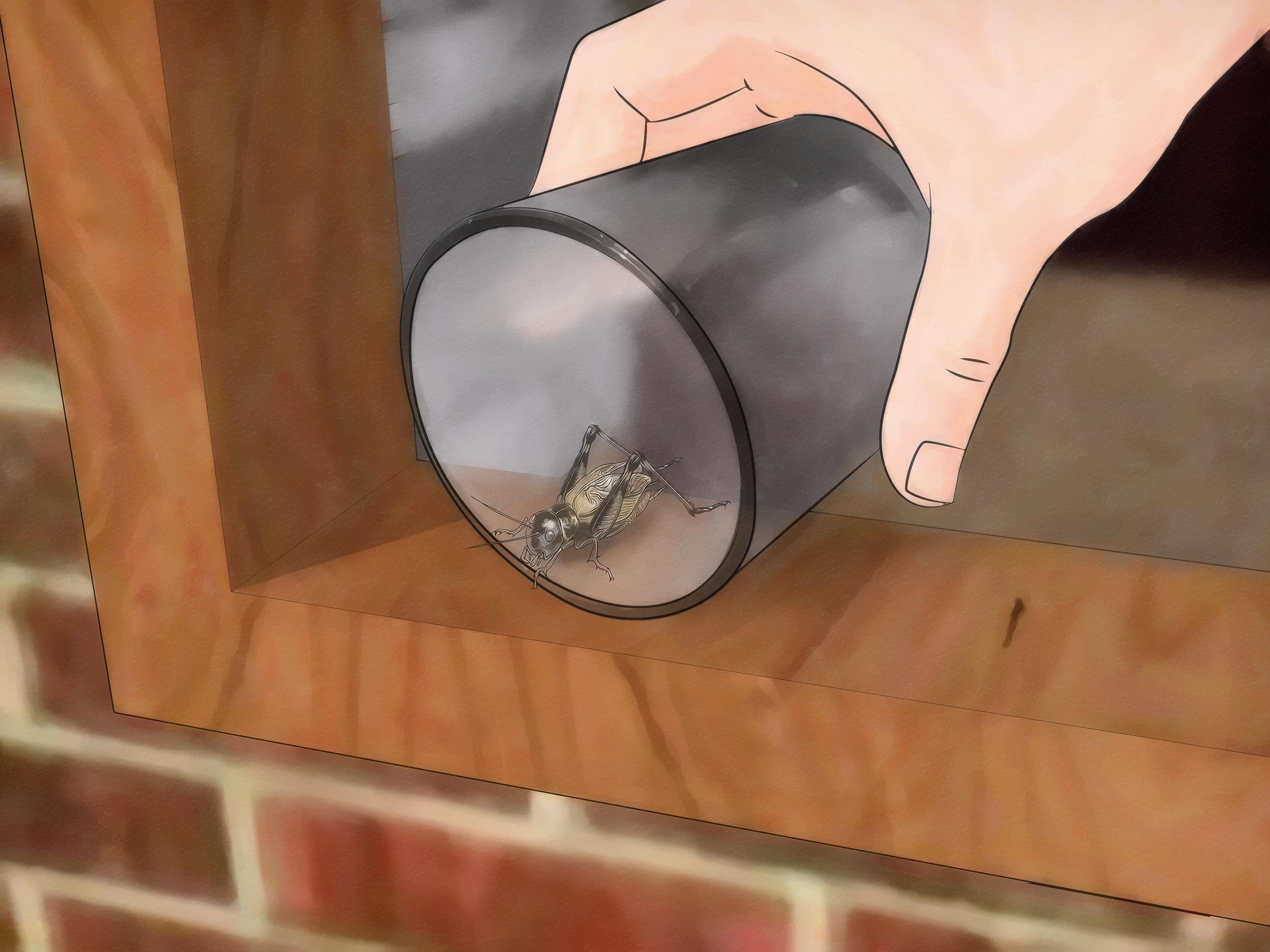
The cup-and-card method is the classic way to catch a cricket alive. It is quiet, clean, inexpensive, and surprisingly satisfying. Wait until the cricket is on a flat surface such as the floor, wall, or low cabinet side. Slowly place the clear cup or container over it.
Do not slam the cup down. Crickets can jump quickly, and a hard smack may injure the insect or simply give it a dramatic escape story. Instead, lower the container smoothly and confidently. Once the cricket is covered, slide a stiff piece of paper or cardboard under the opening.
Keep the card pressed against the container and lift both together. Take the cricket outside and release it away from entry doors, windows, basement wells, and garage openings. A garden bed, patch of grass, or shrub area away from the building is a better release spot than the welcome mat, unless you enjoy sequels.
Step 4: Guide It Out With a Broom or Towel
If the cricket is near an exterior door, you may not need to trap it. Open the door, turn off nearby indoor lights if possible, and gently guide the cricket toward the exit with a broom, dustpan, or soft towel.
The key word is gently. Do not swing at it. Use slow, sweeping movements to encourage the cricket in the right direction. If it jumps, pause. Let it land, then continue. Crickets tend to move away from pressure, so position yourself behind the insect and guide it toward the open door.
This method works well in garages, hallways, entryways, warehouses, classrooms, and offices with direct outdoor access. It is less effective in cluttered rooms, because the cricket may jump under furniture and restart the entire adventure.
Step 5: Use a Vacuum for Fast Removal
If you cannot safely catch the cricket by hand, a vacuum hose can be effective. Use the hose attachment to remove the cricket from a corner, baseboard, closet, or under furniture. This is especially useful when dealing with fast-moving field crickets or silent camel crickets in basements.
After vacuuming, empty the canister or remove the bag outside. If your vacuum uses a disposable bag, seal and discard it. If it uses a canister, empty it into an outdoor trash bag and close it securely. Vacuuming can also remove cricket droppings, dead insects, eggs, and food debris that may attract more pests.
For offices and commercial buildings, a small shop vacuum can be useful in storage rooms, mechanical rooms, or garages. However, avoid using a vacuum near water, exposed wires, or delicate electronics.
Step 6: Set Sticky Traps in Problem Areas
If the cricket keeps disappearing, sticky traps can help. Place traps along walls, near entry points, behind appliances, in closets, beside basement walls, under utility sinks, near garage doors, or around crawl space access points. Crickets often travel along edges rather than across open floor space.
Sticky traps are especially helpful when you hear chirping but cannot locate the source. They also show whether you are dealing with one lost cricket or a repeated indoor problem. Check traps regularly and replace them when dusty or full.
Keep sticky traps away from children, pets, and areas where they may catch non-target animals. In a business setting, place them discreetly and safely where foot traffic will not step on them. Nobody wants to explain to a client why their shoe is now part of the pest-monitoring program.
Step 7: Clean and Remove Cricket Attractants
Once the cricket is caught, clean the area. Crickets are opportunistic feeders. Depending on the species and conditions, they may feed on plant matter, crumbs, pet food, dead insects, paper, fabric, or other organic material. Large numbers may damage fabrics, rugs, stored clothing, curtains, or paper goods.
Vacuum floors, corners, closets, baseboards, and under furniture. Store pet food in sealed containers. Remove piles of paper, cardboard, laundry, and clutter from floors. In basements and garages, reduce damp cardboard storage because it creates hiding space and can hold moisture.
If you find crickets near houseplants, inspect the area for moisture, fallen leaves, and organic debris. If they are in a laundry room or bathroom, check for leaks, condensation, or damp towels left on the floor. Cleaning does not just make the room look better; it removes the cricket’s tiny buffet and hiding resort.
Step 8: Seal Entry Points and Prevent Future Crickets
Catching one cricket is good. Keeping the next one out is better. After removal, inspect the building from both inside and outside. Look for gaps under doors, damaged weather stripping, torn screens, cracks near foundations, spaces around pipes, vents without screens, garage door gaps, and poorly sealed basement windows.
Use door sweeps, weather stripping, caulk, mesh screening, or appropriate sealants to close small openings. Move firewood, leaf piles, rocks, dense vegetation, mulch, and debris away from the foundation. Trim grass and weeds near the building. Reduce excess outdoor lighting near doors, or switch to less insect-attractive lighting where appropriate.
Inside, reduce moisture in basements, crawl spaces, bathrooms, and laundry rooms. Fix leaks, improve ventilation, and consider a dehumidifier in damp areas. Crickets are much less excited about a dry, clean, well-sealed building. Frankly, so are most other pests.
Best Places to Look for a Cricket Inside
Crickets are not random. They prefer places that offer protection, darkness, warmth, or moisture. If you are searching indoors, check these areas first:
- Along baseboards and room corners
- Behind sofas, bookshelves, and storage bins
- Under refrigerators, stoves, washers, and dryers
- Inside closets, laundry rooms, garages, and basements
- Near doors, windows, vents, and floor drains
- Behind cardboard boxes and stacked paper
- Around potted plants and damp utility areas
At night, crickets may become more active. If you cannot find one during the day, wait until the building is quieter. The chirping may reveal its location. Just remember that sound can be deceptive, so use your ears first and your flashlight second.
Should You Kill or Release the Cricket?
Many people prefer to catch and release a cricket, especially if there is only one. Crickets are part of the outdoor ecosystem and serve as food for birds, reptiles, amphibians, spiders, and other animals. If you can remove one safely, releasing it outdoors is a reasonable choice.
However, in some situations, quick removal matters more than a perfect rescue mission. In a restaurant, medical office, classroom, hotel, or workplace, sanitation and guest comfort may require faster control. A vacuum, sticky trap, or professional pest service may be more practical, especially if crickets are appearing repeatedly.
Avoid spraying random household chemicals, air fresheners, cleaning products, or outdoor pesticides indoors. Products not labeled for indoor insect control can create unnecessary risks. If a pesticide is used, read and follow the label exactly, keep children and pets away from treated areas, and use the least risky approach that solves the problem.
Common Mistakes When Trying to Catch a Cricket
Chasing Too Aggressively
Fast movements usually make the cricket jump into a harder-to-reach place. Slow, steady movement works better than dramatic lunges.
Leaving Doors Open Too Long
Opening an exterior door may help guide one cricket out, but leaving it open with lights on can invite more insects inside. Use the exit strategy quickly.
Ignoring Moisture
If crickets keep showing up in the same area, moisture may be part of the problem. Damp basements, crawl spaces, laundry rooms, and garages are common cricket-friendly zones.
Relying Only on Sprays
Spraying without cleaning, sealing, or reducing attractants rarely solves the real issue. Integrated pest management works better because it combines inspection, exclusion, sanitation, monitoring, and targeted control.
Forgetting Outdoor Conditions
Crickets often start outside. Tall grass, mulch against the foundation, stacked firewood, leaf litter, bright lights, and gaps around doors can all make indoor cricket visits more likely.
When to Call a Pest Professional
One cricket does not require a pest-control appointment. But repeated indoor crickets, large numbers in a basement, ongoing chirping in walls, or crickets appearing in a business may justify professional help. A trained pest professional can identify the species, inspect entry points, locate breeding conditions, and recommend a targeted plan.
Call for help if you see many crickets over several days, find fabric damage, notice droppings in storage areas, cannot locate the source, or suspect they are entering through crawl spaces, wall voids, or foundation gaps. Professional inspection is also smart for restaurants, hotels, offices, schools, warehouses, and rental buildings where pest issues can affect customers, tenants, or compliance standards.
Experience-Based Tips: What Actually Works in Real Buildings
In real life, catching a cricket rarely looks like a perfect tutorial. The cricket does not politely stand in the center of the floor while you approach with a cup. It usually waits until you are tired, barefoot, and emotionally fragile, then jumps behind the heaviest piece of furniture in the room. That is why patience matters more than speed.
One practical experience is that the flashlight changes everything. Many people search with the room lights on and still miss the cricket because it blends into shadows along the wall. A low flashlight beam aimed across the floor can reveal movement, legs, antennae, or the cricket’s outline against the baseboard. This works especially well in offices, basements, storage rooms, and garages where overhead lighting creates big shadow pockets.
Another useful lesson: listen from different angles. A cricket behind a refrigerator may sound like it is inside a cabinet. A cricket in a closet may sound like it is under the bed. Walk to two or three positions and compare where the chirp is strongest. If the sound stops, freeze for a moment. The cricket often resumes after the room becomes still again. It is annoying, yes, but at least it is also giving you free tracking data.
The cup-and-card method works best when the cricket is on a smooth surface. If it is on carpet, the rim of the cup may not seal well, and the cricket can squeeze or jump away. In that case, guide it gently toward tile, wood flooring, a wall, or another flat surface before trapping it. A wide plastic food container often works better than a narrow drinking glass because it gives you more margin for error.
For basements, sticky traps are often the unsung heroes. You may not catch the cricket while watching, but a trap placed along the wall near a water heater, utility sink, floor drain, or storage shelf can solve the mystery overnight. Traps also help show whether the problem is a single visitor or a pattern. If several traps catch crickets, the next step is not more chasing; it is sealing, drying, decluttering, and inspecting the exterior.
In apartment buildings, crickets sometimes travel through hallways, laundry rooms, garages, pipe chases, or gaps under entry doors. A tenant may catch one cricket, but the source may be a shared area. Door sweeps, clean storage spaces, sealed trash rooms, and better basement ventilation can make a noticeable difference. For offices and stores, the same idea applies: check receiving doors, roll-up doors, floor-level gaps, and areas where lights stay on at night.
One more experience-based tip: do not underestimate clutter. Cardboard boxes on a basement floor are basically cricket condominiums. They provide darkness, cover, and moisture retention. Switching to sealed plastic bins, lifting storage off the floor, and vacuuming regularly can dramatically reduce hiding places. The room does not need to look like a museum; it just needs fewer secret cricket apartments.
Finally, prevention is less exciting than the chase, but it is far more effective. After catching the cricket, spend ten minutes checking the nearest door, window, vent, or foundation wall. That small inspection often reveals the real problem: a torn screen, a gap under the door, a damp corner, or a pile of leaves against the building. Fix that, and your next night is much more likely to include sleep instead of an indoor insect concert.
Conclusion
Learning how to catch a cricket inside a building is mostly about staying calm, locating the insect, choosing the right removal method, and preventing a repeat performance. Use the cup-and-card method for a gentle live catch, guide the cricket out if it is near a door, vacuum when speed is needed, and use sticky traps when the cricket is hiding like it owes rent.
After removal, clean the area, reduce moisture, seal entry points, and tidy outdoor conditions around the building. Crickets are not usually dangerous, but they can be noisy, irritating, and occasionally damaging when they appear in numbers. A little prevention turns your home, office, basement, garage, or classroom from “cricket-friendly venue” into “sorry, no vacancy.”