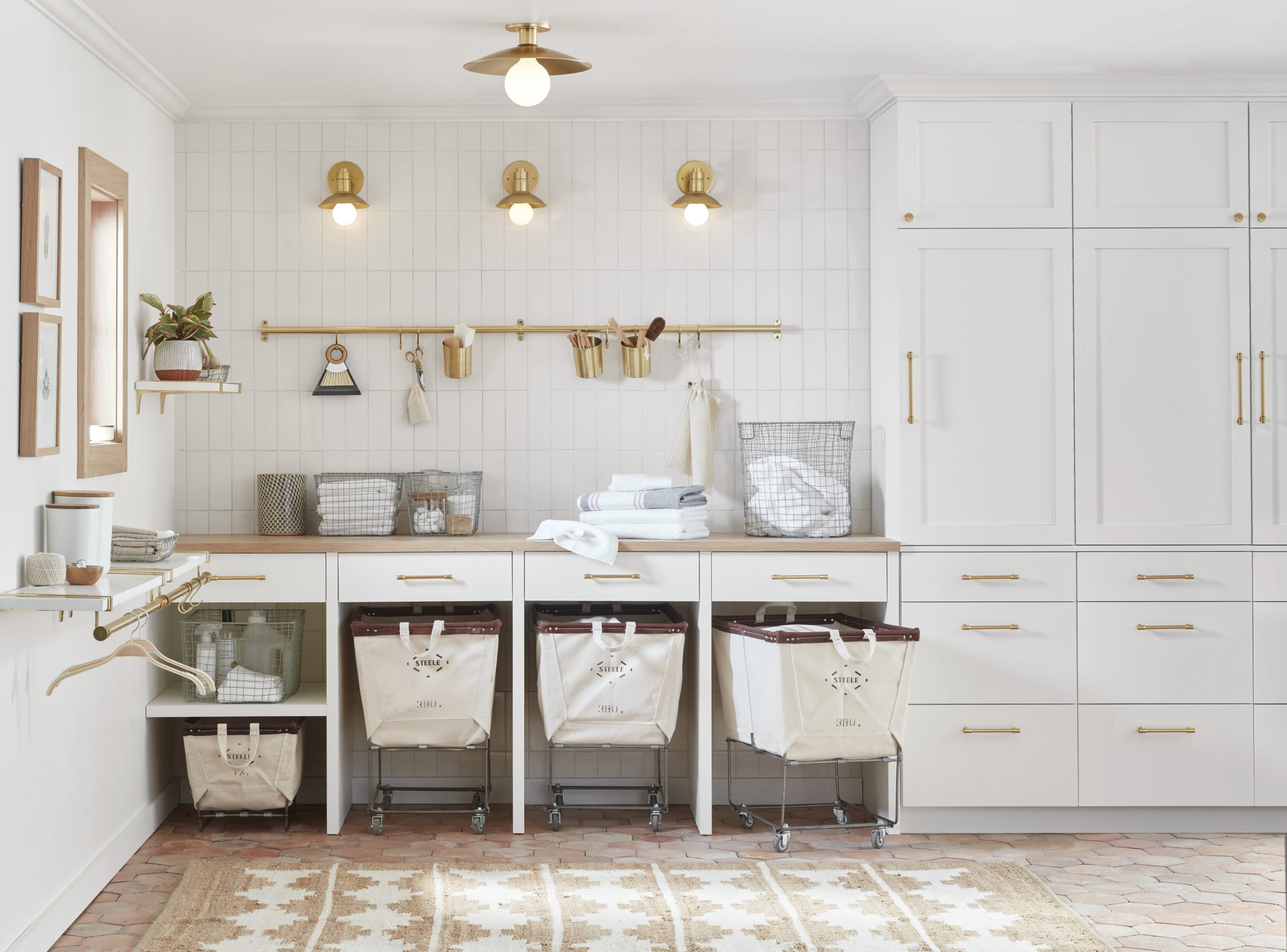
Because laundry day deserves better than bad lighting, wobbly hampers, and one lonely shelf holding a suspiciously sticky detergent bottle.
A laundry room may not be the star of the house, but it is absolutely the room doing backstage cardio. It handles grass-stained uniforms, towels that smell like “wet dog meets gym bag,” mystery socks, delicate sweaters, muddy pet blankets, guest linens, and the occasional emergency hand-wash situation five minutes before you leave the house. So why do so many laundry rooms look like an afterthought? A good-looking, hard-working laundry room should make chores smoother, storage smarter, and the whole space pleasant enough that you do not dramatically sigh every time the dryer buzzes.
That is where the Rejuvenation-inspired approach comes in: timeless lighting, practical wall storage, sturdy hooks, handsome hardware, baskets that hide chaos with dignity, and finishes that feel designed rather than dumped in place. The goal is not to create a laundry room so precious that you are afraid to spill detergent in it. The goal is to build a hardworking utility space that still has warmth, charm, and a little “oh wow, this is nice” energy.
Below are five smart laundry room design tips that blend function and beauty. Whether you have a full laundry room, a hallway laundry closet, a mudroom-laundry combo, or a small corner that technically counts because there is a washer and a dream, these ideas can help you create a space that works harder and looks better.
Tip 1: Start With Lighting That Actually Helps You See
Lighting is the first thing to fix in a laundry room because laundry is full of tiny visual tasks. You need to spot stains before washing, check pockets for crayons and receipts, match navy socks with black socks without losing your will to live, and see inside the washer drum so one damp washcloth does not hide in there until next Tuesday.
A single ceiling bulb may technically illuminate the room, but “technically” is also how people describe airplane food. A more effective laundry room lighting plan uses layers. Start with a bright overhead fixture for general light. Then add task lighting where the work happens: under open shelves, above a folding counter, near a sink, or along a cabinet run. If the space is small, a flush mount or semi-flush mount keeps the room open while still adding style. If you have higher ceilings, a pendant can create a more finished look.
How to Make Laundry Room Lighting Look Intentional
Choose a fixture finish that relates to the rest of the room. Aged brass, oil-rubbed bronze, polished nickel, and matte black can all work beautifully when repeated in cabinet pulls, hooks, rods, or faucet finishes. This is where Rejuvenation-style design shines: simple shapes, classic metals, and fixtures that feel built to last instead of trendy for fourteen minutes.
Also consider bulb temperature. A laundry room should feel clean and clear, not blue and clinical or yellow and sleepy. A warm-white LED often works well because it feels welcoming while still giving enough clarity for stain treatment and folding. If you have no natural light, layered artificial lighting becomes even more important. In short: let the room glow, but make it useful. Your future self, holding a white shirt and a coffee stain, will be grateful.
Tip 2: Put the Walls to Work With Hooks, Rails, and Vertical Storage
Most laundry rooms are not large. Some are barely rooms. Some are closets wearing confidence. That means the walls need to earn their square footage. Hooks, rails, shelves, peg systems, and wall-mounted racks can transform wasted vertical space into a practical command center for laundry day.
Hooks are one of the simplest upgrades with the biggest payoff. Install a row near the door for tote bags, reusable cleaning cloths, delicates bags, pet leashes, or the shirt that is “not dirty enough to wash but not clean enough to return to the closet.” Add a rail or rod near the dryer for hanging shirts as soon as they come out, which helps reduce wrinkles and gives air-dry items a proper landing spot. For small laundry rooms, a wall-mounted drying rack or retractable clothesline can provide drying space without eating up the floor.
Use Vertical Space Without Creating Visual Clutter
Open shelving can be beautiful, but it should not become a museum of half-used stain sprays and bonus detergent jugs. The best strategy is a mix of open and closed storage. Use closed cabinets for bulk products, extra paper goods, cleaning supplies, and anything with packaging that shouts louder than your design plan. Use open shelves for attractive baskets, glass jars, folded towels, or the supplies you reach for every day.
Rail systems are especially useful because they can adapt. Add S-hooks for brushes, small baskets for dryer balls, clips for care labels, or a hanging container for clothespins. The result is storage that moves with your routine instead of forcing you into a layout that only worked on installation day.
Tip 3: Hide the Piles With Baskets, Bins, and Better Sorting Zones
Laundry piles are inevitable. The trick is not pretending your household will suddenly become a minimalist linen spa. The trick is giving every pile a place to go. Baskets and bins are the secret agents of a good-looking laundry room because they make everyday mess feel intentional.
Start by deciding what categories you actually need. Many homes benefit from separate zones for darks, lights, towels, delicates, cleaning rags, and “who left this here?” items. If you have kids, roommates, or a busy household, labeled baskets can reduce confusion and prevent clean clothes from accidentally rejoining the dirty pile. A pull-out hamper cabinet is ideal if you are designing from scratch, but freestanding woven baskets, rolling hampers, and cubbies can work beautifully too.
Choose Storage That Matches the Room’s Style
For a Rejuvenation-inspired laundry room, skip flimsy plastic bins when possible and choose materials that add warmth: woven seagrass baskets, canvas hampers, metal utility bins, wood crates, or sturdy lidded containers. These pieces soften the hard surfaces of appliances, tile, and cabinetry. They also help the laundry room feel like part of the home rather than a utility zone that escaped the garage.
One important rule: do not overbuy storage before you declutter. Pull everything out first. Toss empty bottles, combine duplicate products, move unrelated items elsewhere, and keep only what supports your actual laundry routine. Then choose baskets and bins based on what remains. Otherwise, you are not organizing; you are giving clutter a nicer apartment.
Tip 4: Create a Real Folding, Stain-Treating, and Air-Drying Station
A laundry room works best when it supports the full laundry cycle: sort, wash, dry, fold, hang, treat stains, and put away. Many laundry rooms fail because they only plan for the machines. The washer and dryer are important, obviously, but they are not the whole show. You also need surfaces and zones that prevent clean clothes from migrating to the sofa, where they will sit folded for three to five business days.
If you have front-loading machines, install a countertop above them to create a folding station. This can be stone, quartz, butcher block, laminate, or another durable surface that can handle detergent drips and damp garments. If your machines are top-loading, consider a separate counter, a rolling utility cart, or a wall-mounted drop-down table. In a small space, even a narrow ledge can make laundry day smoother.
Do Not Forget the Sink and Drying Zone
A deep utility sink is one of the most useful laundry room features. It gives you a place to soak stained clothes, hand-wash delicates, rinse muddy shoes, fill a mop bucket, or rescue a houseplant that has made poor life choices. If plumbing allows, placing the sink near the washer creates an efficient workflow and reduces dripping across the floor.
For air-drying, add a dedicated rod, rack, or ceiling-mounted system. Not everything belongs in the dryer, and air-drying can help extend the life of delicate fabrics. A hanging zone also keeps damp clothes off door frames, shower rods, and dining chairs. Your chairs did not sign up for that.
Finally, make room for small but important tools: a stain brush, mesh bags, dryer balls, lint roller, sewing kit, steamer, and a small trash container for lint and tags. When these items are stored near the point of use, the room feels effortless instead of chaotic.
Tip 5: Choose Durable Finishes That Still Have Personality
A laundry room is a working room, so surfaces matter. Floors may face water, detergent, bleach, mud, pet messes, and dropped bottles. Countertops may deal with stain remover, damp clothes, and fabric softener spills. Walls may get bumped by baskets and elbows. This is not the place for fragile materials that panic at the sight of moisture.
Tile, luxury vinyl plank, sealed stone, and other water-resistant flooring options make sense in laundry spaces. For counters, quartz, solid surface, sealed butcher block, laminate, or stone-look materials can all work depending on budget and style. Backsplashes are not just decorative; they protect walls behind sinks and counters while adding color, texture, and polish.
Use Hardware and Color to Add Character
Once the practical surfaces are handled, bring in personality. Cabinet hardware is a small detail that can change the whole mood of the room. Classic knobs, bin pulls, latches, and hooks in a consistent finish can make even basic cabinetry feel tailored. This is another place where a Rejuvenation-style look works well: utility-inspired pieces that feel handsome, sturdy, and timeless.
Color is also your friend. A laundry room is usually small enough to handle a design risk. Try deep green cabinets, navy lower storage, warm cream walls, soft blue shelving, patterned floor tile, or a cheerful wallpaper above a chair rail. If you prefer neutrals, add warmth with wood shelves, woven baskets, brass hardware, vintage art, or a patterned runner. The room should feel clean and calm, but not so sterile that it looks like socks go there for medical testing.
Smart Layout Ideas for Different Laundry Room Sizes
Every laundry room has its own quirks, but the best layouts begin with workflow. Think about how laundry moves through the space. Dirty clothes enter. Items are sorted. Stains are treated. Clothes are washed, dried, folded, hung, and carried away. The closer your storage, sink, baskets, and folding surface are to that sequence, the less time you spend doing the laundry room shuffle.
For a Small Laundry Closet
Use stacked appliances if possible, then add shelves or cabinets above and beside them. Install a wall-mounted drying rack on the back of a door or adjacent wall. Use slim rolling carts between machines and walls for detergent and stain products. A curtain, sliding door, or handsome bifold door can help the closet disappear when not in use.
For a Galley Laundry Room
Place machines and a sink on one wall, then use the opposite wall for shallow storage, hooks, or a folding ledge. Keep the floor clear so baskets can move through easily. Under-cabinet lighting works especially well in galley spaces because it prevents the room from feeling like a tunnel.
For a Laundry-Mudroom Combo
Divide zones clearly. Use hooks and cubbies near the entry for bags, coats, shoes, and pet gear. Keep laundry supplies near the machines. Add closed storage where possible because mudroom-laundry combos collect visual clutter quickly. A bench with baskets underneath can handle shoes while doubling as a place to set folded towels.
Small Upgrades That Make a Big Difference
You do not need a full remodel to create a better laundry room. Start with one improvement from each category: better lighting, smarter storage, a dedicated hanging zone, a more durable surface, and one design detail that makes you smile. Replace a builder-basic light with a classic fixture. Add two sturdy hooks. Put detergent in a tray to catch drips. Use matching baskets on open shelves. Mount a slim rail for hangers. Install a better cabinet pull. Paint the door a fun color. These changes are small, but together they shift the room from “utility closet with appliances” to “finished space with a purpose.”
The best laundry rooms are not necessarily the biggest or most expensive. They are the ones that understand real life. They account for socks, spills, lint, rushed mornings, muddy dogs, sports uniforms, guests, and the eternal return of towels. They give the mess somewhere to go and make the work a little easier.
Real-Life Experience: What Actually Works in a Hard-Working Laundry Room
After living with several different laundry setupsfrom the classic apartment closet to a narrow laundry room where opening the dryer door felt like performing a gymnastics routineI have learned that laundry room success is less about perfection and more about friction. Every annoying step matters. If the detergent is across the room, you will eventually leave it on top of the washer. If there is no hanging rod, damp shirts will appear on doorknobs like sad fabric ghosts. If there is no trash bin, lint will gather in a tiny pile that everyone sees and no one claims.
The first experience that changed my mind was adding a real folding surface. Before that, clean clothes traveled from dryer to basket to bed, which sounded fine until bedtime arrived and the bed was covered in towels. A simple countertop over front-loading machines solved that problem immediately. Suddenly, folding happened where the clothes came out. Socks were matched faster. Towels were stacked before they cooled. The bedroom stopped looking like a department store clearance table after a windstorm.
The second lesson was that hooks are magic. Not fancy magic. Practical, hardware-store-meets-design-show magic. A few wall hooks near the machines became a home for mesh bags, hangers, cleaning cloths, and that one hoodie that was worn for twenty minutes and declared “not dirty.” Hooks also made the room more flexible. When guests came, extra towels could hang there. When something needed to air out, it had a spot. When a tote bag needed to be remembered the next morning, it went on the hook instead of vanishing into the household fog.
Baskets were another quiet revolution. At first, I thought matching baskets were mostly decorative. Then I realized they were really clutter translators. A shelf full of random bottles looks messy. The same shelf with two baskets labeled “backstock” and “cleaning cloths” looks intentional. A hamper on the floor looks like a pile waiting to happen. A divided hamper makes sorting automatic. The goal is not to make laundry glamorous. The goal is to keep it from staging a coup.
Lighting made a bigger difference than expected. In a dim laundry room, every task feels slightly more annoying. After adding brighter overhead lighting and a small task light near the counter, the room felt cleaner before anything else changed. Stain treatment became easier because stains were visible. Folding felt less dreary. Even the appliances looked newer, which is hilarious because they were absolutely not newer.
The final experience-based tip is to make the room pleasant enough that you do not avoid it. That does not require luxury. It can be a framed print, a washable rug, a nice knob on a cabinet, a plant if the room has light, or a cheerful wall color. Laundry is repetitive, so the room should reward you with small moments of order and beauty. A good-looking laundry room will not make laundry disappear, but it can make the chore feel less like punishment and more like a manageable rhythm. And honestly, in a house full of mysteriously missing socks, that is a victory worth celebrating.
Conclusion: Build a Laundry Room That Works Hard and Looks Like It Belongs
A good-looking, hard-working laundry room is not about copying a showroom. It is about designing a space that supports your real routine while still feeling connected to the rest of your home. Start with layered lighting. Use hooks, rails, and vertical storage. Hide clutter with smart baskets and bins. Create zones for folding, stain treatment, and air-drying. Choose durable surfaces and finish the room with hardware, color, and texture that make it feel intentional.
Inspired by Rejuvenation’s timeless approach to lighting, hardware, and utility-minded design, the best laundry rooms combine beauty with backbone. They can handle drips, piles, lint, delicates, muddy gear, and family chaos while still looking pulled together. In other words, your laundry room can be both the hardest-working room in the house and the one that quietly makes you feel like you have your life togethereven if there is still one sock missing.
Note: This original article synthesizes practical laundry room design, storage, lighting, appliance-efficiency, and organization guidance from reputable U.S. home, design, retail, and energy resources for web publication.