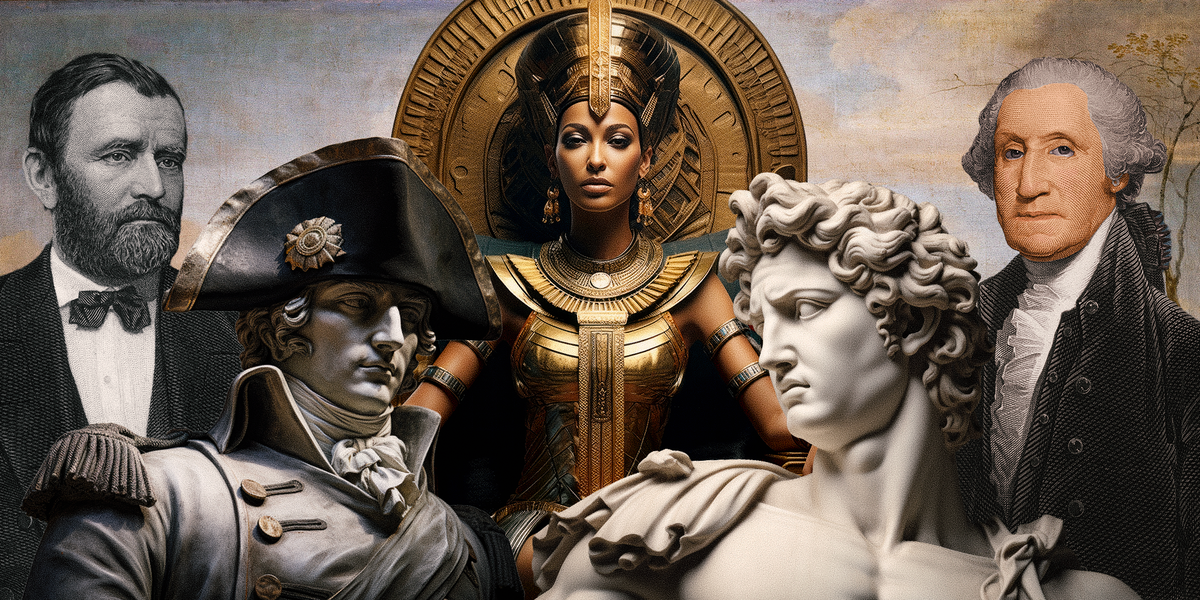
History does not hand out trophies for being nice. If it did, many famous military leaders would be waiting outside the ceremony, pretending they had “a prior campaign.” The most cunning and ruthless military leaders of all time were not simply people who won battles. They were operators, planners, risk-takers, empire-builders, and sometimes terrifying rulers who understood that war is fought with food, fear, timing, alliances, geography, morale, and the occasional bit of theatrical nerve.
This list is not a fan club. A commander can be brilliant and brutal at the same time, and in many cases that combination made them historically important and morally unsettling. The goal here is to examine strategy, leadership, ambition, and consequences without polishing the ugly parts into shiny legend. From ancient battlefields to imperial courts, these leaders shaped military history through audacity, deception, discipline, and decisions that left entire regions changed.
What Makes a Military Leader Cunning and Ruthless?
A cunning military leader sees the board before everyone else realizes there is a board. They exploit terrain, timing, politics, rivalries, and human weakness. A ruthless leader is willing to pay a harsh priceor make others pay itto achieve victory. The leaders below stood out because they combined battlefield intelligence with a hard edge. Some created new systems of warfare. Some manipulated enemies into mistakes. Some turned fear itself into a weapon. All of them proved that military power is rarely just about who has the bigger army; it is about who understands the moment better.
1. Alexander the Great
Alexander of Macedon built an empire at an age when many people are still trying to figure out laundry. In less than 13 years as king, he overthrew the Persian Empire and pushed his armies from Greece and Egypt toward India. His genius was speed: he moved before enemies could fully organize, struck at decisive points, and blended infantry, cavalry, siegecraft, and personal charisma into one extremely aggressive machine.
His cunning appeared in his ability to adapt. At Tyre, he faced a fortified island city and refused to accept that water should be a permanent problem. At Gaugamela, he handled a larger Persian force with discipline and timing. Yet his ruthlessness was equally clear. Cities that resisted could face severe punishment, and his ambition often ignored the exhaustion of his own men. Alexander’s empire did not long survive him, but his military reputation marched on for centuries like it had packed extra sandals.
2. Hannibal Barca
Hannibal was Rome’s nightmare with excellent logistics. The Carthaginian general is famous for crossing the Alps during the Second Punic War, a move so bold that even now it sounds like a bad idea pitched by someone who skipped the safety meeting. Yet Hannibal understood surprise, psychology, and terrain better than almost anyone in antiquity.
At Cannae in 216 BCE, he turned Roman confidence into disaster by drawing a larger army into a carefully shaped trap. His use of flexible formations and cavalry pressure became one of the most studied battlefield maneuvers in history. Hannibal’s ruthlessness came from strategic persistence: he kept Rome under pressure for years, forcing the Republic to endure fear, loss, and uncertainty. He did not destroy Rome, but he taught Rome how terrifying a brilliant enemy could be.
3. Genghis Khan
Born Temüjin, Genghis Khan rose from brutal steppe politics to unite Mongol tribes and create the foundation of the largest contiguous land empire in history. His cunning was organizational as much as tactical. He promoted talent, enforced discipline, used intelligence networks, and moved armies with astonishing speed across huge distances.
Genghis Khan also understood fear as a strategic signal. Cities that surrendered could be absorbed into the Mongol system; those that resisted risked devastating consequences. His campaigns were ruthless on a scale that still shocks historians, yet his empire also helped connect trade, communication, and cultures across Eurasia. That contradiction is part of why he remains so difficult to summarize. He was both state-builder and destroyer, administrator and conqueror, a man who turned mobility into empire.
4. Julius Caesar
Julius Caesar was a military commander, political gambler, and master self-publicistbasically the Roman Republic’s most dangerous content strategist. During the Gallic Wars from 58 to 50 BCE, he conquered Gaul and turned battlefield success into political power. Caesar’s cunning lay in his ability to move fast, divide enemies diplomatically, and present his campaigns as necessary defense rather than personal ambition.
He knew how to inspire soldiers and how to write about himself as if history had personally hired him. His campaign against Vercingetorix and the siege of Alesia showed engineering skill, endurance, and strategic nerve. But Caesar’s ruthlessness was inseparable from his rise. Conquest brought suffering, enslavement, and disruption across Gaul, while his march on Rome helped break the Republic he claimed to serve.
5. Timur, also known as Tamerlane
Timur was one of Central Asia’s last great nomad conquerors, building an empire that stretched across parts of Persia, India, Russia, and the Middle East. His cunning came through coalition-building, opportunism, and relentless campaigning. He knew how to use both steppe mobility and settled-state administration, which made him more than a raider; he was a conqueror with a political blueprint.
His ruthlessness, however, is one reason his name still carries a chill. Historical accounts remember the severity of his conquests as much as his patronage of culture in Samarkand. Timur could destroy and decorate in the same lifetime, which is a very history-book way of saying humanity is complicated and occasionally terrible at multitasking. His empire was not as structurally durable as some, but his military impact was enormous.
6. Napoleon Bonaparte
Napoleon was not merely a general; he was a walking weather system that rearranged Europe. Rising from the French Revolutionary army, he became emperor and transformed warfare through rapid movement, corps organization, concentrated force, and an instinct for decisive battle. At Austerlitz in 1805, he lured his enemies into weakening their center, then struck with timing so sharp it should have come with a warning label.
His cunning was operational: he could split enemy coalitions, move faster than expected, and make opponents fight on his terms. His ruthlessness appeared in his willingness to sacrifice huge numbers of men for strategic ambition, especially as his empire expanded. Napoleon’s legal and administrative legacy remains important, but militarily he is remembered as both genius and cautionary tale. Ambition carried him upward; overreach helped carry him down.
7. Attila the Hun
Attila ruled the Hunnic Empire in the fifth century and became one of Rome’s most feared enemies. His power rested not only on battlefield strength but also on intimidation, diplomacy, and pressure. He extracted payments from the Eastern Roman Empire, exploited political weakness, and used the threat of invasion like a hammer placed politely on the negotiating table.
Attila’s cunning was his sense of leverage. He knew when Rome was distracted, when treaties could be bent, and when fear could achieve what direct battle might not. His ruthlessness came through raiding, coercion, and his reputation for devastation. Later legend inflated parts of his image, but the basic fact remains: Attila made two Roman empires take him seriously, which was not exactly an easy calendar invite to secure.
8. Saladin
Saladin, founder of the Ayyubid dynasty, is often remembered for chivalry, but that should not distract from his hard political intelligence. He unified Egypt, Syria, and other Muslim territories under his authority, then confronted the Crusader states with patience and strategic focus. His victory at Hattin in 1187 opened the way to the capture of Jerusalem, reshaping the history of the Crusades.
His cunning was diplomatic as well as military. Saladin understood that divided territories could not win a long struggle, so he worked to consolidate power before striking major blows. Compared with some figures on this list, his reputation is less savagely brutal, but he was still a ruler operating in a harsh world of siege warfare, dynastic rivalry, and ideological conflict. His ruthlessness was controlled, purposeful, and political.
9. Shaka Zulu
Shaka transformed the Zulu from a relatively small group into a powerful military kingdom in southern Africa. His reforms reorganized age-based regiments, intensified discipline, and reshaped close-combat tactics. He developed a system that made the Zulu army more coordinated, more aggressive, and more centralized than many neighboring forces.
His cunning was institutional: he did not just win fights; he rebuilt the machine that fought them. Shaka’s military organization helped create a kingdom with far greater reach than its original size suggested. His ruthlessness was also notorious. He ruled with extreme severity, and expansion under his leadership brought upheaval to surrounding communities. Shaka remains a towering and debated figure: military innovator, state-builder, and ruler whose methods could be as harsh as the world he mastered.
10. Khalid ibn al-Walid
Khalid ibn al-Walid, known in Islamic tradition as the “Sword of God,” was one of the key commanders of the early Islamic expansions. He fought first against Muhammad, later converted to Islam, and became a leading general under Muhammad and his successors. His campaigns in Arabia, Iraq, Syria, and Palestine showed remarkable mobility and adaptability.
Khalid’s cunning came from maneuver. He could shift theaters quickly, strike unexpectedly, and keep forces moving under difficult conditions. Crossing desert routes to aid campaigns in Syria showed strategic boldness as well as nerve. His ruthlessness was rooted in decisive campaigning during a period when political and religious authority was being rapidly contested. He helped turn a regional movement into a major military power, and his reputation for battlefield effectiveness remains formidable.
11. Frederick the Great
Frederick II of Prussia, better known as Frederick the Great, turned a relatively small kingdom into a major European military power. He used diplomacy, disciplined armies, and calculated aggression to enlarge Prussia’s territory and prestige. His cunning was visible in his ability to survive against larger coalitions during the Seven Years’ War, often by moving quickly and exploiting the poor coordination of his enemies.
Frederick’s ruthlessness came from the demands he placed on the state, the army, and occupied territories. Prussia became a military model, but that model required relentless discipline and resources. Frederick was not a battlefield magician every dayno commander is, despite what statues implybut he had the rare ability to turn limited means into major influence.
12. Sun Tzu
Sun Tzu is the most unusual figure on this list because his historical details are debated, and his greatest influence comes through The Art of War, the classic treatise on military strategy. Traditionally described as a general of the state of Wu, Sun Tzu represents the cunning mind more than the conquering sword.
His core insight was that the best commander wins before battle by understanding strategy, deception, preparation, and the enemy’s weaknesses. That may sound like something printed on a corporate coffee mug today, but the original idea was deadly serious. Sun Tzu’s ruthlessness is intellectual rather than theatrical: war should be efficient, calculated, and directed toward results. His influence spread far beyond ancient China into military academies, business strategy, politics, and competitive thinking.
13. Vlad the Impaler
Vlad III of Wallachia, known as Vlad the Impaler, was not an empire-builder on the scale of Alexander or Genghis Khan, but he belongs on any list of ruthless military rulers. Surrounded by Ottoman pressure, Hungarian interests, internal rivals, and ambitious nobles, Vlad used terror as policy. His reputation for extreme punishment became infamous across Europe and later helped inspire the Dracula legend.
His cunning lay in psychological warfare. Vlad understood that fear could slow stronger enemies, stiffen internal control, and make a small principality appear more dangerous than its size suggested. His ruthlessness was not subtle, and it should not be romanticized. He remains a reminder that military history is not only about grand strategy; sometimes it is also about how rulers manufacture dread to compensate for limited power.
Common Traits Shared by Cunning Military Leaders
These leaders came from different centuries, cultures, and political worlds, but several patterns keep reappearing. First, they understood timing. Alexander, Napoleon, and Khalid moved quickly before enemies could settle into strength. Second, they used organization as a weapon. Genghis Khan, Shaka, and Frederick built systems that made ordinary soldiers part of something faster, stricter, and more effective.
Third, they mastered perception. Hannibal made Rome feel vulnerable. Attila made empires pay attention before he even arrived. Vlad built a reputation so frightening that it outlived his actual political power. Finally, most of them knew that victory required more than battlefield courage. It required supply, discipline, alliances, propaganda, and the ability to read people. In short, they were not just warriors. They were managers of chaosand unfortunately for everyone nearby, some were very good at the job.
Experiences and Lessons From Studying Ruthless Military Leaders
Spending time with the stories of history’s most cunning and ruthless military leaders can feel like walking through a museum where every exhibit whispers, “Great plan, terrible human cost.” The experience is fascinating, but it should also be uncomfortable. These commanders are often introduced through maps, arrows, dates, and dramatic portraits. That makes their campaigns look clean and almost mathematical. But behind every elegant maneuver was a population that paid the bill.
One of the strongest lessons is that intelligence without restraint can become dangerous. Hannibal’s battlefield brilliance, Napoleon’s operational speed, and Genghis Khan’s organizational genius were extraordinary. Yet each case shows how talent can magnify destruction when tied to unlimited ambition. Studying them is useful because it teaches strategic thinking, but it also warns against confusing effectiveness with virtue. A leader can be impressive and still leave wreckage behind.
Another experience is realizing that military success is rarely accidental. The popular image of the “born conqueror” is too simple. Alexander inherited and improved a powerful Macedonian military system. Genghis Khan created structures of loyalty, communication, and command. Shaka reorganized Zulu forces with discipline and standard tactics. Frederick drilled Prussia into a state where military readiness became almost a national personality trait. Even the most dramatic victories usually came from preparation that began long before the famous battle.
There is also a lesson in adaptability. The best commanders did not merely repeat one trick until it stopped working. They changed with terrain, opponents, and political pressure. Saladin understood that unity had to come before confrontation. Khalid ibn al-Walid shifted between theaters and enemies with remarkable flexibility. Yi Sun-shin, though not included in the main thirteen because this list emphasizes ruthlessness as much as cunning, offers a useful contrast: a commander can be brilliant, disciplined, and morally admired without becoming a symbol of terror. That contrast matters.
The experience of comparing these leaders also makes clear that reputation is a battlefield after the battle. Caesar wrote his own version of events. Napoleon became a legend partly because Europe could not stop talking about him. Vlad’s image grew through horror stories and later fiction. Some reputations were inflated by enemies; others were polished by admirers. Modern readers should treat every “greatest general” list with a raised eyebrow and a healthy respect for footnotes.
Most importantly, studying these military leaders should make us more thoughtful about power. Cunning can defend a country or destroy one. Ruthlessness can win a campaign and lose the moral argument for centuries. History remembers these figures because they changed the world, but remembrance is not approval. The real value is not learning how to admire conquest. It is learning how ambition, fear, discipline, strategy, and human cost interact when power is placed in the hands of people willing to use it without hesitation.
Conclusion
The 13 most cunning and ruthless military leaders of all time were not all alike. Some were empire-builders, some were defenders, some were rulers, and some were strategists whose influence outlived the states they served. What connects them is their ability to bend events through intelligence, force, and willpower. They remind us that military history is never just about battles. It is about systems, fear, ambition, endurance, and the uneasy relationship between genius and destruction.
To study them well, we should resist two lazy habits: turning them into superheroes or dismissing them as monsters with maps. The truth is more useful and more difficult. They were human beings operating in violent worlds, making choices that shaped nations and ended lives. Their stories are powerful because they show both the heights of strategic thinking and the depths of ruthless ambition. History may remember winners, but it also keeps receipts.
Note: This article is written for historical and educational analysis. It does not glorify war, conquest, or cruelty; it examines how strategy, leadership, ambition, and consequences shaped military history.