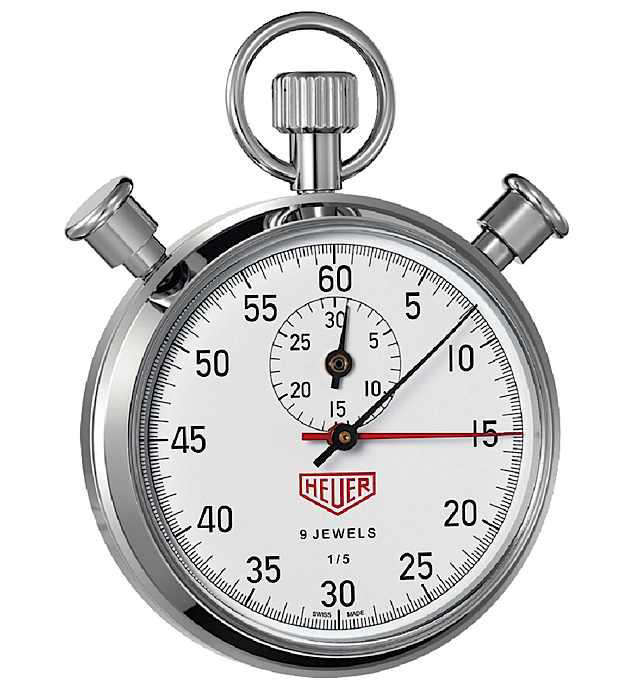
A HEUER vintage manual stopwatch is the kind of object that makes modern phone timers look a little too smug. Yes, your smartphone can count down pasta, track a workout, and remind you that you opened a social media app “for just one minute.” But a mechanical Heuer stopwatch does something different. It turns time into a tactile experience: wind the crown, press the pusher, hear the movement wake up, watch the hand sweep, stop it, reset it, and feel a tiny piece of Swiss timing history click back to zero.
For collectors, racers, photographers, coaches, engineers, and anyone who enjoys beautifully purposeful objects, vintage Heuer stopwatches occupy a special lane. They are not merely accessories. They are tools from an era when timing was physical, decisions were made by eye and hand, and a fraction of a second could separate a winning lap from a polite clap. Heuer built its reputation on precision timing long before the modern TAG Heuer name became associated with luxury sports watches. The company’s stopwatches, dashboard timers, and chronographs helped define the brand’s connection to racing, athletics, industry, aviation, and professional timekeeping.
This guide explores what makes a Heuer manual stopwatch desirable, how vintage models differ, what collectors should inspect, and why these compact mechanical instruments still feel surprisingly alive today. Spoiler: it is not just nostalgia. It is also the satisfying joy of owning something that performs one job extremely well without asking for a software update.
What Is a HEUER Vintage Manual Stopwatch?
A HEUER vintage manual stopwatch is a hand-wound mechanical timing instrument made by Ed. Heuer & Co. before or around the era when the company became TAG Heuer. Unlike battery-powered digital stopwatches, these pieces use a mechanical movement powered by a wound mainspring. The user typically winds the crown, starts the timing hand with a pusher, stops it to read elapsed time, and resets it to zero.
Most vintage Heuer stopwatches were designed for practical use. Some were made for sports timing. Others were built for racing pits, industrial timing, laboratory tasks, aviation, military use, or dashboard-mounted rally timing. Many display elapsed seconds on the outer track and minutes on a smaller register. Some specialized models include split-seconds functions, decimal timing scales, 1/5-second, 1/10-second, or even 1/100-second timing layouts.
The beauty of these instruments is that their design follows their job. A bright dial, bold numerals, sharp hands, a firm pusher, and a sturdy case are not decorative accidents. They exist so the user can capture time quickly and clearly. In vintage Heuer language, form and function were not on speaking terms because they were already best friends.
A Short History of Heuer and Precision Timing
Heuer was founded in Switzerland in 1860 by Edouard Heuer, and the company became deeply associated with chronographs and precision timing. The brand’s early importance was not built only on wristwatches. It was built on timing instruments: pocket chronographs, dashboard timers, stopwatches, and specialty devices used wherever elapsed time mattered.
One of Heuer’s major milestones came in 1916 with the Mikrograph, a stopwatch capable of measuring 1/100th of a second. That achievement was remarkable for its time because many chronographs of the period measured only to much larger fractions. The Mikrograph helped strengthen Heuer’s reputation in sports timing and professional measurement. Over the following decades, Heuer expanded into dashboard timers, racing chronographs, aviation tools, and highly legible stopwatches for both sport and industry.
By the mid-20th century, Heuer was strongly connected to motorsport. Its dashboard timers and stopwatches could be found around rally cars, race garages, timing stands, and pit lanes. Models such as the Sebring, Monte Carlo, Autavia dashboard timers, and various handheld stopwatches became part of the visual language of racing. Before telemetry screens and digital dashboards, someone often stood with a clipboard, a pencil, and a mechanical stopwatch, looking very serious and probably drinking terrible coffee.
Why Vintage Heuer Stopwatches Still Matter
They Represent Heuer’s Tool-Watch DNA
Modern watch enthusiasts often talk about “tool watches,” but Heuer stopwatches were literal tools. They were built to measure performance, not to peek out from under a cuff at dinner. Their value lies in directness. The user winds the movement, presses the crown, records the result, and resets. Nothing is hidden behind a touchscreen. The mechanism does what it does in plain sight.
They Connect to Racing Heritage
Heuer’s link to motorsport is one of the strongest reasons collectors love these stopwatches. Vintage Heuer timing equipment was used in racing contexts throughout the 1960s and 1970s, when motorsport had a raw, mechanical character. Many stopwatches were designed for lap timing, split timing, and pit-lane use. A Heuer stopwatch on a desk can feel like a little piece of Le Mans, Indianapolis, or club-racing paddock history without requiring you to smell gasoline or wear period-correct sideburns.
They Are More Accessible Than Many Vintage Heuer Wristwatches
Vintage Heuer wrist chronographs such as Carreras, Autavias, Camaros, and Monacos can command serious money, especially in rare configurations. A vintage manual stopwatch may offer a more approachable entry point into the Heuer collecting world. Prices vary widely depending on model, condition, rarity, documentation, and provenance, but many stopwatches remain less expensive than famous Heuer wrist chronographs. That makes them appealing to collectors who want genuine Heuer heritage without taking out a small personal loan and naming it “the Monaco fund.”
Common Features of a HEUER Manual Stopwatch
Mechanical Hand-Wound Movement
The heart of a vintage Heuer stopwatch is its mechanical movement. The mainspring stores energy when wound, then releases that energy through the gear train and escapement. Depending on the model, the movement may have jeweled bearings, shock protection, and carefully arranged chronograph works. The action should feel crisp, not crunchy, hesitant, or suspiciously like opening a drawer full of loose screws.
Three-Function Crown or Pusher
Many Heuer stopwatches use a three-function crown: first press starts the timing hand, second press stops it, and third press resets it to zero. Some models include an additional side pusher for split-seconds or rattrapante timing. The tactile feedback is part of the charm. A good pusher has authority. It does not ask; it commands.
Readable Dial Layouts
Heuer understood that a stopwatch is only useful if the timing can be read quickly. Vintage examples often feature high-contrast dials, bold minute and second markings, colored scales, luminous or bright hands, and sub-registers for elapsed minutes. Some models use black dials with white hands, while others use white dials with black and red tracks.
Fractional Timing Scales
Depending on the model, a vintage Heuer stopwatch may measure in 1/5-second, 1/10-second, or 1/100-second increments. For racing and sport, these small divisions mattered. Even today, the fine markings give the dial a technical, almost instrument-panel look. It says, “I time things,” not “I was designed by a committee trying to look adventurous.”
Notable Heuer Stopwatch and Timer Types
Handheld Sports Stopwatches
These are the classic pocket-style stopwatches many people imagine first. They are typically round, hand-held, and designed for athletics, training, racing, or general timing tasks. Some have simple start-stop-reset functionality, while others add split timing. Their appeal lies in simplicity, legibility, and the unmistakable feeling of operating a real mechanical instrument.
Industrial Stopwatches
Heuer also produced stopwatches for industrial and professional timing. These could be used for production measurement, process timing, laboratory work, or technical observation. Many industrial models used decimal scales, minute registers, or specialized dial markings. They may not have the glamour of motorsport, but they have a quiet seriousness. Think less “podium champagne,” more “precision report completed before lunch.”
Dashboard Timers
Heuer dashboard timers are among the most collectible timing instruments associated with the brand. Designed for automobiles, aircraft, and rally use, these pieces were mounted in vehicles or timing boards. Models such as the Sebring and Monte Carlo are closely tied to racing and rally history. A dashboard stopwatch can be especially desirable when it retains its mounting plate, box, instructions, or documented provenance.
Split-Seconds Pocket Chronographs
Some of the most impressive Heuer timing instruments are split-seconds pocket chronographs, including references from the late 1960s and early 1970s. These sophisticated stopwatches allow timing of two events that begin together but end separately. For lap timing, racing, or comparing competitors, that function is extremely useful. The split-seconds complication is also mechanically fascinating, which is collector-speak for “prepare to admire it and service it properly.”
How to Evaluate a Vintage Heuer Manual Stopwatch
Check the Dial First
The dial is one of the most important value factors. Look for original printing, clean tracks, correct logos, matching hands, and honest aging. Minor patina can add character, but water damage, heavy staining, repainted markings, or incorrect replacement parts can reduce desirability. A dial should look consistent with the model and era.
Inspect the Case and Crown
Cases may be stainless steel, chrome-plated, aluminum, plastic, or other materials depending on the model. Check for dents, corrosion, cracked crystals, damaged bezels, missing crowns, or poor previous repairs. Wear is normal on a used timing tool, but abuse is different. A stopwatch that looks like it timed a demolition derby from inside the engine bay deserves extra caution.
Test the Functions
Wind the stopwatch gently. Start it, stop it, and reset it several times. The hand should start smoothly, stop cleanly, and reset accurately to zero. If it has a split-seconds function, test that too. Sluggish action, hands that fail to reset, or a movement that runs briefly and stops may indicate the need for service.
Look for Signatures and Reference Numbers
Many Heuer stopwatches are signed on the dial, movement, case, or inside caseback. Reference numbers, catalog matches, and movement markings can help confirm authenticity. Collectors often compare examples with known catalog pages and trusted Heuer reference archives. Because parts can be swapped over decades, documentation matters.
Consider Accessories and Provenance
Original boxes, timing holders, mounting plates, instruction sheets, dealer paperwork, or racing-team provenance can significantly enhance collectibility. A stopwatch with a clear story often attracts more attention than an anonymous example, even when the anonymous one is mechanically excellent. People collect objects, yes, but they also collect stories.
Buying Tips for a HEUER Vintage Manual Stopwatch
When shopping for a vintage Heuer stopwatch for sale, avoid rushing. The market includes excellent examples, tired examples, and a few pieces wearing more replacement parts than a movie robot. Study the model before buying. Compare dial layouts, case shapes, hands, crown styles, and movement signatures. If a seller claims a rare racing connection, ask for evidence. A nice story is lovely, but documentation is lovelier.
Condition should match your purpose. If you want a display piece, cosmetic originality may matter most. If you want to use the stopwatch, mechanical health becomes more important. For collectors, the sweet spot is often an honest, original, fully functioning example with light age and no major restoration issues.
Be cautious with freshly polished cases, repainted dials, missing parts, or vague descriptions. Words like “untested” can mean anything from “I do not own a winding finger” to “this movement has not ticked since disco was dangerous.” Budget for service, especially if the stopwatch has not been maintained recently.
Using a Vintage Heuer Stopwatch Today
Using a vintage Heuer stopwatch is simple, but gentle habits help preserve it. Wind it carefully until you feel resistance; do not force the crown. Start and stop the mechanism with deliberate pressure. Avoid moisture, dust, magnetic fields, drops, and extreme temperature changes. Mechanical stopwatches are tough, but they are not invincible. They prefer desks, workshops, display cases, and careful handsnot the bottom of a gym bag with keys, coins, and a protein bar of unknown vintage.
Many owners use their Heuer stopwatches for timing espresso shots, workouts, darkroom photography, cooking, model racing, meditation sessions, or simply for the pleasure of hearing the movement. Practical? Yes. Necessary? Not always. Enjoyable? Absolutely.
Care, Storage, and Servicing
A vintage Heuer manual stopwatch should be serviced by a watchmaker familiar with chronographs or mechanical timers. The movement may need cleaning, lubrication, adjustment, and replacement of worn components. Do not spray household oil into the movement. Do not open the case with a kitchen knife. Do not “just see what happens.” What happens is usually expensive.
Store the stopwatch in a dry, stable environment away from direct sunlight. If it has a box or case, use it. Keep records of service, purchase receipts, and any provenance. For display, a small stand can show off the dial without stressing the crown. If the stopwatch is rare, military-issued, dashboard-mounted, or historically documented, avoid unnecessary restoration. Originality often matters more than making it look factory-new.
Collectibility and Market Appeal
The vintage Heuer market has experienced cycles of enthusiasm, correction, and renewed interest. Famous wrist chronographs tend to receive most of the attention, but stopwatches and timers remain important because they reveal the foundation of the brand. Collectors increasingly appreciate these instruments as authentic expressions of Heuer’s timing heritage.
Rarity, condition, reference, function, and provenance all affect value. A common sports stopwatch in average condition may be affordable, while a rare split-seconds model, dashboard stopwatch, military-issued piece, or racing-associated set can be far more valuable. The strongest examples combine originality, function, documentation, and visual appeal.
For many enthusiasts, however, value is not only financial. A vintage Heuer stopwatch is satisfying because it is understandable. You can see what it does. You can feel how it works. You can explain it to someone in ten seconds and then spend an hour discussing why it is cooler than it has any right to be.
Experiences With a HEUER Vintage Manual Stopwatch
Owning a HEUER vintage manual stopwatch is a different experience from owning a wristwatch. A wristwatch quietly joins your daily life. A stopwatch asks to be picked up. It turns timing into a small ritual. The first experience many owners remember is winding it. There is a soft resistance in the crown, a sense of loading energy into the movement. It feels intentional in a way that tapping a phone screen never does.
Then comes the first press. The hand jumps into motion, and suddenly the object is alive. The tick is not loud in a theatrical way, but it has presence. It gives the room a rhythm. Whether you are timing a lap, a cup of coffee, a camera exposure, or how long it takes someone to say, “Is that an old stopwatch?” the action feels surprisingly engaging.
One enjoyable way to use a vintage Heuer stopwatch is during everyday tasks. Time a pour-over coffee bloom. Time a steak sear. Time a plank exercise if you enjoy suffering with style. The stopwatch does not make these tasks easier, exactly, but it makes them more satisfying. The mechanical reset is especially addictive. Press the crown and the hand snaps back to zero like a disciplined little soldier reporting for duty.
Collectors often describe these stopwatches as conversation pieces, and that is accurate. Put one on a desk and people notice it. It has a seriousness that plastic digital timers lack. It also has warmth. Scratches, patina, and softened edges suggest a life before yours. Maybe it timed school races. Maybe it sat in a workshop. Maybe it was used at a track where engines barked and clipboards mattered. Even without confirmed provenance, the imagination has plenty of room to run.
Another experience is the pleasure of research. Vintage Heuer collecting rewards curiosity. You may begin with one stopwatch and soon find yourself comparing catalog scans, reference numbers, dial variations, movement signatures, and old auction listings. This is how collectors accidentally become historians. One minute you are buying a neat timer; the next, you are explaining 1/10-second scales to a friend who only asked whether it still works.
The most important lesson is patience. A vintage stopwatch is not a modern appliance. It may need service. It may run slightly differently depending on position, temperature, or how recently it was wound. But that is part of the relationship. You are not just consuming a product. You are preserving a mechanical object that has already outlived several generations of electronics. Treat it well, and it may continue timing small moments long after today’s smart devices become drawer fossils.
Conclusion
A HEUER vintage manual stopwatch is more than a collector’s curiosity. It is a compact expression of Swiss precision, racing culture, industrial usefulness, and mechanical charm. From simple sports timers to sophisticated split-seconds pocket chronographs, Heuer stopwatches show why the brand became a leader in timing long before modern luxury marketing entered the picture.
For collectors, these stopwatches offer history, beauty, and hands-on enjoyment. For design lovers, they offer clear typography, purposeful cases, and wonderful dial details. For anyone tired of disposable digital gadgets, they offer a refreshing reminder that a well-made mechanical tool can remain useful, desirable, and oddly lovable for decades.
The best vintage Heuer stopwatch is not always the rarest or most expensive. It is the one that feels honest, functions properly, matches your collecting goals, and makes you want to press the pusher one more time. And then maybe one more time after that. For research purposes, obviously.