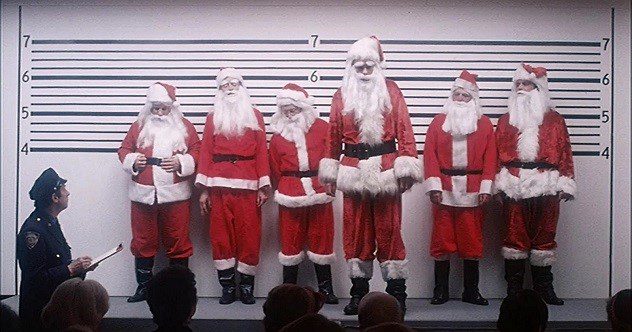
The festive season is supposed to be a warm blur of twinkle lights, questionable eggnog choices, and relatives pretending they totally remember your job. But every year, the holidays also unleash a different tradition: chaos with a gift receipt. From Black Friday crowd surges to neighborhood battles over Christmas lights, the most wonderful time of the year has a sneaky talent for turning minor annoyances into full-blown showdowns.
And no, this is not just holiday folklore cooked up by one overly dramatic uncle. Real reporting and research show that festive season fights pop up in stores, airports, offices, family dining rooms, and even on quiet suburban streets. When you combine money stress, packed schedules, travel delays, alcohol, old grudges, political tension, and one inflatable Santa that is somehow “too large for community standards,” you get a season that can go from merry to messy in record time.
Below are 10 of the wildest holiday fights and fight patterns that have shaken the festive season in real life. Some were physical, some were emotional, and some were legal enough to make a homeowners association feel like a supervillain in a Hallmark movie. Together, they reveal an uncomfortable truth: holiday stress does not invent conflict, but it does put it on stage, hand it a microphone, and crank the volume.
Why the Festive Season Turns Small Problems Into Big Fights
Before we dive into the list, it helps to understand the recipe. The holiday season magnifies pressure. People spend more, travel more, gather more, and expect more. That is already a fragile setup. Add grief, family tension, political disagreements, and the financial pressure of gifts, meals, and travel, and it is no surprise tempers run hot. Researchers and mental health experts have repeatedly noted that the holidays are emotionally loaded. In other words, December is not just a month. It is a stress test wearing a scarf.
That tension shows up differently depending on the setting. In stores, it becomes scarcity panic. At the airport, it becomes crowd frustration. At home, it becomes a long-simmering argument about politics, traditions, or who forgot to buy Aunt Linda a present again. What makes festive season fights so memorable is not just the conflict itself. It is the contrast. People expect peace, and instead they get parking-lot drama under a wreath.
1. The Black Friday Crowd Surge That Changed Holiday Shopping
If there were a grim hall of fame for holiday shopping fights, the 2008 Black Friday crowd surge at a Walmart in Valley Stream, New York, would be near the top. A massive crowd rushed the doors, and a store worker was killed in the crush. The event became one of the clearest warnings that holiday retail chaos was not just embarrassing footage for local news. It could turn deadly when stores, crowds, and hype collided.
That tragedy changed the tone of the Black Friday conversation. Suddenly, holiday shopping was not just about bargains and bragging rights. It was also about crowd control, store preparation, and the strange psychology of scarcity. When people believe a deal is disappearing by the second, basic manners can evaporate faster than the cookie tray at a family gathering. The festive season fight here was not just between shoppers. It was between human impulse and basic public safety.
2. The Xbox Pepper-Spray Battle That Made Black Friday Look Unhinged
In 2011, holiday shopping somehow found a new way to embarrass civilization. At a Los Angeles-area Walmart, a shopper used pepper spray during a rush for discounted Xbox consoles. Yes, really. Nothing says “holiday spirit” quite like chemical warfare in the electronics aisle.
The incident instantly became a symbol of peak Black Friday madness. It was absurd, ugly, and weirdly revealing. The fight was supposedly over a deal, but underneath it was about competition, crowd pressure, and the warped logic that takes over when people think they are one elbow away from holiday victory. It also showed how holiday shopping fights are rarely about the product itself. Nobody is risking public humiliation because a game console is magical. They are reacting to urgency, stress, and the social theater of “I need to get this before someone else does.”
3. The Parking-Lot Showdown That Proved the Store Is Not the Only Battleground
Holiday shopping fights do not always happen under fluorescent lights. Sometimes the real drama starts outside, where parking spots become diplomatic incidents and line-cutting becomes a declaration of war. In 2013, a Black Friday dispute in a Walmart parking lot in Tazewell, Virginia, escalated in a way that sent shoppers scattering. That case became another reminder that festive season stress follows people out the automatic doors and into the asphalt arena.
Parking lots are the perfect holiday pressure cooker. Everyone is tired, overloaded, behind schedule, and convinced their mission is more important than yours. Someone takes your spot, blocks your trunk, cuts the exit line, or nudges a cart into your bumper, and suddenly the Christmas playlist inside the store feels like a personal insult. The festive season fight here is almost primal: limited space, crowded conditions, and a population running on caffeine, deadlines, and seasonal desperation.
4. The SantaCon Street Scuffles That Turned Jolly Into Rowdy
SantaCon was probably not supposed to become a cautionary tale, but festive costumes plus public drinking plus giant crowds is a formula that has repeatedly invited trouble. Over the years, the event has drawn warnings from police, frustration from local businesses, and a reputation for behavior that is far less “ho ho ho” and far more “who threw up on the sidewalk?”
What makes SantaCon such a perfect festive season fight story is the contrast between image and outcome. On paper, it sounds harmless: grown adults dressed like Santa Claus spreading cheer. In practice, large pub-crawl crowds have meant arrests, summonses, public disorder complaints, and a level of local irritation usually reserved for construction at 6 a.m. It is holiday branding wrapped around classic crowd-management problems. The lesson is simple: a red suit does not magically improve decision-making.
5. Hoboken’s Santa Battles Showed How a Party Can Become a Public Headache
If New York’s SantaCon gave the holiday season a bad reputation, Hoboken gave it a sequel. The New Jersey version of the event has produced multiple years of arrests, summonses, public intoxication complaints, and heavy police deployment. At one point, city leaders were openly fed up with the cleanup costs and the rowdy behavior that came with the annual invasion of festive bar hoppers.
This kind of festive season fight is not just between revelers. It is between celebration and civic tolerance. Residents want to get groceries without stepping around somebody dressed as a reindeer and shouting karaoke lyrics at noon. Businesses want customers, but not necessarily chaos. Police want order, but not a whole day spent babysitting bad decisions in velvet trim. Hoboken’s Santa battles are a master class in how quickly “holiday fun” can become a municipal stress fracture.
6. The Airport Gate Meltdown Is the Modern Christmas Carol Nobody Asked For
Holiday travel now moves at such huge scale that even a minor delay can feel like a national mood swing. Millions of people fly during the festive period, and some recent seasons have pushed daily air traffic near record levels. Full flights, weather disruptions, tight connections, staffing issues, and long security lines create perfect conditions for arguments at gates, counters, and overhead bins.
The airport fight is less theatrical than Black Friday, but it is just as revealing. Nobody boards a plane thinking, “Today feels like a great day to argue beside a charging station.” But once delays pile up, people stop feeling festive and start feeling trapped. Add the Federal Aviation Administration’s continued warnings about unruly passenger behavior, and the holiday airport becomes a place where patience goes to die in Terminal B. This is the festive season fight of modern life: too many people, too little room, and absolutely no emotional margin.
7. The Thanksgiving Politics Fight That Literally Shortened Dinner
Some festive season fights never make the evening news because they happen between the mashed potatoes and dessert. One of the most fascinating pieces of holiday conflict research found that politically mixed Thanksgiving dinners after the 2016 election were measurably shorter than politically uniform ones. In plain English: some families argued so hard, or anticipated arguing so hard, that they spent less time together.
That finding matters because it turns holiday tension into something visible. The family table is supposed to be where people reconnect. Instead, for many households, it becomes a place where partisan identity barges in wearing boots. More recent polling has shown that many Americans actively want to avoid political conversations during the holidays. Which is both understandable and deeply funny, because nothing says family love like creating a silent agreement to discuss stuffing but not the republic.
8. The Gift-Giving Grudge Match Is Quiet, Personal, and Weirdly Powerful
Not every festive season fight involves shouting. Some arrive gift-wrapped. Financial stress and emotional expectations make holiday giving one of the sneakiest conflict zones of the season. Was the gift too cheap? Too expensive? Too personal? Not personal enough? Did someone buy a “self-improvement” present that felt more like criticism than kindness? Congratulations: you have entered the emotionally hazardous world of present politics.
This category matters because gift conflicts can feel silly from the outside and deeply painful on the inside. A bad gift is rarely just a bad object. It can feel like a message. It can suggest that someone was not listening, was keeping score, or was trying a little too hard to prove something. During the festive season, gifts become symbols of effort, status, affection, and memory. That is a lot of emotional weight for a candle set and a pair of novelty socks.
9. The Office Holiday Party Fight Happens When “Relaxed” Goes Off the Rails
Workplace holiday parties have long carried a reputation for cheerful disaster. Employers, HR professionals, and management experts have spent years warning that once alcohol and lowered guardrails enter the picture, boundaries can get blurry fast. That is why so many companies have become more cautious about open bars, liability, and inappropriate conduct at year-end events.
The office-party fight is a classic festive contradiction. The event is marketed as fun, but everyone still works together on Monday. One person thinks they are networking. Another thinks they are “being real.” A third person has had two drinks too many and is now trying to explain the company budget with the confidence of a man who absolutely should not be holding a microphone. These conflicts are messy because they blend professional hierarchy with party energy. It is not just a holiday event. It is a workplace dressed as a celebration.
10. The Christmas Lights vs. HOA Feud May Be the Pettiest and Most Festive Fight of All
If you want proof that the festive season can turn anything into a battleground, look no further than holiday decorations. Families have ended up in serious disputes with homeowners associations and neighbors over when lights go up, how bright they are, whether they create a nuisance, and who gets to define “too much Christmas.” In recent years, reported cases have involved fines, legal complaints, and neighborhood tension over displays that were meant to spread cheer.
This is perhaps the most hilariously seasonal fight of the bunch. It is hard to imagine a more specific modern conflict than a legal dispute over twinkling lights and manger scenes. But the underlying issue is familiar: competing ideas of private freedom, neighborhood standards, and holiday expression. One person sees joy. Another sees glare. One family sees tradition. Another sees a code violation with extension cords. And just like that, the festive season gets its own zoning drama.
What These Holiday Fights Really Tell Us
Taken together, these festive season fights reveal something bigger than a few chaotic headlines. The holidays compress everything that already makes people tense: money, travel, family history, public crowds, social pressure, and impossible expectations. The result is not random madness. It is ordinary human stress wearing a Santa hat.
That is also why these stories stick. They feel ridiculous, but they are recognizable. Most people have not pepper-sprayed anyone over a console, and let’s keep it that way, but many have felt the same ingredients: urgency, exhaustion, resentment, overstimulation, or the sense that one more inconvenience might send them into a dramatic monologue in the Target checkout line.
The festive season does not create conflict from scratch. It amplifies what is already there. That can be ugly, but it can also be useful. These moments show where people, families, workplaces, and communities are stretched too thin. If the season is going to be genuinely joyful, it probably needs less perfection and more breathing room.
Extra Perspective: What It Feels Like to Live Through a Festive-Season Fight
The strange thing about festive season conflict is that it rarely feels dramatic at first. It starts small. A line moves too slowly. A cousin makes one comment too many. A gate changes at the airport and suddenly 140 people begin power-walking like the world is ending at C27. A neighbor files one complaint about lights, and what began as seasonal décor becomes a bloodless suburban saga.
Living through one of these moments feels less like a movie and more like your nervous system forgetting how to be civilized. You can almost track the progression. First comes irritation. Then comes interpretation. That person did not just cut the line; they disrespected you. That relative did not just ask a nosy question; they opened a 12-year-old emotional file cabinet. That coworker did not just say something weird at the holiday party; they detonated the illusion that everyone here is normal.
The setting makes everything feel more absurd. If you argue in July, you are just arguing. If you argue in December under a wreath while “Jingle Bell Rock” plays in the background, it becomes a memory nobody asked for but everybody keeps forever. Holiday fights have production value. There are lights, cookies, wrapping paper, themed sweaters, public crowds, and enough symbolism to make every disagreement feel bigger than it is.
There is also the pressure to perform happiness. That part matters. People often get angrier during the holidays because they feel they are not allowed to be angry. They are supposed to be grateful, generous, patient, festive, and camera-ready. So instead of noticing stress early and dialing things down, they white-knuckle their way through it until the smallest problem gets treated like a federal offense. The flight delay becomes personal. The bad gift becomes betrayal. The scheduling conflict becomes proof that nobody respects your time.
Family fights feel the most intense because they are never just about the current moment. They carry old roles and old hurts. One sibling is still “the responsible one,” another is still “the difficult one,” and a parent can somehow make a grown adult feel 14 with one sentence and a glance over cranberry sauce. That is why even small holiday arguments can hit with unusual force. You are not just defending an opinion. You are defending your place in the family story.
Public festive fights feel different. They are fueled less by history and more by overload. Crowds, noise, deadlines, and scarcity create a weird tunnel vision. People stop seeing one another as fellow humans and start seeing obstacles, delays, or competitors for a limited resource, whether that resource is a cheap television, an empty overhead-bin slot, or the last decent parking space within half a mile of the mall entrance.
And yet, the most interesting part of festive season conflict is how quickly it can dissolve once the pressure breaks. A delayed flight finally boards. Dinner ends without a political explosion. Someone laughs at the ridiculousness of a neighbor feud over reindeer lights. The spell lifts. That is the great lesson of the season: many holiday fights feel enormous in the moment because the environment is oversized. Once the crowd thins, the music stops, and the expectations come down a notch, people usually remember what mattered in the first place. Peace on earth may be ambitious, but a calmer group chat is a good start.
Conclusion
The festive season brings out generosity, nostalgia, and connection, but it also exposes stress fractures people spend the rest of the year hiding. That is why holiday shopping fights, airport meltdowns, family arguments, office-party mishaps, and neighborhood decoration feuds keep returning. They are not random seasonal glitches. They are pressure points wearing tinsel.
If there is any comfort in these crazy festive season fights, it is this: most of them are painfully human. People want the perfect holiday, and perfection is a famously cranky houseguest. The smarter goal is not a flawless season. It is a season with fewer impossible expectations, a little more patience, and far less emotional investment in discounted electronics.