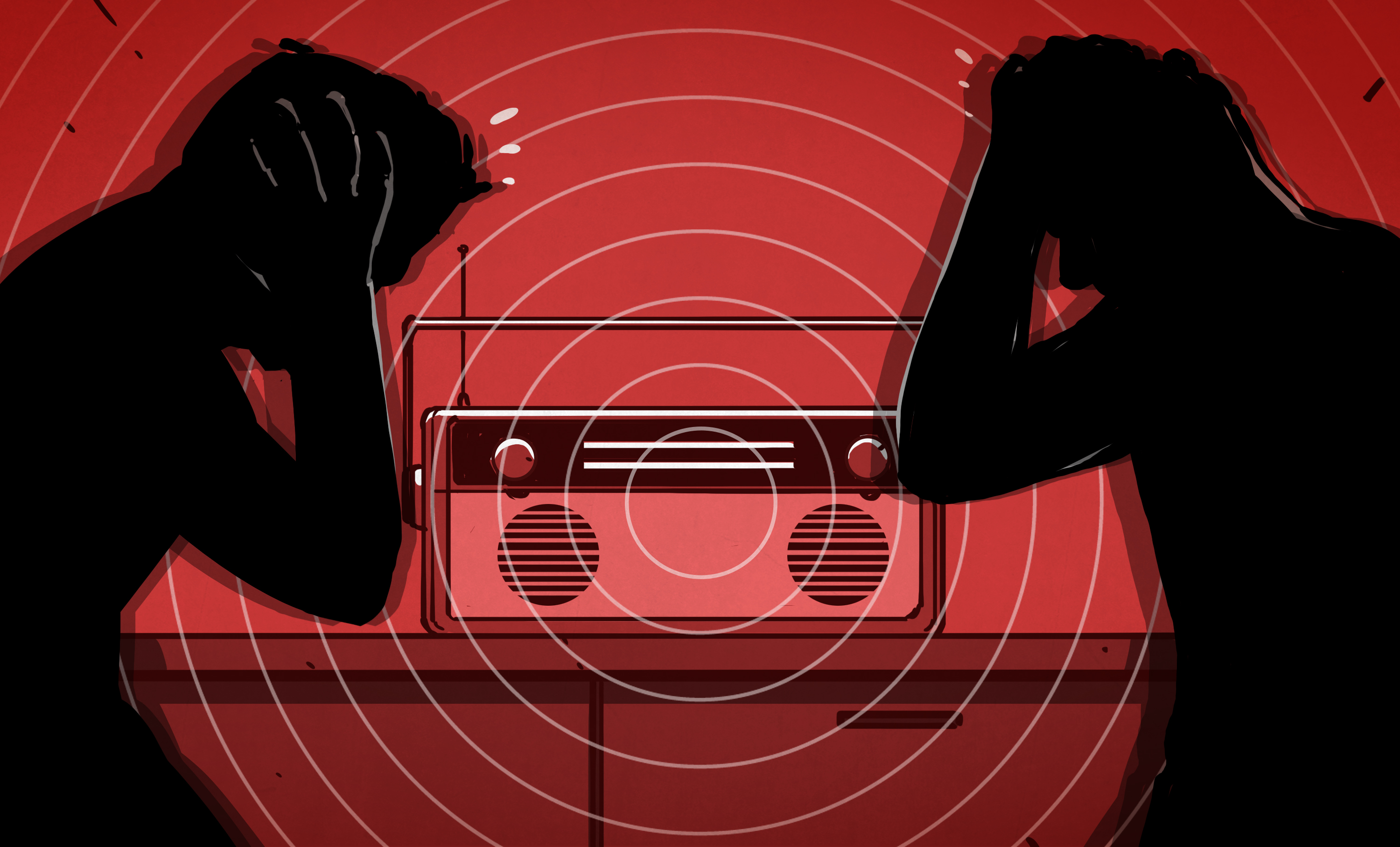
Imagine waking up to a perfectly normal morning. The coffee is doing its heroic duty, airplanes are drawing invisible highways across the sky, and somewhere a radio tower is humming along like an overachieving refrigerator. Then, suddenly, the government has to decide which signals stay alive, which aircraft keep flying, and which parts of the national airspace must go quiet. That is the strange, serious world of SCATANA.
SCATANA stands for Security Control of Air Traffic and Air Navigation Aids. It was a Cold War-era emergency plan designed to control U.S. air traffic and radio navigation systems during a national defense crisis. In plain English: if hostile aircraft, missiles, or a major national emergency threatened the United States, SCATANA gave military, aviation, and communications authorities a playbook for clearing the skies and managing the radio signals that helped aircraft navigate.
It sounds like something from a bunker manual written by people who owned too many slide rulesand honestly, it kind of was. But SCATANA also reveals a surprisingly modern question: what happens when the systems built to make life safer can also become tools in a crisis?
What Was SCATANA?
SCATANA was not a single switch, a secret red phone, or a dramatic button labeled “Turn Off The Sky.” It was a coordinated emergency plan involving the Department of Defense, the Federal Aviation Administration, and the Federal Communications Commission. Its goal was to preserve national security by controlling civil and military air traffic and, when necessary, restricting or shutting down certain air navigation aids.
The plan grew out of an era when radio navigation was central to aviation. Before satellite navigation became ordinary, aircraft depended heavily on ground-based systems such as VOR, DME, ILS, and non-directional beacons. These systems helped pilots find routes, approaches, airports, and safe headings. They were the quiet infrastructure behind everyday flying.
But during a national emergency, that same infrastructure created a problem. If friendly aircraft could use radio navigation aids, hostile aircraft might use them too. SCATANA was built around that uncomfortable reality: the beacon that guides a passenger plane safely home could also guide an enemy aircraft toward a target.
The Cold War Fear Behind The Plan
To understand SCATANA, you have to step into Cold War America. This was the age of civil defense drills, fallout shelters, warning sirens, and radios marked with tiny CONELRAD symbols. The country was preparing not only to fight a war, but to communicate through oneor, in some cases, to stop communicating in ways that could help the enemy.
CONELRAD, short for Control of Electromagnetic Radiation, was America’s early emergency broadcasting system. It instructed most radio stations to leave the air while selected stations broadcast on 640 or 1240 kHz. The purpose was to keep the public informed while preventing enemy bombers from using ordinary broadcast stations as radio breadcrumbs. SCATANA applied a similar national-defense mindset to aviation.
By the 1950s and 1960s, American airspace was getting busier. Civil aviation was expanding, aircraft were faster, and the National Airspace System was becoming more complex. That made emergency control harder. You could not simply tell every airplane to “figure it out” while turning off navigation aids. That would be less a defense plan and more an airborne group project, which is nobody’s favorite kind of project.
How SCATANA Was Supposed To Work
At its core, SCATANA had two major jobs. First, it helped authorities control aircraft in U.S. airspace during an air defense emergency. Second, it allowed certain radio navigation aids to be restricted, shut down, or made available only to authorized flights.
1. Identify What Is Flying
In a crisis, the first question is simple but urgent: who is up there? Friendly aircraft, military aircraft, medical flights, law enforcement flights, commercial flights, private aircraft, and unknown tracks all compete for attention. SCATANA procedures were designed to help sort authorized aircraft from potentially dangerous traffic.
2. Restrict Or Clear Airspace
If a defense emergency required it, civil aircraft could be grounded, diverted, rerouted, or ordered to land. The point was not to punish travelers or ruin vacations, although it would absolutely ruin vacations. The point was to reduce clutter in the sky so military and defense authorities could recognize threats faster.
3. Control Navigation Aids
The radio side of SCATANA is what gives it that “radio apocalypse” flavor. Non-federal radio navigation aids could be shut down as directed, kept operating for authorized missions, or controlled in phases so aircraft already in the air had time to land or disperse safely.
4. Prioritize Essential Flights
Emergency plans do not treat every aircraft equally. A medical evacuation flight, military mission, disaster-response aircraft, or national-command flight may receive priority. Modern ESCAT rules use an air traffic priority list to determine which flights may continue when restrictions are active.
SCATANA And 9/11: The Day The Sky Went Quiet
The most famous real-world example associated with SCATANA-like action came on September 11, 2001. After the terrorist attacks began, the FAA issued the first national ground stop in U.S. history. Soon after the Pentagon was struck, authorities ordered aircraft already in the air to land at the nearest practical airport.
More than 4,500 aircraft were airborne at the time. Controllers, pilots, dispatchers, airport personnel, and military coordinators had to turn the busiest airspace system in the world into a nearly empty sky in only a few hours. It was not elegant in the way a textbook diagram is elegant. It was urgent, human, improvised, and astonishingly effective.
By early afternoon, commercial and private air traffic over the United States had been cleared. The decision exposed both the strength and fragility of the National Airspace System. On one hand, the system could respond at national scale. On the other, the crisis showed that older hijacking assumptions did not match the reality of aircraft being used as weapons.
One important distinction: the 9/11 response was not a simple textbook activation of the old SCATANA plan. Navigation aids were not broadly shut down in the dramatic Cold War sense. In fact, keeping many systems available helped controllers and pilots land aircraft safely. That practical choice says a lot about emergency planning: the plan matters, but judgment matters more.
SCATANA Becomes ESCAT
Today, SCATANA has largely been superseded by ESCAT, the Emergency Security Control of Air Traffic plan. ESCAT reflects a post-9/11 world in which homeland security, aviation security, defense coordination, and air traffic management are tied more closely together.
Modern ESCAT guidance involves the Department of Defense, Department of Transportation, FAA, Department of Homeland Security, and Transportation Security Administration. It provides procedures for controlling civil and military air traffic during air defense emergencies, defense emergencies, or other national emergency conditions.
In practical terms, ESCAT can involve airspace restrictions, altitude limitations, routing controls, authorized-flight requirements, and priority handling for essential missions. It is less about cinematic silence and more about controlled access. The modern question is not always “Should everything stop?” but “What must keep moving, under what rules, and for whose safety?”
Why Radio Navigation Aids Mattered So Much
To modern readers raised on GPS, it can be hard to appreciate how important old-school radio navigation was. Pilots once relied heavily on ground-based signals that pointed them toward stations, airways, runway approaches, and fixes. These systems were reliable, standardized, and deeply woven into aviation.
That reliability was exactly what made them sensitive in wartime planning. A strong, predictable radio signal is wonderful when you are trying to land in fog. It is less wonderful when hostile forces may use it as a homing aid. SCATANA existed in that tension between safety and denial.
Even today, GPS has not erased the importance of ground-based backups. Aviation systems are designed with redundancy because weather happens, satellites fail, equipment breaks, and humans occasionally drop coffee into places coffee should never go. Radio navigation remains part of the larger safety net.
SCATANA, CONELRAD, And The Art Of Not Broadcasting
Most communication systems are judged by how well they send messages. SCATANA and CONELRAD are fascinating because they also cared about when not to send signals. That is a weirdly elegant idea. In a crisis, silence can be a tool.
CONELRAD tried to preserve public warnings while denying useful signals to enemy bombers. SCATANA tried to preserve aviation control while denying navigational advantages to hostile aircraft. Both systems came from the same strategic fear: America’s own electromagnetic landscape could become a map for attackers.
Of course, this created tradeoffs. Turn off too much, and friendly pilots lose useful tools. Leave too much on, and hostile aircraft may exploit the signal environment. Emergency planning lives in that messy middle ground, where every choice solves one problem while creating another.
What SCATANA Teaches About Infrastructure
SCATANA is more than a historical acronym. It is a lesson in infrastructure design. The systems that make modern life smoothair traffic control, radio navigation, satellites, cellular networks, payment systems, electrical gridsare also systems that must be defended, limited, or reconfigured during emergencies.
That is why the best emergency plans are not just shutdown plans. They are continuity plans. They ask what should stop, what should continue, who gets priority, and how decisions travel quickly without causing confusion. A total shutdown may look decisive, but precision is usually more useful than panic.
The 9/11 airspace shutdown proved that national-scale control is possible, but it also showed the importance of trained professionals. Controllers did not merely follow a magic checklist. They made thousands of real-time decisions under pressure, with incomplete information, while maintaining aviation safety. That human layer is easy to overlook until everything depends on it.
Specific Example: Why You Would Not Simply Kill Every Beacon
Suppose a defense emergency occurs while hundreds of aircraft are flying in poor weather. A purely mechanical response might say, “Shut down all navigation aids immediately.” That sounds secure, but it could make the sky more dangerous for friendly aircraft already trying to land.
A smarter response phases restrictions. Some navigation aids may remain active long enough for airborne aircraft to recover safely. Others may be restricted to authorized missions. Air traffic control may reroute flights away from sensitive regions. Military authorities may request specific air control measures rather than a nationwide blackout.
This is the genius and headache of SCATANA-style planning. It is not just about turning things off. It is about knowing what to turn off, when to turn it off, and how to avoid creating a second disaster while responding to the first.
SCATANA In The Age Of GPS, Drones, And Cyber Risk
SCATANA was born in the age of bombers and beacons, but its logic still applies. Today, threats include unmanned aircraft, cyberattacks, GPS jamming, spoofing, and fast-moving misinformation. The airspace is also more crowded and diverse than it was in the Cold War. Commercial jets, business aircraft, helicopters, drones, military aircraft, and emergency responders all share pieces of the same national system.
Modern emergency aviation control must therefore be flexible. A security event over one city may require temporary flight restrictions. A national defense emergency may require broader measures. A cyberattack affecting navigation or communications may require backup procedures. A drone intrusion near an airport may require a local ground stop rather than nationwide action.
The old SCATANA mindsetcontrol the air, control the signals, prioritize essential movementstill echoes through these decisions.
Why This Topic Still Feels So Eerie
SCATANA feels eerie because it lives at the intersection of normal life and national catastrophe. Most days, radio navigation aids quietly help airplanes move safely. Air traffic controllers calmly separate aircraft. Pilots follow clearances. Passengers complain about legroom, which is their constitutional hobby.
But emergency plans remind us that the ordinary system has another mode. The same sky that carries vacations, cargo, medical flights, and business trips can become a defense problem. The same radio signal that helps a pilot descend through clouds can become something authorities may need to control.
That dual identity is what makes SCATANA historically fascinating. It is not just aviation history. It is communications history, military history, emergency management history, and a little bit of Cold War paranoia wearing a headset.
Experience Notes: Living With The Idea Of A Radio Apocalypse
Spend enough time around aviation radios, old AM receivers, flight-tracking maps, or emergency-alert tests, and SCATANA stops feeling like an abstract government acronym. It begins to feel like a reminder that the air around us is busy. Invisible signals are constantly doing work: guiding aircraft, identifying transponders, carrying weather information, coordinating controllers, and keeping pilots connected to the ground.
One practical experience related to this topic is simply listening. Tune across the AM band at night and you can hear distant stations drift in and out as the ionosphere bends signals across surprising distances. That strange nighttime reach helps explain why Cold War planners worried about radio as a navigational clue. A powerful station was not just entertainment; it was a landmark made of electricity.
Another experience is watching live flight-tracking data during bad weather. When thunderstorms build over a major hub, aircraft begin bending around the cells like fish avoiding rocks in a stream. Routes stretch, holding patterns appear, and the system keeps adjusting. Now imagine that same system responding not to weather, but to a national defense emergency. The complexity becomes obvious very quickly.
A third experience comes from visiting aviation museums or control-tower exhibits. Old radar scopes, radio panels, paper flight strips, and navigation charts show how much aviation depended on disciplined communication. Every clearance, frequency change, and beacon mattered. SCATANA belongs to that world: a world where the safety of the sky depended on thousands of coordinated transmissionsand sometimes on the decision to limit them.
For radio hobbyists, SCATANA also connects to the romance and weirdness of emergency broadcasting. CONELRAD-marked radio dials, civil defense posters, and old alert scripts look almost theatrical now. Yet they were built for people who genuinely believed an attack could come with little warning. The design language may feel vintage, but the underlying problem remains current: how do you warn the public, support responders, and deny useful information to an attacker at the same time?
For pilots and aviation enthusiasts, the lesson is even more direct. Procedures matter because emergencies are confusing. When communications degrade, when instructions change quickly, and when the airspace picture becomes uncertain, disciplined procedures keep people from improvising themselves into danger. SCATANA and ESCAT are extreme examples of that principle, but the same idea appears in everyday aviation training: aviate, navigate, communicate, and follow the system.
The most sobering experience is reading accounts of September 11 from the aviation side. The skies did not empty because one person made a dramatic speech. They emptied because controllers, pilots, dispatchers, military coordinators, airport teams, and federal officials acted through a system under terrible pressure. The result was not perfect, but it was remarkable. Thousands of aircraft landed safely during a morning when almost nothing else felt safe.
That is the real human meaning behind “Radio Apocalypse.” It is not about gadgets, acronyms, or secret plans alone. It is about the people who keep technical systems useful when the situation turns frightening. SCATANA may have come from the Cold War, but its deepest lesson is timeless: in a crisis, clarity is a form of safety, and controlled silence can be just as important as a loud warning.
Conclusion: Clearing The Air
SCATANA was a product of its time, but it was not foolish. It recognized that airspace and radio signals are strategic resources. In peace, they support movement, commerce, safety, and connection. In crisis, they must be managed with discipline.
Modern ESCAT procedures have replaced the older SCATANA framework, but the basic challenge remains. America still needs ways to identify aircraft, restrict dangerous movement, protect essential flights, coordinate military and civilian authorities, and manage the invisible signal environment that aviation depends on.
The next time you see a contrail, hear an emergency alert test, or watch aircraft icons crawling across a flight map, remember: the sky is not empty. It is organized. And behind that organization are plans for the unthinkable, written so that if the air ever has to be cleared, it can be cleared with purpose instead of panic.