Decluttering your home sounds simple until you open one drawer and suddenly discover expired coupons, mystery keys, five pens that do not work, and a charger for a device last seen during the Obama administration. That is usually the moment many people quietly close the drawer and decide the house has “character.”
But here is the good news: learning how to declutter your home stress-free does not require a dramatic weekend makeover, matching acrylic bins, or the emotional toughness of a reality-show organizer. Professional organizers often recommend a calmer approach: start small, make clear decisions, reduce what you own before buying storage, and build simple systems that fit your real life.
Clutter is not just “stuff.” It is delayed decisions, visual noise, and unfinished tasks sitting on the kitchen counter wearing a tiny hat that says, “Deal with me later.” Research and mental-health professionals have linked cluttered environments with stress, distraction, and lower feelings of control. So, a stress-free decluttering plan should protect your energy as much as it clears your surfaces.
This guide breaks down practical, pro-approved decluttering tips you can use room by room, without turning your home upside down or your weekend into a storage-bin convention.
Why Decluttering Feels So Overwhelming
Before grabbing trash bags, it helps to understand why decluttering can feel emotionally heavy. Many items in a home carry a story, a cost, a memory, or a guilt trip. That sweater you never wear? It still whispers, “But I was expensive.” The bread maker? It remembers your 2018 sourdough dreams.
Professional organizers often see clutter as a pile of postponed decisions. When every object requires a questionShould I keep this? Where should it go? Will I need it later?your brain burns energy fast. That is why stress-free decluttering is not about speed. It is about reducing decision fatigue.
The Goal Is Not a Perfect Home
A peaceful home is not necessarily a minimalist home. You do not have to live with three plates, one chair, and a plant named Steve. The real goal is to create a space where you can find what you need, use what you own, and rest without feeling surrounded by unfinished chores.
Instead of asking, “How can I make my home look like a magazine?” ask, “How can I make this room easier to live in?” That small shift turns decluttering from a punishment into a practical act of self-respect.
Start With Your “Why” Before You Touch a Thing
Pros often recommend defining your reason before starting. A clear “why” keeps you focused when decision fatigue creeps in.
Your reason might be:
- You want mornings to feel less chaotic.
- You want guests to drop by without triggering a cleaning panic.
- You want your bedroom to feel restful.
- You want to stop buying duplicates because you cannot find what you already own.
- You want less cleaning, less searching, and fewer tiny household arguments about scissors.
Write your reason on a sticky note or say it out loud. Yes, you may feel silly. But you will feel less silly than when you find four unopened bottles of paprika in the pantry.
Use the Small-Zone Rule
The fastest way to feel overwhelmed is to declare, “Today I declutter the entire house.” That sentence has defeated many brave people by 10:17 a.m.
Instead, choose one small zone. A zone is not “the kitchen.” It is one drawer, one shelf, one cabinet, one nightstand, or one corner of the entryway. Small zones create quick wins, and quick wins build momentum.
Good Starter Zones
- The junk drawer
- The bathroom counter
- The entryway shoe area
- One pantry shelf
- Your nightstand
- The top of your desk
- One refrigerator door shelf
When the zone is small, your brain can see the finish line. And when your brain sees the finish line, it complains less dramatically.
Try the Core 4 Decluttering Method
Many organizing experts use a simple process similar to the Core 4 method: clear out, categorize, cut out, and contain. It works because it gives your hands something specific to do instead of wandering around holding a random candle and wondering who you are as a person.
Step 1: Clear Out
Remove everything from the small zone you are tackling. If it is a drawer, empty the drawer. If it is a shelf, clear the shelf. This lets you see what you actually have instead of shuffling items around like a tiny household casino dealer.
Step 2: Categorize
Group similar items together. Pens with pens. Batteries with batteries. Hair ties with the other 900 hair ties that apparently formed a colony. Categories reveal duplicates, excess, and things that do not belong in that space.
Step 3: Cut Out
Now decide what leaves. Toss trash, recycle what you can, donate useful items, and relocate things that belong elsewhere. This is the step where you remind yourself: if you do not use it, like it, need it, or have space for it, it may not deserve rent-free housing in your home.
Step 4: Contain
Only after decluttering should you choose bins, baskets, drawer dividers, or labels. Buying containers first is a common mistake. It often turns into organizing clutter instead of reducing it. Containers should fit what remains, not what you wish you had already edited.
Set a Timer to Lower the Pressure
A timer makes decluttering feel less endless. Try 10, 15, 20, or 25 minutes. When the timer rings, you are allowed to stop. This matters because your brain is more willing to start when it knows the task has a boundary.
For busy households, a 15-minute decluttering session can be surprisingly powerful. Clear one counter, sort one basket, remove trash from the car, or reset the entryway. Done consistently, these small sessions prevent clutter from becoming a full-blown household uprising.
The 25-Minute Focus Session
If you want a little more structure, use a 25-minute work session followed by a five-minute break. Pick one task before you start. Do not check messages, reorganize your spice rack alphabetically, or suddenly research “best mudroom benches” for 40 minutes. Stay with the zone until the timer ends.
Make Four Simple Sorting Piles
Professional organizers often simplify decision-making with clear sorting categories. Use boxes, bags, laundry baskets, or labeled floor zones. Fancy supplies are not required. Your old grocery bags are emotionally ready for this promotion.
- Keep: Items you use, need, love, or have space to store properly.
- Donate or Sell: Useful items in good condition that no longer serve you.
- Trash or Recycle: Broken, expired, stained, incomplete, or unusable items.
- Relocate: Items that belong in another room.
The relocate pile is important. Without it, you may spend the whole session walking from room to room putting things away and accidentally starting seven new projects. Keep relocated items together, then return them after the main zone is finished.
Declutter Before You Organize
This is one of the most repeated pieces of professional advice because it works: do not organize what you should be removing. If your bathroom has 16 half-used lotions, buying a rotating organizer will not solve the problem. It will simply give your lotion museum better architecture.
Decluttering first reduces the number of items you need to manage. Once there is less stuff, organizing becomes easier, cheaper, and more sustainable.
Ask Better Questions
Instead of only asking, “Could I use this someday?” ask more useful questions:
- Have I used this in the past year?
- Would I buy this again today?
- Do I own something else that does the same job?
- Is this worth the space it takes up?
- Does keeping this support the home I want?
The “someday” question is dangerous because almost anything could be useful in an imaginary future. A broken lamp could become art. A cardboard box could become a spaceship. That does not mean your closet should become NASA.
Start With Visible Stress Points
If you need fast relief, focus on the areas you see and use every day. Visible clutter creates constant reminders that something needs attention. Clearing these zones can make the whole home feel calmer quickly.
Entryway
The entryway is the handshake of your home. Unfortunately, it often becomes a shoe jungle, mail swamp, and backpack parking lot. Keep only current-season shoes and outerwear near the door. Add a small tray for keys, a basket for returns, and a simple mail routine: recycle junk immediately, place action papers in one spot, and do not let envelopes breed on the console table.
Kitchen Counters
Kitchen counters attract clutter because they are flat, convenient, and apparently magnetic. Remove anything that does not support cooking, eating, or daily routines. Store rarely used appliances elsewhere. Keep a small “daily use” zone for coffee, tea, or breakfast items if that matches your routine.
Bedroom Surfaces
Your bedroom should not feel like a storage unit wearing pajamas. Clear nightstands, dressers, and floor piles first. Remove cups, receipts, laundry, old books, and random items that wandered in and never left. A calm bedroom can improve the feeling of rest even before you tackle the closet.
Give Everything a Real Home
Clutter often returns when items do not have a clear place to go. “I’ll just put it here for now” is how a clean table becomes a paperwork mountain by Thursday.
A good home for an item should be easy to access, easy to return, and located near where you use it. If scissors are always needed in the kitchen, do not store all scissors in the office. If dog leashes are used at the front door, give them a hook near the front door. Organization should follow behavior, not fantasy.
Use Labels Where They Actually Help
Labels are useful for shared spaces, pantries, storage bins, kids’ items, and categories that are easy to mix up. But do not over-label to the point where your home feels like a warehouse with throw pillows. Label what needs clarity and skip the rest.
Use the One-In, One-Out Rule
Once you create breathing room, protect it. The one-in, one-out rule is simple: when something new comes in, something similar leaves. New sweater in, old sweater out. New mug in, chipped mug out. New toy in, forgotten toy donated.
This rule is especially helpful for clothing, books, toys, beauty products, kitchen gadgets, and hobby supplies. It turns decluttering from a giant annual event into a quiet habit.
Handle Sentimental Items Last
Do not begin your decluttering journey with old photographs, baby clothes, inherited china, or handwritten letters. Sentimental items are advanced-level decluttering. Starting there is like learning to swim by jumping into the ocean during a thunderstorm while holding a scrapbook.
Build confidence with easier categories first: expired food, old toiletries, duplicate tools, worn towels, unused office supplies, and broken items. Once your decision-making muscles are stronger, sentimental items become easier to approach.
Try a Memory Box
For sentimental clutter, set a physical limit. A memory box gives you permission to keep meaningful items while preventing keepsakes from taking over closets. Choose the best examples, not every example. One cherished school drawing may mean more than a stack of 200 curled papers slowly turning into attic confetti.
Make Donation Easy
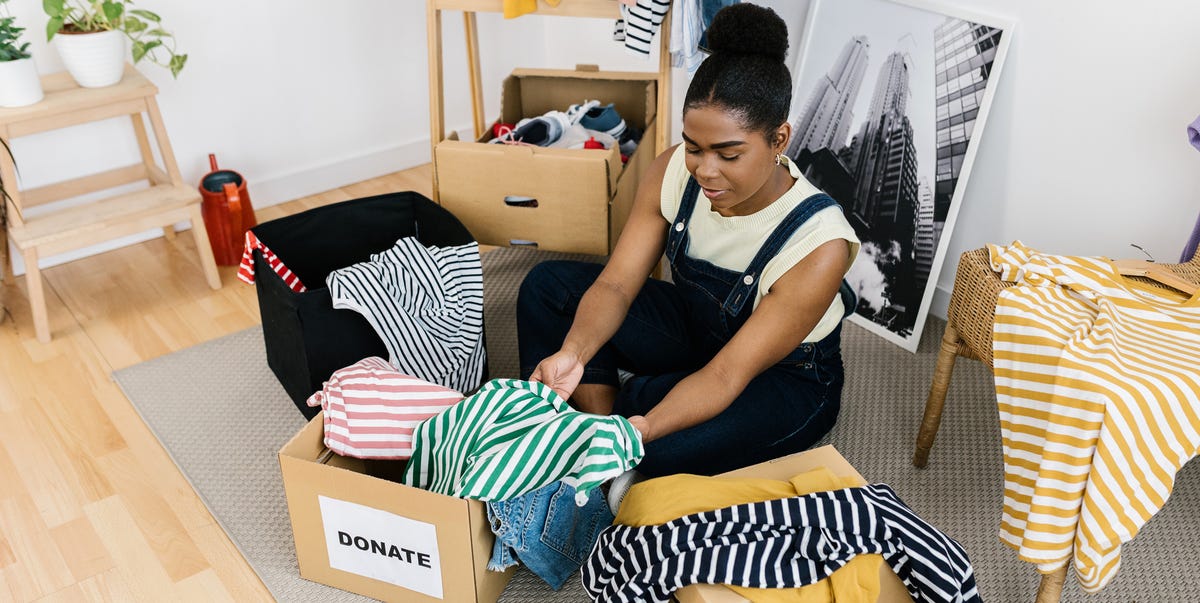
A donation bag that sits by the door for six months is not a donation bag. It is a roommate. To keep decluttering stress-free, decide where items will go before you begin. Choose one charity, resale shop, local shelter, community group, or donation pickup option.
Keep a permanent donation bin or bag in a closet, laundry room, or garage. When it fills, schedule a drop-off. This creates an exit path for items you no longer need and prevents them from sneaking back into drawers like tiny clutter boomerangs.
Do Not Forget Digital and Paper Clutter
Paper clutter is sneaky because it often looks important. Some of it is. Much of it is not. Sort papers into categories: recycle, shred, file, and action. Keep action papers in one visible place, not scattered across five rooms.
For sentimental papers such as cards, children’s artwork, invitations, and notes, consider taking photos of items you want to remember but do not need to store physically. Digital files need organizing too, but at least they do not fall on your head when you open the hall closet.
Room-by-Room Stress-Free Decluttering Checklist
Kitchen
- Toss expired pantry food and spices with no scent left.
- Donate duplicate utensils and gadgets you never use.
- Clear counters of non-kitchen items.
- Match containers with lids and recycle the lonely extras.
- Create zones for cooking, baking, coffee, snacks, and lunch prep.
Living Room
- Remove old magazines, broken decor, and random cables.
- Use baskets for blankets, remotes, and toys.
- Keep surfaces mostly clear with only a few intentional items.
- Return items that belong in bedrooms, offices, or closets.
Bathroom
- Discard expired medicine safely according to local guidance.
- Toss empty bottles, dried cosmetics, and worn-out grooming tools.
- Group daily items together and store backups separately.
- Limit counter items to what you use every day.
Bedroom
- Clear the floor first for an instant sense of progress.
- Remove laundry, dishes, papers, and items that belong elsewhere.
- Edit nightstand contents to sleep essentials.
- Donate clothing that does not fit, flatter, or function for your life now.
Closet
- Group clothing by category before deciding what to keep.
- Let go of damaged items you realistically will not repair.
- Move off-season clothing to less accessible storage if needed.
- Keep a donation bag nearby for easy future edits.
Home Office
- Recycle old notes, junk mail, and outdated paperwork.
- Keep only working pens and supplies you actually use.
- Create one inbox for action papers.
- Reset the desk for five minutes at the end of the day.
How to Keep Clutter From Coming Back
Decluttering is not a one-time heroic event. It is more like brushing your teeth: smaller maintenance prevents bigger problems. The best systems are easy enough to repeat when you are tired, busy, or running late.
Do a Five-Minute Daily Reset
Pick one time each day to reset a high-traffic area. Before bed, clear the coffee table. After dinner, reset the kitchen counter. After work, empty your bag and sort mail. Five minutes may not make your whole home perfect, but it keeps clutter from gaining confidence.
Schedule a Weekly Mini-Declutter
Choose one small area each week. A drawer, a shelf, a basket, or a car console is enough. This habit keeps your home functional without requiring marathon sessions.
Share Ownership
If you live with other people, decluttering should not belong to one person by default. Assign zones, create simple rules, and make sure everyone knows where common items live. A shared home works better when the mental load is shared too.
When Decluttering Feels Emotionally Difficult
Some clutter is connected to grief, identity, money stress, caregiving, big life changes, or anxiety. Be gentle with yourself. You are not “bad at organizing” because you struggle to release items. You may simply be human, which is inconvenient but very common.
If clutter is creating safety issues, blocking exits, attracting pests, causing major distress, or making daily life hard to manage, consider getting help from a professional organizer, therapist, or local support service. Hoarding disorder and severe clutter challenges require compassion, not shame.
Real-Life Experiences: What Stress-Free Decluttering Actually Feels Like
The most helpful decluttering lessons often come from ordinary homes, not perfect before-and-after photos. A stress-free approach usually feels less like a grand transformation and more like a series of tiny reliefs.
For example, one common experience is the “entryway breakthrough.” A family may spend months tripping over shoes, backpacks, reusable bags, and mystery sports equipment near the front door. Nobody means to create chaos; the space simply has no rules. The fix is not dramatic. They remove out-of-season shoes, donate pairs that no longer fit, add two hooks for bags, place a small tray for keys, and put a basket by the door for returns. Suddenly, leaving the house feels less like an obstacle course. No one becomes a new person. They just stop yelling, “Where are my keys?” with the emotional intensity of a courtroom drama.
Another realistic experience happens in the kitchen. Many people begin with one drawer and discover that they own three vegetable peelers, seven takeout sauce packets, birthday candles from 2014, and a measuring spoon set missing the one spoon they actually need. By sorting everything into categories, the decision becomes easier. Keep the best peeler. Toss the sticky packets. Move birthday candles to a party-supply spot. The drawer closes smoothly again, and that small success makes the next cabinet feel less intimidating.
Closets often bring a more emotional experience. Clothes can represent past sizes, past jobs, past identities, and money already spent. A stress-free method avoids harsh rules. Instead of forcing yourself to toss everything at once, start with obvious decisions: damaged items, uncomfortable pieces, duplicates, and clothing that never leaves the hanger. Then create a “maybe” section with a deadline. If you do not wear those items in the next season, let them go. This approach respects emotion while still moving forward.
Parents often find that toys are easier to declutter when children are involved in a positive way. Instead of saying, “We have too much stuff,” try, “Let’s choose toys another child would enjoy.” Keep favorites accessible and rotate some toys into storage. When fewer toys are available, cleanup becomes easier and play often becomes more focused. The surprising experience for many families is that children do not always miss the excess. Adults do, however, miss stepping on plastic dinosaurs in bare feet. Nobody writes poetry about that pain.
Home offices tell another familiar story. Paper piles grow because every document looks like it might matter. A calmer process is to create three paper categories: action, file, and discard. Bills, forms, and deadlines go into action. Tax papers and important records go into file. Old flyers, envelopes, duplicates, and outdated notes leave. The desk does not have to become empty; it just needs to become usable. A five-minute reset at the end of each workday can make the next morning feel noticeably lighter.
The biggest experience people report after decluttering is not pride in owning fewer things. It is relief. Relief that the drawer opens. Relief that the counter is clear. Relief that the bedroom feels restful. Relief that cleaning takes less time. Stress-free decluttering works because it does not demand perfection. It gives you permission to make one small decision, then another, until your home starts supporting your life instead of quietly heckling it.
Conclusion
Decluttering your home stress-free is not about becoming a minimalist, buying perfect containers, or finishing everything in one exhausting weekend. It is about making your home easier to use, easier to clean, and easier to enjoy. Start with one small zone, use simple sorting categories, remove what no longer serves you, and create homes for the items you keep.
Professional organizers agree on one powerful idea: the best organizing system is the one you can maintain in real life. So skip the guilt, set a timer, clear one drawer, and give yourself credit for every inch of progress. Your home does not need to be perfect to feel peaceful. It just needs to work for you.