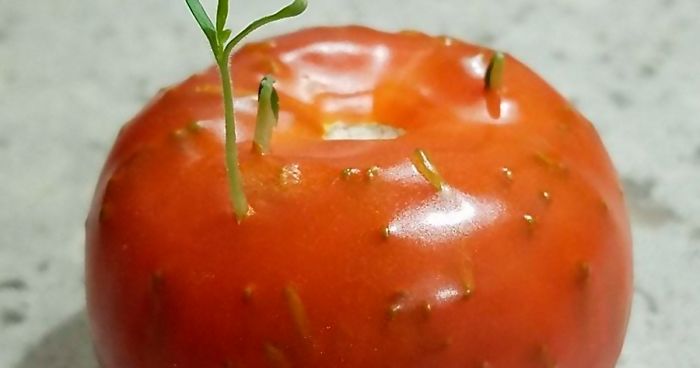
Every so often, someone slices into a tomato, strawberry, pepper, apple, or citrus fruit and discovers something that looks less like lunch and more like a deleted scene from a sci-fi horror movie. Tiny white sprouts curl through the flesh. Green shoots poke through the skin. A perfectly innocent fruit suddenly appears to be growing a second career. Congratulations: you have just met vivipary in plants, the botanical phenomenon that makes people grab their phones, whisper “absolutely not,” and share the evidence online.
The title “30 Times People Encountered ‘Vivipary’ In Plants And Just Had To Share These Terrifying Pics” sounds dramatic, but the science behind the scare is surprisingly calm. Vivipary is not a parasite invasion, not a zombie vegetable uprising, and not proof that your tomato has been plotting against you from the salad bowl. It is the premature germination of seeds while they are still inside, attached to, or closely associated with the parent fruit or plant.
In plain English: the seed decided to start growing before it was officially supposed to move out.
What Is Vivipary in Plants?
The word vivipary comes from Latin roots meaning “live birth.” In animals, vivipary refers to giving birth to live young. In plants, the idea is similar in spirit, though much less cuddly and a little more “why is my pepper growing tentacles?”
Normally, seeds remain dormant until conditions are right. They wait for moisture, warmth, oxygen, and the right environment. A tomato seed, for example, is not supposed to sprout while still inside the tomato because the fruit contains chemical and hormonal controls that help keep the seed quiet. One of the most important plant hormones involved in seed dormancy is abscisic acid, often shortened to ABA. When these controls weaken, run out, or are disrupted by stress, the seed may wake up early.
That early wake-up call can produce the unsettling images people love to share: tomatoes packed with pale seedlings, strawberries covered in tiny green sprouts, peppers with stringy interior shoots, and citrus segments that look like they have been quietly growing sea monsters.
Why Vivipary Looks So Terrifying
Vivipary is scientifically fascinating, but visually? It has the subtle charm of a haunted greenhouse.
Part of the creepiness comes from surprise. We expect a tomato to contain seeds, juice, and maybe a disappointing amount of flavor if it came from the wrong grocery store. We do not expect it to contain dozens of baby plants already stretching toward freedom. The human brain is excellent at noticing patterns that seem “wrong,” and sprouting fruit checks several boxes at once: unexpected texture, worm-like shapes, clustered growth, and a feeling that something is moving even when it is not.
This is why vivipary photos go viral. A strawberry with sprouts all over its surface can trigger the same uneasy reaction as trypophobia images. A tomato with seedlings inside may look like it is full of tiny worms, even though the sprouts are just plant embryos doing exactly what plant embryos do best: trying to become plants.
Common Foods Where People Find Vivipary
Vivipary can appear in many fruits and seed-bearing vegetables. Some examples are common in home kitchens, while others show up more often in gardens, farms, or nature photography.
Tomatoes: The Classic Vivipary Shock
Tomato vivipary is probably the most famous version. Someone cuts open a ripe or overripe tomato and finds a tangle of pale green or white sprouts inside. The seeds have germinated in the moist interior of the fruit, where they already have warmth and water. If the tomato sits long enough, the seedlings may even push against the skin and break through.
This is especially common when tomatoes are allowed to become very ripe, stored in warm conditions, or exposed to certain stresses during growth. Some tomato varieties may be more likely to show vivipary than others. High nitrogen levels, nutrient imbalance, cool storage, temperature stress, and delayed harvest can all contribute.
Strawberries: Cute Fruit, Creepy Hairdo
Strawberries are unusual because their “seeds” are visible on the outside. Technically, those little specks are achenes, each containing a seed. When vivipary happens on a strawberry, those tiny seeds can sprout while still attached to the fruit, producing a fuzzy, alien-looking surface. It is like the strawberry decided to grow a chia-pet costume without asking permission.
Peppers: Surprise Seedlings in the Seed Cavity
Bell peppers and other peppers can also show vivipary. When you cut one open, the inner seed cluster may contain small sprouts. Since peppers already have a hollow interior, the seedlings can look like pale threads dangling in a little botanical cave. Dramatic? Yes. Dangerous? Usually no, as long as the pepper is otherwise fresh and not moldy or rotten.
Apples and Pears: Orchard Fruit With a Secret
Vivipary can occur in apples and pears, especially when fruit becomes overripe or seed dormancy weakens. Finding a sprout inside an apple is less common than seeing it in tomatoes, but it does happen. The fruit may still be safe if it is firm and fresh, though the texture and flavor may be past their prime.
Citrus Fruits: The Worm Illusion
Orange, lemon, lime, and grapefruit seeds can sometimes sprout inside the fruit. In citrus, the sprouts may look especially strange because they twist through juicy segments. A citrus fruit with internal sprouts can look like it has been invaded by tiny pale noodles. Nature, apparently, has a flair for uncomfortable presentation.
Corn and Grains: When Sprouting Starts Before Harvest
Vivipary and related premature sprouting can also happen in cereal crops such as corn, wheat, and barley. In agriculture, this is not just a weird photo opportunity. Preharvest sprouting can reduce quality and create economic problems for farmers, especially when wet or cool conditions encourage grain to germinate before harvest.
What Causes Vivipary?
Vivipary is not caused by one single factor every time. It is usually the result of several conditions lining up at once. Think of it as a botanical “perfect storm,” except instead of lightning, you get a tomato full of tiny plants.
1. Overripe Fruit
As fruit matures and ages, the chemical signals that keep seeds dormant can weaken. If the fruit sits too long on the vine, counter, or shelf, the seeds may receive enough moisture and warmth to begin germinating. This is one reason vivipary often appears in tomatoes that look very ripe or slightly past their best eating stage.
2. Warm, Moist Conditions
Seeds need moisture to germinate. The inside of many fruits is already moist, and a warm kitchen can provide the rest of the encouragement. To a seed, the inside of an overripe tomato may feel like a tiny greenhouse. To a human, it feels like breakfast betrayal.
3. Changes in Seed Dormancy Hormones
Abscisic acid helps maintain seed dormancy. When ABA levels decline or when seeds become less responsive to dormancy signals, germination can begin too early. Plant scientists study this balance because it matters not only for home gardeners but also for crop production, seed storage, and food quality.
4. Plant Stress
Stress during growth can increase the chance of unusual fruit development. Temperature swings, inconsistent watering, nutrient imbalance, and delayed harvest can all affect fruit and seed behavior. In tomatoes, excessive nitrogen or other nutrient issues have been linked with a greater likelihood of vivipary.
5. Genetics and Variety Differences
Some plant varieties are simply more prone to vivipary than others. Plant breeding, natural variation, and genetic traits can influence how strongly seeds remain dormant inside the fruit. That is why two tomatoes stored in the same kitchen may not behave the same way. One stays normal; the other starts a nursery.
Is Vivipary Harmful?
In most kitchen situations, vivipary itself is not harmful. Sprouting seeds inside a fruit do not automatically mean the fruit is diseased, infected, or unsafe. However, the condition of the fruit matters. If the tomato, apple, pepper, or citrus fruit is firm, fresh-smelling, and free of mold, rot, or leaking liquid, it is generally a quality issue more than a safety emergency.
That said, sprouted fruit may not taste its best. The texture can be softer, the flavor may be dull, and the sprouts themselves may be bitter or unpleasant. For tomatoes, a viviparous fruit is often better used in cooked dishes, sauces, soups, or compost rather than sliced proudly into a salad where guests can ask, “Why is the garnish trying to escape?”
If the fruit has broken skin, mold, a sour smell, slimy areas, or obvious decay, throw it away. Broken skin creates an easier path for microorganisms, and no amount of curiosity is worth turning dinner into a biology lab with consequences.
Can You Plant the Sprouts?
Sometimes, yes. If you find sprouted tomato seeds inside a tomato, you can carefully remove a few seedlings and plant them in a seed-starting mix. Give them light, warmth, and gentle watering. Some may survive and grow like ordinary tomato seedlings.
There is one catch: if the original tomato came from a hybrid variety, the new plants may not produce fruit exactly like the parent. Hybrid seeds can grow into plants with mixed traits, which is either disappointing or exciting depending on how much you enjoy garden roulette. You might get a productive plant, a weird plant, or a plant that produces tomatoes with the emotional complexity of a reality show contestant.
Vivipary in Nature: Mangroves Do It on Purpose
Not all vivipary is accidental. In mangrove forests, vivipary is a survival strategy. Red mangroves and other mangrove species grow in salty, muddy, unstable coastal environments where ordinary seed germination would be risky. Instead of dropping a dormant seed and hoping for the best, mangroves develop propagules while still attached to the parent tree.
These propagules are like ready-to-go baby plants. When they drop, they can float with tides and currents until they find a suitable place to root. Some may lodge in mud and begin growing quickly. In this context, vivipary is not a creepy glitch; it is an elegant adaptation to a difficult habitat.
So, while a sprouting strawberry may look like a tiny produce nightmare, vivipary is also one of the reasons mangrove forests can thrive along coastlines, stabilize shorelines, and provide habitat for fish, birds, crabs, and countless other creatures.
Why People Share Vivipary Pics Online
Vivipary photos hit the perfect internet sweet spot: educational, unsettling, funny, and completely unexpected. They are not graphic enough to be unbearable, but they are weird enough to make people pause mid-scroll. They invite the same comments every time: “Is this safe?” “What am I looking at?” “Burn it.” “Actually, that’s amazing.”
The viral appeal also comes from the fact that these images happen in ordinary places. You do not need to hike into a rainforest or own a microscope. You can encounter vivipary while making salsa, packing lunch, baking with apples, or grabbing a strawberry from the fridge. Nature sneaks the strange into the routine, then watches us overreact with excellent comic timing.
30 Types of Vivipary Moments People Can’t Resist Sharing
While every photo is different, most viral vivipary encounters fall into recognizable categories. Here are the kinds of moments that make people reach for the camera before reaching for the compost bin:
- A tomato sliced open to reveal dozens of pale seedlings curled inside.
- A cherry tomato with sprouts bursting through the skin.
- A bell pepper containing a tiny green plant in its seed cavity.
- A strawberry covered in tiny sprouted seeds like botanical stubble.
- An apple seed growing a root inside the core.
- A pear with a seedling hidden near the center.
- A grapefruit with sprouts winding through the segments.
- A lemon seed germinating inside the fruit.
- A lime with a curled sprout that looks suspiciously worm-like.
- An orange segment hiding a tiny plant shoot.
- A pumpkin with sprouted seeds inside.
- A squash filled with seeds that have already started growing.
- A melon with seedlings forming in the seed cavity.
- An ear of corn sprouting before it leaves the stalk.
- Wheat or barley sprouting before harvest after wet weather.
- A tomato left on the counter too long and turning into a seedling hotel.
- A garden tomato that looks normal outside but wild inside.
- A pepper seedling growing inside a pepper like a plant-within-a-plant.
- A strawberry whose sprouts make it look furry.
- A citrus fruit that appears to contain tiny white tentacles.
- A mangrove propagule still attached to the tree.
- A red mangrove seedling floating like a tiny green spear.
- A greenhouse tomato crop showing internal sprouting.
- A homegrown tomato variety that repeatedly produces vivipary.
- A supermarket tomato sprouting after warm storage.
- A forgotten fruit bowl turning into an accidental nursery.
- A compost pile fruit sprouting before it fully decomposes.
- A cut pepper that looks like it is growing a second pepper.
- An overripe fruit proving that seeds do not care about your meal plan.
- A perfectly timed photo that turns plant science into viral entertainment.
How to Prevent Vivipary in Fruits and Vegetables
You cannot prevent every case of vivipary, but you can reduce the odds.
Harvest on Time
Do not leave ripe fruits on the plant too long. Tomatoes, peppers, and similar crops should be picked when they reach the proper stage of ripeness. Delayed harvest gives seeds more time to break dormancy inside the fruit.
Store Produce Properly
Keep produce in conditions recommended for that crop. Avoid leaving ripe tomatoes in hot, humid places for long periods. At the same time, be careful with overly cold storage for tomatoes, which can affect quality and may contribute to problems in some situations.
Use Ripe Produce Promptly
Vivipary is more likely when fruits sit too long. If a tomato is ready, use it. The fruit bowl is not a long-term apartment complex for seeds with ambition.
Manage Garden Stress
Consistent watering, balanced fertilization, and healthy soil can reduce plant stress. Avoid overdoing nitrogen fertilizer, especially as fruit ripens. Plants appreciate nutrition; they do not need an all-you-can-eat buffet that turns the fruit into a science surprise.
Experiences Related to Vivipary: When the Kitchen Becomes a Tiny Jungle
The most memorable thing about vivipary is not just the science. It is the moment of discovery. People usually meet vivipary during an ordinary task: chopping tomatoes for tacos, slicing fruit for breakfast, washing strawberries, or cutting peppers for dinner. Then suddenly the routine cracks open, and there it is: life, inconveniently early and visually dramatic.
Imagine preparing a simple tomato sandwich. You have toasted the bread, spread the mayo, added a little salt, maybe even congratulated yourself for choosing a healthy lunch instead of eating cereal over the sink. Then your knife slides through the tomato and reveals a nest of tiny sprouts. For one full second, your brain refuses the information. The tomato was supposed to be food. Now it appears to be hosting a family reunion.
That emotional whiplash is why people share these pictures. Vivipary is not dangerous in the way it looks dangerous. It is more like nature tapping you on the shoulder and saying, “By the way, I have been doing complicated things inside your groceries.” The fear turns into curiosity. Curiosity turns into a search. The search leads to the word “vivipary.” And once someone learns the word, they immediately become the type of person who explains it at dinner parties whether anyone asked or not.
Gardeners often have the best vivipary stories because they know how much effort goes into growing fruit. A home gardener may wait all summer for the perfect tomato, protect it from pests, water it carefully, watch it ripen, and finally bring it inside like a trophy. Then they cut it open and find seedlings already germinating. It feels rude. The tomato skipped the seed packet stage and started the next generation without consulting management.
For some people, the discovery is gross enough to ruin the appetite. For others, it becomes an experiment. They remove the seedlings, place them in soil, and see what happens. Children especially tend to love this part. What begins as “Ew, what is that?” can become a lesson in seed dormancy, plant hormones, fruit ripening, and the stubborn optimism of living things. A sprouted tomato may not be ideal for a salad, but it is excellent at making biology feel real.
Vivipary also changes the way people look at produce. After seeing it once, you may inspect every tomato with suspicion. You may cut peppers more carefully. You may stare at strawberries and wonder whether the seeds are behaving themselves. This is the funny side effect of learning plant science: the grocery store becomes less boring. Every fruit is suddenly a small biological system, not just an ingredient waiting for a recipe.
And that is the strange charm of those terrifying vivipary pictures. They remind us that plants are not passive decorations or silent food objects. They are living organisms with timing, chemistry, stress responses, reproductive strategies, and the occasional flair for horror aesthetics. A tomato full of sprouts may look like a tiny nightmare, but it is also proof that life is persistent, opportunistic, and sometimes deeply committed to making your lunch weird.
Conclusion
Vivipary in plants may look terrifying, but it is usually a natural case of seeds germinating earlier than expected. In tomatoes, peppers, strawberries, apples, citrus fruits, and grains, it can happen when dormancy controls weaken, fruit becomes overripe, storage conditions encourage germination, or plants experience stress. In mangroves, vivipary is not a mistake at all; it is a brilliant adaptation that helps seedlings survive in salty coastal environments.
So the next time you cut into a tomato and find sprouts inside, take a breath before declaring the kitchen haunted. Check the fruit for freshness, skip it if it shows signs of decay, and maybe plant a seedling if you feel adventurous. At the very least, snap a photo. The internet has made one thing clear: when fruit starts growing more fruit, people absolutely need to see it.
Note: This article is original editorial content based on real horticultural, agricultural, and botanical information. Source links are intentionally omitted for clean web publishing.