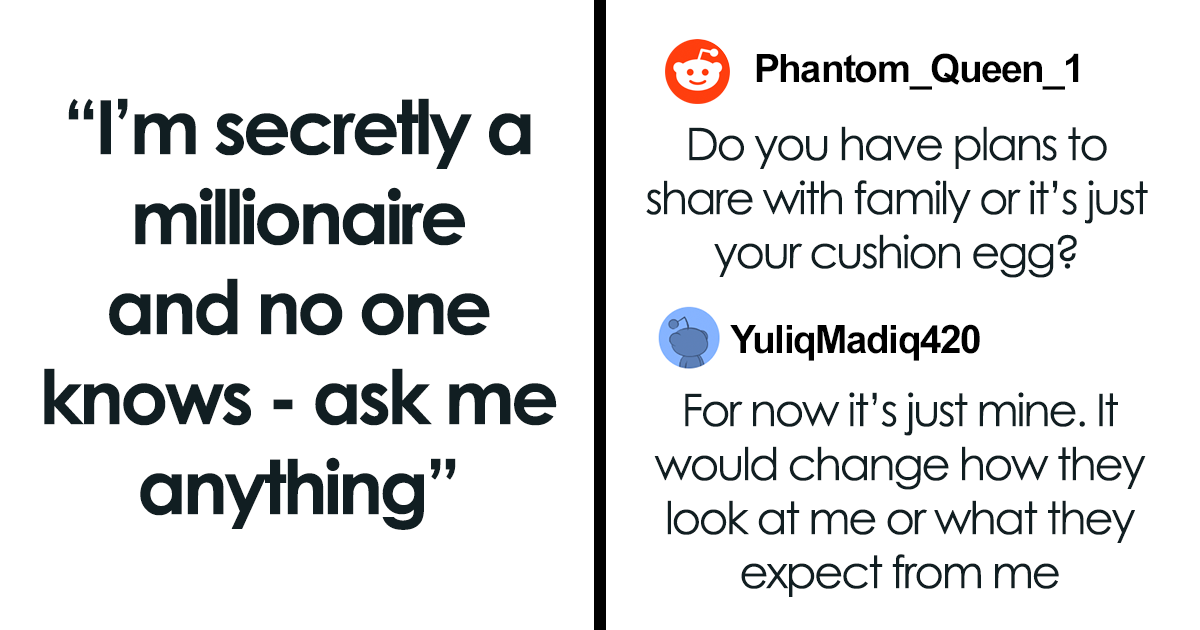
Most people imagine a giant lottery win as a confetti cannon moment: champagne, screaming, a group chat explosion, and at least one cousin suddenly remembering he always believed in you. But one anonymous man took a wildly different route after becoming a millionaire. According to a public online Q&A later covered by media outlets, he won around $14 million and decided not to tell his friends or family.
No dramatic press conference. No “guess who’s rich now?” social media post. No gold-plated sports car parked outside his apartment like a neon sign for every long-lost acquaintance. Instead, he kept living quietly, answered questions anonymously online, and revealed something surprisingly practical: becoming rich overnight can be less about buying everything and more about protecting your peace.
The story caught attention because it flips the usual lottery-winner fantasy on its head. The fascinating part is not just the money. It is the silence. In an age when people post their coffee foam, gym mirrors, and airport boarding passes, keeping a $14 million windfall private feels almost heroic. Or suspicious. Or both, depending on how nosy your aunt is.
The Secret Millionaire Story That Grabbed the Internet
The anonymous winner said he chose a low-key life after receiving the kind of money that can change everything. Instead of splurging immediately, he focused on making the money last. He described spreading it across savings, investments, and income-generating assets while avoiding the classic “mansion and Lamborghini” phase.
That detail is what made readers lean closer to the screen. People expect instant millionaires to become walking shopping carts. This guy seemed more interested in stability, privacy, and not waking up one day surrounded by marble countertops, unpaid tax bills, and friends named “Bro, remember me?”
He also explained that he had not told friends or family because he liked living normally. That sounds simple, but it is a major emotional decision. Money does not only change your bank balance. It can change how people look at you, what they expect from you, and how comfortable you feel saying no.
Why Would Someone Hide a $14 Million Win?
At first, hiding that kind of news may sound cold. After all, wouldn’t family be happy? Wouldn’t close friends celebrate? Maybe. But sudden wealth has a way of turning ordinary relationships into complicated financial weather systems.
A person who wins millions can quickly become a target for requests, advice, assumptions, and guilt. One relative may ask for a loan. Another may call it an “investment opportunity.” A friend may suddenly need help with a business idea involving protein bars, crypto, and absolutely no business plan. Even well-meaning loved ones can create pressure simply because they now know the money exists.
Privacy protects relationships before money tests them
Keeping quiet does not always mean someone is selfish. Sometimes it means they are trying to preserve the version of life where conversations are still about dinner, work, jokes, and weekend plansnot whether they can pay off someone’s mortgage.
Once a windfall becomes public, the winner may never know whether people are being kind because they care or because they hope to benefit. That uncertainty can poison trust. Silence, in this case, can be a shield.
Money changes expectations fast
Before the win, a person might be seen as regular, relatable, and financially human. After the win, some people may assume they have unlimited resources. But $14 million, while enormous, is not infinite. Taxes, inflation, poor investments, lawsuits, overspending, and constant handouts can drain even a stunning fortune.
The anonymous winner’s approach suggests he understood something many people miss: wealth is not just about getting money. It is about keeping enough of it to remain free.
The Smart Part: He Did Not Rush Into a New Identity
One of the most interesting parts of the story is that the winner did not seem desperate to become a new person. He did not appear to define wealth as showing everyone he was wealthy. Instead, he described wanting comfort, security, and long-term control.
That may not sound flashy, but it is the financial equivalent of wearing a seatbelt in a rocket ship. Sudden money can create a strange identity crisis. If you were a regular person yesterday and a multimillionaire today, who are you tomorrow? The answer can become dangerous if it is based entirely on purchases.
Buying a dream home is not necessarily reckless. Enjoying life is not wrong. But when the first instinct is to impress people, the money starts working for the audience instead of the owner. Quiet wealth removes the audience. It lets a person ask, “What do I actually want?” instead of “What will make people gasp?”
The Tax Reality Behind a Lottery-Style Windfall
Big wins often look larger in headlines than they do after taxes. In the United States, gambling winnings, including lottery winnings, are taxable income. Depending on the winner’s location, payout structure, and other financial details, federal and state tax obligations can significantly reduce the final amount.
That is why sudden wealth planning matters. A winner who treats the headline number as spendable cash can make expensive mistakes. The smarter move is to pause, calculate, and build a plan before making promises or purchases.
And yes, this is the part where the dream sequence briefly cuts to paperwork. Every millionaire fantasy eventually meets a tax form wearing tiny reading glasses.
Why Telling Friends and Family Can Get Messy
When people hear that someone has won millions, they often imagine the winner has solved every problem forever. But sometimes the win creates brand-new problems with better lighting.
Family money requests can be emotionally brutal because they rarely feel like normal financial decisions. Saying no to a stranger is easy. Saying no to a sibling, cousin, parent, or childhood friend can feel like rejecting a relationship. That is why winners often need boundaries before the requests arrive.
The “just this once” problem
A single request can sound harmless. Help with rent. Help with a car. Help with tuition. Help with debt. But once a winner says yes to one person, other people may expect equal treatment. Suddenly, a private windfall becomes a public fairness debate.
Even generosity needs structure. Without limits, the winner can become a walking emergency fund for everyone else. That role may feel noble for a while, but it can lead to resentment, confusion, and financial damage.
The friendship test nobody asked for
Friendships can also get awkward. A friend may expect the winner to pay for every dinner. Another may make jokes about “rich people problems” until the jokes stop feeling like jokes. Someone else may pitch an investment that sounds less like a business and more like a money bonfire with a logo.
The anonymous winner’s secrecy avoided that test entirely. His friends and family could keep treating him normally because, as far as they knew, nothing had changed.
Quiet Wealth Is Not the Same as Miserliness
There is a big difference between being secretive because you plan to hoard every dollar and being private because you want a normal life. Quiet wealth can still include generosity. It can still include charity, helping loved ones, and making meaningful purchases. The difference is that the winner chooses when and how to give instead of being pushed into it by outside pressure.
In fact, privacy can make generosity more thoughtful. When nobody knows you have millions, any help you give can be targeted and intentional. You can support a cause without turning your life into a public donation counter. You can help a relative without accidentally starting a family-wide courtroom drama at Thanksgiving.
That may be the most underrated lesson of the story: money is most powerful when it serves values, not noise.
What This Story Reveals About Sudden Wealth
Sudden wealth is not just a financial event. It is a psychological event, a social event, and sometimes a logistical circus wearing a tiny hat. People who receive large windfalls may experience anxiety, guilt, confusion, or fear of losing the money. They may also struggle with boredom, isolation, or distrust.
That does not mean winning money ruins lives. Plenty of winners do well. Some become happier, more secure, and more generous. But the difference often comes down to discipline, support, and pacing. The winners who avoid chaos usually do not treat the windfall like a race. They treat it like a responsibility.
The pause is powerful
The first major decision after sudden wealth should often be no decision at all. Pausing creates room to think clearly. It helps prevent emotional spending, panic promises, and dramatic lifestyle upgrades that later feel like financial handcuffs.
The anonymous winner’s calm approach is compelling because he appeared to understand that speed is the enemy of wisdom. He did not need to prove anything immediately. He let the money sit quietly while he figured out what kind of life he wanted.
A professional team matters
For anyone who unexpectedly receives major wealth, professional advice is crucial. A qualified tax professional, estate attorney, and fiduciary financial advisor can help with tax planning, legal protection, long-term investing, and family boundaries.
That is not as fun as buying a yacht named “Oops,” but it is much more useful. A strong advisory team can also act as a buffer. Instead of personally rejecting every request, a winner can say, “I have a plan and I am following professional guidance.” It is polite, boring, and wonderfully effective.
The Internet’s Fascination: Could You Keep It a Secret?
The reason this story went viral is simple: everyone wants to know what they would do. Would you tell your parents? Your best friend? Your partner? Your dog? The dog would probably know immediately because you would start buying premium treats with suspicious confidence.
For many people, secrecy sounds impossible. The excitement alone would be hard to contain. But the anonymous winner’s choice forces a deeper question: do we want money for freedom, or do we want money for applause?
If the goal is applause, telling everyone makes sense. If the goal is freedom, silence becomes more attractive. Freedom means choosing your schedule, your home, your work, your giving, and your future without turning your private life into a public committee meeting.
Why This Story Is Not an Advertisement for Gambling
It is important to say the quiet part clearly: lottery-style wins are rare and should never be treated as a financial plan. The interesting lesson here is not “go chase a jackpot.” The lesson is about privacy, boundaries, and decision-making when life changes suddenly.
Most people will build financial security through far less dramatic methods: earning, saving, investing carefully, managing debt, and avoiding decisions that look exciting but quietly eat the future. A $14 million surprise makes a great headline, but discipline is still the real main character.
The anonymous winner’s story works because it is not really about luck. Luck opened the door. Restraint kept the room from catching fire.
Experiences and Real-Life Lessons Related to Quietly Becoming a Millionaire
Stories like this feel entertaining because they are extreme, but the experiences behind them are surprisingly relatable. Many people have had smaller versions of the same problem. Maybe they received a bonus, inheritance, settlement, promotion, or profitable investment. Suddenly, people around them began acting differently. The numbers were smaller, but the emotional pattern was the same.
One common experience is the pressure to explain lifestyle changes. If someone pays off debt, upgrades a car, takes more vacations, or stops worrying about every restaurant bill, friends may notice. Questions begin casually: “Did you get a raise?” “Are you doing something on the side?” “How can you afford that?” The person may not want to lie, but they also may not want to hand everyone a copy of their bank statement with popcorn.
Another related experience is learning that generosity without boundaries can become a trap. A person may help a loved one once and feel great about it. Then the same person comes back again. Then someone else hears about it. Then the original act of kindness turns into an expectation. The giver starts feeling less like a loved one and more like a private ATM with holiday emotions.
There is also the loneliness of good fortune. People often assume that more money automatically means fewer worries. In reality, money can remove certain stresses while adding new ones. A person may wonder who to trust, how much to share, whether they are becoming too cautious, or whether they are wrong for not helping everyone. Those questions can be heavy, especially when the winner has no safe place to discuss them honestly.
The smartest sudden-wealth experiences often involve small, almost boring choices. The person does not quit everything immediately. They do not buy the most visible symbol of success. They do not announce the news while emotions are still exploding like microwave popcorn. Instead, they breathe. They learn. They plan. They may upgrade comfort quietly: better healthcare, safer housing, reliable transportation, education, time with family, or meaningful travel.
Quiet wealth also teaches people that confidence does not require performance. You do not need strangers to know you are financially secure for that security to matter. You do not need to dress rich, talk rich, or decorate your life like a luxury hotel lobby. Sometimes the best version of wealth is being able to sleep well, ignore panic, and choose peace over attention.
The anonymous $14 million winner may or may not be the model every person would follow. Some people would tell a spouse or parent. Some would celebrate with close friends. Some would give publicly to charity. But his story is valuable because it shows another possibility: a windfall can be handled quietly, patiently, and privately. Not every life-changing event needs a spotlight. Sometimes the most powerful flex is not flexing at all.
Conclusion
The story of a guy quietly becoming a millionaire by winning $14 million and not telling friends or family is more than internet curiosity. It is a modern parable about privacy in a culture addicted to announcements. The money is exciting, of course. But the real intrigue is the restraint.
By keeping the win private, the anonymous millionaire protected his relationships, avoided instant pressure, and gave himself room to make rational decisions. His approach may not suit everyone, but it highlights a powerful truth: sudden wealth requires more than luck. It requires patience, boundaries, planning, and the confidence to live for yourself instead of an audience.
In the end, the quiet millionaire did something many people with far less money struggle to do. He chose peace over performance. And honestly, that might be the richest move of all.
Note: This article is written as a commentary-style feature based on public reporting and general sudden-wealth guidance. It is not financial, legal, tax, or gambling advice, and it should not be read as encouragement to gamble.