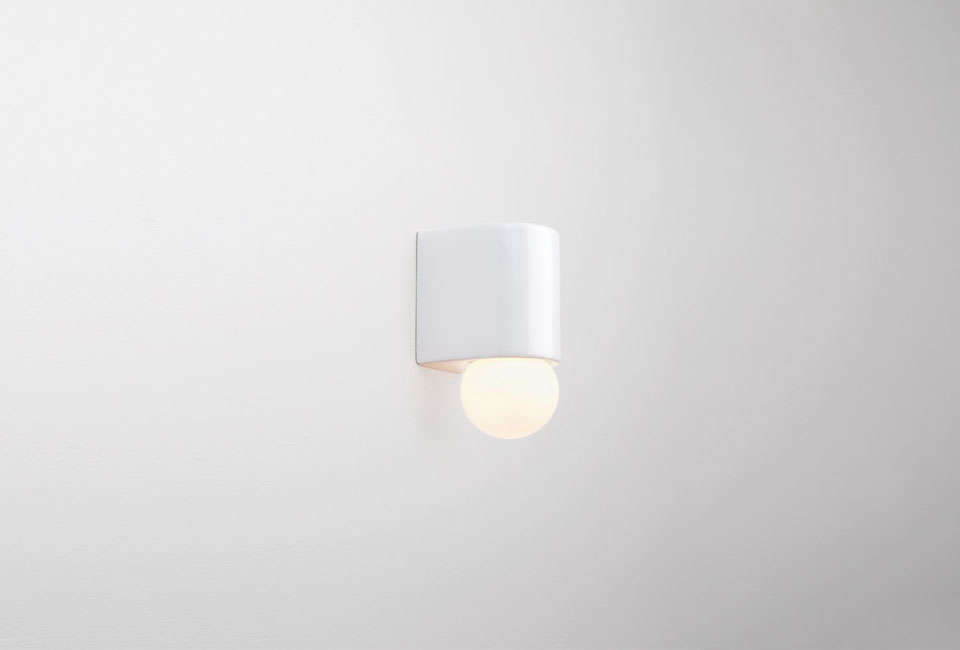
Michael Anastassiades has long been associated with lighting that looks almost impossibly calm: a glowing sphere balanced on a slender rod, a chandelier that appears to hover in mid-thought, a brass detail so quiet it makes other fixtures look like they are shouting across the room. But with the White Porcelain Series, the London-based Cypriot designer turns the volume down even further. The result is a collection of porcelain lighting fixtures that feels both ancient and freshly modern, like something discovered in a Bauhaus archive and then politely upgraded for today’s most considered interiors.
The title “New Directions” fits because this collection does not rely on the designer’s familiar brass poetry. Instead, it celebrates porcelain: glazed, tactile, modest, and surprisingly luxurious. These are not flashy lights that barge into a room wearing sequins. They are more like the person at dinner who says three sentences all night and somehow becomes the most interesting guest.
For homeowners, designers, architects, and lighting obsessives, Michael Anastassiades porcelain lighting offers a useful lesson: minimalism does not have to be cold, and utility does not have to look utilitarian. When proportion, material, and light are handled with care, even a small wall sconce can change the mood of an entire room.
Who Is Michael Anastassiades?
Michael Anastassiades is a designer whose work sits between product design, sculpture, and quiet theater. Born in Cyprus and based in London, he trained as a civil engineer before earning a master’s degree in industrial design. That background matters. His best-known pieces often feel engineered with mathematical discipline, yet they still carry a sense of wonder. In other words, the calculator and the poet are both invited to the meeting.
Anastassiades founded his studio in London in the 1990s and later developed an eponymous brand to make his signature lighting and objects more widely available. His work is held in important museum collections and has been shown internationally. Beyond his own studio pieces, he has collaborated with major design brands, including Flos, Cassina, B&B Italia, Herman Miller, Molteni, Glas Italia, Alessi, and others.
Many people know him through designs such as IC Lights for Flos, where a glowing glass sphere appears to balance delicately on a metal rod. That sense of balance is a recurring idea in his work. He often strips lighting down to elemental forms: circle, line, globe, tube, surface. Yet the pieces rarely feel empty. They feel measured, thoughtful, and quietly alive.
The White Porcelain Series: A Subtle but Important Shift
The White Porcelain Series was first produced in 2017 and includes ceiling and wall lights made with glazed porcelain bodies, opaline diffusers, and G9 LED bulbs. At first glance, the collection may seem almost too simple. A small white form. A soft diffuser. A wall or ceiling mount. That is it. No decorative fireworks. No dramatic arms. No “look at me” silhouette.
But the simplicity is exactly the point. The series focuses on materiality and form, allowing porcelain to do the heavy lifting. Porcelain has a long history in domestic and industrial objects, from tableware to bathroom fittings to early electrical components. Anastassiades reintroduces the material in a way that feels refined rather than nostalgic. The fixtures nod to the practical language of early 20th-century ceramic lighting, especially Bauhaus-era porcelain lights, but they are simplified for a contemporary interior.
This is where the collection becomes interesting. Porcelain can easily feel old-fashioned or purely functional. In the wrong context, it might remind you of a utility closet, a school corridor, or a bathroom that has seen too many questionable paint colors. Anastassiades changes that perception through proportion, finish, and invisible detailing. The hardware retreats. The light remains. The object becomes almost anonymous, but in the best possible way.
Why Porcelain Works So Well for Lighting
Porcelain is not merely a pretty surface. It brings real design advantages to lighting fixtures. It is durable, heat-resistant, smooth to the touch, and visually soft. When glazed in white, it reflects light gently rather than aggressively. That makes porcelain lighting especially useful in spaces where atmosphere matters as much as brightness.
In the White Porcelain Series, the opaline diffuser softens the bulb, while the porcelain body gives the fixture a grounded, crafted presence. The pieces feel handmade without looking rustic. That is an important distinction. Many “handcrafted” objects lean heavily into texture, irregularity, and visible imperfection. Anastassiades takes another route. The craft is present, but restrained. The fixture does not need to wave a tiny ceramic flag and shout, “I was made with care!” It simply behaves like it was.
The handmade nature of ceramic also means dimensions can vary slightly, which adds quiet individuality to each piece. This is one of the most appealing aspects of contemporary porcelain lighting: it bridges the gap between industrial consistency and human variation. You get clean lines, but not soulless perfection.
Design Details That Make the Collection Stand Out
1. Invisible Fixture Detailing
One of the collection’s defining features is its sophisticated, nearly invisible fixture detailing. With many wall lights and ceiling lights, mounting hardware can become visually noisy. Screws, seams, and plates interrupt the form. Here, the practical components are handled discreetly, allowing the porcelain shape and glowing diffuser to take center stage.
2. Refined Proportions
Minimal design only works when proportions are exact. Remove ornament, and every millimeter suddenly has a job. The White Porcelain Series relies on simple geometry, but the dimensions feel carefully judged. The small O1 ceiling or wall light, for example, works as a compact punctuation mark. The D1, D2, and D3 wall lights introduce more directionality and length while still maintaining the collection’s reserved character.
3. Flexible Wall and Ceiling Applications
Many pieces in the series can be used on either the wall or ceiling, making them unusually versatile. This flexibility is a major advantage for interior designers. A single lighting language can move from hallway to bathroom, from bedroom wall to kitchen ceiling, without making the home feel over-designed. It creates continuity, but not monotony.
4. A Soft, Architectural Glow
The opaline diffuser produces a clean, diffused light that feels architectural rather than decorative. These fixtures are not trying to replace a chandelier over a dining table or become the star of a dramatic foyer. They are better suited for layered lighting: hallways, powder rooms, bedrooms, reading corners, entryways, and transitional spaces.
Where These Porcelain Fixtures Work Best
Porcelain lighting from Michael Anastassiades is especially compelling in interiors that value restraint. Think limewashed walls, plaster surfaces, natural stone, oak floors, linen curtains, and rooms where the most dramatic object is probably a very serious chair. But the collection is more adaptable than it first appears.
In a modern bathroom, the white porcelain surface feels appropriate without looking generic. In a hallway, a row of small ceiling or wall fixtures can create rhythm without clutter. In a bedroom, a pair of sconces can offer soft evening light while keeping the room calm. In a kitchen, these fixtures can add warmth to spaces dominated by hard surfaces such as tile, marble, stainless steel, or concrete.
The series also works beautifully in older homes. Because porcelain has historical associations, it can sit comfortably in a traditional setting. Yet the simplified forms prevent the fixture from looking like a reproduction. This balance makes the White Porcelain Series a strong choice for renovations where the goal is not to erase history but to edit it politely.
How the Collection Fits Into Current Interior Design Trends
Interior design has been moving away from overly shiny, overly busy fixtures. Many homeowners now want lighting that feels warm, tactile, and integrated into the architecture. The White Porcelain Series speaks directly to that shift. It is minimal, but not sterile. It is luxurious, but not loud. It looks expensive in the way good tailoring looks expensive: not because of a giant logo, but because the fit is right.
The collection also aligns with the renewed interest in natural materials and honest finishes. Designers are increasingly drawn to plaster, ceramic, stone, wood, unlacquered metals, and surfaces that age with dignity. Anastassiades has often emphasized preserving the inherent qualities of materials, and porcelain fits neatly into that philosophy. It does not pretend to be something else. It is porcelain, and that is enough.
Another trend the collection supports is “quiet luxury,” though the phrase has been used so often it may need a vacation. In lighting terms, quiet luxury means choosing pieces that improve a room without dominating it. These porcelain fixtures do exactly that. They do not beg for attention, which is precisely why people notice them.
Comparing Porcelain to Brass, Glass, and Metal Lighting
Michael Anastassiades is often associated with brass, opaline glass, and finely balanced metal structures. Brass brings warmth, reflection, and a sense of preciousness. Glass brings glow and delicacy. Metal brings line, tension, and structure. Porcelain brings something different: softness, humility, and permanence.
Compared with brass fixtures, porcelain lighting feels quieter and less decorative. Compared with exposed glass globes, it feels more architectural and grounded. Compared with painted metal, glazed porcelain has more depth and tactile appeal. It can also soften a room visually, especially when paired with matte walls or natural materials.
This does not mean porcelain is “better” than other materials. It means it performs a different emotional role. Brass may add glamour. Glass may add transparency. Porcelain adds calm. And in many modern homes, calm is not exactly in oversupply.
Styling Ideas for Michael Anastassiades Porcelain Lighting
Use Repetition for Quiet Drama
A single fixture can be subtle. Several placed in a rhythm can become architectural. In a hallway, repeat the O1 or a similar ceiling-wall fixture at consistent intervals. The result feels ordered and elegant without turning the ceiling into a lighting showroom.
Pair With Textured Walls
White porcelain looks especially beautiful against plaster, limewash, microcement, handmade tile, or painted brick. The contrast between smooth glaze and textured wall gives the fixture more visual presence while keeping the palette restrained.
Let It Replace the Ordinary
The White Porcelain Series shines when used in places that often get boring lighting: utility corners, bathrooms, entryways, closets, and corridors. Replacing a standard ceiling socket with a considered porcelain fixture can make a small space feel designed rather than forgotten.
Mix With Warm Metals
Although the collection itself is porcelain-forward, it pairs well with brass, bronze, nickel, and blackened metal hardware. The trick is not to overmatch. A porcelain sconce near a brass mirror or bronze faucet can feel layered and sophisticated.
Why Designers Keep Returning to Anastassiades
The appeal of Michael Anastassiades lighting is not just the final object. It is the discipline behind it. His designs often ask how little can be done while still creating emotional impact. That question is harder than it sounds. Anyone can add more. Fewer people know when to stop.
The White Porcelain Series is a strong example of this restraint. It takes a familiar material and removes the visual baggage around it. It treats porcelain not as something quaint, clinical, or purely practical, but as a material capable of elegance. That move may seem small, yet it changes how the fixture behaves in a room.
Good lighting should support life as much as it supports design photography. It should make the bathroom usable at 6 a.m., the hallway welcoming at night, and the bedroom calm before sleep. These fixtures understand that. They are not dramatic for the sake of drama. They are useful, beautiful, and blessedly free of design gymnastics.
Buying Considerations Before Choosing Porcelain Lighting
Before choosing porcelain lighting fixtures, consider scale, brightness, installation requirements, and dimming compatibility. The White Porcelain Series includes compact models and elongated versions, so the best choice depends on where the fixture will live. A small ceiling-wall light may be ideal for a powder room or hallway, while a longer tube-style piece can create a stronger architectural line.
Because these are design-led fixtures, they should be planned as part of a complete lighting scheme. Do not expect one small sconce to light an entire kitchen, unless the kitchen belongs to a dollhouse with excellent taste. Use them as ambient or accent lighting, then layer with task lighting where needed.
It is also worth thinking about maintenance. White porcelain is durable and generally easy to clean, but it will show dust more visibly than darker finishes. Fortunately, that is not a tragedy. A soft cloth and occasional attention should keep the fixture looking crisp. If your household includes enthusiastic spaghetti sauce incidents, maybe do not install it directly above the most chaotic cooking zone.
Experience Notes: Living With Porcelain Lighting in Real Interiors
Imagine walking into a narrow hallway at night. Instead of a harsh ceiling light that makes everyone look like they are being interrogated about missing cookies, a small porcelain ceiling-wall fixture gives the space a soft, even glow. The hallway suddenly feels intentional. Nothing dramatic has happened, yet everything feels better. That is the quiet power of this kind of lighting.
In real homes, the best lighting often disappears into daily life. You notice it not because it screams, but because the room simply feels right. Porcelain fixtures are especially good at creating that effect. Their white surfaces blend easily with walls and ceilings, while the opaline diffusers soften the light enough for everyday comfort. The experience is less “statement piece” and more “why does this room feel so peaceful?”
One of the most satisfying uses for porcelain lighting is in a bathroom renovation. Bathrooms are full of hard materials: tile, stone, mirrors, metal fittings, glass shower doors. A porcelain fixture adds softness without introducing visual clutter. It feels clean but not cold. In a guest bath, a compact porcelain wall light can make the room feel considered, even if the square footage is modest. Small rooms love good lighting; they just rarely get it.
In bedrooms, porcelain sconces can create a gentle evening mood. Placed near the bed, they work best when supported by dimming controls or a layered lighting plan. The goal is not to flood the room with brightness. The goal is to make the space feel calm enough that your phone starts to look like the villain of the evening. A soft porcelain light beside linen bedding, wood furniture, and pale walls can create exactly that atmosphere.
For designers working on older houses, porcelain lighting can be a smart bridge between past and present. Many historic homes already include ceramic, plaster, tile, or painted wood. A refined porcelain fixture respects that material language without resorting to imitation vintage style. It feels familiar, but not fake. That is a difficult balance, and it is one reason the White Porcelain Series remains relevant.
There is also a practical emotional benefit. Porcelain does not have the visual temperature of shiny chrome or the moodiness of black metal. It feels approachable. It does not compete with artwork, furniture, or architectural details. In open-plan homes, where one room visually flows into the next, that restraint can be extremely helpful. A repeated porcelain fixture can create continuity without making every space look identical.
The key experience is restraint. These fixtures reward slower looking. At first, you may only see a white shape. Then you notice the proportion, the glow, the way the fixture sits against the wall, the absence of fussy hardware, the relationship between ceramic and light. It is a reminder that good design does not always arrive with a drumroll. Sometimes it enters quietly, turns on the light, and lets the room breathe.
Final Thoughts: A Small Fixture With a Big Design Lesson
New Directions: Porcelain Lighting Fixtures from Michael Anastassiades is more than a story about a material change. It is a reminder that innovation in design does not always require louder shapes, smarter apps, or fixtures that can change color 47 ways because apparently the living room now needs a nightclub mode. Sometimes the freshest direction is a return to essentials: form, material, proportion, and light.
The White Porcelain Series proves that porcelain can be contemporary, refined, and quietly luxurious. It shows how a familiar material can be reimagined through precision and restraint. For anyone designing a home that values calm over clutter, atmosphere over spectacle, and craft over trend-chasing, these porcelain lighting fixtures deserve serious consideration.
In the end, Michael Anastassiades does what he does best: he removes the unnecessary until only the necessary feels poetic. That is not easy. But when it works, even a small white porcelain light can make a room feel complete.