Instagram has a special talent for making ordinary life look like a luxury perfume commercial. A cup of coffee becomes a “morning ritual.” A vacation becomes “healing energy.” A sidewalk outfit photo somehow looks as if a wind machine, a professional lighting crew, and a very patient friend were hiding behind the nearest tree. Then an influencer like Rianne Meijer steps in with a reality check: behind many “perfect” Instagram photos are dozensor hundredsof awkward outtakes, bad angles, blinking faces, weird shadows, and poses that lasted approximately three seconds before gravity filed a complaint.
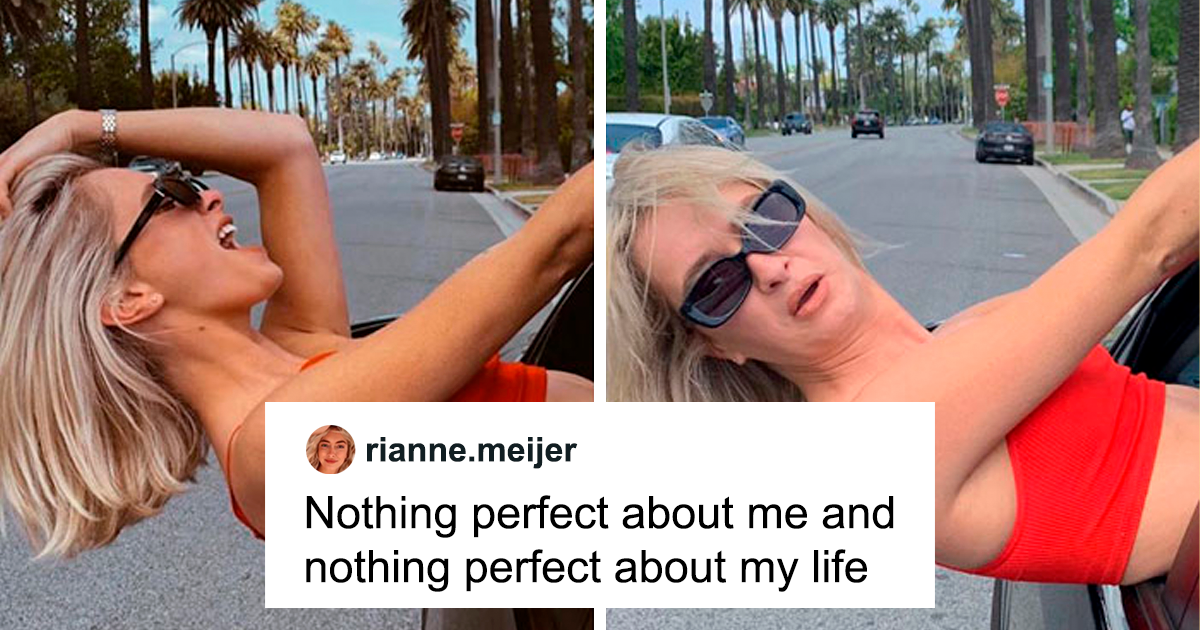
The Dutch fashion and lifestyle influencer became widely known for posting “Instagram vs. reality” side-by-side pictures: one polished image that looks feed-ready and one candid shot from the same setting that reveals the messy, funny, very human truth. Her 30 side-by-side pics did more than make people laugh. They pulled back the velvet curtain on influencer culture and reminded viewers that social media perfection is often a carefully edited performance, not a fair measurement of real life.
And honestly? That reminder arrived right on time. In a world of filters, beauty apps, sponsored trips, ring lights, and “effortless” photos that required the effort of a small municipal project, Meijer’s posts feel refreshing. They do not shame beauty, style, or creativity. Instead, they challenge the myth that a perfect photo equals a perfect person, a perfect body, or a perfect life.
Who Is Rianne Meijer, and Why Did Her Photos Go Viral?
Rianne Meijer is an Amsterdam-based influencer and vlogger known for fashion, beauty, lifestyle, travel, and a sharp sense of humor about the realities behind online image-making. Unlike many creators who hide the awkward work behind the final shot, Meijer made the outtakes part of the story. She placed polished influencer photos next to the less glamorous version: a squint, a slouch, a double chin, a caught-off-guard expression, a gust of wind behaving like a villain, or a dog refusing to cooperate with the assignment.
That honesty connected with audiences because it exposed something most people already suspected but rarely see confirmed by the influencer herself: the photo that lands on Instagram is often one selected frame from a much larger pile of “absolutely not” images. The flawless jawline might be a camera angle. The dreamy lighting might be five minutes of waiting for the sun to behave. The elegant pose might be one lucky second between two very normal human movements.
Meijer has explained in interviews that she wanted followers to remember that Instagram is not always real life. That message is simple, but powerful. People do not necessarily need another lecture about social media. Sometimes they need to see two pictures taken seconds apart and realize, “Oh. So nobody looks like their best photo all the time. Excellent. I can breathe again.”
The Real Secret Behind “Perfect” Instagram Photos
The secret is not magic. It is production. A perfect Instagram photo usually depends on a combination of lighting, angle, pose, timing, background, editing, and confidence. Remove even one of those ingredients and the glamorous final image can turn into a blooper reel faster than you can say “delete that immediately.”
1. Angles Can Change Everything
Camera angles can make legs look longer, faces look sharper, waists look smaller, and rooms look larger. A slight turn of the body can create a completely different silhouette. A camera held from below can distort proportions. A camera held slightly above eye level can create a softer, more flattering frame. None of this is evil; photographers have used angles forever. The problem begins when viewers forget that the angle is part of the performance.
2. Lighting Is the Unsung Influencer
Good lighting is the difference between “glowing goddess” and “tired raccoon who has seen too much.” Natural light, golden hour, soft shade, and bright window light can smooth skin, define features, and give an image that effortless look everyone loves. Harsh overhead light, by contrast, has never met a face it did not want to interrogate.
3. Posing Is a Skill, Not a Personality Trait
Influencers often know how to position their bodies for the camera. They elongate the neck, shift weight to one leg, angle the hips, relax the mouth, control the hands, and create movement. The finished result may look spontaneous, but many poses are practiced. This does not make the photo fake; it makes it styled. Meijer’s side-by-side pics are funny because they show what happens when the styling drops for one second and the regular human returns.
4. Filters and Editing Finish the Illusion
Filters can brighten, smooth, sharpen, warm, cool, blur, reshape, and polish. Some edits are minor; others create an appearance that no living person could maintain without being part wax figure, part phone screen. The more normalized editing becomes, the easier it is for usersespecially young viewersto compare themselves to images that are not really comparable.
Why Side-By-Side Instagram vs. Reality Photos Matter
At first glance, Meijer’s photos are simply funny. But beneath the humor is a serious cultural point: people are constantly comparing their everyday selves to other people’s highlight reels. That comparison is unfair from the start. You know your own bad hair day, messy bedroom, tired face, and emotional chaos. You see someone else’s best angle, best outfit, best lighting, and best caption. Of course that comparison feels terrible. It is like comparing your grocery list to someone else’s wedding album.
Research on social media and body image has repeatedly found links between appearance-focused content, upward comparison, and lower body satisfaction. Platforms like Instagram are visual by design, which means the body, face, lifestyle, and status symbols become easy targets for comparison. When users scroll past hundreds of polished images, it can quietly train the brain to believe that perfection is normal and normal is failure.
That is why “Instagram vs. reality” content can be helpful. Side-by-side photos interrupt the illusion. They show the polished image and the ordinary moment together, giving the viewer context. Instead of thinking, “Why don’t I look like that?” a person may think, “Oh, even she does not look like that from every angle.” That tiny shift can reduce shame and bring humor back into the experience of seeing bodies online.
What Rianne Meijer’s 30 Pics Reveal About Influencer Culture
Meijer’s side-by-side images reveal that influencer culture is not just about beauty. It is about performance, labor, branding, and constant visibility. A creator’s job often includes planning outfits, scouting locations, taking hundreds of photos, editing content, writing captions, replying to followers, negotiating with brands, and staying relevant in an algorithm that behaves like a moody house cat.
To the audience, a photo may look casual. To the creator, it may represent hours of work. That gap between appearance and labor is one reason influencer life can look easier than it is. The picture says, “Just casually thriving.” The behind-the-scenes reality says, “We took 247 photos, changed shoes in a car, lost the good light, argued with the tripod, and finally got the shot while a stranger watched in silence.”
By sharing bloopers, Meijer makes that labor visible. She also makes herself more relatable. Her content suggests that beauty and awkwardness can exist in the same person. Confidence does not require pretending every frame is flattering. In fact, real confidence may be the ability to post the double-chin photo and still know you are doing just fine.
The Mental Health Side of Perfect Photos
Perfect Instagram photos may seem harmless, and often they are. People enjoy beauty, style, creativity, travel, and aspiration. There is nothing wrong with posting a gorgeous picture. The concern is what happens when perfect images become constant, context-free, and emotionally loaded.
For teens and young adults, social media can be both positive and stressful. It can help people connect, create, learn, and find communities. It can also increase pressure around appearance, popularity, success, and lifestyle. When feeds are full of edited faces, sculpted bodies, luxury vacations, perfect relationships, and spotless homes, users may begin to feel that their own lives are somehow behind schedule.
Meijer’s approach works because it does not scold the viewer. It simply adds context. It says: here is the beautiful shot, and here is the hilarious outtake. Both are real in different ways. One is the chosen image; the other is the reminder that nobody lives inside a flattering freeze-frame.
Authenticity Is Becoming the New Influence
For years, influencer marketing rewarded perfection. The cleaner the feed, the more aspirational the lifestyle, the more desirable the brand partnership. But audiences have grown more media-literate. Many people now crave creators who are funny, honest, transparent, and willing to show the work behind the image.
This does not mean polished content is dead. A beautiful photo will always have a place online. Humans enjoy aesthetics; we are simple creatures with complicated skincare routines. But audiences increasingly want balance. They want to know when something is sponsored. They want to know when a photo is heavily edited. They want creators who can admit that the “candid” laughing shot was taken after 23 attempts and one fake joke.
Authenticity does not require creators to share every private struggle or turn their feed into a diary of chaos. It means not presenting a curated image as the whole truth. Meijer’s side-by-side photos are a smart example because they preserve creativity while removing the pressure of perfection. She still gets the beautiful photo, but she also lets people laugh at the process.
What Viewers Can Learn From These Side-By-Side Pics
Stop Comparing Your Life to Someone Else’s Final Draft
The image you see online is usually the final draft, not the messy brainstorming session. You do not see the rejected shots, the awkward pose, the bad lighting, the editing, or the moment the creator said, “Wait, take one more.” Comparing your regular Tuesday face to someone’s best professional-looking frame is not motivation. It is emotional self-sabotage in a cute app layout.
Remember That “Natural” Can Still Be Staged
Many photos that look natural are carefully arranged. The messy bun may be styled. The casual breakfast may be plated. The “woke up like this” selfie may involve makeup, lighting, and a filter with a name like Soft Peach Dream. Again, that does not make the content worthless. It simply means viewers should interpret it as media, not as evidence that everyone else is effortlessly perfect.
Follow Creators Who Make You Feel Human
Your feed affects your mood. If certain accounts leave you feeling smaller, less attractive, poorer, less successful, or generally like a potato in sweatpants, consider whether they deserve daily access to your brain. Follow creators who inspire you without making you hate your actual life. The best content should expand your world, not shrink your self-worth.
What Influencers Can Learn From Rianne Meijer
For influencers, Meijer’s success shows that vulnerability can build trust. Posting imperfect moments does not necessarily weaken a brand. In many cases, it strengthens it. Audiences can sense when a creator is overly polished to the point of becoming unreachable. A little honesty makes the person behind the profile feel real.
That honesty is also useful for sponsored content. Transparency matters. When creators disclose brand relationships clearly and avoid pretending every product recommendation is spontaneous destiny, audiences are more likely to trust them. The same principle applies to imagery. When creators acknowledge angles, lighting, editing, and outtakes, they help followers understand the difference between content and reality.
The lesson is not “post ugly photos.” The lesson is “stop building a brand on impossible standards.” Humor, honesty, and context can make a creator more memorable than another flawless beach photo captioned “grateful.” Grateful is fine. But if the beach photo required sunburn, sand in the shoes, and a partner taking 300 pictures, the audience can probably handle that truth.
Specific Examples of the Instagram vs. Reality Effect
Meijer’s photos often show the same outfit, location, or moment from two completely different perspectives. In one version, she may appear polished, posed, and editorial. In the other, she may be blinking, laughing awkwardly, slouching, reacting to the weather, or caught between poses. The humor comes from the contrast, but the message comes from the similarity: both pictures are of the same person, in the same body, during the same moment.
That contrast reveals how fragile the illusion of perfection really is. A jawline can change with posture. A waist can look different depending on how someone turns. A facial expression can shift from model-like to chaotic in half a second. A sunny travel shot may hide discomfort, crowds, heat, or boredom. The perfect photo is not a lie, exactly, but it is incomplete.
Think of it like movie trailers. A trailer shows the most exciting two minutes. It does not show the entire production schedule, the bad takes, the lighting adjustments, or the actor eating a sandwich in costume. Instagram often works the same way. Meijer’s side-by-side photos are the bonus features.
Why People Loved Her Honesty
People responded positively to Meijer’s honesty because it gave them permission to be normal. The internet can make normal feel embarrassing. Normal skin texture, normal stomach rolls, normal tired eyes, normal awkward expressions, normal bad anglesthese things can start to feel like personal failures when every feed is filled with polished perfection.
Seeing an influencer laugh at her own outtakes breaks that spell. It reminds viewers that beauty is not the absence of awkwardness. Style is not the absence of bad photos. Confidence is not the absence of insecurity. A person can look amazing in one frame and ridiculous in the next. That is not failure; that is simply having a face and a body that move.
Experience Section: What These Photos Teach Us in Real Life
Anyone who has tried to take a “quick” Instagram photo knows there is no such thing as quick. The experience usually begins with optimism. You see a nice wall, a cute café table, a city street, or a sunset that looks like it was personally sponsored by the universe. You hand your phone to a friend and say, “Just take a few.” This is the first lie. Nobody takes a few. A few becomes 38. Then 38 becomes 112 because your hand looked weird, your eyes were closed, the background stranger would not move, and your smile somehow evolved into a customer-service grimace.
That ordinary experience is exactly why Meijer’s photos resonate. Most people have lived some version of it. We know the difference between the photo we post and the photos we bury forever in the camera roll. We know that the right picture can make us feel confident, stylish, and alive. We also know that the wrong picture can make us question our posture, our haircut, our life choices, and whether our phone camera has developed personal hostility.
The healthiest lesson is not that we should stop taking beautiful photos. Beautiful photos are fun. They capture creativity, memory, personality, and style. The problem is when we forget that they are selected moments. A polished image can be real, but it is not the full reality. Real life includes the picture where the wind attacks your hair, the one where your smile disappears, the one where your pose looks like you are waiting for a bus, and the one where your friend says, “No, no, this one is cute,” while clearly lying out of love.
In everyday life, remembering this can make social media easier to handle. When you see a perfect photo, imagine the 200 deleted versions. Imagine the creator adjusting the camera, fixing a sleeve, changing the pose, asking for another shot, checking the light, and laughing at the bad ones. That mental habit turns comparison into perspective. Instead of letting someone else’s polished moment become proof that you are lacking, you can see it as a creative result.
For creators, the experience is also freeing. Posting only perfection creates a prison with good lighting. Once an audience expects flawless content, every post becomes pressure. Sharing a funny outtake or honest caption can release some of that tension. It tells followers, “I enjoy making pretty content, but I am still a person.” That balance is more sustainable than pretending every second of life is camera-ready.
For viewers, the takeaway is simple: be careful what you let define your self-image. Your worth is not measured by how you look in one frame, one angle, one outfit, or one day. Nobody is photogenic every second. Nobody has perfect lighting at the grocery store. Nobody lives permanently inside a curated feed. Meijer’s 30 side-by-side pics work because they are funny, but they last because they are honest. They remind us that the human version is not the failed version. It is the real one.
Conclusion: The Truth Behind Perfect Instagram Photos
Rianne Meijer’s side-by-side Instagram vs. reality photos expose a truth the internet badly needs: perfection is often a production, not a permanent state. The right angle, lighting, pose, timing, and filter can create a stunning image, but the outtake beside it tells an equally important story. People are not less beautiful because they have awkward moments. They are not less successful because their real life is messier than their feed. And they are certainly not failing because they do not look like someone else’s best photo.
The best part of Meijer’s project is that it does not reject beauty or creativity. It simply makes room for honesty. Her photos say that it is possible to enjoy fashion, photography, travel, and aesthetics without pretending life is flawless. In a culture addicted to polish, that kind of transparency feels almost rebelliousand much more fun.
Note: This article is based on real publicly reported information about Rianne Meijer’s Instagram vs. reality photo series, along with reputable research and guidance on social media, body image, influencer transparency, and online comparison. It is written as original web-publishing content and does not reproduce the original photos.