Note: This article is written in original language and synthesized from real public information about stadium video boards, fan cams, Kiss Cam culture, sports crowd psychology, and modern fan engagement trends.
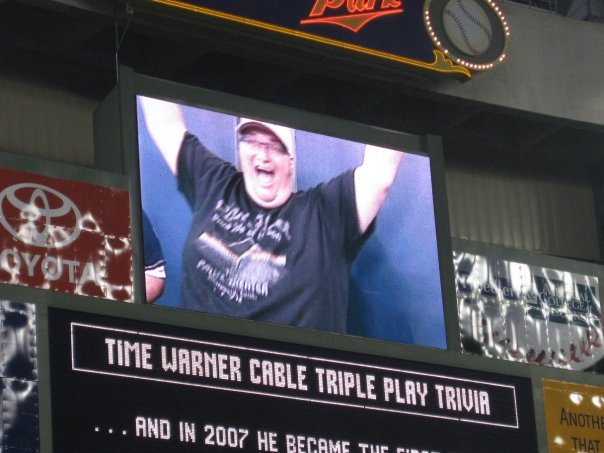
There are many small miracles at a live sporting event: the smell of popcorn fighting bravely against the smell of nacho cheese, the roar after a home run, the stranger who becomes your best friend for exactly four quarters, and the mascot who somehow dances harder than anyone with a functioning spine should. But one moment deserves its own tiny trophy: the look on someone’s face when they realize they’re on the big screen at the game.
It starts innocently. The camera sweeps across the crowd during a timeout, between innings, or after a commercial break. Fans wave. Kids scream. Someone points at someone else. A dad holding two hot dogs suddenly becomes an accidental celebrity. Then, in one glorious second, the chosen person looks up, freezes, and understands: Oh no. That is me. That giant, blinking, stadium-sized face is my face.
That expression is why this tiny human moment belongs in the universe of 1000 Awesome Things. It is surprise, panic, pride, confusion, and instant performance anxiety blended into one delicious sports-arena smoothie. Whether it happens at a baseball game, basketball arena, hockey rink, football stadium, tennis match, or concert-style halftime show, the big screen reaction is a universal comedy show with free admission included in your ticket.
Why the Big Screen Moment Feels So Awesome
The magic of the stadium big screen comes from contrast. One second, you are just a regular fan eating fries and debating whether the ref needs glasses. The next second, you are a 40-foot-tall public figure with thousands of people studying your snack choices. Your normal face becomes an event. Your wave becomes a performance. Your awkward smile becomes community entertainment.
Sports venues have always been built around shared emotion. Fans cheer together, groan together, clap together, and occasionally shout advice at professional athletes who are, inconveniently, too far away to receive coaching from Section 312. Video boards turn that shared emotion into a visual spectacle. They show replays, stats, sponsor messages, player introductions, crowd shots, dance cams, celebrity sightings, birthday messages, proposals, and the classic Kiss Cam.
But the best part is still the unplanned human reaction. The camera finds someone before they find themselves. That short delay is comedy gold. There is the blank stare. The double take. The frantic shoulder tap from a friend. The mouth forming a perfect little “O.” Then comes the decision: wave, dance, hide, flex, kiss, salute, lift the baby, spill the soda, or pretend this is all part of a carefully rehearsed personal brand strategy.
A Brief History of the Stadium Big Screen
Large video displays became part of the live sports experience in the 1980s, when giant screens made it possible for fans in huge venues to see close-up action, replays, graphics, and crowd shots. Dodger Stadium helped popularize large stadium video display culture with Diamond Vision during the 1980 MLB All-Star Game. Sony later made “JumboTron” famous as a brand name, though today many people use “jumbotron” casually to describe almost any massive stadium video board.
What began as a way to help fans follow the game soon became part of the entertainment itself. Modern arenas now use enormous LED boards, ribbon displays, mobile integrations, interactive filters, and high-resolution camera systems to keep fans involved during pauses in play. The game is still the main event, of course, but the crowd has become part of the show. Sometimes, the best highlight does not come from the field. It comes from a teenager in a foam finger realizing the whole stadium can see him eating a pretzel like a confused raccoon.
The Fan Cam: A Tiny Stage for Ordinary People
The fan cam works because it gives everyday people a surprise starring role. Most spectators do not arrive expecting fame. They arrive expecting overpriced parking, a decent seat, and maybe a souvenir cup large enough to bathe a small dog. Then the camera lands on them, and suddenly they have three seconds to become memorable.
Some fans are naturals. They see themselves on the big screen and instantly become the main character. They dance. They point to the logo on their jersey. They lead chants. They make heart hands. They grab grandma and pull her into the frame. These people have apparently been training for this moment since kindergarten.
Other fans react with the energy of a startled owl. They duck. They cover their face. They laugh into their sleeve. They shove their friend into view as a human shield. These reactions are just as wonderful, maybe even better, because they feel real. The crowd does not need perfection. The crowd wants personality.
The Kiss Cam and the Fine Art of Public Awkwardness
No big screen tradition is more famous, more chaotic, or more emotionally dangerous than the Kiss Cam. The premise is simple: a camera frames two people, usually with romantic graphics, and the crowd waits for a kiss. Sometimes it is sweet. Sometimes it is silly. Sometimes it is an absolute social fire alarm.
The Kiss Cam likely grew out of early stadium video board culture in baseball and later spread across American sports. It became a standard break-in-action feature because it is easy to understand. Nobody needs a rulebook. The heart appears, the music swells, the crowd cheers, and two unsuspecting people must decide whether to play along, laugh it off, or suddenly become very interested in the nacho tray.
Over time, fans have turned Kiss Cam moments into creative comedy. People kiss their beer. Friends hold up signs saying they are siblings. Couples get engaged. Mascots interrupt. Celebrities lean into the joke. The format works because it blends romance, embarrassment, crowd pressure, and improvisation. It is basically Shakespeare, but with more arena lighting and fewer tights.
Why People React So Dramatically When They See Themselves
Psychology helps explain why the big screen reaction is so entertaining. Humans are highly sensitive to being watched. Even subtle cues that we are visible can make us more self-aware. The “spotlight effect” describes our tendency to overestimate how much other people notice our appearance, behavior, or mistakes. At a game, the spotlight effect becomes literal. You are not imagining the spotlight. You are on a screen the size of a small apartment building.
That is why faces change so fast. A person may go from relaxed fan to emergency performer in half a second. The brain quickly asks several important questions: Do I look normal? Is there cheese on my shirt? Should I wave? Why are my hands suddenly shaped like confused starfish? Is my boss watching this broadcast?
The comedy comes from seeing someone process those questions in real time. We recognize ourselves in that reaction. Everyone knows what it feels like to be unexpectedly noticed. The big screen simply makes that feeling huge, bright, and accompanied by 20,000 people clapping.
The Big Screen Turns Strangers Into a Temporary Family
One reason this moment feels so good is that stadium crowds create instant community. At a live game, thousands of people agree to care about the same thing at the same time. They wear the same colors, shout the same chants, and celebrate tiny changes in ball direction with the emotional intensity of a courtroom verdict.
When the camera finds one fan, everyone shares the discovery. The person on screen becomes “one of us.” The crowd cheers not because the fan has done anything extraordinary, but because being seen is funny, vulnerable, and strangely brave. A little kid waving from the upper deck can make an entire arena melt. A grandfather dancing badly can become the spiritual leader of the building. A shy couple laughing at the Kiss Cam can make strangers smile from sections away.
This is the heart of the big screen moment: it transforms a massive venue into a neighborhood. For a few seconds, the person on camera is not anonymous. They are the stadium’s chosen representative of joy.
The Best Types of Big Screen Reactions
1. The Delayed Realization
This is the classic. The fan stares at the screen, laughs at the person on camera, then slowly realizes the person is them. Their face changes from spectator to suspect. It is beautiful every time.
2. The Instant Performer
Some people are born ready. The second they appear on the board, they dance like the arena is paying rent to their confidence. Bonus points if they are wearing a costume, holding a foam finger, or moving with the reckless freedom of someone who has never feared lower-back pain.
3. The Snack Panic
This fan is mid-bite when fame arrives. They freeze with a hot dog halfway to their mouth. They chew with the seriousness of a person testifying before Congress. The crowd loves them because snacks are honest.
4. The Family Chaos Shot
Parents wave, kids scream, one child hides, another child tries to climb into the camera lens from 200 feet away, and someone’s uncle points at the screen as if he personally invented electricity. Family crowd shots are tiny sitcoms.
5. The Shy Smile
Not every reaction needs fireworks. Sometimes the sweetest big screen moment is a quiet smile from someone who did not expect to be noticed. The crowd cheers, they blush, and for three seconds the stadium becomes gentle.
How Teams Use Big Screen Moments to Improve Fan Engagement
Modern sports organizations understand that fans want more than a seat and a scoreboard. They want an experience. Video boards help venues create that experience by filling natural pauses with entertainment. Between innings, during timeouts, and before the next faceoff, teams use fan cams, trivia, dance contests, noise meters, birthday shoutouts, sponsor activations, charity campaigns, and instant replays to keep energy high.
These moments also give fans something shareable. A person who appears on the big screen may film it, post it, text it, or tell the story for years. Interactive crowd photos and fan cam platforms let people find themselves later, zoom into crowd images, and share proof that they were there. The result is a powerful mix of memory, marketing, and emotional connection.
In other words, the big screen is not just a giant television. It is a community engine. It keeps fans involved when the ball is not moving. It creates mini-stories inside the larger story of the game. And sometimes, it turns a random Tuesday night matchup into the night your dad became famous for doing the robot in cargo shorts.
Why This Moment Belongs in “1000 Awesome Things”
The idea behind 1000 Awesome Things celebrates small, everyday joys that are easy to miss. The look on someone’s face when they realize they’re on the big screen fits perfectly because it is ordinary and extraordinary at once. Nobody planned it. Nobody bought a special upgrade. Nobody needed a script. It is just a person, a camera, a crowd, and a reaction too honest to fake.
That is what makes it awesome. In a world full of edited photos, polished captions, and carefully managed online identities, the fan cam captures a raw little spark. For a few seconds, nobody has time to curate. The face tells the truth before the brain can hire a publicist.
And the truth is usually delightful. Surprise looks like wide eyes. Joy looks like open arms. Embarrassment looks like hiding behind a popcorn bucket. Pride looks like pointing at your jersey. Love looks like pulling someone close. Confusion looks like a man checking whether the screen has accidentally selected the person behind him.
Big Screen Etiquette: How to Become a Stadium Legend
If you ever find yourself on the big screen, do not panic. Or panic a little, because that is part of the fun. Then choose your move. A wave is always safe. A thumbs-up says, “I am pleased to represent this section.” A dance says, “My knees and I have entered negotiations.” A heart gesture is sweet. Holding up your snack is funny. Pointing at your friend is acceptable, but only if you are ready for revenge later.
The golden rule is simple: be kind, be playful, and remember that everyone is cheering with you, not against you. The best fan cam reactions are not perfect performances. They are tiny invitations for the whole stadium to laugh together.
Extra Experience Section: What It Feels Like to Be Caught on the Big Screen
Being on the big screen at a game is a very specific flavor of chaos. It begins with a noise shift. You hear the crowd react, but you do not yet know why. People around you start pointing. Your friend’s face changes from normal human to emergency alarm system. Then you look up and see yourself larger than any person should ever be, especially while holding a paper tray of cheese fries.
The first feeling is disbelief. You think, “Surely that is someone else who looks exactly like me and also owns this oddly specific hoodie.” Then the person beside you elbows your ribs and yells, “That’s you!” This is not helpful information. You already know. But now the entire row knows that you know.
The second feeling is full-body awareness. Suddenly, you remember your posture. You remember your hair. You remember that you were making a weird face because you were trying to read a player’s batting average from the scoreboard. You become aware of your hands, which have somehow forgotten their career as hands. Should they wave? Clap? Form a peace sign? Pretend to adjust a hat? There is no training manual for this.
Then instinct takes over. Some people wave like royalty. Some people dance like they have been waiting 35 years for this one song. Some people hold up their baby, which is always a winning strategy because babies are basically cheat codes for crowd approval. Some people hide behind their friends, which only makes the camera operator more determined. A good fan cam operator can smell fear from the control room.
The best experience is when the people around you join in. Your section starts clapping. Strangers shout encouragement. Someone behind you yells, “Dance!” even though they would absolutely not dance if the camera found them. But that is sports culture: everyone becomes brave through someone else.
After the moment passes, you sit back down slightly changed. You are still you, but now you are also “the person who was just on the big screen.” Friends text you if they saw it. Someone asks whether you planned that dance. You pretend you did. For the rest of the game, you feel a small glow, as if the stadium personally winked at you.
That is the joy of the big screen reaction. It gives ordinary fans a souvenir that does not fit in a bag. You may forget the final score someday. You may forget who hit the double, who missed the free throw, or how much you paid for parking because your brain is merciful. But you will remember the moment your face appeared above the arena and thousands of strangers cheered as if you had just done something heroic by existing enthusiastically in public.
And honestly, maybe you did.
Conclusion
The look on someone’s face when they realize they’re on the big screen at the game is one of the purest forms of live-event joy. It is funny because it is sudden. It is sweet because it is human. It is memorable because everyone in the stadium gets to share it at the same time. In an age when so much entertainment is streamed privately on tiny screens, the stadium big screen reminds us how good it feels to laugh together in a crowd.
Whether it is a dance cam, Kiss Cam, family shot, birthday shoutout, proposal, mascot prank, or random close-up of a fan mid-nacho, the moment works because it celebrates regular people. For a few seconds, the fan becomes the highlight. The crowd becomes the audience. The screen becomes a stage. And one startled face becomes an awesome thing.