Editor’s Note: This article is based on publicly available reporting and defense analysis about Russia’s Vostok-2018 military exercise, with added context on later Vostok drills and Russia-China military cooperation.
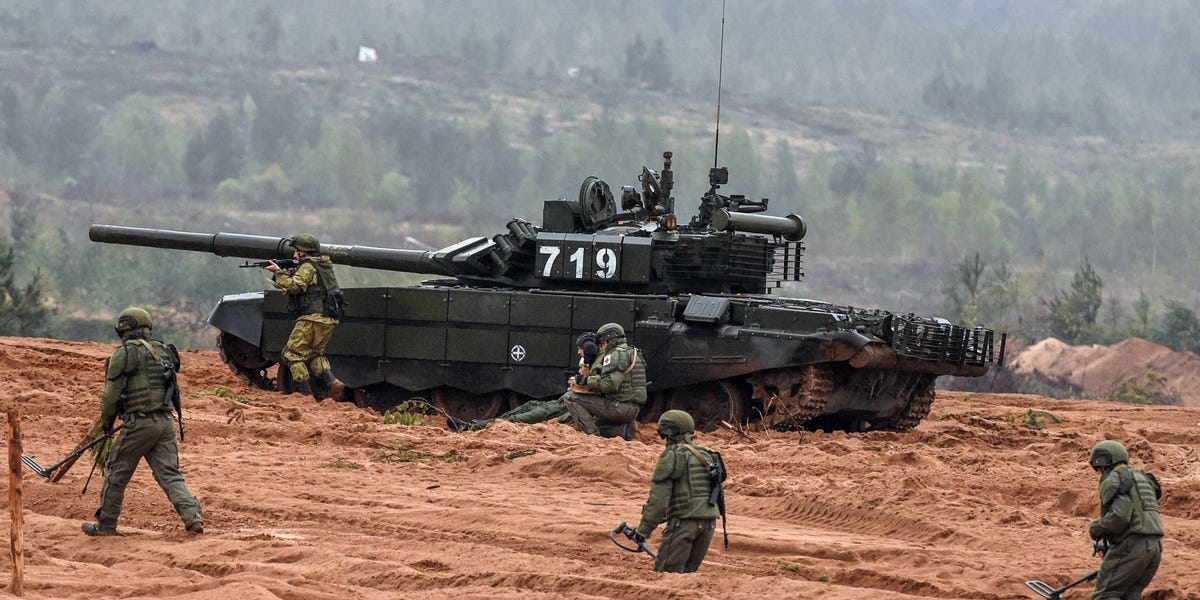
When Russia announced its Vostok-2018 military exercise, the numbers sounded less like a routine training plan and more like someone had accidentally ordered an entire army from a warehouse catalog. Nearly 300,000 troops. Around 36,000 military vehicles. More than 1,000 aircraft. About 80 ships. Add Chinese and Mongolian forces to the mix, place the action across Siberia and the Russian Far East, and suddenly “military drill” feels like a very small phrase trying to carry a very large backpack.
Vostok, which means “East” in Russian, was not just another exercise on the calendar. It was billed as Russia’s largest military exercise since the Cold War, often compared with the Soviet Union’s massive Zapad-81 drills in 1981. For Moscow, Vostok-2018 was a message wrapped in camouflage: Russia wanted the world to see that it could move troops across enormous distances, coordinate air, land, and naval forces, and conduct strategic-level operations far from Europe.
But the story is not only about size. In military politics, numbers are never just numbers. Vostok-2018 was about signaling, logistics, China’s growing military relationship with Russia, and the uneasy security environment that followed Russia’s 2014 annexation of Crimea. It was also about theaterpart operational rehearsal, part geopolitical billboard, and part “please notice our tanks” moment.
What Was Vostok-2018?
Vostok-2018 was a large-scale Russian strategic military exercise held from September 11 to September 17, 2018. The drills took place across Russia’s Eastern Military District, including parts of Siberia, the Russian Far East, and nearby maritime zones. Russia described the exercise as a major test of readiness, coordination, and long-distance deployment.
The Russian Ministry of Defense announced that the exercise would involve approximately 300,000 personnel, 36,000 tanks and military vehicles, more than 1,000 aircraft, and 80 naval vessels. Those figures made headlines around the world because they suggested a drill larger than anything Russia had staged since the Soviet period.
Western analysts, however, treated the numbers with caution. Russia has a long tradition of using exercises for strategic messaging, and the headline troop count may have included support units, forces on alert, and personnel involved across several connected activities rather than one single battlefield-style event. Still, even with skepticism applied, Vostok-2018 was huge. It was a reminder that Russia’s geography is not merely bigit is “your road trip needs several time zones and a backup plan” big.
Why Was It Called the Largest Since the Cold War?
The comparison comes mainly from Zapad-81, the enormous Soviet-era exercise held in 1981. Zapad-81 involved Warsaw Pact forces and was widely seen as one of the largest military exercises of the Cold War. When Russia framed Vostok-2018 as the biggest since that period, it was not making a casual historical reference. It was deliberately placing the drill in the same mental folder as superpower rivalry, mass mobilization, and strategic intimidation.
For SEO readers searching “Russia Vostok exercise largest since Cold War,” the important point is this: Vostok-2018 mattered because it was designed to show that Russia could still conduct large-scale military operations despite sanctions, economic pressure, and strained relations with the West. It was not only about practicing military tasks. It was about demonstrating that Moscow still had strategic reach.
The China Factor: A Quietly Huge Development
One of the most important aspects of Vostok-2018 was China’s participation. Beijing sent roughly 3,200 troops, hundreds of pieces of equipment, and aircraft to join the drills. Mongolia also participated, giving the exercise a multinational character.
That was a major shift. Historically, Russia’s large eastern exercises were partly shaped by concerns about threats along its Asian frontier. Inviting China into Vostok changed the symbolism. Instead of quietly preparing for a possible problem in the east, Russia was publicly training with the biggest power in the east.
This did not mean Russia and China had formed a formal military alliance. Their relationship is more complicated than a handshake and a matching set of uniforms. Both countries have overlapping interests, especially in pushing back against U.S. influence, but they also have different priorities, historical mistrust, and competing ambitions in Central Asia. Still, Vostok-2018 showed that Moscow and Beijing were comfortable enough to stage large-scale cooperation in front of the world.
What Russia Wanted to Prove
1. Russia Could Move Forces Across Huge Distances
Russia’s territory stretches across eleven time zones, and moving military units from one side to another is not as simple as “turn left after Lake Baikal.” Vostok-2018 tested the ability to transport, supply, and coordinate forces over vast distances. Logistics may not look dramatic on television, but in real military planning, logistics is the difference between a functioning army and a very expensive traffic jam.
2. Russia Could Coordinate Multiple Branches
The exercise involved ground forces, air forces, naval units, airborne troops, and command structures. The goal was to practice joint operations, meaning different branches working together rather than acting like separate bands playing different songs at the same parade.
3. Russia Still Had Strategic Confidence
By 2018, Russia was facing Western sanctions and diplomatic pressure. Vostok-2018 gave Moscow a chance to project resilience. The message was clear: Russia was not isolated, not weak, and not finished as a major military actor.
How NATO and the West Viewed Vostok
Western governments and analysts watched Vostok-2018 carefully, but not all interpreted it the same way. Some saw it as a show of force meant to intimidate NATO and U.S. allies. Others viewed it as a more complex signal aimed at both domestic and foreign audiences.
The exercise came during a tense period. Relations between Russia and NATO had deteriorated sharply after 2014. NATO had increased its presence in Eastern Europe, while Russia continued to modernize its military and conduct large exercises. Against that background, a massive Russian drill involving China naturally attracted attention.
Still, Vostok was geographically focused on the east, not directly on NATO’s borders. That made it different from Zapad exercises, which are often watched with special concern by Poland, the Baltic states, and other European neighbors. Vostok was less about an immediate European scenario and more about Russia’s ability to operate at scale across the broader Eurasian space.
Were the Numbers Real?
The short answer is: probably not in the simple way the headlines suggested. The longer answer is more interesting.
Russia’s announced figure of nearly 300,000 personnel was enormousroughly a third of its armed forces at the time. Many defense experts argued that the real number of troops actively training at any single location was likely much smaller. The official count may have included personnel involved in related readiness checks, command exercises, support roles, and activities spread across a wide area.
That does not mean Vostok-2018 was fake. It means military exercises can be counted in ways that serve political messaging. A school might say “the whole district participated” in an event even if only some students were on the field at once. Russia’s version just involved armored vehicles instead of folding chairs.
The inflated-or-not debate matters because it changes how we interpret the exercise. If the goal was purely operational, exact numbers would be central. If the goal was strategic communication, then the announcement itself was part of the operation.
Why Vostok-2018 Still Matters Today
Vostok-2018 remains important because it foreshadowed deeper Russia-China military cooperation. Since then, China has continued participating in Russian-led exercises, while the two countries have increased joint patrols, naval drills, and defense contacts. The relationship has grown more visible since Russia’s full-scale invasion of Ukraine in 2022, even though China has tried to balance support for Moscow with its own global economic interests.
Vostok-2022, held during the Ukraine war, was much smaller than Vostok-2018, with Russia announcing more than 50,000 troops rather than hundreds of thousands. That contrast was telling. Russia could still stage a multinational exercise, but the war in Ukraine had clearly absorbed manpower, equipment, and attention.
In that sense, Vostok-2018 looks like a peak moment: Russia wanted to show maximum capacity, strategic reach, and diplomatic confidence. Later exercises had to operate in a different reality, one shaped by battlefield losses, sanctions, and a much more hostile relationship with the West.
Specific Examples of What Vostok Revealed
Russia’s Emphasis on Mobility
The exercise highlighted Russia’s interest in rapid movement over long distances. For a country with Russia’s geography, the ability to shift forces from west to east is a strategic necessity. Vostok tested rail networks, staging areas, command systems, and supply chains.
China’s Interest in Learning
China did not participate merely for the photo opportunity. The People’s Liberation Army gained a chance to observe Russian command methods, large-scale maneuver planning, and combat lessons Russia claimed to have learned from operations in Syria and elsewhere. For China, Vostok was a classroom with tanks.
Russia’s Use of Military Theater
President Vladimir Putin visited the exercise after attending the Eastern Economic Forum in Vladivostok. That timing mattered. It connected military power, diplomacy, and economic messaging. Russia was telling Asian partners: we are not only a European power; we are also a Pacific power.
What the Exercise Did Not Mean
It is easy to overread major military exercises. Vostok-2018 did not mean Russia and China were ready to fight side by side in every possible conflict. It did not prove Russia could successfully sustain a huge modern war indefinitely. It did not erase the logistical, economic, and technological limits that later became more visible during the war in Ukraine.
What it did show was that Russia understood the power of military spectacle. A large exercise can train forces, test command systems, impress domestic audiences, worry rivals, and reassure partners all at the same time. That is a lot of work for one event, but Vostok was built for exactly that.
Experience-Based Reflections: What Watching Vostok Teaches About Modern Power
Following an exercise like Vostok-2018 can feel a little like watching a giant stage production where the actors are soldiers, the props are armored vehicles, and the audience includes every intelligence agency with a satellite subscription. The first experience many observers have is simple amazement. The numbers are so large that they almost stop feeling real. Three hundred thousand troops is not a statistic most people can picture. It is more people than the population of many American cities. When that figure appears next to thousands of vehicles and aircraft, the mind naturally reaches for big words: historic, massive, unprecedented, alarming.
But the deeper experience is learning to slow down. Big numbers attract attention, yet serious analysis asks what those numbers actually mean. Were all troops training at once? Were they combat troops, support personnel, reservists, or units placed on alert? Was the exercise testing battlefield tactics, national mobilization, transportation systems, or political messaging? The moment you ask those questions, Vostok becomes less like a movie trailer and more like a complicated spreadsheet with geopolitical consequences.
Another lesson is that military exercises are rarely only military. Vostok-2018 was also a diplomatic performance. China’s presence changed the emotional temperature of the event. For decades, Russia and China had reasons to mistrust one another, yet here they were, training together in Russia’s east. That image mattered even if the partnership remained short of a formal alliance. In international politics, appearances do not replace reality, but they can shape expectationsand expectations can influence decisions.
For writers, analysts, and readers, Vostok also teaches humility. It is tempting to treat every large drill as a direct rehearsal for war, but that can be misleading. Some exercises are about readiness. Some are about deterrence. Some are about internal morale. Some are about showing allies and rivals that a government still has options. Vostok-2018 likely contained all of those layers. Like a nesting doll, each message opened into another message.
The most practical takeaway is that logistics deserves more respect. Tanks and jets get the glamour, but trains, fuel, maintenance crews, communications networks, and supply routes make the whole machine move. Vostok’s real significance may not have been the sight of vehicles crossing training grounds. It was the attempt to prove that Russia could coordinate movement across a continent-sized country. That is the kind of detail that does not always make a flashy headline, but it is exactly what military planners study.
Finally, Vostok-2018 reminds us that power is both real and performed. Russia used the exercise to show strength, but later events revealed the limits behind the performance. That does not make Vostok meaningless. It makes it more interesting. The exercise was a snapshot of ambition: Russia wanted to be seen as capable, connected, and strategically confident. Whether reality fully matched the performance is the question that keeps analysts busyand keeps articles like this from being short.
Conclusion
Russia’s Vostok-2018 exercise was one of the most significant military events of the post-Cold War era. It combined scale, symbolism, and strategy in a way that drew attention from Washington, Beijing, Brussels, Tokyo, and beyond. The announced numbers were dramatic, and perhaps inflated, but the broader message was unmistakable: Russia wanted to prove it could still operate like a great power across enormous distances.
The exercise also marked a turning point in Russia-China military cooperation. China’s participation did not create a formal alliance, but it did signal a warmer and more practical defense relationship. In the years since, that relationship has become an increasingly important part of global security debates.
For readers trying to understand why Vostok matters, the answer is simple: major exercises reveal what states want to practice, what they want to advertise, and what they want others to fear. Vostok-2018 did all three. It was part training drill, part political theater, and part strategic message written across the map of Eurasia in very large letters.