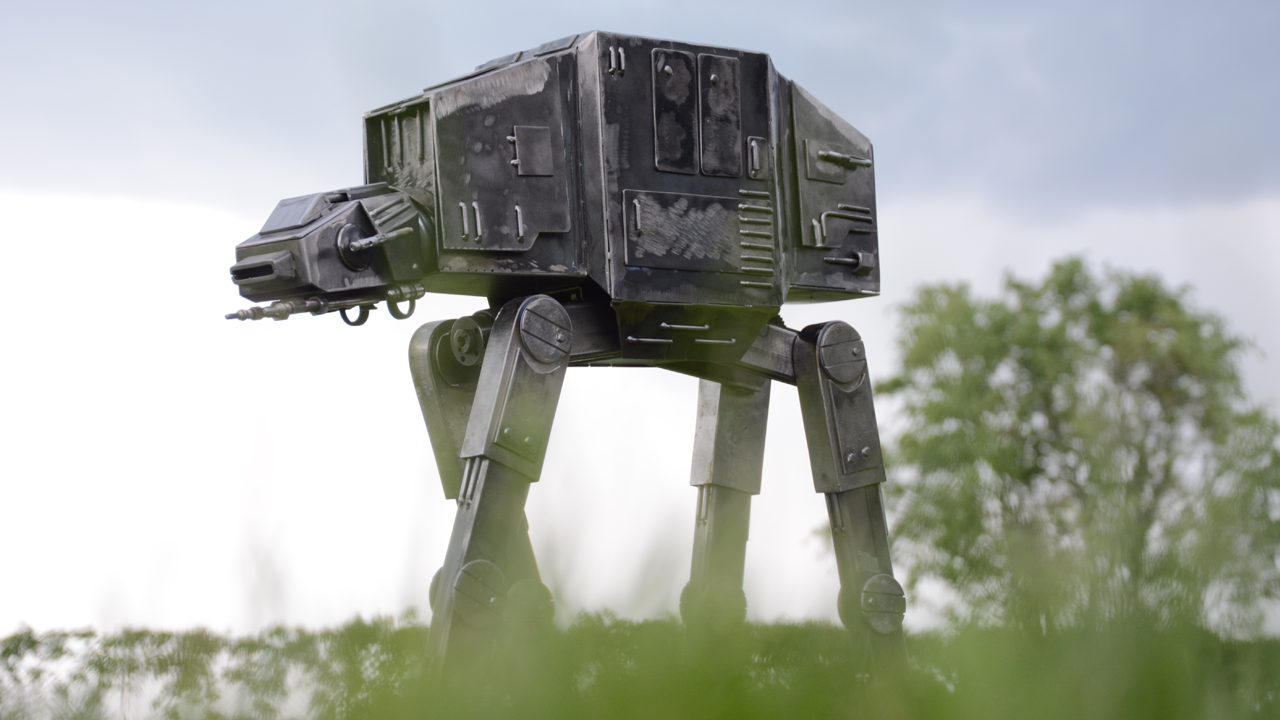
Some people see a pile of rusty gears, busted car parts, chains, bolts, panels, and tired metal scraps and think, “That belongs in a recycling bin.” Sebastian Kucharski looks at the same pile and apparently thinks, “Excellent, that is clearly the shoulder blade of a giant robot.” That difference in imagination is exactly why his work has captured attention far beyond Poland. At Fabryka Robotów, or “Robot Factory,” in Moszna, Poland, scrap metal gets a second life as towering sculptures inspired by science fiction, fantasy cinema, and the kind of futuristic worlds most of us only visit through movie screens and popcorn buckets.
The title “This Artist From Poland Creates Cool Sculptures From Scrap Metal” sounds simple, but the story behind it is wonderfully layered. Kucharski’s work sits at the crossroads of upcycling, sculpture, fan culture, engineering, and old-fashioned patience. His pieces are not quick weekend crafts made from a soda can and three screws. Many of the largest sculptures can reach several meters in height, weigh hundreds of kilograms, and require hundreds of hours of planning, welding, fitting, polishing, and adjusting. In other words, this is art with biceps.
What makes these scrap metal sculptures so memorable is not only their size. It is the strange magic of recognition. Viewers can still spot hints of former lives inside the finished work: a gearbox here, a suspension part there, a bolt that once had a very serious job keeping a machine together. Now those pieces become fingers, armor, ribs, eyes, claws, joints, and futuristic surfaces. It is recycling with a dramatic entrance.
Who Is Sebastian Kucharski?
Sebastian Kucharski is a Polish artist and maker best known for creating large metal sculptures from scrap, especially old car parts and other discarded steel materials. His project, Fabryka Robotów, has become a museum of scrap sculpture in Moszna, a village also known for the nearby Moszna Castle. The museum setting matters because Kucharski’s work is not treated as a single viral internet moment. It has grown into a full visitor experience where people can walk among metal figures, notice details up close, and understand just how much labor hides behind the shiny “cool robot” factor.
According to public information about the museum, the displayed works are created by Kucharski and are strongly shaped by his love of science fiction and fantasy films. That inspiration is easy to understand. Scrap metal already has a futuristic personality. It looks mechanical, weathered, tough, and a little mysterious. Add artistic vision, and suddenly an old automotive component can feel like it came from a spaceship repair shop.
His sculptures often feature characters and forms that fans associate with action, sci-fi, and pop-culture worlds. Yet the real achievement is not imitation. The real achievement is translation. Kucharski translates flat screen energy into physical objects. He takes the feeling of cinematic machinery and rebuilds it from real machinery. That is a clever loop: machines become scrap, scrap becomes art, art becomes a new kind of machine for the imagination.
Why Scrap Metal Makes Such Powerful Art
Scrap metal has a built-in story. Unlike fresh materials purchased from an art supply store, discarded metal has already lived a life. It may have carried weight, transferred power, protected an engine, connected moving parts, or survived years of weather, friction, and heat. When an artist uses it in sculpture, that history does not vanish. It becomes part of the work’s personality.
In art history, this approach connects with assemblage, a technique that uses found objects to create three-dimensional compositions. Assemblage art often keeps the identity of its original materials visible while giving them new symbolic meaning. A metal spring may still look like a spring, but in the sculpture it can also become a tendon, a spine, or a detail on a robot’s face. The result is a satisfying double vision: you see what the object was and what it has become.
That dual identity is one reason Kucharski’s sculptures are so engaging. Smooth bronze sculpture can be beautiful, but scrap metal sculpture invites investigation. Viewers want to lean closer and ask, “Wait, is that part of a clutch?” or “Was that once from a motorcycle?” The artwork becomes a visual treasure hunt. Every nut and bolt is a tiny clue, and the finished figure is the big reveal.
The Upcycling Appeal: From Junkyard to Jaw-Dropper
Upcycling is more than a trendy word that looks nice on a tote bag. It means taking discarded materials and transforming them into something of higher creative, practical, or cultural value. In Kucharski’s case, the transformation is dramatic. Old metal parts that might otherwise sit forgotten become museum pieces, photo magnets, conversation starters, and examples of how creativity can change the way people think about waste.
The environmental angle is important, too. Recycling and reuse help reduce landfill waste, conserve resources, and lower the need for new raw materials. Metal recycling is especially significant because steel, aluminum, copper, and other metals can remain valuable even after their first use. In the United States alone, scrap metal recycling is a huge industry, processing millions of tons of metal each year. Kucharski’s sculptures are not industrial recycling in the usual sense, but they make the idea visible. They show, in a fun and unforgettable way, that “waste” is often just a material waiting for a better job title.
And let’s be honest: “scrap metal robot” is a much cooler job title than “old gearbox in the corner.”
How These Metal Sculptures Come Together
Creating a sculpture from scrap metal begins long before the welding torch appears. The artist has to collect, sort, clean, and study materials. A part that looks useless to one person may be perfect for a knee joint, shoulder plate, jawline, or decorative texture. The process requires both artistic vision and practical problem-solving. The sculpture must look alive, but it also must stand safely, balance properly, and hold together.
Large metal works demand a strong internal structure. Heavy pieces cannot simply be glued together and encouraged with positive thoughts. They need planning, support, welding skill, and knowledge of how weight behaves. A sculpture weighing hundreds of kilograms has to be engineered as much as it is designed. This is where Kucharski’s work becomes especially impressive: the finished pieces feel theatrical and imaginative, yet they are also physical objects that must obey gravity, that famously humorless force.
Detail is another major part of the appeal. Many scrap sculptures fail when they look like random metal piles with ambition. Kucharski’s works stand out because the parts are arranged with care. Surfaces feel intentional. Mechanical elements are placed where they visually make sense. Small components add rhythm and texture. Larger pieces establish the silhouette. The best scrap metal sculpture does not hide the material; it organizes it into something believable.
Why Sci-Fi Fans Love Fabryka Robotów
Science fiction and scrap metal are natural best friends. Sci-fi often imagines futures filled with machines, armor, spacecraft, artificial intelligence, and strange industrial landscapes. Scrap metal already looks like it came from one of those worlds. It has scratches, dents, shine, rust, and mystery. When used well, it can suggest technology that has survived battles, repairs, upgrades, and possibly one very stressful afternoon on another planet.
At Fabryka Robotów, visitors encounter steel figures that feel familiar even when they are made from unexpected parts. The pieces appeal to movie fans because they connect to recognizable visual language: robotic bodies, armored surfaces, alien textures, mechanical limbs, and steampunk-style objects. They also appeal to people who may not know every sci-fi reference because the craftsmanship itself is easy to admire. You do not need a film degree to appreciate a massive metal figure built from car parts. You just need eyes and the ability to say, “Wow,” preferably more than once.
That broad appeal is one reason these sculptures spread so well online. They are instantly understandable in a photo, but still complex enough to reward a closer look. The first reaction is size and spectacle. The second reaction is detail. The third reaction is usually a quiet review of your own garage, wondering whether your broken lawn equipment has artistic potential. Spoiler: maybe, but please do not start welding without proper training.
Art, Engineering, and Patience in One Package
One of the most interesting things about Kucharski’s work is how it blurs the line between artist and builder. Traditional sculpture often brings to mind marble, clay, wood, or bronze. Scrap metal sculpture introduces a more industrial vocabulary: cutting, grinding, welding, fitting, polishing, and structural support. The studio becomes part art workshop, part mechanical laboratory, and part controlled chaos zone.
This combination gives the sculptures their unique energy. They are not delicate in the usual sense, but they are full of delicate decisions. A large robot may look powerful, but its expression might depend on a tiny metal piece placed at exactly the right angle. A hand may look convincing because several unrelated components have been arranged into knuckles and joints. A chest plate may feel heroic because curved car parts create a sense of armor and motion.
Patience is the secret ingredient. Reports about the museum note that the largest and most labor-intensive sculptures can take around 700 hours to complete. That number is difficult to appreciate until you imagine spending that long making thousands of choices about metal fragments. It is not just time; it is focused time. It is the difference between “I had an idea” and “I stayed with the idea until it became taller than a refrigerator and much harder to move.”
Why the Museum Experience Matters
Seeing scrap metal sculpture online is fun, but seeing it in person changes the experience. Scale becomes real. Texture becomes real. The weight of the materials becomes part of the emotional response. In photographs, a sculpture may look impressive. In person, standing near a towering steel figure, visitors can feel the amount of labor and material involved. It becomes less like viewing an image and more like meeting a metal creature with excellent posture.
Fabryka Robotów also gives visitors a chance to understand the project as an evolving body of work. The museum includes finished pieces and, according to visitor information, works in different stages of completion. That matters because process is often the most fascinating part of scrap sculpture. Seeing how parts come together helps people appreciate the imagination required to recognize form inside disorder.
For families, art lovers, sci-fi fans, and curious travelers, the museum offers something different from a standard gallery. There are no quiet white rooms where visitors feel guilty for breathing too loudly. The subject matter is playful, bold, and accessible. Children can enjoy the robots. Adults can admire the craftsmanship. Everyone can agree that scrap metal has never looked so ready for a movie premiere.
The Bigger Meaning Behind Scrap Metal Sculptures
Kucharski’s sculptures are entertaining, but they also carry a deeper message: creativity changes value. A discarded part is not automatically worthless. It may be waiting for a new context. This idea is powerful because it applies far beyond art. Communities, industries, designers, and everyday people are all rethinking how materials are used, reused, and respected.
In a culture where many products are designed to be replaced quickly, scrap metal sculpture slows the story down. It asks viewers to look again. That broken part had a purpose. Now it has another. The object did not disappear; it transformed. There is optimism in that transformation, and not the sugary kind that belongs on motivational posters. It is practical optimism, built from steel and sparks.
Scrap art also invites a healthier relationship with imperfection. The dents, scratches, and irregular surfaces are not flaws to hide. They are character. They make the work feel alive. A perfect factory surface can look sterile, but a reused metal surface has drama. It carries evidence of use, time, and survival. In Kucharski’s hands, those marks help create sculptures that feel both futuristic and deeply grounded in the real world.
Examples of Details That Make the Work Stand Out
The most successful scrap metal sculptures depend on smart detail placement. A gear can suggest mechanical intelligence. A chain can create muscle-like rhythm. A curved fender can become armor. Bolts can become teeth, rivets, eyes, or decorative patterns. Flat panels can create broad surfaces, while smaller pieces add visual texture. This is not random decoration; it is composition.
In Kucharski’s work, the choice of parts matters because each piece contributes to the final personality. A sculpture inspired by a robot needs a sense of strength and mechanical logic. A figure with alien or monster-like qualities may use sharper, more layered shapes. Steampunk-style objects may emphasize visible gears, brass-like tones, and old-machine charm. The material vocabulary changes depending on the character of the sculpture.
This is why the works are fun to revisit. The first look gives you the whole figure. The second look gives you the parts. The third look gives you the artist’s decisions. Great scrap sculpture rewards all three.
Why This Artist From Poland Keeps Fascinating the Internet
The internet loves transformations. We enjoy before-and-after stories, clever reuse, and surprising skill. Sebastian Kucharski’s scrap metal sculptures combine all three. The “before” is discarded material. The “after” is a giant, highly detailed, sci-fi-inspired sculpture. The skill is obvious even to people who do not usually follow contemporary art.
Another reason the work travels well online is its emotional simplicity. You do not have to decode a complicated theory to enjoy it. The sculptures say: imagination can turn junk into wonder. That message is direct, visual, and satisfying. It also has just enough humor. After all, there is something delightfully rebellious about taking materials destined for the scrapyard and turning them into a metal giant that looks like it could guard the parking lot.
At the same time, the work has enough depth for serious discussion. It belongs to traditions of assemblage, found-object art, recycled sculpture, and environmental design. It raises questions about material culture and waste. It shows how fan inspiration can become original craftsmanship. It proves that popular culture and fine skill do not have to live in separate rooms.
Experiences Related to Scrap Metal Sculpture: What It Feels Like to Encounter This Art
Standing near a scrap metal sculpture is different from looking at a clean, polished object in a store. The sculpture seems to carry noise even when the room is quiet. You can almost imagine the sounds that made it possible: metal clinking on a workshop floor, a grinder smoothing an edge, a welder joining two stubborn parts, the soft problem-solving silence of an artist staring at a pile of pieces until one of them finally becomes an elbow.
For many visitors, the first experience is surprise. Scrap metal is familiar, but not like this. People know what old bolts, gears, pipes, and car parts look like. They have seen them in garages, repair shops, junkyards, and maybe in that mysterious drawer at home where every family stores objects nobody can identify but everyone is afraid to throw away. When those materials become a sculpture, the brain has a tiny celebration. It recognizes the parts and then realizes they have been promoted.
The second experience is curiosity. Viewers begin scanning the surface, trying to identify components. A child may point at a chain and call it a robot muscle. An adult may notice a brake disc, a gear, or a familiar automotive shape. This creates a rare kind of art interaction: people feel invited to inspect the work instead of simply standing back with folded arms and pretending to understand a wall label. Scrap metal sculpture is generous that way. It welcomes attention.
The third experience is respect. The more closely you look, the harder it becomes to dismiss the work as “just welding stuff together.” A strong sculpture needs balance, proportion, rhythm, expression, and structure. The artist must decide where every piece belongs. Too few details, and the figure looks unfinished. Too many, and it becomes visual soup. Kucharski’s strongest works avoid that problem by giving the eye clear forms first, then layers of mechanical detail afterward.
There is also a personal lesson hidden inside the experience. Scrap sculpture reminds people that creativity often begins with what is available, not what is perfect. You do not always need brand-new materials, flawless conditions, or a glamorous studio. Sometimes you need imagination, patience, and the ability to look at a discarded object without underestimating it. That idea feels especially refreshing in a world obsessed with newness.
For travelers, a place like Fabryka Robotów offers a memorable break from predictable sightseeing. Castles, churches, and historic squares are wonderful, but a museum full of handmade scrap metal robots adds a different flavor to the journey. It is playful, modern, slightly strange, and deeply human. You leave with photos, yes, but also with a changed relationship to ordinary materials. The next time you see a heap of old metal, you may not see junk right away. You may see a future sculpture stretching its rusty little arms.
Conclusion
Sebastian Kucharski’s scrap metal sculptures prove that art does not always begin with marble blocks, blank canvases, or expensive materials. Sometimes it begins with discarded steel, old car parts, and a wild idea that refuses to stay small. His work at Fabryka Robotów turns recycling into spectacle and craftsmanship into storytelling. It is fun enough for casual visitors, detailed enough for serious art lovers, and imaginative enough to make sci-fi fans feel right at home.
The best part is the message underneath the metal: value can be remade. A forgotten part can become a face. A gearbox can become a torso. A pile of scrap can become a museum attraction. Kucharski’s sculptures are cool because they look powerful, but they are meaningful because they change how we see the objects we throw away. In his world, junk does not quietly disappear. It stands up, shines, and becomes unforgettable.