Barbie has worn a lot of hats over the decades. Astronaut helmet. Lab coat. Chef’s toque. Presidential power blazer. But in 2021, the world’s most famous doll traded glam-for-glory in a way that actually mattered: Mattel honored six women whose real work during the COVID-19 pandemic helped save lives, fight bias, advance science, and keep healthcare systems moving when everything felt like it was held together with coffee, duct tape, and pure human determination.
Instead of creating another celebrity tie-in or a splashy collectible designed to vanish from shelves in three minutes, Barbie released six one-of-a-kind custom dolls inspired by actual pandemic heroes. These were not fantasy figures. These were doctors, nurses, researchers, and advocates whose work had weight, urgency, and consequences. It was a rare pop-culture crossover that didn’t just wink at empowerment, but pointed directly at it.
And honestly, it worked. Because when a brand as recognizable as Barbie uses its reach to spotlight women in medicine and science, it sends a message that is bigger than plastic and packaging. It tells kids that heroism can look like a nurse in scrubs, a scientist sequencing a virus genome, or a physician pushing back against racism while treating patients in a crisis. That is a much more useful lesson than “heels go with everything.”
Why This Barbie Story Landed So Hard
The timing mattered. By mid-2021, the world was deep into pandemic fatigue. Healthcare workers had been praised, overworked, politicized, exhausted, and too often forgotten in the same news cycle. Public applause had faded, but the pressure had not. Mattel’s tribute landed in a cultural moment when many people were still trying to process what frontline work had actually cost.
That gave the dolls symbolic power. They were not mass-market toys sold as trend pieces. They were custom creations meant to recognize six women from different parts of the world who made a measurable difference during COVID-19. Mattel paired the tribute with its broader #ThankYouHeroes effort, which also supported the First Responders Children’s Foundation through sales of select doctor, nurse, and paramedic Barbie dolls. In other words, the campaign tried to balance tribute with action. That was smart, because symbolism alone is nice, but symbolism plus support is better.
From an SEO and storytelling angle, this is exactly why the phrase Barbie honored six pandemic women heroes with custom dolls still catches attention years later. It combines culture, emotion, women in STEM, pandemic history, and one of the most recognizable brands on earth. It is part human-interest story, part brand evolution, and part reminder that role models do not need a movie script to be iconic.
Meet the Six Women Behind the Custom Barbie Dolls
Amy O’Sullivan: The Nurse Who Became a Symbol of Frontline Courage
Amy O’Sullivan, an emergency room nurse in Brooklyn, became one of the most recognizable faces of pandemic frontline care. She treated one of Brooklyn’s first COVID-19 patients, then became seriously ill herself, was intubated, recovered, and returned to work. That story alone sounds like something a screenwriter would reject for being “too dramatic,” except it happened in real life.
Her custom Barbie captured more than a job title. It reflected personality, individuality, and resilience. O’Sullivan’s story mattered not just because she worked through crisis, but because she embodied the emotional core of the pandemic: people risking themselves to care for strangers, then coming back to do it again. She turned the idea of a “healthcare hero” from a slogan into a lived example.
Dr. Audrey Sue Cruz: Medicine, Advocacy, and Visibility
Las Vegas physician Dr. Audrey Sue Cruz represented another vital side of pandemic reality. During COVID-19, frontline care was only part of the struggle. Bias, discrimination, and anti-Asian racism also intensified, forcing many Asian American healthcare professionals to carry both clinical and social burdens at once. Cruz became known not only for her medical work, but for speaking out against racial bias and advocating for better treatment of Asian American physicians and communities.
That is what makes her inclusion so important. This was not just a doll honoring a doctor. It was a doll honoring a doctor who also fought to be seen, heard, and respected in a time when prejudice was flaring alongside public fear. Barbie, for once, was not just dressed for the job. She was aligned with the deeper reality of the moment.
Professor Sarah Gilbert: The Scientist Who Helped Change the Course of the Pandemic
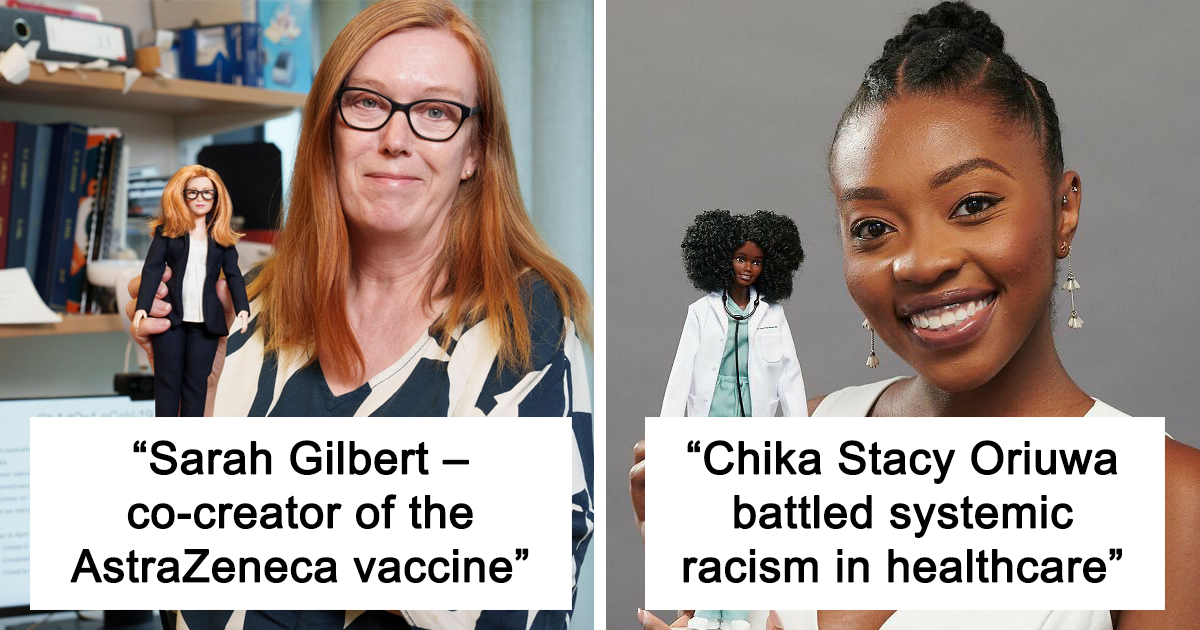
If one of the six names was instantly recognizable across headlines, it was Professor Sarah Gilbert. As a lead developer of the Oxford/AstraZeneca COVID-19 vaccine, Gilbert became one of the most visible scientific figures of the pandemic. Her work contributed to one of the vaccines that helped reduce serious illness and death around the world, which is about as close as a person gets to earning superhero status without a cape.
Her Barbie doll also carried major symbolic weight for girls in science. Barbie has spent years trying to shake off old criticism and reposition herself as a platform for ambition. Honoring Gilbert made that effort feel less like branding and more like a credible statement: yes, women in labs, epidemiology teams, and vaccine research belong in the spotlight too.
Dr. Jaqueline Goes de Jesus: The Researcher Who Helped Decode the Virus
Brazilian biomedical researcher Dr. Jaqueline Goes de Jesus was recognized for helping lead genome sequencing work connected to COVID-19 in Brazil. In plain English, she helped scientists understand what they were dealing with faster. In pandemic terms, speed matters. The quicker researchers can identify and analyze viral genomes, the quicker public health responses can adapt.
Her inclusion broadened the public’s understanding of what a “pandemic hero” looks like. Not every hero is photographed in an ER. Some are in research spaces, data systems, and labs, doing the work that rarely becomes a household conversation. By turning de Jesus into a Barbie role model, Mattel pushed lab science closer to center stage, where it frankly deserved to be all along.
Dr. Kirby White: Innovation Under Pressure
Australian physician Dr. Kirby White earned recognition for co-creating the Gowns for Doctors initiative, which helped provide reusable gowns during shortages of protective equipment. That may sound like a practical fix, and it was. But practical fixes are often the reason systems survive a crisis at all.
White’s story reflects one of the less glamorous truths of the pandemic: healthcare depended not only on brilliance, but on improvisation. Protective gear shortages forced doctors and communities to innovate in real time. Reusable gowns are not flashy. They are simply the kind of solution that keeps people safer when supply chains fail and need outruns inventory. In other words, not glamorous, very heroic.
Dr. Chika Stacy Oriuwa: Representation That Actually Means Something
Canadian physician and mental health advocate Dr. Chika Stacy Oriuwa was honored for both her medical work and her advocacy against systemic racism in healthcare. Her visibility mattered on several levels. She has spoken openly about what it means to be Black in medicine and why representation in healthcare spaces affects both providers and patients.
That made her custom Barbie especially powerful. For many children, dolls are not just toys. They are tiny rehearsals of possibility. Seeing a Barbie modeled after a Black woman physician and advocate helps expand who gets imagined in authority, intelligence, compassion, and leadership. That is not a small cultural shift. That is the kind of thing that can quietly change a child’s internal map of the future.
What Mattel Got Right With This Campaign
Let’s be fair: brands do not always handle social recognition gracefully. Sometimes a tribute campaign feels like a company discovered empathy in a marketing deck five minutes before launch. But this one had substance. First, the honorees represented a range of pandemic contributions: bedside care, medical advocacy, vaccine development, genomic research, PPE innovation, and anti-racism work in healthcare.
Second, Mattel did not reduce these women to generic “girl power” slogans. Their individual stories were specific, rooted in real accomplishments, and connected to actual public health impact. Specificity matters. “Inspiring woman” is nice. “Emergency nurse who treated early COVID patients, survived the disease, and returned to work” is unforgettable.
Third, the dolls were one-of-a-kind tributes rather than products built entirely around commercial scarcity. That decision preserved some dignity. It framed the campaign more as recognition than monetization. Sure, Mattel is still a business, and nobody accidentally stumbles into altruism with a global marketing budget, but this initiative showed a level of care that gave the campaign credibility.
Why the Story Still Matters for Culture, Parenting, and SEO
This story still performs well because it sits at the crossroads of several high-interest topics: Barbie role models, women heroes during COVID-19, women in STEM, pandemic frontline workers, and custom Barbie dolls based on real people. Search engines like relevance, but readers like emotional stakes. This topic has both.
For parents, it offered a concrete way to talk with kids about what happened during the pandemic. For educators, it highlighted female achievement in medicine and science. For culture writers, it showed how legacy brands try to remain relevant by aligning with values audiences increasingly care about: representation, authenticity, and real-world impact.
And for Barbie herself, it marked another chapter in a long reinvention. The brand has spent years moving away from a narrower beauty image toward broader career and identity storytelling. Sometimes that evolution has felt strategic. Here, it felt earned. When Barbie honors women who helped hold the world together during a public health emergency, the brand becomes less about aspiration in the abstract and more about aspiration with receipts.
The Bigger Lesson Behind the Dolls
The most meaningful part of this story is not that six women got dolls. It is that six women got recognition in a form millions of people immediately understand. Barbie is visual shorthand. She is cultural shorthand. When she reflects real scientists, nurses, physicians, and advocates, she helps normalize the idea that girls can grow into every one of those roles.
That matters because representation works best when it is concrete. A child may not remember a corporate statement about empowerment. But a child can remember a doll modeled after a vaccine developer or a frontline nurse. Toys shape stories. Stories shape imagination. Imagination shapes ambition. It is not magic. It is repetition with meaning.
So yes, these were custom dolls. But they were also miniature monuments to labor, care, intelligence, and grit. During a period when many frontline workers were exhausted beyond words, a public gesture of recognition carried real emotional weight. Small object, big symbolism.
Experiences, Emotions, and the Human Side of the Story
What makes Barbie honored six pandemic women heroes with custom dolls more than a feel-good headline is the experience wrapped inside it. The pandemic did not arrive as one tidy global event. It arrived as millions of separate human experiences: ICU alarms, isolation, fear, shortages, endless shifts, delayed funerals, frozen school routines, and families learning to read each other’s faces above masks. Against that backdrop, the six custom dolls felt less like polished PR and more like a small public thank-you note written in a language the whole culture could recognize.
For adults, the story carries a strange emotional double exposure. On one layer, it is hopeful. You see women in medicine and science being honored in a mainstream, visible way. On another layer, it is sobering, because each doll points back to a period that was frightening, chaotic, and deeply unequal. It is hard to look at the tribute without remembering what made it necessary in the first place.
That emotional tension is probably why the story lingers. It reminds people that heroism during the pandemic was rarely cinematic. It was repetitive. Tiring. Often underappreciated. It looked like going back to work when you were scared, speaking up when bias surged, solving supply problems with limited resources, or spending long hours in a lab while the world waited for answers. The dolls give those experiences a visible form, but the real substance remains the work itself.
There is also something quietly powerful about the childhood angle. Many adults who read this story likely grew up with dolls that reflected a much narrower idea of womanhood. Fashionable? Yes. Professionally ambitious? Sometimes. Broadly representative of women doing life-saving, system-changing work in real time? Not exactly. So seeing Barbie shift from dreamhouse icon to tribute vehicle for pandemic heroes feels, for many people, like cultural catch-up.
And then there is the parental experience. For moms, dads, grandparents, teachers, and caregivers, stories like this make difficult history more explainable. It is easier to talk with kids about COVID-19, healthcare workers, and science when there is a familiar object at the center of the conversation. A doll becomes an entry point. Suddenly the discussion is not abstract. It becomes: “This woman helped make a vaccine.” “This nurse took care of very sick people.” “This doctor spoke out when people were being treated unfairly.” That is how big history becomes understandable at eye level.
Even years later, the campaign still resonates because it captured something many people felt but could not easily phrase: during the pandemic, some of the most important heroes were women whose labor was practical, intellectual, emotional, and relentless all at once. Barbie did not create that truth. She simply reflected it for once without the usual sparkle getting in the way.
And maybe that is the best takeaway. The dolls were tiny. The work they honored was enormous. But sometimes culture needs a small symbol to point back to a very big reality. In that sense, these custom Barbies were not really about toys at all. They were about memory, gratitude, and the overdue recognition of women who kept showing up when the world was at its most fragile.
Conclusion
Barbie honored six pandemic women heroes with custom dolls, but the real story goes far beyond collectibles or headlines. Mattel used one of the world’s most recognizable brands to spotlight women whose work during COVID-19 mattered in immediate, life-shaping ways. That made the campaign memorable, searchable, and culturally significant.
More importantly, it showed what meaningful recognition can look like when a brand focuses on substance instead of slogans. The dolls celebrated science, courage, advocacy, innovation, and representation all at once. For readers, parents, and anyone still thinking about how the pandemic reshaped public life, that is why this story still stands out. Barbie did not just dress for the occasion. She finally showed up for the right one.