Some kitchen collections whisper, “I am practical.” Betül Tunç’s cookware and homeware line at Anthropologie practically leans across the counter, pours you tea, hands you a flaky pastry, and says, “Stay a while.” The exclusive Turkuaz Kitchen collection brings together the cozy romance of old-world design, the warmth of Turkish-inspired patterns, and the kind of everyday usefulness that makes a kitchen feel less like a room and more like a living, breathing family album.
Created with Betül Tunç, the baker, recipe developer, food photographer, and founder of Turkuaz Kitchen, the Anthropologie collection celebrates the visual language her followers already know well: handmade-looking details, nostalgic florals, powdery blues, soft ivory tones, warm amber accents, and a general sense that someone nearby is rolling dough while classical music plays in the background. In other words, it is not just cookware. It is a mood. A very charming, slightly flour-dusted mood.
Who Is Betül Tunç, and Why Does Her Kitchen Style Matter?
Betül Tunç is best known as the creator behind Turkuaz Kitchen, a food and baking platform loved for its calming, artful videos and made-from-scratch recipes. Her work blends Turkish tradition, home cooking, travel inspiration, and modern food styling. What makes her content stand out is not only the final dish, but the process: hands in dough, vintage utensils, natural light, soft textures, and a rhythm that makes baking feel like a form of meditation.
Born and raised in Erzurum, Türkiye, Tunç has often connected her love of food to family kitchens, long winters, and the comfort of warm homemade meals. That personal history shows up beautifully in her Anthropologie line. The pieces do not feel like anonymous products designed by committee in a room with suspiciously bright fluorescent lighting. They feel personal, decorative, and intentionally rooted in memory.
Inside the Anthropologie x Turkuaz Kitchen Collection
The Betül Tunç for Anthropologie collection launched as an exclusive homeware collaboration inspired by her Turkish heritage and signature old-world aesthetic. The line includes dishware, bakeware, cooking tools, table linens, tea pieces, serveware, and candles. It is the kind of collection that makes you suddenly believe you are the sort of person who hosts spring breakfasts with fresh flowers and homemade jam. Even if your current breakfast is toast eaten over the sink, we support the dream.
Signature Design Elements
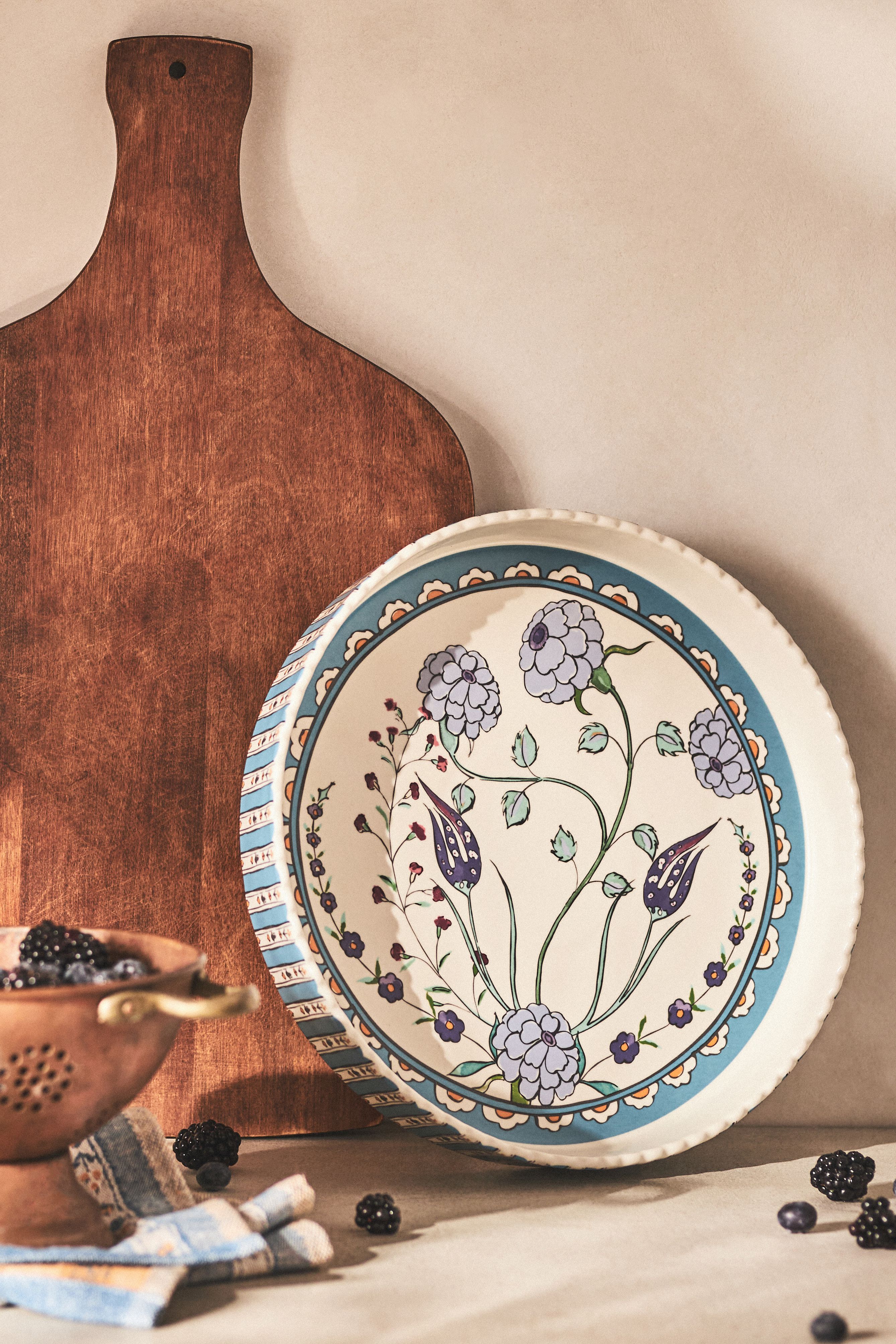
The most recognizable feature of the collection is its use of traditional Turkish-inspired patterns, especially designs that echo the spirit of Iznik ceramics. Iznik ware is known for stylized floral motifs, flowing leaves, rich blues, turquoise tones, greens, and decorative symmetry. Tunç’s Anthropologie pieces translate that historical inspiration into an approachable modern kitchen collection.
Instead of looking stiff or museum-like, the designs feel soft and lived-in. Delicate scalloped edges, floral details, hand-painted effects, and glazed stoneware give the pieces an heirloom quality. They have the look of something discovered in a grandmother’s cabinet, except they are ready for today’s brunch table, tea tray, or “I made one cake and now I deserve applause” moment.
Color Palette: Ivory, Amber, Powder Blue, and Springtime Joy
The collection’s palette is one of its biggest strengths. Ivory gives the pieces a timeless foundation. Powder blue brings in a fresh, airy feeling. Amber adds warmth. Floral accents prevent everything from becoming too precious. Together, the colors create a table setting that feels cheerful but not loud, traditional but not heavy, and decorative without tipping into “do not touch this or my soul will crack” territory.
This balance is important because beautiful kitchen items still need to work in real homes. A teacup should look pretty, yes, but it should also survive actual tea. A spoon rest should look charming, but it should also catch sauce. An apron should be cute enough for photos and useful enough for a flour storm. Tunç’s collection understands that the kitchen is both a creative studio and a mild disaster zone.
Why the Collection Feels So Old-World
Old-world charm is not just about adding floral patterns to a plate and calling it a day. It comes from a deeper design language: craftsmanship, imperfection, heritage, tactile materials, and objects that seem to carry stories. Betül Tunç’s line leans into all of these ideas.
Handcrafted Character
Several pieces in the collection are described as hand-painted or handcrafted in appearance, with natural variation expected from item to item. That detail matters. In a world where many kitchen products look aggressively identical, small irregularities make a piece feel human. A slight variation in glaze or pattern placement can make a cup feel less like inventory and more like a keepsake.
That handmade spirit aligns perfectly with Tunç’s cooking style. Her videos often celebrate slow processes: kneading, rolling, folding, whisking, and shaping. The collection turns those same values into physical objects. It says: cooking is not only about efficiency. Sometimes it is about presence, beauty, and letting the dough take its sweet time because apparently dough has a better work-life balance than the rest of us.
Turkish-Inspired Patterns With Everyday Appeal
The Iznik-inspired motifs bring cultural depth to the collection. Traditional Iznik ceramics are admired for their stylized tulips, carnations, vines, leaves, and bold yet balanced color combinations. Tunç’s line nods to that history while keeping the pieces easy to mix with modern dinnerware, neutral kitchens, and casual entertaining.
That is the magic trick. The collection does not require a fully themed kitchen. You do not need tiled walls, copper pots, and a dramatic courtyard fountain to make it work. One teacup, serving bowl, rolling pin, or table runner can add a touch of romance to an otherwise simple kitchen. The pieces are decorative enough to stand out, but versatile enough to live with.
Standout Pieces Worth Noticing
While the full collection spans multiple categories, a few types of pieces capture the spirit of the collaboration especially well.
Teacups and Saucers
The teacup and saucer sets are perhaps the most instantly charming items in the line. They bring together scalloped forms, floral details, and glazed stoneware in a way that makes even an ordinary afternoon tea feel special. They are also a natural match for Tunç’s baking world, where pastries, cookies, and tender doughs often take center stage.
These cups are the sort of thing that can make a guest say, “Oh, this is beautiful,” which is very satisfying, especially if the cookies came from a store and you simply arranged them with confidence.
Rolling Pins and Baking Tools
The rolling pin may be one of the most symbolic pieces in the collection. It connects directly to Tunç’s love of dough and traditional baking. With floral decoration and a nostalgic shape, it turns a basic kitchen tool into something worth displaying. For anyone who bakes pies, cookies, flatbreads, or pastries, it brings a sense of ceremony to an everyday task.
Decorative baking tools are not just about looks. They can change how people feel in the kitchen. A beautiful rolling pin might not magically fix a tough pie crust, but it can make the process feel more joyful. And joy, unlike overworked dough, should be handled generously.
Aprons and Table Linens
The apron and linens help extend the collection from cookware into atmosphere. An apron with floral details can make baking feel like an occasion rather than a chore. Table runners and napkins help connect the cooking process to the final act of gathering. This is where Tunç’s philosophy shines: food is not only made; it is shared, styled, and remembered.
Serveware and Dessert Plates
Serving bowls, dessert plates, pitchers, and platters are ideal for anyone who likes a layered table. These pieces can frame simple foods beautifully: fruit, olives, bread, cookies, roasted vegetables, dips, cakes, or a tiny mountain of baklava if the day calls for ambition. Because the patterns are decorative, they add visual interest before the food even arrives.
How to Style Betül Tunç’s Anthropologie Pieces at Home
The best way to use this collection is not to overthink it. The old-world look is strongest when it feels gathered over time, not staged like a showroom where nobody has ever spilled olive oil.
Mix With Simple White Dinnerware
If you already own plain white plates, the Turkuaz Kitchen pieces will fit in easily. A patterned dessert plate or teacup can add charm without overwhelming the table. White dinnerware gives the florals and blues room to breathe.
Add Natural Materials
Pair the pieces with wood cutting boards, linen napkins, woven baskets, brass candlesticks, or ceramic vases. These textures support the old-world feeling and keep the table from looking too polished. The goal is warm and collected, not “my dining table has a museum security guard.”
Use Them Beyond Special Occasions
One of the smartest things about the collection is that it looks special but does not have to be saved for holidays. Use the teacups on a Tuesday. Put toast on the dessert plates. Rest a sauce-covered spoon on a beautiful spoon rest while making weeknight pasta. The charm works best when it becomes part of daily ritual.
Why This Collaboration Works for Anthropologie
Anthropologie has long been associated with expressive home goods, decorative tableware, and pieces that feel a little whimsical. Betül Tunç’s aesthetic fits naturally into that world. Her brand is romantic, handmade, international, and deeply tied to the sensory pleasures of home. For Anthropologie shoppers, the collection offers a familiar promise: your kitchen can be practical and beautiful at the same time.
The collaboration also reflects a broader trend in home design. People are moving away from sterile minimalism and toward warmth, personality, and objects with visible character. A kitchen does not need to look like a laboratory where joy goes to be measured in teaspoons. It can have color, pattern, history, and softness. Tunç’s collection arrives right in that sweet spot.
The Emotional Pull of a Beautiful Kitchen
There is a reason people respond so strongly to Tunç’s work. Her kitchen world feels peaceful. It offers a small escape from the speed of daily life. Her Anthropologie line captures that same emotional pull by turning ordinary actions into rituals: pouring tea, rolling dough, setting the table, lighting a candle, serving dessert.
This is where the collection becomes more than a shopping story. It points to a larger idea: the objects we use every day shape the way we experience home. A pretty cup will not solve all of life’s problems, but it can make a quiet morning feel gentler. A floral rolling pin will not guarantee perfect pastry, but it can make baking feel more inviting. Sometimes the kitchen needs function. Sometimes it needs poetry. Ideally, it gets both.
Is Betül Tunç’s Cookware Line Worth the Hype?
For people who love old-world kitchen design, Turkish-inspired motifs, cottage-style baking tools, and Anthropologie’s decorative approach to home goods, this collection is absolutely worth noticing. It is especially appealing if you enjoy hosting, baking, tea service, or creating a kitchen that looks warm and personal rather than purely modern.
It may not be the right fit for someone who wants ultra-minimal black-and-steel cookware or purely professional restaurant equipment. But that is not the point. Betül Tunç’s Anthropologie line is about atmosphere as much as utility. It is for cooks and hosts who believe a table can be useful and beautiful, a tool can be practical and romantic, and a kitchen can hold both tradition and everyday life.
Experience Notes: Living With the Old-World Kitchen Mood
There is something surprisingly powerful about bringing one charming piece into the kitchen. A patterned teacup, a decorative spoon rest, or a floral apron can shift the whole mood of cooking. Suddenly, making breakfast feels less like a daily obligation and more like a tiny ceremony. The eggs are still eggs, of course. They have not become royal eggs. But the experience feels softer, more intentional, and a little more beautiful.
That is the real appeal of Betül Tunç’s Anthropologie collection. It does not ask you to become a professional baker overnight. It does not demand that you produce perfect braided bread while wearing linen and gazing peacefully out a window. It simply invites you to slow down. Maybe you make tea in a pretty cup. Maybe you serve store-bought cookies on a dessert plate that makes them look like they came from a charming village bakery. Maybe you wear the apron while making pancakes and feel, briefly, like the main character in a cozy cooking montage.
In practical terms, decorative kitchen pieces also encourage more mindful hosting. When the table looks inviting, people tend to linger. A patterned platter turns sliced fruit into something intentional. A beautiful pitcher makes lemonade feel like hospitality. A soft table runner can make even a small apartment table feel ready for guests. These are not huge changes, but they create a sense of welcome.
The old-world charm also works because it feels forgiving. Modern kitchens can sometimes look so clean and sharp that using them feels like disturbing a showroom. Tunç’s aesthetic is different. It welcomes flour on the counter, crumbs on the plate, and a spoon resting beside a pot of sauce. It suggests that beauty is not ruined by use. In fact, use is what gives it meaning.
For home cooks, that mindset matters. Many people avoid baking because it seems fussy or intimidating. But a warm, nostalgic kitchen setup can make the process feel more approachable. A rolling pin displayed on the counter is a tiny invitation. A pretty mixing bowl says, “Make the dough.” A patterned teacup says, “Take a break while the dough rises.” This is kitchen psychology, and frankly, it is more pleasant than being bullied by a stand mixer at 9 p.m.
The collection also reminds us that heritage-inspired design does not have to feel old-fashioned in a dusty way. It can be fresh, colorful, and flexible. Turkish-inspired florals can sit beside modern cabinets. Scalloped stoneware can work with everyday plates. A traditional pattern can become part of a casual brunch, a birthday cake moment, or a weeknight dinner. That is the beauty of old-world charm when it is done well: it does not freeze the past in place. It brings the best parts of it forward.
Ultimately, Betül Tunç’s cookware and homeware line at Anthropologie succeeds because it understands that people do not only buy kitchen items for tasks. They buy them for the kind of home they want to create. This collection offers a kitchen that feels warmer, slower, more colorful, and more connected to memory. And if it makes your toast look more romantic along the way, that is simply excellent bonus content.
Conclusion
Betül Tunç’s cookware line at Anthropologie brings old-world charm into the modern kitchen with a thoughtful mix of Turkish-inspired patterns, vintage details, soft colors, and practical pieces for cooking, baking, serving, and gathering. The collection works because it feels personal. It reflects Tunç’s love of tradition, family, handmade food, and beautiful presentation without becoming too formal for everyday life.
Whether you are drawn to the teacups, baking tools, linens, dessert plates, or serveware, the line offers an easy way to add warmth and personality to your kitchen. More importantly, it reminds us that cooking is not only about getting food on the table. It is about creating moments, slowing down, and making ordinary days feel a little more memorable.
Note: This article is written as original web content based on publicly available information about Betül Tunç, Turkuaz Kitchen, Anthropologie’s exclusive collaboration, Turkish-inspired design elements, and the collection’s known product themes.