Learning how to wear contact lenses can feel like training for a tiny, high-stakes magic trick. You are holding a nearly invisible disc on your fingertip, your eye is blinking like it has hired its own security team, and suddenly you are wondering why anyone ever thought this was convenient.
The good news: putting in contact lenses becomes much easier with clean hands, a reliable routine, and a little patience. Most new wearers improve quickly once they stop treating every blink like a personal betrayal.
This guide explains how to put in contact lenses safely, how to make them feel comfortable, and what mistakes to avoid. It applies primarily to soft contact lenses, including daily disposable, biweekly, and monthly lenses. Always follow the specific instructions from your eye doctor and the lens manufacturer, especially if you wear specialty, rigid gas-permeable, or scleral lenses.
Before You Start: Set Up a Contact Lens Routine
The easiest way to wear contact lenses is to make the process boring. That sounds unglamorous, but boring is excellent when your corneas are involved. Use the same order every time, such as right lens first and left lens second. This reduces the chance of mixing up lenses with different prescriptions.
Keep your lens case, fresh contact lens solution, mirror, and glasses nearby. If you are standing over a sink, close or cover the drain. A contact lens may be tiny, but it has an astonishing ability to disappear into plumbing with Olympic-level confidence.
How to Wear Contact Lenses in 12 Steps
Step 1: Wash Your Hands Thoroughly
Wash your hands with soap and water before touching your lenses, lens case, or eyes. Rinse away all soap residue, then dry your hands completely with a clean, lint-free towel. Wet fingers can make a soft contact lens cling, fold, or slide around like it has other plans.
Avoid hand creams, oily lotions, strong fragrances, or products that leave residue on your fingers. Those ingredients can transfer to the lens and create blurry vision, discomfort, or an annoying film that makes the world look like it was shot through a greasy camera lens.
Step 2: Start With the Same Eye Every Time
Pick one eye to start with every day. Many people choose the right eye first. This habit matters most when each eye has a different prescription, but it is useful for everyone because it creates a dependable routine.
Open only one side of your lens case at a time. That simple move prevents the classic “Which lens is which?” mystery from becoming the first challenge of your morning.
Step 3: Remove the Lens Carefully From Its Case or Package
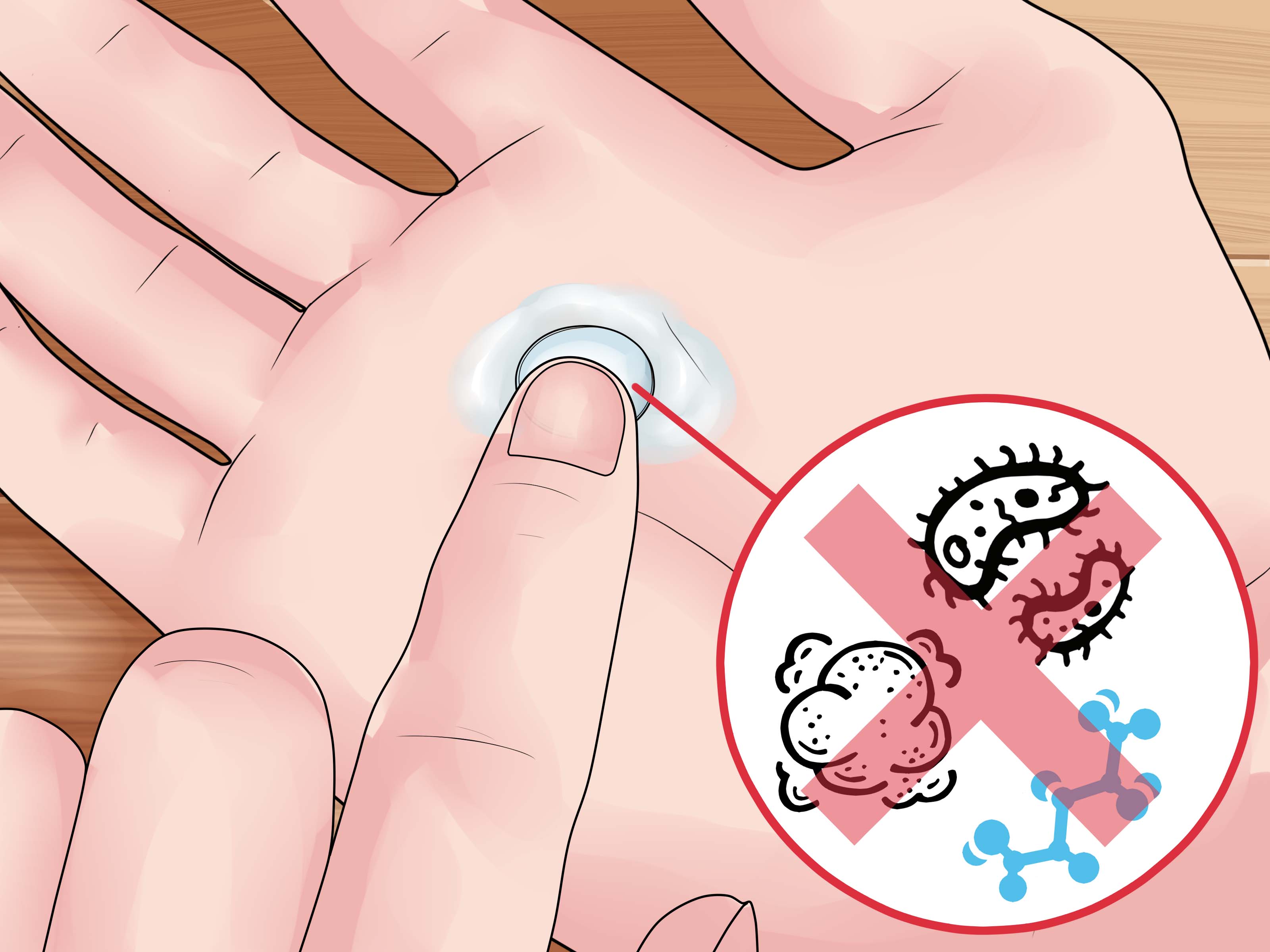
Gently shake the lens case if needed, then slide the lens into the palm of your clean hand. Use the pads of your fingertips, not your fingernails, to handle it. Fingernails can tear a soft contact lens or leave behind tiny scratches that make the lens uncomfortable.
For reusable lenses, follow your doctor’s instructions for rinsing and cleaning. Use only the recommended sterile contact lens solution. Never rinse or store a contact lens in tap water, bottled water, saliva, or homemade saltwater. Water may contain microorganisms that can cause serious eye infections.
Step 4: Inspect the Contact Lens
Place the lens on the tip of your index finger and examine it under good light. Make sure it is clean, smooth, and free from tears, lint, makeup particles, or damage. A lens that looks torn, chipped, cloudy, or folded should not go into your eye.
If you wear daily disposable lenses, use a fresh lens. If you wear reusable lenses, do not try to stretch their replacement schedule simply because they still look “pretty okay.” Contact lenses are not leftovers in the refrigerator. Their replacement schedule exists for a reason.
Step 5: Check Whether the Lens Is Right-Side Out
A correctly oriented soft contact lens should resemble a smooth little bowl. The edges should point upward in a gentle curve. If the edges flare outward, making the lens look more like a shallow plate or soup bowl with a rebellious rim, it may be inside out.
Another clue: an inside-out lens often feels irritating, shifts around more easily, or refuses to settle comfortably. If you are unsure, gently turn it over and inspect it again. Some brands have tiny markings that help you identify the correct orientation, so check your lens instructions.
Step 6: Balance the Lens on Your Index Finger
Place the lens on the very tip of your dominant-hand index finger. Keep your fingertip dry enough that the lens does not collapse, but do not obsess over achieving laboratory-grade perfection. The goal is simply to keep the lens centered and upright.
Use your middle finger on the same hand to pull down your lower eyelid. This gives you space to place the lens without accidentally blinking it onto the bathroom counter, where it may immediately collect enough lint to develop its own ecosystem.
Step 7: Hold Your Upper Eyelid Open
With your other hand, gently hold your upper eyelid open by placing a finger near the base of your upper lashes. Do not pull aggressively. You only need enough control to prevent your eyelid from closing at the dramatic moment.
Try not to touch your eye with your fingernails. The skin around the eye is delicate, and your cornea is even less interested in rough handling than your favorite phone screen.
Step 8: Look Straight Ahead or Slightly Upward
Look into a mirror and focus on a steady point. Some people find it easiest to look directly at the lens as it approaches. Others prefer to look slightly upward and place the lens on the lower white part of the eye before allowing it to slide into position.
Neither approach is universally better. Choose the one that helps you stay calm and keeps your eyelids open. The correct method is the one that gets the lens in safely without turning your morning into an emotional documentary.
Step 9: Place the Lens Gently on Your Eye
Bring your finger slowly toward your eye and lightly touch the lens to the surface of the eye. Do not press hard. The lens should transfer from your fingertip to the moisture on your eye with gentle contact.
Once the lens touches your eye, move your finger away slowly. Keep holding your eyelids for a moment so you do not blink before the lens settles. If the lens folds or falls out, do not panic. Clean or replace it according to your lens type, then try again.
Step 10: Release Your Eyelids and Blink Slowly
Let go of your lower eyelid first, then your upper eyelid. Close your eye gently for a second, then blink several times. This helps the contact lens center itself over the cornea.
Your vision may feel slightly strange for a few seconds, especially if you are new to contacts. That is normal. The lens needs a moment to settle into its happy little parking spot.
Step 11: Check Your Vision and Comfort
Look around the room. Your vision should become clear, and the lens should feel almost unnoticeable. You should not feel sharp pain, intense burning, persistent scratchiness, or the sensation that the lens is scraping your eye.
If the lens feels uncomfortable, remove it. Do not try to “tough it out” for hours. Check for lint, makeup residue, a torn edge, or an inside-out lens. Rinse reusable lenses only with approved sterile solution, or use a new lens if you wear dailies.
Step 12: Repeat With the Other Eye
Repeat the process with your second lens. Once both lenses are in, wash away any leftover solution from your hands, store your case properly if you wear reusable lenses, and put your glasses somewhere safe for later.
When you finish, you should be able to see clearly without constantly noticing your lenses. The best contact lens experience is wonderfully uneventful. No burning, no blur, no surprise lens in your hair. Just vision.
What to Do When a Contact Lens Feels Wrong
A contact lens should not feel painful. Mild awareness during your first few days may happen, but persistent discomfort is a sign to stop and investigate.
The Lens Feels Scratchy
Remove it and inspect it. A tiny eyelash, lint fiber, makeup particle, or tear in the lens can create a surprisingly dramatic scratchy feeling. If it is a reusable lens, clean and rinse it with fresh approved solution. If it is a daily disposable lens, throw it away and use a new one.
The Lens Is Blurry
Blur can happen when the lens is inside out, off-center, dirty, dry, or mixed up between eyes. Blink a few times first. If vision stays blurry, remove the lens and check its orientation and condition. Never keep wearing a lens that causes ongoing blurry vision.
The Lens Keeps Moving Around
A lens may shift if it is inside out, dried out, damaged, or not fitting correctly. If this happens repeatedly, schedule an appointment with your eye doctor. A lens fit is not something you should solve by repeatedly buying random brands online and hoping your eyeball develops brand loyalty.
Your Eye Is Red, Painful, or Sensitive to Light
Remove the contact lens and do not put it back in. Use your glasses and contact an eye-care professional promptly, especially if you have worsening pain, redness, discharge, swelling, light sensitivity, or changes in vision. These symptoms may signal irritation, a scratch, or an infection that needs medical attention.
Daily Contact Lens Safety Rules
Putting in contacts correctly is only half the job. Healthy contact lens wear also depends on what you do after they are in.
- Follow your prescribed replacement schedule for daily, biweekly, monthly, or specialty lenses.
- Do not sleep or nap in lenses unless your eye-care professional specifically prescribed them for overnight wear.
- Keep contact lenses away from water, including showers, pools, hot tubs, lakes, and oceans.
- Never use tap water, saliva, or old solution to clean or store lenses.
- Use fresh lens solution every time you store reusable lenses. Do not “top off” yesterday’s solution.
- Replace your lens case regularly, usually at least every few months or as directed by your eye-care professional.
- Put contact lenses in before applying makeup and remove them before taking makeup off.
- Keep a current pair of glasses available for evenings, eye irritation, illness, or unexpected lens trouble.
How Long Does It Take to Get Used to Contact Lenses?
For most people, the insertion process becomes easier within several days to a few weeks. The first attempts can take ten minutes, fifteen minutes, or longer. That does not mean you are bad at contacts. It means your eye has a built-in blink reflex and is doing its best to protect you from a mysterious finger approaching at top speed.
Practice when you are not rushed. Early mornings before school, work, or a big event are not ideal for learning. Give yourself enough time to pause, wash your hands again if needed, and try without frustration.
Many new wearers improve when they focus on keeping both eyelids controlled, moving slowly, and using a mirror at eye level. Over time, you may insert a lens in seconds without thinking about it. The process goes from “tiny medical drama” to “brush teeth, insert lens, find keys.”
Real-World Experiences: What New Contact Lens Wearers Often Learn
The first day with contact lenses often comes with a strange combination of excitement and suspicion. You may see your room clearly from across the hall and think, “Amazing.” Then you may try to put in the second lens and think, “This is apparently my new career.” Both reactions are normal.
Many beginners discover that the hardest part is not touching the eye. It is controlling the blink reflex. Your brain has spent your entire life protecting your eyes from incoming objects, so it is understandably skeptical when you approach with a tiny transparent bowl balanced on one finger. The breakthrough often happens when you stop trying to move faster. Slow, steady movements work better than charging forward like you are defusing a bomb.
Another common lesson is that contacts are much easier when you develop a routine. Starting with the same eye every time prevents mix-ups. Keeping your glasses in the same place saves you when your eyes feel tired. Carrying a small lens case and approved solution can rescue you from an unexpected eyelash, dusty commute, or overly air-conditioned room.
New wearers also learn that comfort is not something to negotiate. A well-fitted, clean contact lens should usually fade into the background. You should not spend the day constantly rubbing your eye, blinking hard, or pretending that burning is “probably normal.” It is better to remove the lens, switch to glasses, and solve the problem than to keep wearing something that feels wrong.
Makeup can create another learning curve. Most experienced wearers put contacts in before applying eye makeup. That order helps prevent mascara flakes, eye shadow particles, and moisturizer residue from ending up between the lens and the eye. At the end of the day, lenses come out before makeup comes off. It may not sound glamorous, but neither is trying to remove eyeliner while a contact lens is sliding around like a tiny ice rink.
Dry environments can also surprise beginners. Airplanes, strong fans, heated rooms, long screen sessions, and windy days may make lenses feel less comfortable. Some people find that blinking more often, taking visual breaks, and using eye drops recommended for contact lens wearers helps. Others may need a different lens material, replacement schedule, or fit from their eye doctor.
Perhaps the most useful experience is learning when not to wear contacts. If your eyes are red, painful, unusually watery, sensitive to light, or producing discharge, glasses are the better choice until you speak with an eye-care professional. Contacts should make life clearer, not turn your eyes into a customer-service complaint department.
Eventually, contact lenses become routine. You stop staring at yourself in the mirror, stop bargaining with your eyelids, and stop celebrating every successful insertion like you just landed a spacecraft. You simply put them in, see clearly, and get on with your day. That quiet confidence is the real milestone.
Conclusion
Learning how to wear contact lenses is mostly about building safe habits. Clean and dry your hands, inspect the lens, make sure it is right-side out, hold your eyelids steadily, place the lens gently, and check that your vision feels clear and comfortable.
Do not ignore pain, redness, blurry vision, or ongoing irritation. Contact lenses can be a convenient and comfortable way to correct vision, but only when you treat them as the medical devices they are. With practice, your daily routine will become fast, simple, and far less dramatic than your first attempt.