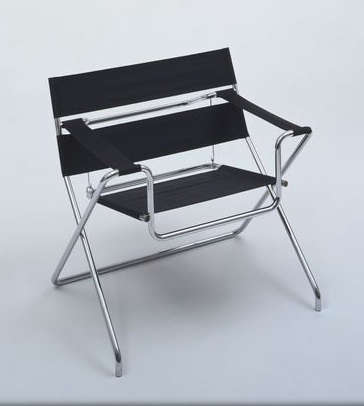
The Marcel Breuer Folding Chair is what happens when a chair decides it has had enough of heavy upholstery, carved wood, and “please do not move me” energy. Light, geometric, collapsible, and unapologetically modern, this Bauhaus icon proves that furniture can be practical without looking like it gave up on style. Known historically as the model B4 and today often associated with the Tecta D4 folding armchair, the chair is one of Marcel Breuer’s most fascinating experiments in tubular steel design.
While Breuer’s Wassily Chair usually gets the celebrity treatmentmuseum spotlights, design-book glamour shots, and endless living-room cameosthe folding chair deserves its own standing ovation. It takes the same Bauhaus obsession with structure, honesty, and industrial materials, then adds a simple but brilliant twist: it folds. That one practical feature transforms it from a sculptural lounge chair into a mobile, adaptable piece of modern furniture.
In this guide, we’ll explore the history, design, materials, styling potential, buying considerations, and real-world experience of living with the Marcel Breuer Folding Chair. Spoiler: it is not just a chair; it is a small architecture lesson with a seat.
What Is the Marcel Breuer Folding Chair?
The Marcel Breuer Folding Chair is a collapsible lounge chair designed in the late 1920s during the golden age of Bauhaus experimentation. It is most commonly identified as the B4 folding armchair, later reintroduced and produced as the D4 by Tecta. The chair combines a tubular steel frame with taut fabric or strap seating, creating a structure that feels both mechanical and surprisingly elegant.
At first glance, the chair looks like a close relative of Breuer’s famous Wassily Chair. That comparison is fair. Both designs use tubular steel, open geometry, and suspended seating surfaces. But the folding chair has its own personality. Where the Wassily Chair sits like a confident manifesto in the room, the folding chair says, “I am also brilliant, but I can clear space when needed.” That flexibility is a big part of its appeal.
The chair’s design is often described as airy, light, and springy. It does not dominate a room with bulk. Instead, it outlines space with metal lines and fabric planes. This was a radical idea in the 1920s, when many chairs still behaved like miniature sofas wearing wooden armor.
Marcel Breuer and the Bauhaus Mindset
To understand the Marcel Breuer Folding Chair, you need to understand the design world that produced it. Marcel Breuer, born in Hungary in 1902, became one of the most influential designers and architects of the 20th century. As a young designer at the Bauhaus, he was surrounded by a school culture that believed good design should bring art, craft, and industry together.
The Bauhaus was not interested in furniture that simply looked fancy. Its goal was bigger: create objects suited to modern life. That meant clean lines, honest materials, efficient production, and a strong dislike of decorative clutter. If a scroll, carving, or extra flourish did not serve a purpose, the Bauhaus attitude was basically: thank you for your service, now please leave the room.
Breuer’s breakthrough came when he began experimenting with tubular steel, reportedly inspired by bicycle frames. The idea was almost shockingly simple. If tubular steel could make a bicycle light, strong, and durable, why couldn’t it make a chair? This thinking led to his celebrated tubular steel furniture designs, including the Wassily Chair, B9 tables, Cesca Chair, and the folding B4/D4 armchair.
The B4 and D4: Same Spirit, Different Names
The chair is commonly referred to by two related names: B4 and D4. The model B4 is the historical designation associated with Breuer’s folding armchair. In modern production and retail contexts, the chair is often called the Tecta D4. Tecta, a German manufacturer known for preserving and producing Bauhaus classics, helped bring the folding design back into wider attention in the 1970s.
This naming shift can confuse buyers, collectors, and design fans. If you are searching online, you may see “Marcel Breuer B4,” “Breuer D4,” “Tecta D4,” “Bauhaus folding armchair,” or “folding Wassily-style chair.” These terms are often circling the same design family. The safest way to identify the chair is by its structure: a folding tubular steel frame, lounge-chair proportions, and suspended fabric, leather, or strap surfaces.
The D4 is sometimes described as the folding brother of the Wassily Chair. That description is useful, but it also undersells the D4’s cleverness. The folding mechanism is not a gimmick. It reflects the Bauhaus belief that modern furniture should serve modern livingsmaller spaces, flexible rooms, terraces, gardens, summer houses, clubs, and casual settings where furniture might need to move rather than sit forever like a museum guard.
Design Analysis: Why This Chair Still Looks Fresh
1. Tubular Steel Creates a Visual Skeleton
The chair’s frame is made from tubular steel, usually chrome-plated or nickel-plated depending on the version. Instead of hiding the structure under upholstery, Breuer makes the frame the main visual event. The chair is not pretending to be soft, carved, or handmade in a traditional sense. It is proudly industrial.
This exposed frame gives the Marcel Breuer Folding Chair its skeletal beauty. You can see how it works. The lines carry weight, define the arms, support the seat, and create the folding geometry. There is no visual trickery. In a world full of overstuffed furniture, that honesty still feels refreshing.
2. Negative Space Makes It Feel Light
One of the chair’s strongest features is what is not there. Large areas of open space make the chair feel transparent. You can see through it, around it, and under it. That visual lightness allows the chair to work in modern apartments, glassy interiors, reading corners, galleries, and even eclectic homes where one strong design piece can sharpen the entire room.
This is where Breuer’s genius becomes obvious. The chair has presence, but it does not bully the furniture around it. It is like the stylish guest at a dinner party who wears something unforgettable but still lets everyone else talk.
3. The Folding Function Adds Practical Intelligence
The folding feature is the star of the show. Many iconic chairs are beautiful but stubborn. They take up space, demand attention, and refuse to be anything other than what they are. The Marcel Breuer Folding Chair offers a different proposition: iconic design that can move, fold, and adapt.
That practicality was especially forward-thinking in the 1920s. Breuer was not just designing a luxurious object for display. He was thinking about mobility, storage, and changing use. In contemporary homes, that idea feels more relevant than ever. Open-plan rooms, small apartments, multipurpose studios, and indoor-outdoor living all reward furniture that can flex.
Materials: Steel, Fabric, Eisengarn, and Leather
Original and museum-documented versions of the folding armchair are often associated with chrome-plated tubular steel and Eisengarn, a strong waxed cotton material historically linked to Bauhaus weaving experiments. Modern versions may use fabric, leather straps, Bauhaus-style webbing, or other durable upholstery options.
The choice of material changes the mood. Black fabric makes the chair feel graphic and architectural. Natural canvas gives it a relaxed, workshop-like honesty. Leather adds warmth and luxury, making the chair easier to pair with richer interiors. Bright or custom colors can push it into collectible design territory, though purists may prefer classic black or neutral tones.
Whatever the version, the key is tension. The seat and back surfaces must be taut enough to support the body while preserving the chair’s crisp geometry. If the fabric sags too much, the whole design loses its elegant precision. A Breuer chair should not look like it skipped leg day.
How the Folding Chair Relates to the Wassily Chair
The Wassily Chair, originally the model B3, is Breuer’s best-known tubular steel lounge chair. Designed in the mid-1920s, it reimagined the traditional club chair as a lightweight framework of metal and suspended straps. It was radical because it stripped the idea of a comfortable armchair down to its essential structure.
The Marcel Breuer Folding Chair shares that same design language. Both pieces reject bulk. Both use industrial materials. Both transform the lounge chair into a modern object made of lines, planes, and tension. But the folding chair pushes the idea further into mobility. It is less monumental than the Wassily and arguably more playful.
If the Wassily Chair is the famous older sibling with a framed portrait in every design textbook, the folding chair is the clever sibling who figured out how to pack light and still look fantastic.
Why Collectors and Designers Care About It
The Marcel Breuer Folding Chair matters because it captures a specific moment in design history: the shift from furniture as heavy domestic ornament to furniture as functional modern equipment. It also represents Breuer’s broader influence on 20th-century design. His tubular steel experiments helped shape the language of modern interiors, from office furniture to lounge seating to minimalist homes.
Collectors value the chair because it is both historically important and less commonly seen than some other Breuer designs. The Cesca Chair and Wassily Chair are widely recognized, reproduced, and discussed. The folding B4/D4 armchair feels a little more insiderstill iconic, but with a quieter kind of prestige.
Designers appreciate it because it solves several problems at once. It adds a recognizable modernist element. It brings texture through straps or fabric. It creates seating without visual heaviness. And because it folds, it offers functional flexibility that many collectible chairs do not.
How to Style a Marcel Breuer Folding Chair
In a Modern Living Room
Place the chair near a low sofa, a glass table, or a simple wool rug. The open frame pairs well with clean architectural lines. Avoid crowding it with too many heavy pieces. Let the chair breathe. Bauhaus furniture likes oxygen and good lighting.
In a Reading Corner
A Breuer folding chair can become a sharp reading chair when paired with a slim floor lamp and a small side table. Choose a soft throw if you want more comfort, but keep it minimal. A giant blanket pile will make the chair look like it lost a fight with a laundry basket.
In a Home Office or Studio
The chair works beautifully in creative spaces. It signals taste without screaming for attention. In a studio, design office, or architecture-inspired workspace, it can function as a guest chair, thinking chair, or “I am waiting for inspiration” chair.
On a Covered Patio or Sunroom
Historically, the folding chair was linked to casual and semi-outdoor settings such as terraces, summer houses, and garden cafés. In modern use, it can suit a covered patio or sunroom, provided the materials are protected from moisture, harsh sun, and weather damage.
Buying Tips: Original, Licensed, Vintage, or Inspired?
If you are shopping for a Marcel Breuer Folding Chair, start by deciding what you actually want: a collectible piece, a licensed modern production, a vintage Tecta version, or an inspired design. Each option has a different price point and purpose.
For collectors, authenticity matters. Look for maker labels, documented provenance, quality of construction, accurate proportions, and material details. Vintage examples may show wear, but structural problems are a bigger concern than cosmetic patina. Check the folding mechanism, frame alignment, plating condition, and fabric tension.
For everyday users, comfort and durability may matter more than collectible purity. A well-made licensed or high-quality contemporary version can deliver the design experience without the anxiety of owning a fragile historical object. Avoid flimsy reproductions with weak metal, loose joints, or straps that look tired before anyone has even sat down.
Care and Maintenance
The chair’s care depends on its materials. Tubular steel should be wiped with a soft cloth and kept dry to prevent spotting or corrosion. Avoid abrasive cleaners, which can damage chrome or nickel finishes. Fabric straps should be vacuumed gently and spot-cleaned according to the textile type. Leather versions need occasional conditioning, but not too much; over-conditioned leather can become soft and lose its crisp look.
Because the chair folds, the moving joints deserve attention. Do not force the mechanism. If it resists, inspect it rather than wrestling with it like a folding lawn chair at a family barbecue. A quality Breuer folding chair should open and close smoothly, with the frame maintaining proper alignment.
Common Mistakes to Avoid
One common mistake is treating the Marcel Breuer Folding Chair as if it were just another accent chair. It is more architectural than decorative. Give it space, pair it with thoughtful pieces, and let its structure show.
Another mistake is buying solely by looks. Many reproductions copy the silhouette but miss the engineering quality. Since this chair depends on tension, balance, and precise geometry, poor construction is easy to feel. A weak copy can look stylish in photos but feel awkward in daily use.
Finally, do not assume “folding” means casual or disposable. This is not a beach chair wearing a Bauhaus costume. It is a serious design object with a practical feature. Treat it with the same respect you would give any modern classic.
Experiences With the Marcel Breuer Folding Chair
Living with a Marcel Breuer Folding Chairor even spending time around one in a showroom, studio, or carefully designed interiorreveals something that photographs often miss: this chair changes the rhythm of a room. In images, the metal frame looks graphic and almost flat, like a line drawing. In person, it has depth. The chrome or nickel surface catches light, the straps create shadows, and the folding geometry gives the chair a quiet sense of movement even when it is standing still.
The first practical experience many people notice is the chair’s visual lightness. You can place it in a corner that would feel crowded with a fully upholstered lounge chair, and suddenly the space still feels open. This makes it especially useful in apartments, lofts, studios, and rooms where every square foot has to earn its rent. The chair does not visually block windows, rugs, artwork, or architectural details. It behaves more like a frame than a wall.
Comfort is another interesting part of the experience. The Marcel Breuer Folding Chair is not the kind of seat that swallows you in cushions. It will not pretend to be a recliner, and it has no interest in becoming your Sunday nap headquarters. Instead, it offers a supported, slightly upright lounge position. The suspended fabric or leather has a gentle give, while the steel frame keeps the posture defined. It feels composed. You sit in it and become slightly more aware of your body, your coffee, and maybe your questionable habit of stacking design books you have not finished reading.
In everyday use, the folding feature is more valuable than it may sound. A chair that can be moved or stored easily gives a room options. It can become extra seating for guests, a reading chair near a window, a temporary lounge piece on a covered terrace, or a sculptural object against a wall. Folding it away also makes cleaning easier, which is not glamorous but is deeply satisfying if you enjoy seeing dust lose a battle.
Designers often use the chair as a bridge between styles. It can sharpen a soft, neutral room. It can add historical depth to a minimalist interior. It can make a midcentury modern space feel less predictable. It also pairs surprisingly well with natural materialswood floors, linen curtains, stone tables, wool rugsbecause the tubular steel introduces contrast without overwhelming the room.
The biggest lesson from real-world experience is that the Marcel Breuer Folding Chair rewards restraint. It does not need loud accessories or theatrical styling. A simple side table, good light, and enough open space are usually enough. The chair’s beauty is in the clarity of its idea: strong materials, honest construction, flexible function, and a form that still looks modern nearly a century after it was designed. That is not just good furniture design. That is design with excellent aging habits.
Conclusion: A Folding Chair That Refused to Be Ordinary
The Marcel Breuer Folding Chair is a compact masterpiece of Bauhaus thinking. It brings together tubular steel, suspended seating, folding practicality, and modernist clarity in a way that still feels relevant today. Whether you call it the B4, the D4, or the folding sibling of the Wassily Chair, its appeal is easy to understand: it is useful, beautiful, intelligent, and just unusual enough to make a room more interesting.
For collectors, it offers a meaningful connection to Breuer’s design legacy. For homeowners, it provides a stylish and flexible seating option. For design lovers, it is a reminder that innovation does not always need to shout. Sometimes it simply folds, shines, and waits patiently for someone with good taste to sit down.
Note: This article is written for web publication and is based on verified design-history information from museum, manufacturer, and reputable design references. No source-link elements or content-reference placeholders have been included.