Note: This article is original, publication-ready editorial content based on real SNL history, interviews, entertainment reporting, and public records about the show’s early years, recurring characters, and Buck Henry’s role in shaping one of Saturday Night Live’s most recognizable habits.
Every long-running comedy institution has a secret recipe. For Saturday Night Live, the ingredients are familiar: one celebrity host, one musical guest, several sleep-deprived writers, a cold open that may or may not survive Monday’s headlines, and at least one sketch that makes viewers say, “Wait, didn’t they do this last month?” That last ingredientthe recurring characteris so baked into SNL’s identity that it feels inevitable. Of course the show would bring back fan favorites. Of course the audience would want another round of Wayne and Garth, Matt Foley, Stefon, Debbie Downer, the Coneheads, or whatever modern character just detonated on TikTok before Sunday brunch.
But repeating sketches was not always part of the plan. In fact, early SNL had a strong anti-repeat streak. The show wanted to be fresh, dangerous, and allergic to anything that smelled like old-fashioned variety television. Then along came one host who nudged Lorne Michaels toward a practical idea that would become both a comedy goldmine and a complaint generator for generations of viewers. That host was Buck Henry.
So yes, if you love SNL recurring characters, thank Buck Henry. If you groan when a once-funny bit returns for the fifth time wearing a slightly different hat, blame Buck Henry. Comedy history is rarely tidy. Sometimes it arrives in a deli sketch with John Belushi swinging chaos around like a kitchen appliance with theatrical ambitions.
Who Was Buck Henry, and Why Did SNL Trust Him?
Buck Henry was not just another celebrity host wandering into Studio 8H with a monologue and a promotional agenda. He was a serious comedy mind disguised as a dry, slightly bewildered gentleman who looked as if he had accidentally walked into the wrong building and decided to improve the script while he was there. Henry co-created Get Smart with Mel Brooks, co-wrote The Graduate, appeared in major films, and became one of SNL’s most important early hosts.
During the show’s first five seasons, Henry hosted repeatedly and quickly became part of SNL’s house rhythm. Before “Five-Timers Club” was a formal recurring joke with velvet jackets and celebrity cameos, Buck Henry was already living the concept. He was the first person to host SNL five times, and he eventually hosted ten times between 1976 and 1980. That made him more than a guest. He was almost an honorary cast memberexcept he got to leave before everyone else had to rewrite the cold open at 3 a.m.
Henry’s particular gift was being a straight man who made absurdity funnier by refusing to overreact. He did not need to mug for the camera. He could stand next to mayhem, blink politely, and somehow make the mayhem feel twice as ridiculous. That quality mattered because the sketch that changed SNL’s relationship with repetition was built around contrast: John Belushi’s wildly committed Samurai character and Henry’s calm, conversational normality.
The Samurai Sketch That Started the Recurring Character Habit
The character at the center of this story was John Belushi’s Samurai Futaba, a broad, physical, and now undeniably dated character from SNL’s earliest era. The Samurai first appeared in “Samurai Hotel” during the December 13, 1975 episode hosted by Richard Pryor. The sketch placed Belushi’s intense, sword-wielding character in an ordinary service setting, turning a hotel front desk into a stage for escalating nonsense.
At the time, the idea of bringing that character back was not obvious to the writers. Early SNL was built on the thrill of live novelty. The staff feared that repeating a successful bit could feel lazy, predictable, or too close to the sketch-comedy formulas they wanted to escape. The show was trying to feel like the counterculture had hijacked network television, not like your uncle’s variety hour had discovered bell-bottoms.
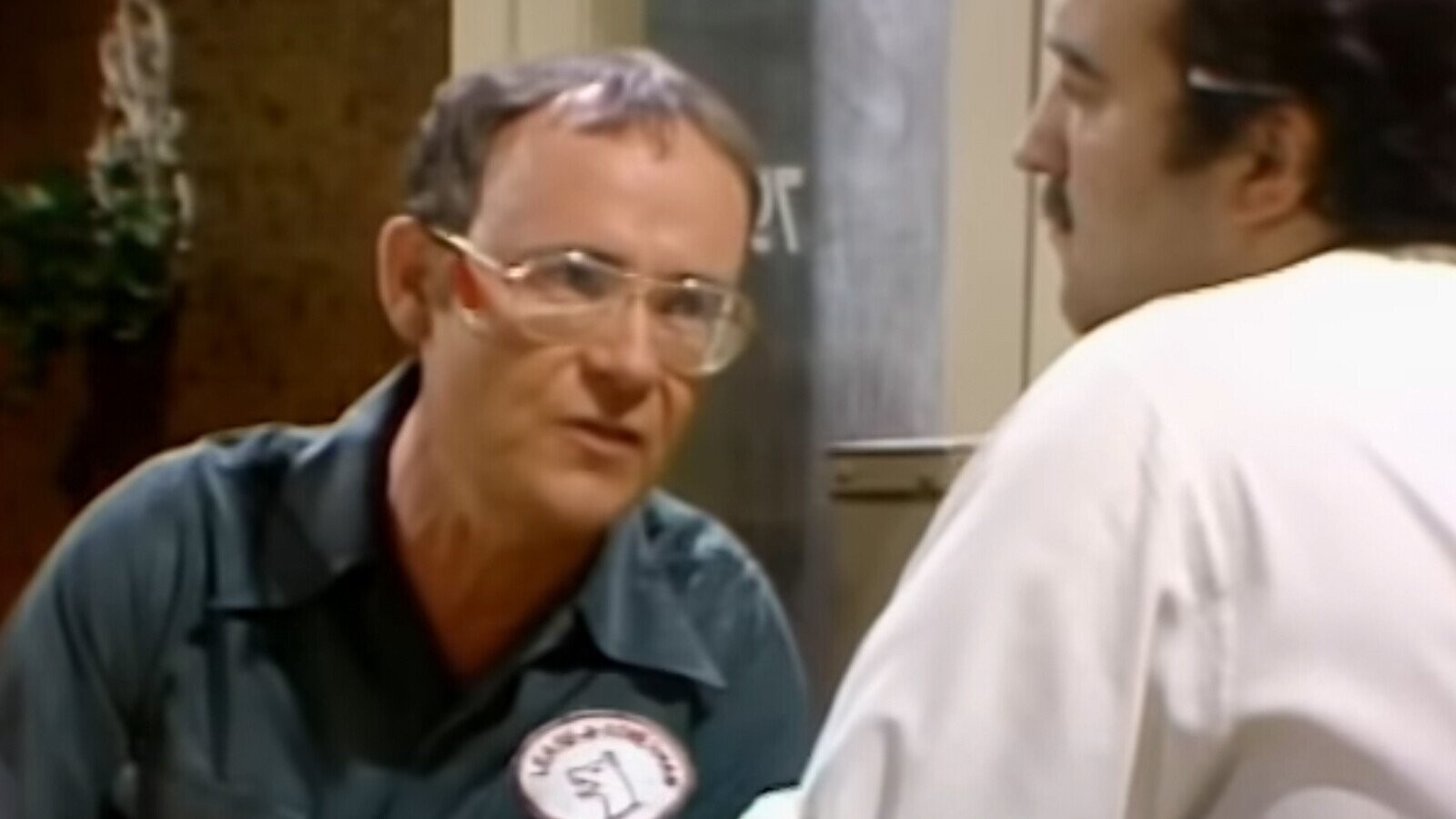
Then Buck Henry hosted on January 17, 1976. According to accounts from the show’s history, Henry suggested that Belushi’s Samurai character deserved another outing. That suggestion led to “Samurai Delicatessen,” a sketch that put the same character into a new workplace. Instead of a hotel, the Samurai was now in a deli, and Henry played the customer who treated the whole situation with an almost heroic level of politeness.
The result was not merely a sequel. It was a template. Take a big, memorable character. Drop that character into a new everyday setting. Let the audience enjoy the anticipation of the familiar joke while the writers find small ways to vary the situation. SNL discovered that repetition did not have to mean creative surrender. It could mean comic architecture.
Why Lorne Michaels Changed His Mind
Lorne Michaels reportedly resisted recurring sketches at first because he worried they were hacky. That concern makes sense. A comedy show that repeats itself too often risks becoming its own tribute band. Yet SNL faced a brutal weekly challenge: produce a live show full of topical humor, character pieces, commercial parodies, political satire, filmed segments, music, and monologue material in just a few days.
From that perspective, recurring characters were not just crowd-pleasers. They were survival tools. A recurring sketch gives writers a known structure. It gives performers a character they understand. It gives the audience an immediate point of entry. And in live television, where anything can wobble, catch fire metaphorically, or break because someone is trying not to laugh, dependable material is not a luxury. It is oxygen.
Henry’s suggestion arrived at the exact moment SNL needed to learn a practical lesson: originality and familiarity do not have to be enemies. A show can be fresh and still build rituals. In fact, rituals are part of why audiences return. Viewers like discovering something new, but they also like being rewarded for remembering what came before. Recurring characters create a club, and SNL has always loved clubsespecially if they involve jackets, smugness, and famous people pretending not to enjoy being famous.
How Recurring Characters Became SNL’s Comedy Currency
Once SNL learned that a character could return, the show never looked back for long. The early years produced characters such as the Coneheads, Roseanne Roseannadanna, and the Blues Brothers. Later eras gave viewers Wayne’s World, the Church Lady, Hans and Franz, Matt Foley, Mary Katherine Gallagher, the Spartan Cheerleaders, MacGruber, Debbie Downer, Target Lady, Gilly, Stefon, Drunk Uncle, and many more.
Some recurring sketches became cultural landmarks. “Wayne’s World” jumped from a basement cable-access parody to a hit movie franchise. The Blues Brothers became an album, a tour, and a film. The Coneheads also made the leap to the big screen. Matt Foley, Chris Farley’s motivational speaker who lived in a van down by the river, became one of the most quoted SNL characters of the 1990s. Bill Hader’s Stefon turned “Weekend Update” into a surreal nightlife guide for imaginary clubs full of impossible attractions and emotional chaos.
That is the upside of repetition: a good character deepens over time. The first appearance introduces the premise. The second appearance proves whether the premise has legs. The third appearance reveals whether the character can evolve or whether the show is simply pressing the applause button again and hoping nobody notices the battery is dying.
The “Thank” Side: Why Bringing Characters Back Works
Recurring characters work because comedy often depends on anticipation. The audience laughs not only at the joke but also at the approach of the joke. When viewers see a familiar costume, voice, theme song, or setup, they begin laughing before the punchline lands. Their memory becomes part of the sketch.
That shared memory gives SNL a special kind of energy. Unlike a sitcom, SNL does not live with the same fictional world every week. It resets constantly. Recurring characters create continuity inside that chaos. They give fans something to track, quote, debate, and rank. They make the show feel less like a random collection of sketches and more like a living comedy universe that occasionally forgets where it parked its logic.
Recurring characters also allow performers to sharpen their instincts. Dana Carvey’s Church Lady became funnier as Carvey perfected the rhythm of smug judgment. Mike Myers and Dana Carvey refined Wayne and Garth into a complete comic language. Bill Hader’s Stefon grew partly because the character’s nervous delivery, strange recommendations, and Hader’s near-breaking became a ritual of their own. The audience was not just watching a character; it was watching a performer dance with the danger of live comedy.
The “Blame” Side: When SNL Drives a Character Into the Ground
Of course, the same mechanism that makes recurring characters satisfying can also make them exhausting. A sketch that feels delightful once can feel thin the fourth time if nothing meaningful changes. The audience begins to recognize not just the character but the entire machine: entrance, catchphrase, escalation, bigger guest cameo, applause, repeat.
This is where “ad nauseam” enters the chat wearing a wig from the costume department. SNL has sometimes been accused of leaning too hard on characters after they become popular. That criticism is not new. Viewers have complained about recurring sketches for decades, usually while still watching them, quoting them, and clicking the clips online. Comedy fans are complicated creatures. We say we want originality, but we also want the exact thing we loved before, only somehow new, better, shorter, longer, more surprising, and available by Sunday morning.
The danger is that a recurring character can become a brand before it remains a joke. Once the audience applauds the entrance more than the writing, the sketch is in risky territory. A character should return because there is another funny situation to explore, not simply because the last clip performed well online. Otherwise, SNL can end up serving leftovers with a fresh garnish and hoping nobody looks too closely at the microwave.
Modern SNL and the Viral Recurring Character Problem
In the social media era, the pressure to repeat popular sketches has only intensified. A sketch no longer lives only on Saturday night. It gets clipped, posted, memed, ranked, reacted to, and turned into a cultural object before the cast has fully removed their wigs. If a character goes viral, the audience may expect a return almost immediately.
Recent examples show how quickly SNL can turn a breakout bit into a recurring event. Marcello Hernández’s Domingo, introduced in a 2024 sketch hosted by Ariana Grande, became a viral favorite and returned in multiple forms, including high-profile anniversary-related appearances. The appeal is obvious: a catchy format, a recognizable character, and a connection to pop music that travels well online. But the speed of modern virality also compresses the life cycle of a joke. What once had months to breathe can now feel overexposed in a few weeks.
This is the new version of Buck Henry’s legacy. In 1976, repeating a character helped SNL survive the weekly grind of live television. In the 2020s, repeating a character also helps feed the digital machine. A recurring sketch is not just a TV moment; it is a YouTube asset, a TikTok prompt, a headline, a fan argument, and sometimes a concert cameo. The joke does not merely return. It multiplies.
Why Buck Henry Was the Perfect Person to Start the Trend
Buck Henry’s role in this history feels especially fitting because his comedy often lived in the space between intelligence and silliness. He understood that formulas were not automatically bad. A formula can be lazy, yes, but it can also be a frame. The question is what the performer does inside it.
With “Samurai Delicatessen,” Henry helped prove that SNL could revisit a character without simply copying the previous sketch. The fun came from the collision between a known personality and a new setting. That structure became one of SNL’s most durable tools. Put the character somewhere else. Raise the stakes. Add a host who can play along. See if the audience still wants more.
Henry also made repetition feel respectable because he treated absurdity with discipline. He did not act as if the returning character was a cheap trick. He acted as if the world of the sketch made complete sense. That is the secret sauce of many great SNL recurring sketches. The performer must believe in the ridiculous premise more deeply than the audience does. Once that happens, repetition becomes not a shortcut but a ritual.
The Accident That Became Part of SNL Lore
The Samurai sketches also produced one of early SNL’s most infamous live-TV moments. During a later Samurai sketch, Belushi accidentally injured Buck Henry with a prop sword. Henry continued the show with a bandage, and cast members later wore similar bandages as a visual gag. It was the kind of unpredictable, slightly alarming moment that reinforced SNL’s reputation as television happening without a net.
That incident is worth mentioning not because accidents are funny in themselves, but because it captures the wild energy of the show’s first era. Early SNL was messy, ambitious, raw, and constantly negotiating the line between brilliance and disaster. Recurring characters gave that chaos a shape. They did not make the show safe, exactly, but they gave it familiar launchpads from which to leap into the unknown.
Recurring Characters as Audience Friendship
At their best, recurring SNL characters feel less like repeats and more like old friends showing up with new problems. Wayne and Garth are funny because their basement enthusiasm feels sincere. Matt Foley works because his disaster energy is enormous, but also oddly motivational in the most unhelpful way possible. Debbie Downer is funny because everyone has met someone who can turn a cheerful conversation into a documentary about doom before dessert arrives.
The best recurring characters contain something recognizable. They are exaggerated, but not empty. They reflect social types, anxieties, habits, or fantasies. The audience laughs because the character is ridiculous and because the character is familiar. That double recognition is powerful. It is also why overuse can sting. When a character becomes too mechanical, viewers feel the difference immediately.
What SNL Writers Can Learn From the Buck Henry Rule
The Buck Henry rule is simple: bring a character back only if the return adds something. A new location can help. A new emotional angle can help. A host with a specific comic energy can help. A topical twist can help. But if the sketch returns only to repeat the same beats, the audience’s affection can curdle into impatience.
That does not mean SNL should avoid recurring characters. Quite the opposite. Recurring characters are part of the show’s DNA now. Asking SNL to stop repeating characters would be like asking “Weekend Update” to stop smirking. The better question is not whether the show should bring characters back, but whether each return earns its spot.
In that sense, Buck Henry did not ruin SNL. He gave it a tool. Tools can build houses, or they can assemble furniture with three screws missing and one mysterious leftover peg. The responsibility lies in how the tool is used.
Experience Section: Watching SNL Characters Return Again and Again
Anyone who has watched SNL for more than one era knows the strange emotional cycle of recurring characters. First comes discovery. You see a sketch that feels so specific and weird that you cannot believe it made it to air. Maybe it is a character with a strange voice, a bizarre job, a catchphrase, or a rhythm that should not work but somehow does. You laugh, maybe harder than expected. By Sunday morning, the clip is everywhere. Friends send it. Headlines praise it. The internet declares a new SNL classic, because the internet loves declaring things before lunch.
Then comes anticipation. The next time that performer appears in costume, the audience reacts before the first line. There is a little thrill in recognition. You feel included. You know the rules of the game. The sketch becomes interactive in a small way because viewers are waiting for the signature move. That waiting can be delicious. It is the comedy equivalent of hearing the first few notes of a song you love.
But after that comes the tricky part: repetition fatigue. The third or fourth appearance can divide viewers. Some still enjoy the comfort of the familiar. Others start measuring the sketch against the original and finding it less surprising. This is not always fair to the writers or performers. A first appearance has the advantage of shock. A later appearance has to do more work because the audience already knows the premise. Surprise has to be replaced by escalation, variation, or emotional commitment.
That is why the strongest recurring characters usually have room to bend. Stefon could survive multiple appearances because the details changed constantly, and the joke was partly about how impossible the descriptions became. Wayne’s World worked because Wayne and Garth had a complete worldview, not just a punchline. Matt Foley worked because Chris Farley performed every entrance as if his whole body had been launched from a comedy cannon. The character did not need subtle evolution; the performance itself was the event.
As a viewer, the best recurring sketches feel like a shared tradition rather than a rerun. They make you think, “I hope they do something new with this,” not “Here we go again.” The worst ones feel as if the show is asking for applause on credit. That difference matters. Audiences are generous, but they are not asleep. They can smell a warmed-over premise, even if it arrives with a famous cameo and a shiny wig.
Buck Henry’s accidental legacy is therefore more complicated than a simple thank-you or blame assignment. He helped SNL discover that repetition could build loyalty, deepen characters, and give a live show dependable comic engines. He also opened the door to one of the show’s most persistent temptations: going back to the well after the bucket is already making scraping noises at the bottom.
Still, SNL without recurring characters would feel incomplete. It would lose a major part of its cultural memory. The show is not just a factory for one-night jokes; it is an archive of personalities America has collectively met at midnight. Some should visit often. Some should have stopped by once and left a nice note. And some, like Buck Henry’s place in this story, deserve to be remembered every time SNL brings back a character and viewers argue over whether it is brilliant, lazy, nostalgic, annoying, or all of the above.
Conclusion: Buck Henry’s Funny Little Monster
Buck Henry did not set out to create a monster. He simply recognized that John Belushi’s Samurai character had more comic life in him. That suggestion helped change how Saturday Night Live approached its own material. From that point forward, recurring characters became one of the show’s defining features, capable of launching catchphrases, movies, viral clips, and endless debates among fans who somehow love and hate repetition with equal passion.
The answer to the title is clear: Buck Henry is the host to thankor blamefor SNL bringing back characters ad nauseam. But the better verdict is that he helped SNL become SNL. The recurring character is not automatically a crutch. It is a test. If the writers and performers find a new angle, it can become classic comedy. If they simply repeat the same trick, it becomes a reminder that even great jokes can overstay their welcome.
And that is the beauty of SNL’s messy, live, unpredictable tradition. Every returned character arrives with a question: will this be a victory lap, or are we about to watch a joke ask for one more encore than it deserves? Either way, somewhere in comedy history, Buck Henry is probably accepting the credit with a shrug.