What if one simple drawing could preserve your first home, wedding venue, childhood church, favorite vacation cottage, or the building wh Architectural Portraits giveaway celebrated exactly that idea: turning an emotionally important place into personal artwork that could live on long after addresses, neighborhoods, and lives had changed.
A Giveaway With More Heart Than Your Average Freebie
Most giveaways offer something practical, trendy, or likely to disappear into a junk drawer before the winner remembers entering. A custom architectural portrait is different. It is not another travel mug, discount code, or kitchen gadget that promises to revolutionize onions. It is a handmade record of a place that matters.
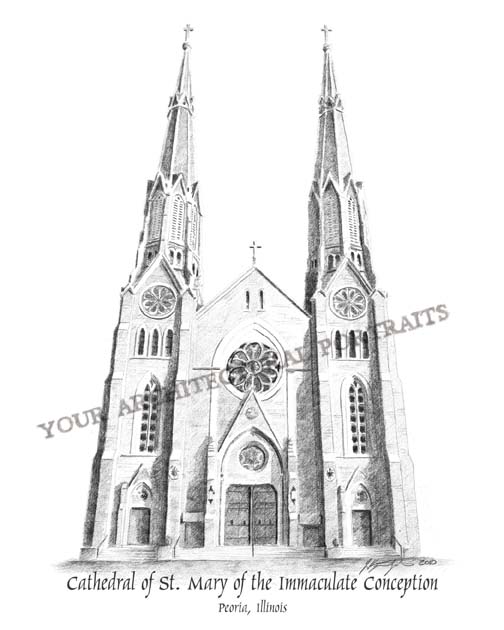
The original Your Architectural Portraits giveaway, hosted by Remodelaholic, offered one reader a free custom 8-by-10 architectural sketch. The winner could choose a home, landmark, place of worship, wedding venue, vacation destination, or almost any building with personal significance. The earlier winner selected the cathedral where she had been married, transforming a photograph of an important location into a lasting piece of art.
That choice captures the true appeal of architectural portrait art. The subject may be made of brick, stone, wood, stucco, or an alarming amount of 1970s siding, but the finished portrait is rarely just about construction. It is about what happened there.
A house portrait can represent the porch where a couple brought home their first baby, the kitchen window where a grandmother grew herbs, or the front steps where a teenager posed awkwardly before prom. The building provides the outline. Memory supplies the color, even when the portrait itself is drawn in black ink.
Why Architectural Portraits Feel So Personal
Buildings Become Containers for Memory
People do not remember important places as neutral collections of walls. We remember the squeak of a staircase, the afternoon light in a hallway, the oddly stubborn front door, and the exact corner where the Christmas tree stood every year.
Researchers and cultural institutions have long examined the connection between memory and place. The American Psychological Association has highlighted how nostalgia can support meaning, social connection, and continuity between past and present. Meanwhile, Smithsonian discussions of architecture and memory describe memorable places as spaces people can mentally hold, revisit, and imagine even after leaving them behind.
An architectural portrait gives that emotional geography a physical form. Instead of scrolling through hundreds of phone photos to find the old house, the owner can place one carefully composed image on the wall. The artwork becomes a visual doorway, minus the mortgage payment and the box of unidentified cables still hiding in the attic.
A Drawing Interprets What a Camera Records
Photography can capture a building with impressive accuracy, but a drawing performs a different job. An artist decides which details deserve emphasis, which visual distractions can disappear, and how the structure’s personality should be presented.
A trash bin beside the garage does not have to become part of the family legacy. A parked delivery truck can vanish. Overgrown shrubs can be gently disciplined. Power lines may be simplified, and a dull sky can become clean negative space. The artist can preserve the recognizable architecture while allowing the emotional subjectthe home itselfto take center stage.
Major museums treat architectural drawings as significant works in their own right. Collections at the Getty Research Institute and the National Gallery of Art include sketches, elevations, perspective studies, and imaginative architectural scenes created by celebrated artists and architects. Even loose preliminary drawings can reveal how their creators understood mass, rhythm, proportion, and movement.
A custom house sketch belongs to that same broad tradition, only at a more intimate scale. It says that an ordinary home deserves observation too.
Personal Art Cannot Be Duplicated by Store Decor
Mass-produced wall art can certainly make a room attractive. There is nothing wrong with a tasteful mountain print, a cheerful abstract canvas, or a framed sign politely reminding everyone to “gather.” Still, generic decor cannot tell the story of a specific family.
An architectural portrait has an identity before the artist makes the first mark. No other customer has the same combination of structure, history, memories, landscaping, and sentimental details. Even two identical suburban houses can carry completely different emotional meanings.
That uniqueness makes a custom architectural portrait particularly effective as a wedding, anniversary, retirement, housewarming, memorial, or moving-away gift. It is thoughtful without being overly complicated, decorative without being impersonal, and emotional without requiring anyone to read a twelve-page handwritten letter through tears.
What Building Would You Choose?
The original giveaway showed that almost any meaningful structure could become an architectural portrait. Examples included city landmarks, churches, mission towers, courthouses, historic buildings, streetscapes, and private residences.
Choosing a subject is usually the most enjoyable partunless a family has lived in seventeen houses and everyone begins campaigning for a different one. These categories can help narrow the decision.
Your First Home
A first home often represents more than a first real estate purchase. It may be the place where two people learned that assembling furniture together is an advanced relationship test. It is where empty rooms slowly became familiar, where neighbors became friends, and where a family began building routines.
The home does not need to be architecturally famous. A modest ranch, townhouse, apartment building, cabin, farmhouse, or duplex can carry extraordinary meaning. Architectural importance and personal importance are not the same thing.
A Childhood Home
A portrait of a childhood home can become a treasured gift for parents, siblings, or adult children. It may preserve a building that has been remodeled beyond recognition or demolished entirely.
When current photographs are unavailable, an artist may work from old snapshots, real estate listings, street views, family albums, and written descriptions. One photograph may reveal the roofline, another the front door, and a third the tree that everyone remembers falling during a storm. Reconstructing the house becomes a small act of historical research.
A Wedding or Engagement Location
Churches, courthouses, gardens, hotels, barns, museums, and city halls can all become romantic architectural portraits. Unlike a standard wedding photograph, the drawing focuses on the place that held the ceremony and silently witnessed the beginning of the marriage.
Dates, names, coordinates, or a short quotation can sometimes be added beneath the image. The result feels elegant rather than overly themed, making it suitable for display long after the wedding favors have mysteriously migrated to the back of a closet.
A Family Business
A portrait of a storefront, workshop, restaurant, farm building, office, or factory can honor years of work. It can be especially meaningful when a business closes, relocates, changes ownership, or passes from one generation to the next.
Small commercial buildings often contain enormous family stories. A simple facade may represent decades of early mornings, difficult decisions, regular customers, and handwritten signs taped to the front window.
A Favorite Landmark or Vacation Place
Not every meaningful structure needs to have been owned by the recipient. A lighthouse visited every summer, a mountain lodge, a neighborhood theater, a beloved library, or a building discovered during a memorable trip can carry just as much emotional weight.
The original architectural portrait collection included recognizable subjects such as the Alamo, the Daniels & Fisher Tower in Denver, the Tarrant County Courthouse, mission architecture in San Antonio, and buildings from Taxco, Mexico. These examples demonstrated how architectural drawing can capture both grand landmarks and quieter streetscapes.
From Reference Photograph to Finished Portrait
Step 1: Selecting the Best View
A successful architectural portrait begins with a useful reference image. Ideally, the photograph should show the main facade clearly, with limited obstruction from cars, trees, utility poles, or enthusiastic relatives waving at the camera.
The best view is not always perfectly centered. A slight angle can reveal depth, rooflines, porches, side windows, and landscaping. Straight-on views emphasize symmetry, while corner views often make a building feel more dimensional.
Several photographs are better than one. A primary image can establish composition, while additional images clarify small details such as trim, masonry, windows, signs, or decorative railings.
Step 2: Identifying Character-Defining Details
Architectural preservation professionals use the phrase “character-defining features” for the elements that give a building its distinctive visual identity. These may include its roof shape, materials, windows, porch, entrance, towers, dormers, columns, trim, and relationship to the surrounding landscape.
The National Park Service emphasizes the value of documenting buildings through photographs, sketches, measured drawings, and written descriptions. Its Historic American Buildings Survey, established in 1933, records significant American structures so they do not disappear from cultural memory without documentation. The federal collection now represents tens of thousands of buildings and sites.
A personal portrait is not a federal survey, of course. Nobody is arriving with measuring equipment to investigate your suspiciously uneven porch. However, the underlying principle is similar: details help preserve the identity of a place.
Step 3: Simplifying Without Losing the Building
An architectural artist must decide what to include and what to remove. Too little detail can make the portrait generic. Too much can produce a drawing that feels crowded or mechanical.
The goal is selective accuracy. The artist may carefully render the windows, roof, masonry, and entrance while simplifying surrounding foliage. Shadows can suggest depth without covering important lines. Landscaping can frame the building rather than compete with it.
This balance is where artistic interpretation becomes essential. A blueprint explains how a building fits together. An architectural portrait explains how the building feels.
Step 4: Adding Personal Elements
Small custom details can make the portrait even more meaningful. A favorite tree, porch swing, weather vane, mailbox, family name, business sign, or pet near the front steps may be included when appropriate.
These additions should support the architecture rather than turn the piece into a visual scavenger hunt. One or two carefully selected details usually carry more emotional power than twenty tiny references requiring an instruction manual.
Why Preserving Everyday Architecture Matters
Historic preservation is often associated with monumental buildings, famous architects, and places where someone important signed something important. Yet America’s architectural record also includes ordinary houses, schools, barns, stores, bridges, workshops, and community buildings.
The Historic American Buildings Survey was created partly because buildings were disappearing through fire, weather, demolition, and redevelopment. Its documentation ranges from celebrated landmarks to vernacular structures that represent regional communities and everyday life. The Library of Congress now makes enormous collections of architectural photographs and drawings available for public study.
Private architectural portraits contribute to preservation on a family scale. They record the buildings that may never receive plaques, museum exhibitions, or carefully funded restoration campaigns. A small bungalow may not appear in a national archive, but it can still be central to one family’s history.
This is why a portrait of an ordinary home can become an heirloom. Future generations may look at it and hear stories that would otherwise be lost: who planted the oak tree, why the porch was painted blue, which bedroom belonged to whom, and how everyone survived one bathroom with astonishingly little diplomacy.
How to Display an Architectural Portrait
An 8-by-10 portrait is versatile enough for a gallery wall, desk, bookshelf, hallway, entryway, or bedside table. A simple mat and frame usually allow the architectural detail to remain the focus.
For a traditional ink or graphite drawing, black, natural wood, white, brass-toned, or dark brown frames tend to work well. A generous white mat gives the piece breathing room and can make a small drawing feel more substantial.
Architectural portraits also pair naturally with family photographs, maps, handwritten recipes, vintage keys, letters, property documents, and neighborhood memorabilia. Together, these pieces can create a compact visual history of a family or place.
Avoid displaying original works on paper in direct sunlight or unusually humid areas. Kitchens and bathrooms may provide charming walls, but they also provide steam, grease, and other enemies of paper that do not appreciate sentiment.
Experiences That Make Architectural Portraits Unforgettable
The strongest architectural portrait experiences usually begin before the artwork exists. They begin with someone realizing that a familiar building is about to change.
Experience One: Saying Goodbye to a Family Home
Imagine a family preparing to sell the house where their children grew up. The rooms are slowly emptied, nail holes appear where photographs once hung, and every closet produces at least one object nobody recognizes but nobody feels authorized to throw away.
During the final week, one family member takes clear photographs of the exterior. The images show the front porch, the maple tree, the upstairs dormer, and the small section of fence repaired after a particularly ambitious dog escape.
Months later, an architectural portrait of the house is presented as a holiday gift. The reaction is immediate because the recipient does not simply recognize the building. They recognize an entire period of life. The drawing allows the family to keep the house without keeping the roof repairs, property taxes, or basement dehumidifier.
Experience Two: Recreating a Place From Incomplete Photographs
Another common experience involves a childhood home that no longer exists. Perhaps it was demolished, dramatically remodeled, or replaced by a building with excellent square footage and absolutely no emotional credentials.
The available photographs are imperfect. One image shows half the facade behind a birthday party. Another captures the porch but includes three people, a bicycle, and someone’s thumb. A relative remembers that the shutters were green, while another insists they were blue. Family history briefly turns into a courtroom drama.
An artist can combine the evidence, prioritize reliable details, and produce a coherent interpretation. The finished portrait may not function as a measured architectural record, but it can accurately restore the home as the family remembers it.
The process itself often becomes meaningful. Searching through albums encourages people to share stories, compare memories, identify relatives, and notice details they had forgotten. The portrait preserves the building, while the research revives the conversation around it.
Experience Three: Giving a Wedding Venue Portrait
A wedding venue portrait works especially well as an anniversary gift because it recalls a shared place without repeating the usual portrait of the couple. The architecture becomes a quieter symbol of the day.
A drawing of a chapel, courthouse, hotel, barn, beach pavilion, or garden structure can include the wedding date beneath the image. Some people add a short line from their vows; others prefer only the building and date.
When the gift is opened, the recognition may take a second. Then a familiar tower, doorway, roofline, or window arrangement brings the entire event back: the weather, the music, the nervous laughter, the flowers, and the relative who arrived late but somehow appeared in every important photograph.
Experience Four: Winning the Artwork
Winning a personalized art giveaway is more involving than receiving a standard prize. The winner must choose the subject, locate photographs, explain important details, and consider what the building means. Instead of simply waiting for a package, the winner participates in the creation.
That collaboration can make the finished artwork feel even more valuable. The artist is not guessing why the location matters. The winner can explain that the side window belonged to a parent’s study, the front steps were where a proposal happened, or the church tower was the first thing visible when arriving in town.
These stories guide artistic decisions. They reveal which details deserve special attention and which distractions can be removed. By the time the portrait arrives, it already carries a narrative.
Experience Five: Seeing an Ordinary Building as Art
Perhaps the most surprising experience is seeing a familiar house transformed by someone else’s attention. Residents often become visually accustomed to their homes. They stop noticing the proportions of the porch, the pattern of the windows, the angle of the roof, or the way a tree frames the entrance.
An architectural portrait asks the viewer to look again. The home becomes a composition of line, texture, shadow, balance, and personality. Imperfections that once seemed annoying may become charming. The slightly crooked steps are no longer a weekend project; they are part of the story.
That shift in perspective is the real prize. The artwork does not make the building meaningful. It reveals the meaning that was already there.
A Small Portrait With a Long Life
The enduring appeal of the Your Architectural Portraits giveaway was never simply that the artwork was free. It was that the prize could represent something irreplaceable.
A custom architectural portrait connects visual art, personal history, home decor, and memory. It can celebrate a beginning, honor an ending, preserve a vanished place, or remind someone where an important chapter unfolded.
Buildings change. Families move. Neighborhoods evolve. Trees grow, paint colors disappear, and someone eventually replaces the charming original windows with perfectly efficient ones that have all the personality of a spreadsheet.
A drawing pauses the building at one meaningful moment. It preserves not only what the place looked like, but also how someone chose to remember it. That is why architectural portrait art can outlast ordinary decor and become a genuine family heirloom.
The original giveaway may be over, but its central question remains worth asking: If an artist offered to draw one meaningful building from your life, which place would you choose?