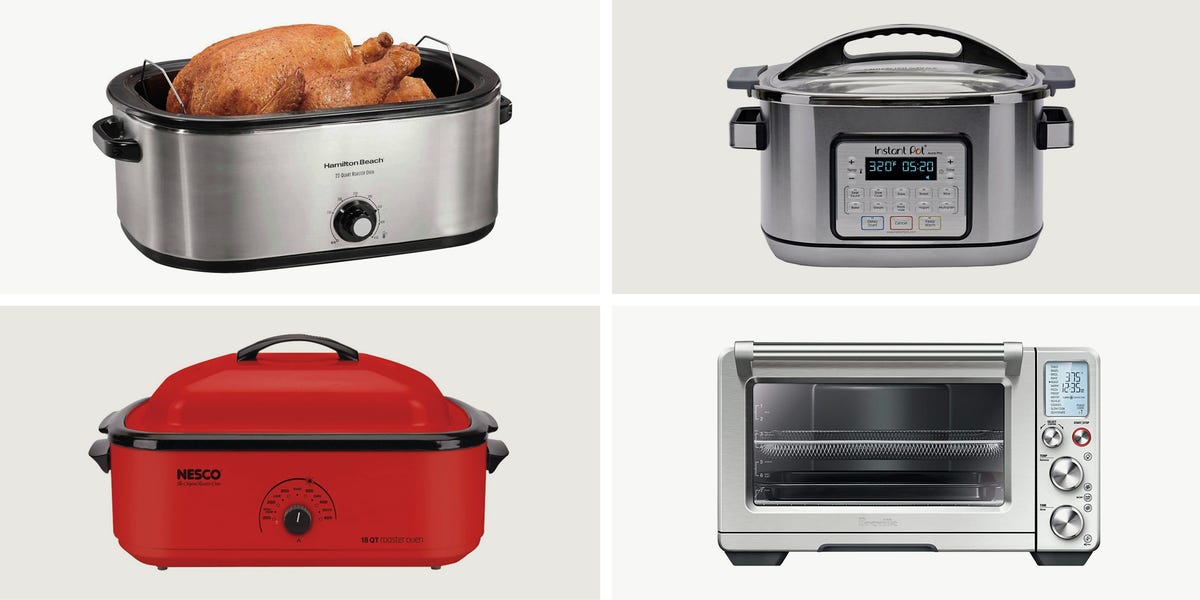
A turkey roaster oven may not be the flashiest appliance in the kitchen, but when Thanksgiving arrives and every rack in the regular oven is occupied by stuffing, casseroles, rolls, and one pie that absolutely cannot be disturbed, it suddenly becomes the family hero.
The best turkey roaster ovens of 2021 offered much more than extra holiday cooking space. These countertop appliances could roast poultry, slow-cook pot roast, steam vegetables, bake potatoes, warm party food, and handle enough chili to feed a small neighborhood. Most popular models ranged from 18 to 22 quarts, with room for birds weighing approximately 22 to 28 pounds, depending on the shape of the oven and lid.
This guide revisits the strongest 2021-era options based on capacity, temperature control, lid design, cleanup, versatility, and overall value. Because some model numbers and finishes may have changed since 2021, shoppers buying today should compare the current product listing with the original specifications discussed below.
Why Buy an Electric Turkey Roaster Oven?
An electric roaster works like a compact second oven. A heating element surrounds or heats the removable cooking pan, while a fitted lid traps heat and moisture around the food. The enclosed cooking chamber may heat more quickly than a full-size oven, although actual cooking time varies by appliance, turkey size, starting temperature, and how often someone lifts the lid “just to check.” Every unnecessary peek releases heat and steam, so admire the turkey from a respectful distance.
Roaster ovens are especially useful when conventional oven space is limited. An 18-quart model commonly accommodates a turkey of about 22 pounds, while certain 20- and 22-quart models are designed for birds weighing 24 pounds or more. Manufacturer capacity limits should always take priority because a tall turkey that prevents the lid from closing is not a culinary achievement.
Best Turkey Roaster Ovens of 2021 at a Glance
| Roaster Oven | Capacity | Best For | Notable Feature |
|---|---|---|---|
| Hamilton Beach 32215G | 22 quarts | Best overall | Fits exceptionally large turkeys |
| Oster CKSTRS23-SB | 22 quarts | Moist, tender meat | Self-basting lid |
| NESCO MWR18 Series | 18 quarts | Consistent roasting | Circle-of-Heat design |
| Proctor Silex 32200 | 18 quarts | Best value | Wide 125°F–450°F range |
| Aroma ART-712SB | 22 quarts | Everyday versatility | Large removable cooking pan |
| Rival RO180 | 18 quarts | Simple operation | Traditional one-dial controls |
| Oster 20-Quart Defrost Roaster | 20 quarts | Frozen-turkey emergencies | Dedicated defrost setting |
Detailed Turkey Roaster Oven Reviews
1. Hamilton Beach 32215G 22-Quart Roaster Oven: Best Overall
The Hamilton Beach 32215G earned the top position because it combined unusually generous capacity with uncomplicated controls. Its 22-quart cooking chamber was marketed as large enough for a turkey weighing up to 28 pounds, making it one of the roomiest mainstream electric roaster ovens available in 2021.
A temperature dial covering approximately 125°F to 450°F allowed the appliance to do more than roast poultry. Lower settings could keep food warm or support slow cooking, while higher temperatures handled roasting and baking. The removable cooking pan simplified cleanup, and the included lift-out rack made it easier to remove heavy meat without attempting an awkward turkey-wrestling maneuver over a pool of hot drippings.
Advantages: Outstanding capacity, broad temperature range, removable pan, useful lift-out rack, and straightforward controls.
Limitations: Its large footprint requires substantial counter and storage space. The exterior can become hot, so it needs a clear, heat-resistant work area.
2. Oster CKSTRS23-SB 22-Quart Roaster Oven: Best Self-Basting Model
The Oster CKSTRS23-SB was one of the most recognizable turkey roaster ovens of its time. Its high-domed, self-basting lid collected condensation and directed moisture back toward the food. This did not magically season the turkey or replace proper temperature monitoring, but it helped reduce moisture loss and eliminated the need to open the lid repeatedly for manual basting.
The 22-quart oven could accommodate turkeys weighing up to approximately 26 pounds. Its adjustable control generally covered 150°F to 450°F, providing enough flexibility for warming, slow cooking, roasting, and baking. It also included an enamel-on-steel roasting pan and a removable rack.
Advantages: Effective moisture-retaining lid, large capacity, familiar controls, wide heat range, and a removable roasting pan.
Limitations: Like many enclosed electric roasters, it may produce paler turkey skin than a conventional uncovered oven. Browning ingredients or a brief oven finish may be helpful.
3. NESCO MWR18 18-Quart Roaster Oven: Best for Even, Moist Cooking
NESCO has a long association with electric roasters, and its 18-quart model was a dependable choice for cooks who valued steady heat more than flashy electronics. The brand’s Circle-of-Heat construction places the heating system around the body of the roaster rather than concentrating all heat directly underneath the cooking pan.
The 18-quart cookwell could accommodate a turkey of about 22 pounds and was also suitable for pot roasts, ham, soups, casseroles, and party-size batches of food. The MWR18 series offered a removable porcelain-enamel cookwell, a steel rack with lifting handles, and temperature settings from about 200°F to 450°F.
Advantages: Reliable surrounding heat, durable cookwell, sturdy rack, proven design, and good performance for roasting or bulk cooking.
Limitations: The 200°F minimum is higher than the low settings on some competing models, reducing flexibility for very gentle warming.
4. Proctor Silex 32200 18-Quart Roaster Oven: Best Value
The Proctor Silex 32200 concentrated on the features most households actually needed: a large pan, a domed lid, a broad temperature dial, and a rack. Its 18-quart chamber was promoted as large enough for a turkey weighing up to 24 pounds, although leaving some space around the bird is preferable to squeezing in the largest possible specimen.
The temperature control ranged from approximately 125°F to 450°F. That low starting point made the appliance useful as a food warmer, while the upper range supported normal roasting. It could also bake, steam, and slow-cook, giving buyers more uses for the appliance after Thanksgiving leftovers had finally disappeared.
Advantages: Affordable design, generous capacity for an 18-quart unit, versatile temperature settings, removable pan, and lift-out rack.
Limitations: The construction and control system are basic. Cooks seeking digital timers, temperature probes, or premium materials should look elsewhere.
5. Aroma ART-712SB 22-Quart Roaster Oven: Best Multipurpose Pick
The Aroma ART-712SB was designed as a large all-purpose countertop oven rather than a once-a-year turkey machine. Its 22-quart capacity could handle a substantial holiday bird, but it was equally useful for baking, steaming, slow roasting, cooking vegetables, or preparing soups and stews.
The removable enameled cooking pan and stainless steel rack made serving and cleanup more manageable. Instructions for the ART-712SB included guidance for whole turkeys in the 10- to 22-pound range, while later Aroma product materials described capacity for larger birds. The practical lesson is simple: use the limit stated in the manual supplied with the exact unit and make sure the lid closes freely.
Advantages: Large cooking area, useful for many recipes, removable pan, uncomplicated operation, and good value for frequent entertainers.
Limitations: Published turkey-size recommendations have varied among versions and product materials. Buyers should verify the specification attached to their model number.
6. Rival RO180 18-Quart Roaster Oven: Best Traditional Design
The Rival RO180 appealed to cooks who wanted a familiar appliance without menus, touchscreens, or an app asking permission to roast dinner. It used a simple adjustable temperature control and included an 18-quart removable roasting pan, lid, and rack.
Its cooking guide covered turkeys weighing as much as approximately 22 pounds. A keep-warm function also allowed the roaster to remain useful during buffets and family gatherings after the main cooking was complete. Because the model had been sold in several versions, including buffet-server packages, buyers shopping secondhand needed to check which accessories were included.
Advantages: Easy operation, substantial capacity, established design, keep-warm capability, and widespread availability on the secondhand market.
Limitations: Older units may show wear, lack replacement accessories, or have less precise thermostats. Used appliances should be inspected carefully before operation.
7. Oster 20-Quart Roaster Oven with Defrost Setting: Best for Last-Minute Thawing
The Oster 20-quart roaster with a dedicated defrost function was the intriguing choice for cooks who had looked at a frozen turkey on Wednesday night and realized Thanksgiving was not, in fact, next week.
Oster described the unit as capable of accommodating a turkey weighing up to 24 pounds. In addition to the specialized defrost mode, it offered a self-basting lid and normal roasting functions. The feature was convenient, but it still had to be used exactly as directed in the model’s manual. Improvised low-temperature thawing can keep poultry in an unsafe temperature range and is not worth the gamble.
Advantages: Dedicated defrost function, roomy cooking chamber, self-basting lid, and strong holiday convenience.
Limitations: Model availability and naming have varied. The feature should never be confused with simply placing frozen poultry in an ordinary roaster at a low setting.
How We Evaluated the Best Turkey Roaster Ovens
The best appliance is not automatically the one that can hold the heaviest turkey. A well-designed roaster should offer enough clearance for heat to circulate, maintain a reasonably stable temperature, provide safe handles, and allow the cook to remove the finished bird without reenacting a scene from an action movie.
The 2021 selections were compared using the following criteria:
- Capacity: Eighteen to 22 quarts provided the most practical balance for family-size holiday birds.
- Temperature range: Models with low warming settings were more versatile throughout the year.
- Lid construction: High-domed and self-basting lids improved usable space and moisture retention.
- Cleanup: Removable cookwells and pans were strongly preferred.
- Rack design: Lift-out handles reduced the difficulty of moving a hot, heavy turkey.
- Versatility: The ability to bake, steam, warm, and slow-cook made the appliance easier to justify.
- Value: Practical performance mattered more than unnecessary digital decoration.
Turkey Roaster Oven Buying Guide
Choose Capacity by the Food You Usually Cook
An 18-quart roaster is sufficient for many households and commonly fits a turkey of approximately 20 to 22 pounds. Larger 22-quart ovens may accommodate birds weighing 26 to 28 pounds when the manufacturer explicitly permits it. Do not use capacity as a challenge. A smaller turkey with breathing room generally cooks more predictably than a giant bird touching the lid.
Look for a Useful Temperature Range
A maximum setting around 450°F is common and suitable for many roasting and baking tasks. A low setting between 125°F and 150°F adds flexibility for warming and certain slow-cooking recipes. Roasters with a higher minimum temperature may still perform beautifully but are less adaptable.
Prioritize a Removable Pan
Turkey drippings are delicious in gravy and considerably less charming when baked onto a fixed appliance. A removable enamel or porcelain-coated insert can be carried to the sink after it cools. Check the manual before using a dishwasher, abrasive pad, or metal utensil on a coated surface.
Measure Your Counter and Storage Area
Large roaster ovens are bulky. They need open space during operation and an equally realistic storage location afterward. Measure cabinet shelves, pantry floors, and counter depth before ordering. “We will find somewhere for it” is how small appliances begin colonizing the laundry room.
Consider the Lid and Handle Design
A high-domed lid provides extra clearance, while a self-basting design returns some condensed moisture to the food. Handles should be large enough to grip with oven mitts. Cool-touch wording does not mean the appliance can be handled casually while operating; hot steam and metal remain hot steam and metal.
How to Cook Turkey Safely in an Electric Roaster
Begin with the instructions for the exact roaster model. Preheat when directed, place the turkey on the rack, and use a food thermometer rather than relying only on time-per-pound estimates or the turkey’s built-in pop-up indicator.
The USDA states that whole turkey must reach at least 165°F in the thickest part of the breast, the innermost part of the thigh, and the innermost part of the wing. Stuffing cooked inside the bird must also reach 165°F. After cooking, resting the turkey for approximately 20 minutes improves carving and allows the juices to settle.
A probe thermometer is especially helpful because the lid can remain closed while the temperature is monitored. Avoid repeatedly opening the roaster, since heat escapes faster from a compact appliance than from a large conventional oven. Electric roasters may also cook faster than expected, so begin checking the temperature earlier than the maximum estimated finishing time.
Real-World Experience: What Using a Turkey Roaster Oven Is Actually Like
The most noticeable benefit is not necessarily a better turkey. It is a calmer kitchen. Moving the bird to a countertop roaster frees the conventional oven for dishes that genuinely need dry, exposed heat: rolls, roasted vegetables, casseroles with crisp toppings, and pies that someone will later insist were made from an old family recipe.
Roaster ovens also create a different cooking environment. The lid traps steam, so meat often remains juicy and tender. That same moisture can work against deeply browned, crisp skin. Applying butter or oil, paprika, and a browning seasoning before roasting may improve color. Some cooks transfer the finished bird to a conventional oven for a brief high-heat finish, but that step should be handled carefully because a fully cooked turkey is heavy, slippery, and remarkably unwilling to cooperate.
The lid should stay closed as much as possible. New users often lift it every 20 minutes because roasting a turkey feels like an important event requiring supervision. In practice, each inspection releases a cloud of steam and extends the cooking process. A leave-in probe thermometer provides more useful information with considerably less drama.
The included rack is another feature that seems ordinary until removal time. Lifting a 20-pound turkey directly from a deep pan is difficult even before accounting for hot drippings. A rack with substantial handles allows two well-protected hands to raise the meat steadily. It is still smart to clear the route to the carving board before lifting. This is not the moment to discover that a bowl of cranberry sauce is blocking the landing zone.
Temperature dials on basic roasters may also be less exact than digital controls on premium conventional ovens. An inexpensive oven thermometer can reveal whether the appliance runs slightly hot or cool. More importantly, the food thermometer determines when the turkey is safe and ready. Cooking charts provide a planning estimate, not a guarantee.
Cleanup is usually easier than cleaning a full-size oven, especially when the cooking insert is removable. However, the pan should cool before washing, and sudden temperature changes should be avoided. Soaking loosens stubborn residue without damaging enamel coatings. Foil should not be placed against heating components or used in a way the manufacturer prohibits.
After the holidays, the roaster can earn its storage space by handling other large meals. It works well for ham, pulled pork, pot roast, baked potatoes, meatballs, soup, chili, corn on the cob, and hot food for graduation parties or family reunions. Some owners use it as a large slow cooker, but recipes may need adjustment because a roaster’s heat output and temperature range differ from those of a standard slow cooker.
The less glamorous ownership experience arrives after dinner: finding somewhere to store a 22-quart metal oval. Keeping the rack, instruction manual, and power cord inside the cooled roaster reduces clutter. A fitted cover or original box protects it from dust, particularly when it spends eleven months waiting for its annual moment of Thanksgiving glory.
Final Verdict
Among the best turkey roaster ovens of 2021, the Hamilton Beach 32215G offered the strongest overall combination of capacity, temperature flexibility, removable components, and straightforward operation. It was especially attractive for families cooking oversized turkeys.
The Oster CKSTRS23-SB was the better choice for cooks prioritizing a self-basting lid and moisture retention, while the NESCO MWR18 stood out for its established surrounding-heat design. Budget-conscious shoppers received excellent basic functionality from the Proctor Silex 32200.
Whichever model is selected, capacity should match the turkey, the lid must close properly, and a reliable food thermometer remains more important than any marketing feature. The right electric roaster will not eliminate holiday chaos entirely, but it can at least prevent the turkey from fighting the sweet potatoes for oven space.
Editorial note: This article is a retrospective guide to prominent 2021-era turkey roaster ovens. Model names, finishes, warranties, specifications, pricing, and availability may have changed. Confirm current details with the manufacturer or authorized retailer before purchasing.