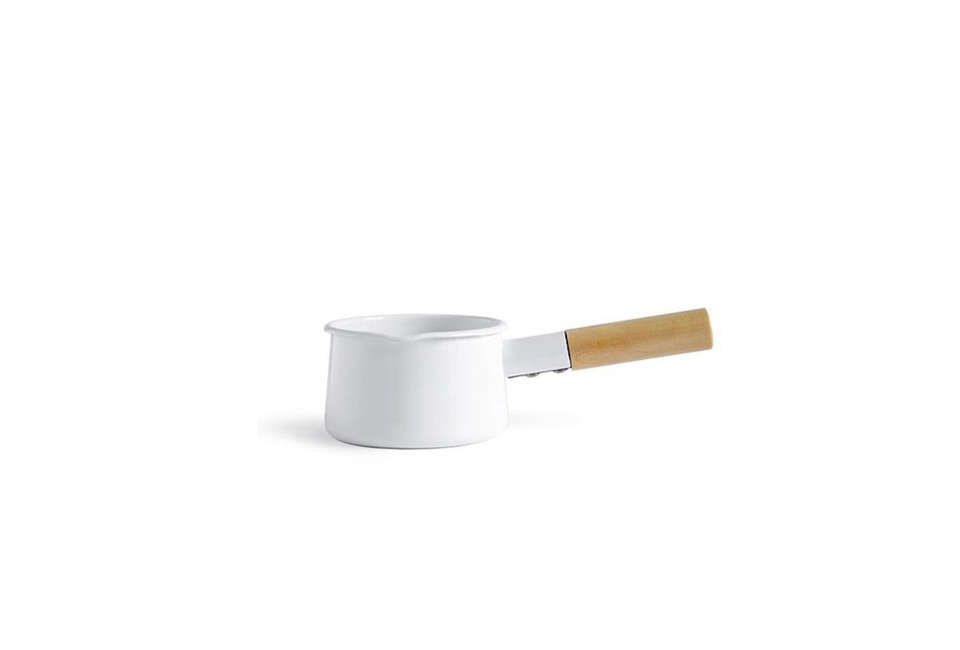
Some cookware announces itself with twelve buttons, three coatings, and an instruction manual thick enough to qualify as light airport reading. The Kaico Enamel Milk Pan takes the opposite approach. It is a compact white saucepan with a warm wooden handle, a gracefully curved rim, and no visible interest in becoming a countertop computer.
Designed by Japanese industrial designer Makoto Koizumi, the Kaico milk pan combines enamel-coated steel with natural wood. Its purpose is simple: heat small quantities of milk, sauces, tea, soup, oatmeal, or melted ingredients without forcing you to drag out a family-size stockpot. Yet the thoughtful proportions, smooth finish, and distinctive pouring edge make it more than a miniature saucepan.
This guide examines the Kaico Enamel Milk Pan’s design, available sizes, cooking performance, limitations, maintenance needs, and everyday usefulness. It also explores what living with the pan may feel like after the honeymoon periodwhen the beautiful kitchen object must stop posing and start warming Tuesday morning oatmeal.
What Is the Kaico Enamel Milk Pan?
The Kaico Enamel Milk Pan belongs to a Japanese cookware collection created by Makoto Koizumi. Koizumi established his Tokyo design studio in 1990 and has worked across architecture, furniture, household tools, and traditional manufacturing. His products tend to emphasize practical details rather than decoration for decoration’s sake.
The Kaico cookware collection appeared in the mid-2000s, and the milk pan received recognition through Japan’s Good Design Award program. Its visual identity is easy to recognize: clean enamel, softly rounded geometry, dark edging, and a natural wooden handle that adds warmth to the otherwise crisp form.
Materials and construction
The vessel is made from steel coated with vitreous enamel, a glass-like material fused to metal at high temperatures. The steel body heats more quickly than thick cast iron, while the smooth enamel provides a nonreactive cooking surface that does not require seasoning.
A maple or similar natural-wood handle is attached to the pan with metal hardware. The wood creates a more comfortable grip than an exposed metal handle and gives the pan its characteristic Scandinavian-meets-Japanese appearance. However, it also means the pan should not be treated like an all-metal saucepan that can casually move from the burner to a hot oven.
Available sizes
Kaico milk pans are commonly found in two sizes, although exact dimensions can vary slightly among markets and production versions:
- Small milk pan: Approximately 0.92 liter, or about 31 fluid ounces.
- Large milk pan: Approximately 1.45 liters, or about 49 fluid ounces.
The small version is ideal for one or two drinks, a modest serving of oatmeal, melted butter, or a small sauce. The larger version provides more headroom for stirring and is better for several cups of liquid, reheating soup, or preparing food for two people.
Why the Design Stands Out
A wide base for a small pan
The Kaico Enamel Milk Pan has a relatively broad base compared with its height. This places more of the steel body over the heat source and helps liquids warm efficiently. The wider opening also makes the interior easier to stir and clean than a tall, narrow milk pot.
That shape is particularly useful for sauces. A whisk can reach the corners more easily, and steam escapes from the open top instead of collecting under a lid. It is a practical advantage disguised as an attractive silhouette.
A rim designed for cleaner pouring
Rather than adding a sharply pointed spout, the pan uses a carefully curved rim intended to guide liquid as it pours. This allows right- or left-handed use and keeps the overall design visually balanced.
No saucepan can completely defeat a cook who pours hot chocolate from shoulder height, but the Kaico rim provides better control than a plain vertical edge. It is useful for transferring warm milk into a mug, pouring custard into serving dishes, or adding broth to another pan.
A light interior that reveals what is happening
The pale enamel makes it easy to monitor color and residue. You can see when butter begins to brown, when milk proteins start collecting near the bottom, or when caramel is moving from golden to “call the smoke detector.”
A dark pan can hide subtle changes, especially when working with sugar, dairy, or lightly colored sauces. The Kaico’s white interior acts almost like a blank canvas, though it also makes splashes and stains more visible after cooking.
A handle that feels like furniture
The wooden handle is one of the pan’s most appealing features. It softens the clinical appearance of white enamel and feels pleasant in the hand. Because wood does not conduct heat as readily as bare metal, it may remain more comfortable during short stovetop tasks.
Still, the handle is not magically immune to heat. Flames that extend beyond the bottom of the pan can scorch the wood or heat the metal connector. The burner should match the pan’s base, and a potholder remains sensible during longer cooking sessions.
What Can You Cook in a Kaico Milk Pan?
The name suggests a single-purpose utensil, but “milk pan” is essentially another term for a very small saucepan or butter warmer. Its compact size makes it useful whenever a full-size pot feels unnecessarily dramatic.
Milk and coffee drinks
The pan can warm dairy milk or plant-based alternatives for lattes, hot chocolate, café au lait, or bedtime drinks. Use low to medium-low heat and stir periodically. Milk can scorch quickly, and the pan’s responsive steel body does not provide the slow thermal buffering of heavy cast iron.
Sauces and glazes
It is well suited to béchamel, cheese sauce, gravy, fruit compote, dessert sauce, teriyaki glaze, or a small batch of pasta sauce. The wide opening supports whisking, while the light enamel helps you notice browning before it becomes burning.
Butter, chocolate, and sugar
The small capacity is convenient for melting butter, chocolate, coconut oil, or sugar mixtures. Gentle heat is essential, especially with chocolate. The goal is a glossy ganache, not an edible geological sample fused to the bottom.
Breakfasts and light meals
The larger milk pan can handle oatmeal, cream of wheat, a single serving of soup, instant noodles, or a few boiled eggs. It can also warm leftovers without creating the cold-center, lava-edge combination sometimes delivered by a microwave.
Tea concentrates and infused liquids
Use it to simmer chai spices, steep ginger, prepare simple syrup, warm broth, or make a concentrated herbal infusion. The enamel surface does not need seasoning and is less likely than uncoated reactive metal to influence delicate flavors.
Cooking Performance: What to Expect
The Kaico Enamel Milk Pan heats relatively quickly because it uses enamel-coated steel rather than thick cast iron. That responsiveness is useful when warming one cup of milk or melting a few tablespoons of butter. You do not have to preheat a heavy vessel merely to complete a two-minute task.
The trade-off is that the pan responds quickly when the burner is too hot. Dairy, custard, oatmeal, and sugary sauces may stick or scorch if left unattended. Low to medium heat works best for most jobs, along with frequent stirring.
The pan should not be heated empty. Excessive dry heat can stress enamel and may damage the finish. Add the cooking liquid or fat before turning on the burner, increase the temperature gradually, and avoid moving a very hot pan directly into cold water.
The smooth enamel is easier to clean than raw iron, but it is not a conventional nonstick coating. Eggs, porridge, and milk solids can still adhere. Proper heat control matters more than the pan’s polished appearance might suggest.
Stovetop Compatibility Requires a Closer Look
Product listings do not always agree about induction compatibility because Kaico milk pans come in different sizes and versions. The larger 1.45-liter model is frequently listed as suitable for gas, electric, and induction cooking. Some listings for the smaller 0.92-liter model describe it as compatible with gas and electric heat but not induction.
The smaller base may also be too narrow to trigger certain induction cooktops, even when the underlying material is magnetic. Before purchasing, check the exact model number, base diameter, product packaging, and compatibility instructions supplied by the seller or manufacturer.
On a gas stove, keep the flame beneath the base instead of allowing it to climb the sides. On electric or ceramic surfaces, lift the pan rather than dragging it, since grit trapped underneath may scratch either the pan or the cooktop.
Advantages of the Kaico Enamel Milk Pan
- Compact versatility: It handles small jobs without occupying the space of a standard saucepan.
- Responsive heating: The steel body warms quickly, making it useful for beverages and sauces.
- Nonreactive enamel: The cooking surface does not require seasoning and does not readily absorb food odors.
- Controlled pouring: The shaped rim helps direct liquids into mugs and serving containers.
- Comfortable appearance and grip: Natural wood balances the clean white enamel.
- Easy visual monitoring: The pale interior reveals browning, residue, and changes in texture.
- Display-worthy design: It looks at home on an open shelf instead of demanding immediate cabinet exile.
Limitations to Consider Before Buying
The Kaico Enamel Milk Pan is not the least expensive way to warm milk. Much of its appeal comes from Japanese manufacturing, industrial design, distinctive materials, and visual refinement. Buyers interested only in basic function can find less expensive stainless-steel saucepans.
Enamel is durable in normal use but can chip when struck against a sink, countertop, or metal utensil. It should not be treated with the same casual aggression as a restaurant-grade stainless-steel pot.
The wooden handle requires additional care. It should not soak in water for long periods, sit directly over a flame, or enter a hot oven unless the specific product instructions explicitly permit it. Frequent dishwasher cleaning may dull the enamel and degrade the wood, so hand washing is the safer routine.
The pan also lacks a lid. That is convenient for whisking and reducing sauces but less efficient when boiling water or simmering foods that benefit from covered cooking.
How to Clean and Care for the Pan
Let it cool gradually
Do not place the pan under cold water immediately after cooking. Sudden temperature changes can stress the glass-like enamel. Set the pan aside until it is warm rather than blazing hot.
Wash it by hand
Use warm water, mild dish soap, and a soft sponge or nylon brush. Avoid steel wool, harsh scouring powder, metal brushes, and aggressive scraping. Dry the pan thoroughly, paying attention to the rim, handle connection, and any exposed metal edges.
Loosen stubborn residue gently
If milk or sauce sticks, fill the cooled pan with warm soapy water and let it rest briefly. For persistent discoloration, a mild baking-soda paste can help. Rub gently rather than trying to win an arm-wrestling contest against the enamel.
Protect the wooden handle
Do not leave the entire pan submerged in a sink. Wash around the handle quickly and dry it immediately. If the wood becomes dry over time, follow the manufacturer’s recommendations before applying any food-safe wood treatment.
Avoid damaging habits
- Do not preheat the pan while empty.
- Do not routinely cook over maximum heat.
- Do not strike the rim with metal utensils.
- Do not nest heavy cookware inside it without protection.
- Do not allow a gas flame to reach the wooden handle.
Choosing Between the Small and Large Kaico Milk Pan
Choose the small model when your routine centers on one or two drinks, melted ingredients, or compact portions. Its approximately 0.92-liter capacity is generous enough for several cups of liquid but still feels nimble in a small kitchen.
Choose the larger 1.45-liter version when you want room for oatmeal, soup, several servings of sauce, or milk that may foam as it heats. The additional headspace reduces the risk of boil-over and gives a whisk more room to move.
In either case, avoid filling the vessel to its absolute capacity for active cooking. Milk, porridge, and sugary mixtures can expand rapidly. A little unused space is less wasteful than cleaning a sweet, sticky eruption from the burner.
Everyday Experience: What Living With a Kaico Milk Pan Feels Like
The first noticeable experience is not culinary. It is visual. The Kaico milk pan looks less like equipment purchased from a commercial kitchen supplier and more like an object selected for a carefully arranged home. The enamel catches light, the wooden handle adds warmth, and the pan is attractive enough to remain on an open shelf.
On the first morning, imagine using the small pan to warm milk for two coffees. The pan feels light compared with enameled cast iron and reaches temperature quickly. Medium-low heat is enough. Because the interior is white, tiny bubbles forming around the edge are easy to see. You can remove the pan before the milk boils and attempts its traditional escape over the rim.
Pouring is controlled when the movement is slow and deliberate. The rim guides the milk neatly into a mug from either side. Pour too quickly, however, and physics resumes authority. This is an elegantly designed saucepan, not a supernatural liquid-containment device.
Later, the pan earns another assignment: a small serving of oatmeal. Here, its responsiveness becomes both an advantage and a warning. The water heats rapidly, but oatmeal needs regular stirring to prevent residue from forming along the bottom. The wide mouth makes the task comfortable, and the rounded interior is easier to reach with a silicone spatula than the narrow corners of some conventional saucepans.
During a sauce-making session, the pale enamel proves especially helpful. Butter changes color visibly, flour blends without hiding in a dark interior, and the consistency of a cheese sauce is easy to judge. The pan feels appropriately sized for two servings, avoiding the thin layer of sauce that spreads across an oversized pot and evaporates before dinner is ready.
Chocolate exposes the pan’s need for heat discipline. A low burner and frequent stirring produce a smooth result. High heat creates sticky patches quickly. The Kaico rewards attention and punishes multitasking, particularly the kind where a cook starts melting chocolate and then disappears to answer six messages.
Cleaning is generally straightforward when done soon after the pan cools. Warm water and a soft sponge remove most residue. Dried oatmeal and milk film require a brief soak, but there is no seasoning ritual and no need to polish the pan like ceremonial silverware. The wooden handle encourages hand washing because leaving it underwater feels obviously unwise.
After several uses, small cosmetic marks may become more noticeable on white enamel than on brushed stainless steel. This can bother owners who expect permanent showroom perfection. Others may view the marks as evidence that the pan is a working tool rather than a museum exhibit. Gentle utensils and careful storage make a significant difference.
The lack of a lid occasionally becomes frustrating. Water takes longer to boil, and foods cannot be covered without improvisation. Yet the open form is excellent for beverages, sauces, and reductionsthe tasks the pan was designed to perform.
The handle is comfortable for short sessions, although the metal connection can become warm. Balance depends on how full the pan is. A heavily filled large model should be lifted deliberately, with a secure grip and perhaps a second hand supporting the opposite side during a long pour.
The most satisfying part of ownership is how often the pan becomes the easiest choice. It is convenient for warming leftover soup, making one serving of instant noodles, dissolving sugar, boiling two eggs, or heating broth for a recipe. Instead of disappearing into a cabinet behind larger cookware, it tends to stay within reach.
The experience is therefore less about revolutionary performance and more about removing friction from small cooking jobs. The Kaico milk pan does not replace a complete saucepan set. It becomes the pan used between major mealsthe one that handles coffee, breakfast, sauces, snacks, and all the tiny kitchen tasks that somehow create half the dishes in the sink.
Is the Kaico Enamel Milk Pan Worth It?
The Kaico Enamel Milk Pan is most appealing to people who value design, Japanese craftsmanship, compact cookware, and the tactile character of natural materials. It is particularly suitable for small households, coffee drinkers, sauce makers, and cooks who regularly prepare one- or two-person portions.
It may not be ideal for someone who wants dishwasher-safe cookware, oven versatility, completely maintenance-free materials, or the lowest possible price per quart. A basic stainless-steel saucepan will tolerate rougher treatment and may include a lid.
However, the Kaico offers something less measurable than capacity or heating speed. It turns an ordinary task into a pleasant ritual. Warming milk remains warming milk, but using a well-proportioned tool can make the process feel calmer, cleaner, and more intentional.
Conclusion
The Kaico Enamel Milk Pan succeeds because it does not try to become everything. It is a small, responsive vessel designed for warm drinks, sauces, breakfast foods, melted ingredients, and modest portions. Its enamel-coated steel body heats efficiently, its pale interior helps the cook monitor food, and its wooden handle gives the pan a welcoming appearance.
Its weaknesses are equally clear. Enamel can chip, the handle needs protection, high heat can scorch delicate ingredients, and compatibility differs among sizes. Buyers should verify the exact model, especially when using an induction cooktop.
For cooks who appreciate practical minimalism, the Kaico Enamel Milk Pan can become an unusually useful everyday object. It looks refined on a shelf, behaves sensibly on the stove, and handles small jobs without turning breakfast into a full-scale catering operation.