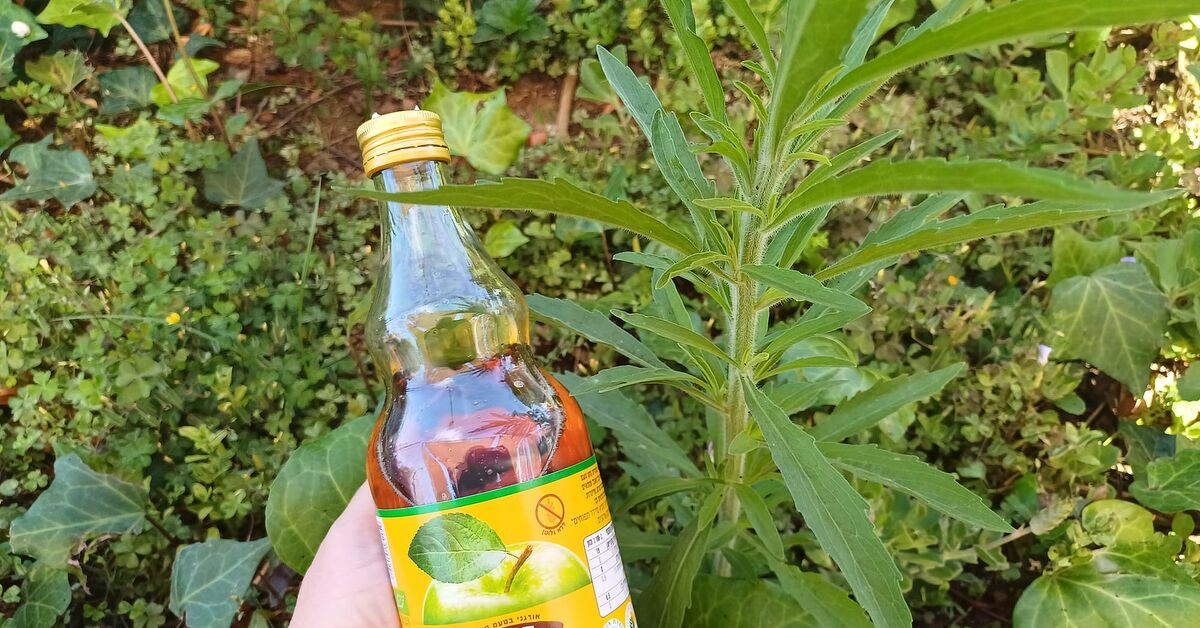
Weeds have a special talent for appearing exactly where they were not invited. A tiny green sprout pushes through the driveway on Monday, and by Friday it looks ready to apply for property rights. That is why apple cider vinegar weed killer has become such a popular homemade solution: it is inexpensive, familiar, easy to find, and far less intimidating than a bottle covered in chemical warnings.
But does apple cider vinegar actually kill weeds? Yesunder the right conditions. Its acetic acid can quickly damage young, tender foliage. However, vinegar is a contact treatment rather than a root-killing herbicide, so mature perennial weeds may return with the confidence of a movie villain who clearly survived the first scene.
This guide explains how vinegar affects plants, which weeds it controls best, how to apply it carefully, and why adding handfuls of salt may create a bigger gardening problem than the weeds themselves.
Does Apple Cider Vinegar Kill Weeds?
Apple cider vinegar can kill or severely damage weeds because it contains acetic acid. Most household apple cider vinegar contains approximately 5% acetic acid, although shoppers should check the label because concentrations vary.
Acetic acid acts as a nonselective contact herbicide. When it coats a leaf, it disrupts plant cells and causes the exposed tissue to lose moisture rapidly. The leaf begins to wilt, brown, and dry out. The effect may become visible within hours on a warm, sunny day.
The important word is contact. Vinegar damages only the plant tissue it reaches. It does not reliably travel through stems and into underground roots. A young annual weed may be completely controlled, while a dandelion with a substantial taproot may simply grow a new collection of leaves.
Why Apple Cider Vinegar Works
The weed-killing ingredient is acetic acidnot the apple aroma, amber color, cloudy “mother,” or rustic-looking label. When apple cider vinegar and distilled white vinegar contain the same percentage of acetic acid, their basic effect on weed foliage is similar.
Apple cider vinegar is therefore not automatically stronger than white vinegar. In fact, it is often more expensive. It remains useful when it is already sitting in the pantry, but there is little reason to purchase a premium organic bottle for driveway weeds. The crabgrass will not appreciate the tasting notes.
Colorado State University Extension notes that both white vinegar and apple cider vinegar may damage weeds, while stronger pickling vinegar contains a higher concentration of acetic acid. Effectiveness depends more on acid concentration, plant age, coverage, and weather than on the fruit used to make the vinegar.
What Weeds Does Vinegar Control Best?
Apple cider vinegar weed killer performs best on small annual weeds that have only recently emerged. These plants have limited root reserves and tender foliage that can be thoroughly coated.
Good Targets
- Young chickweed
- Small lamb’s-quarters seedlings
- Newly emerged spurge
- Tiny purslane plants
- Small annual broadleaf weeds
- Weeds growing between pavers or in pavement cracks
Seedlings with two to four leaves are especially vulnerable because the spray can cover most of their limited foliage and may reach the growing point. Broadleaf weeds are generally easier to control with vinegar than grasses because their wider leaves hold more liquid. USDA and university research also indicate that vinegar tends to work better on annual weeds than established perennial species.
Difficult Targets
- Mature dandelions
- Canada thistle
- Field bindweed or morning glory
- Horsetail
- Established crabgrass
- Nutsedge
- Weeds with bulbs, rhizomes, or deep taproots
Vinegar may burn the tops of these plants without eliminating the underground structures that fuel regrowth. Oregon State University Extension describes perennial weeds as particularly challenging because acetic acid does not move effectively into their root systems. Weed seeds waiting in the soil are also unaffected, so new seedlings may emerge after the original plants disappear.
Is Apple Cider Vinegar the Best Natural Weed Killer?
It can be one of the most convenient natural-style treatments for a narrow job: controlling young weeds in driveway cracks, gravel paths, and other places where accidental plant damage is unlikely.
It is not the best tool for every situation. Hand pulling is generally more dependable when the entire root can be removed. Mulch is better for preventing large numbers of seedlings in garden beds. A weeding knife is more accurate around flowers, and repeated mowing may gradually weaken certain upright weeds in rough areas.
The honest verdict is that apple cider vinegar is a useful spot-treatment tool, not an all-purpose cure. North Carolina State University and other extension programs classify acetic-acid products as nonselective, contact-action weed controls. They can produce rapid visible injury, but repeated treatment is commonly needed.
A Simple Apple Cider Vinegar Weed Killer Method
Many online recipes combine vinegar, salt, and dish detergent. The mixture may scorch plants, but “capable of killing greenery” is not the same as “carefully studied, environmentally gentle, and suitable everywhere.” Several extension services advise choosing a registered herbicidal product with clear label directions instead of relying on untested household mixtures.
For homeowners considering a limited trial with ordinary 5% apple cider vinegar, the least complicated approach is to use the vinegar by itself rather than building a backyard chemistry project.
What You Need
- Apple cider vinegar labeled as 5% acidity
- A dedicated spray bottle or garden sprayer
- Gloves, long sleeves, long pants, shoes, and socks
- A piece of cardboard for shielding desirable plants
How to Apply It
- Choose a suitable day. Select a warm, sunny, calm day with no immediate rain expected. Wind increases the risk of spray drifting onto desirable plants.
- Identify the target. Focus on young weeds rather than large, woody, flowering, or deeply rooted plants.
- Protect nearby vegetation. Place cardboard between the weed and any lawn grass, flowers, vegetables, shrubs, or tree shoots.
- Coat the leaves. Spray enough vinegar to wet the foliage without creating puddles or runoff.
- Check the results. Tender leaves may wilt or brown within several hours. Evaluate the plant again after one or two days.
- Remove survivors. Pull persistent weeds after the foliage weakens, making an effort to remove the root.
- Watch for regrowth. Repeat spot treatment only when necessary and avoid repeatedly soaking the soil.
Warm, bright conditions can improve foliar injury, but heat also increases acetic-acid vapor. Avoid leaning over the spray, inhaling the mist, or applying it in an enclosed area. Higher-strength horticultural vinegar requires substantially greater caution and should be used only according to its pesticide label.
Should You Add Dish Soap?
A small amount of soap is commonly added as a surfactant, meaning it helps liquid spread across waxy leaves rather than forming beads. That sounds practical, but household dish detergent is formulated for dishes, not landscape application.
Its ingredients and concentration can vary, and it may injure desirable foliage, soil organisms, or aquatic life if it reaches drains and waterways. Commercial herbicides that require a surfactant specify an appropriate product and application rate on the label.
For that reason, plain 5% vinegar is the simpler choice for a small household trial. Those using a registered acetic-acid herbicide should add nothing unless its label specifically instructs them to do so. University of Connecticut and University of California guidance cautions that household pesticide recipes have not necessarily been tested for effectiveness or environmental safety.
Why Salt Is Usually a Bad Addition
Salt certainly has plant-killing power. Unfortunately, it does not know when the weed is dead and the mission is complete.
Salt can accumulate in soil, interfere with water uptake, damage soil structure, and move into nearby planting areas. Repeated applications may leave bare ground where desirable plants struggle to grow. That may sound acceptable between two concrete slabs, but runoff can carry dissolved salt toward lawns, flower beds, tree roots, or storm drains.
Epsom salt is not a harmless loophole. It contains magnesium sulfate rather than sodium chloride, but excessive magnesium may still disrupt nutrient balance. Illinois and Connecticut extension specialists warn that repeated salt-based treatments can harm neighboring plants and create longer-lasting soil problems.
Where Apple Cider Vinegar Weed Killer Should Be Used
The best locations are isolated hardscape areas where no valuable plants are close enough to receive spray or runoff.
More Suitable Locations
- Driveway cracks
- Sidewalk joints
- Gravel paths
- Patio seams
- Unplanted fence-line gaps
- Small patches of young weeds awaiting manual removal
Locations to Avoid
- Lawns
- Vegetable gardens
- Flower beds with closely spaced plants
- Areas above shallow tree roots
- Slopes where runoff enters planted ground
- Areas near ponds, streams, drains, or wells
Because vinegar is nonselective, overspray can brown turf and ornamental plants just as readily as it browns weeds. Purdue University Extension notes that acetic acid can rapidly burn susceptible plant tissue and cause unintended injury. Utah State University similarly emphasizes that many household substances kill plants only when used strongly or repeatedly, often with added cost, effort, or environmental risk.
Household Vinegar Versus Horticultural Vinegar
| Feature | Household Apple Cider Vinegar | Horticultural Vinegar |
|---|---|---|
| Typical acetic acid level | About 5% | Often 20% or higher |
| Best use | Tiny, young weeds and limited spot treatments | Uses specifically permitted by the product label |
| Speed | Variable; visible browning may occur within hours | Usually faster and more severe foliar injury |
| Root control | Poor on established perennials | Still limited because acetic acid is a contact treatment |
| Primary hazard | Eye, skin, and plant irritation | Potentially corrosive; severe eye and skin injury |
Stronger does not automatically mean better for a homeowner. The National Pesticide Information Center reports that registered acetic-acid herbicides commonly contain 20% or more acetic acid and carry prominent hazard language because of eye and skin risks. Oregon State University describes 20% horticultural vinegar as four times stronger than ordinary 5% household vinegar.
Choose a registered herbicidal product when stronger acetic acid is needed. Its label explains approved locations, protective equipment, application rates, storage, first aid, and disposal. Follow that label exactly rather than diluting a concentrated industrial product based on an online recipe.
Important Safety Rules
- Never mix vinegar with bleach, ammonia, pesticides, or household cleaners.
- Never transfer a weed-control mixture into a beverage bottle or food container.
- Keep vinegar sprays and herbicides away from children and pets.
- Wear eye protection when using concentrated acetic-acid products.
- Avoid spraying in wind or immediately before rain.
- Do not inhale spray mist or concentrated vapor.
- Do not assume “natural” means harmless.
- Follow all label instructions on registered products.
- Prepare only the amount needed and dispose of leftovers according to local requirements.
Concentrated acetic acid may cause serious burns, permanent eye injury, and respiratory irritation. University of Florida specialists emphasize that organic and natural pesticides are still chemicals and must be handled with appropriate protective equipment. EPA guidance also advises mixing only what is needed and following label instructions for use and disposal.
Better Long-Term Weed Prevention
Vinegar attacks weeds that are already visible. It does not create a lasting barrier against seeds, so prevention should remain part of the plan.
- Apply two to four inches of mulch in ornamental beds.
- Pull weeds before they flower and produce seed.
- Repair cracks in patios and driveways.
- Maintain dense, healthy turf that leaves less room for weeds.
- Use landscape fabric selectively beneath permanent gravel areas.
- Inspect garden beds weekly and remove seedlings while they are small.
- Identify perennial weeds before choosing a control method.
Penn State and UC integrated pest-management guidance favor tested, targeted methods rather than assuming every household remedy is effective or low-risk. Combining prevention, manual removal, mulching, and carefully selected products generally produces better control than repeatedly spraying whatever appears.
Common Mistakes to Avoid
Spraying Mature Weeds Once
Large weeds have more stored energy and thicker foliage. A single application may brown the leaves while leaving the crown or root alive.
Treating a Lawn
Vinegar is not selective. It may injure the dandelion, but it can also kill or discolor the surrounding grass.
Applying Before Rain
Rain may wash the vinegar from the leaves before sufficient contact occurs and may move the solution toward nearby plants.
Soaking the Soil
The target is the foliage. Pouring large quantities into the ground wastes product and increases the chance of affecting adjacent roots or soil conditions.
Assuming Brown Means Dead
Brown leaves prove that exposed tissue was damaged. They do not prove that a deep taproot, rhizome, bulb, or underground crown was destroyed.
Using Concentrated Vinegar Like Salad Dressing
Horticultural vinegar is not a slightly angrier condiment. It may be corrosive and should be treated as a pesticide, complete with label reading and protective equipment.
A 500-Word Real-World Experience: What Gardeners Commonly Notice
The following composite experience reflects outcomes commonly predicted by extension research and reported in home landscapes. It is not presented as a personal laboratory trial, but it shows what a realistic weekend vinegar experiment may look like.
Imagine a homeowner facing three weed problems: small broadleaf seedlings in a sunny driveway, crabgrass along a patio edge, and a mature dandelion growing in the lawn. All three plants receive the same undiluted 5% apple cider vinegar on a warm, dry morning.
The driveway seedlings respond first. Within two hours, their leaves lose their glossy appearance and begin curling. By late afternoon, several have turned brown. The following morning, most look completely dried out. Because these plants were young, had little stored energy, and received full coverage, the treatment appears successful. A quick sweep removes the remains.
The crabgrass delivers a less satisfying performance. The tips become tan and a few blades collapse, but the base remains green. Grass leaves are narrow, upright, and sometimes difficult to coat thoroughly. Several days later, new blades emerge from the crown. The vinegar produced visible injury without complete control.
The dandelion creates the most convincing illusion. Its outer leaves flatten dramatically, and the center looks badly burned. For a few days, the homeowner believes victory has arrived. Then a small cluster of fresh leaves appears from the crown. The taproot remained alive underground, quietly preparing its comeback tour.
There is also an accidental lesson. A light breeze carries a few droplets onto the edge of a nearby thyme plant. Small pale patches appear the next day. Vinegar does not recognize the difference between a weed and an herb destined for dinner; it reacts with whichever foliage it touches.
During the second round, the homeowner changes strategy. New driveway seedlings receive another carefully targeted treatment. The crabgrass is removed with a narrow weeding tool, including as much of the crown and root mass as possible. The dandelion is loosened with a long-handled fork after rain softens the soil. The damaged thyme is trimmed and allowed to recover.
The homeowner also skips the online recommendation to add a cup of salt. The driveway drains toward a flower bed, and dissolved salt could travel with irrigation or rainwater. Avoiding salt preserves the option of growing something near the pavement later.
After several weeks, the practical lesson becomes clear. Apple cider vinegar is satisfying when used against tiny weeds in isolated cracks because the browning happens quickly and the risk to valuable vegetation is manageable. It is frustrating when treated as a one-spray solution for established grasses and deep-rooted perennials.
The best results come from matching the method to the target: vinegar for young top growth, pulling for removable roots, mulch for prevention, and a properly labeled herbicide when a difficult infestation requires a tested treatment. The vinegar earns a place in the toolboxbut not the entire toolshed. This pattern aligns with USDA trials and extension observations showing stronger results on young annual broadleaf weeds and weaker long-term control of established perennial plants.
Frequently Asked Questions
How long does apple cider vinegar take to kill weeds?
Tender foliage may begin wilting within a few hours on a warm, sunny day. Complete results should be evaluated after one or two days. Regrowth may take longer to appear.
Will vinegar kill weeds permanently?
It may permanently control very young annual seedlings. It usually does not permanently eliminate mature perennial weeds with deep roots, rhizomes, bulbs, or underground crowns.
Is apple cider vinegar better than white vinegar?
Not when both contain the same percentage of acetic acid. The acid concentration and weed growth stage matter more than the type of vinegar.
Can I use apple cider vinegar on my lawn?
It is risky because vinegar is nonselective and can damage lawn grass. Manual removal or a selective lawn treatment labeled for the target weed is usually more appropriate.
Does vinegar damage soil?
Acetic acid breaks down relatively quickly and generally does not provide lasting weed prevention. Repeated heavy applications may temporarily affect the immediate area, while recipes containing salt can cause much more persistent soil problems.
Can I mix vinegar with bleach for stronger weed control?
No. Never mix vinegar with bleach or other household cleaners. Chemical mixtures may release dangerous fumes or cause unpredictable reactions.
Conclusion
Apple cider vinegar weed killer is most effective when expectations remain realistic. It can rapidly scorch young annual weeds, especially in sunny driveway cracks, patio joints, and gravel paths. It is far less reliable against mature grasses, dandelions, thistles, bindweed, and other plants capable of regenerating from underground structures.
Use vinegar as a targeted contact treatment rather than a soil drench. Protect desirable vegetation, avoid salt-heavy recipes, and never treat concentrated horticultural vinegar as though it were ordinary kitchen vinegar. For serious weed problems, choose an integrated approach that combines early removal, mulch, healthy landscape management, and registered products used according to their labels.
In other words, vinegar can win a quick skirmish. Preventive gardening and proper weed identification are what win the season.