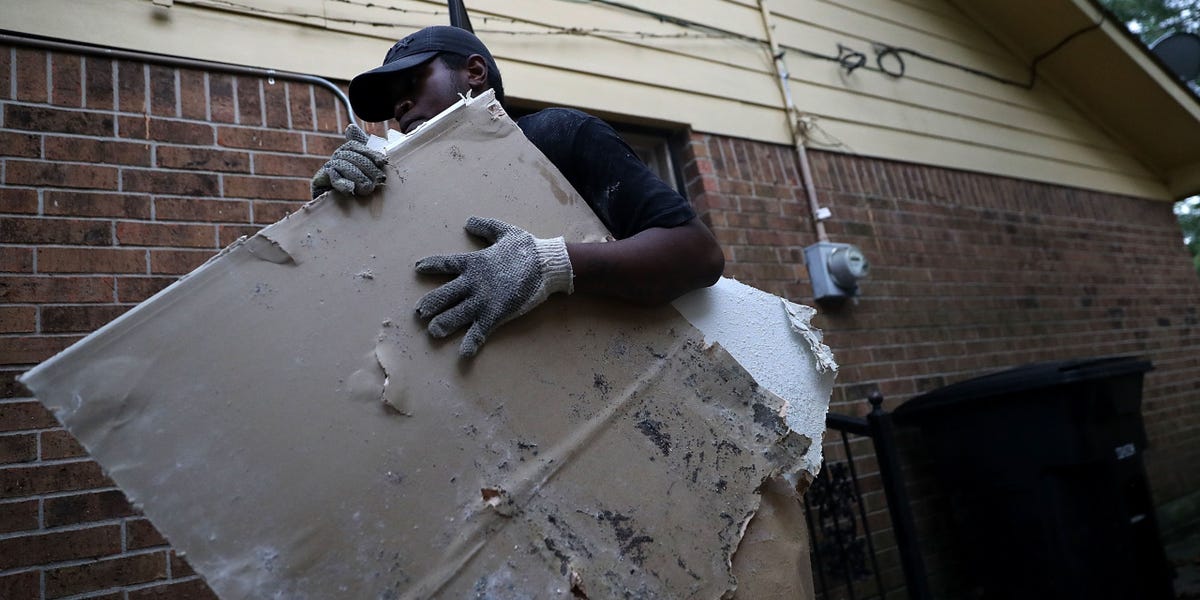
For much of the last century, America built infrastructure around a comforting assumption: tomorrow’s weather would look more or less like yesterday’s. Bridges were sized for historical floods, drainage systems were designed around old rainfall records, and electrical equipment was often placed exactly where engineers thought water was unlikely to reach.
Then the weather started ignoring the memo.
Hurricanes, extreme rainfall, coastal flooding, severe thunderstorms, wildfires, winter storms, and other disasters are repeatedly testing roads, power grids, drinking-water systems, hospitals, ports, communications networks, and homes. NOAA recorded 403 U.S. weather and climate disasters costing at least $1 billion each from 1980 through 2024, including 27 such disasters in 2024 alone.
The answer is not simply to rebuild faster after the next catastrophe. We need to rebuild differently. In the age of superstorms, infrastructure resilience means designing communities to absorb shocks, continue providing essential services, recover quickly, and avoid rebuilding the same vulnerable asset every few years.
Why America’s Old Infrastructure Playbook Is No Longer Enough
Infrastructure has always faced weather. What has changed is the combination of aging assets, growing development in risky locations, interconnected systems, and changing climate hazards. The American Society of Civil Engineers gave U.S. infrastructure an overall grade of C in its 2025 Report Cardthe country’s highest grade since the report card began, but hardly something anyone would proudly stick on the refrigerator. ASCE also estimated a roughly $3.7 trillion investment gap between expected spending and what would be needed to put infrastructure into good working order.
Meanwhile, extreme weather can create failures far beyond the structure that receives the initial hit. A flooded electrical substation may shut down pumps. Failed pumps can interrupt drinking water and wastewater systems. Closed roads can delay fuel deliveries and emergency crews. Cell towers may lose backup power. Suddenly, one broken component has recruited half the city into its disaster.
NIST’s community resilience guidance emphasizes exactly these dependencies. Buildings, transportation, electricity, communications, water, and social systems must be considered together because restoring individual assets is not enough if the community functions depending on them remain unavailable.
1. Stop Rebuilding Yesterday’s Infrastructure
One of the most expensive habits in disaster recovery is replacing a destroyed asset with a nearly identical version of the asset that just failed.
If a bridge deck repeatedly floods, restoring it to the same elevation is not resilience. If a wastewater facility sits in a growing floodplain, buying shinier pumps for the same vulnerable building is not resilience. It is basically scheduling another very expensive meeting with the same problem.
Reconstruction should instead incorporate future conditions into design decisions. Engineers may need to account for heavier rainfall, changing flood elevations, sea-level rise, stronger coastal hazards, extreme heat, wildfire exposure, and combinations of hazards that older standards did not contemplate.
Federal Highway Administration guidance now requires state transportation asset-management processes to consider extreme weather and resilience in lifecycle cost and risk analyses. That represents an important shift from simply asking, “How much does this road cost?” to asking, “How much will this road cost over its entire life if it keeps washing out?”
2. Build Above Minimum Codes Where the Risk Justifies It
Building codes are sometimes treated as annoying paperwork between an architect and a permit. In reality, they are one of America’s most scalable disaster-resilience technologies.
FEMA promotes the adoption and enforcement of hazard-resistant building codes because better standards can reduce losses before disasters happen. Modern flood-resistant design may require elevated structures, protected utilities, stronger foundations, flood-resistant materials, improved drainage, or equipment located above anticipated flood levels.
There is also a strong economic argument for mitigation. A FEMA fact sheet summarizing research by the National Institute of Building Sciences reported that federal mitigation grants produced an average benefit of about $6 for every $1 invested, although returns naturally differ from project to project.
That suggests a simple principle: the cheapest infrastructure on bid day is not necessarily the cheapest infrastructure over 50 years.
3. Give Water Somewhere Safe to Go
Many cities have spent decades treating rainwater as something that must be rushed underground into pipes as quickly as possible. During ordinary storms, that works nicely. During extraordinary rainfall, the strategy can resemble trying to drain a swimming pool through a drinking straw.
Resilient cities need both conventional drainage and green infrastructure.
Use parks, wetlands, trees, and permeable surfaces as infrastructure
Rain gardens, bioswales, restored wetlands, urban trees, floodable parks, permeable pavement, retention areas, and restored floodplains can temporarily capture or slow stormwater before it overwhelms drainage networks.
EPA modeling has found that applying green stormwater practices to new development and redevelopment across selected growing watersheds could avoid hundreds of millions of dollars in future flood losses. Green infrastructure can also improve water quality, reduce runoff, cool neighborhoods, and create public spaces when it is thoughtfully designed.
This does not mean replacing every concrete floodwall with a charming patch of flowers. Major urban areas may require tunnels, pumps, levees, floodwalls, detention facilities, restored wetlands, dunes, and drainage upgrades working together.
The U.S. Army Corps of Engineers increasingly describes flood-risk management as a combination of structural, nonstructural, and natural or nature-based measures, including wetlands, beaches, marshes, levees, dams, and seawalls.
4. Make the Electric Grid Harder to Knock Down
Modern infrastructure has one especially needy friend: electricity.
Water treatment depends on it. Telecommunications depend on it. Hospitals depend on it. Traffic lights, refrigeration, gasoline pumps, internet equipment, elevators, businesses, and increasingly transportation depend on it.
The Department of Energy identifies extreme-weather resilience as a critical function of today’s electric grid and supports investments intended to improve flexibility, reliability, and recovery.
Grid resilience can include stronger poles and transmission structures, strategic undergrounding, vegetation management, flood protection around substations, better forecasting, sectionalizing equipment that isolates damaged portions of the network, distributed generation, batteries, and microgrids.
Microgrids can protect critical services
A microgrid can operate as part of the larger electrical system but, depending on its design, separate during a widespread outage and keep selected facilities operating locally. Hospitals, emergency shelters, military installations, water facilities, fire stations, campuses, and isolated communities can be strong candidates.
DOE specifically highlights microgrids as one tool for strengthening reliability and resilience as extreme events place growing pressure on the grid.
The goal should not necessarily be preventing every outage. That would become extraordinarily expensive. The smarter target is preventing catastrophic failure and ensuring that essential functions can continue while damaged components are repaired.
5. Design Transportation Networks With Backup Plans
A resilient transportation system does not depend on one bridge, one highway, one rail corridor, or one evacuation route behaving perfectly during a disaster.
Transportation planners should identify vulnerable chokepoints and ask uncomfortable questions before the storm does:
- What happens if this bridge closes for two weeks?
- Can ambulances reach the hospital by another route?
- Will neighborhoods become isolated during flooding?
- Can evacuation traffic leave without depending on one low-lying highway?
- Are culverts large enough for changing rainfall patterns?
- Which roads repeatedly require emergency repairs?
The U.S. Department of Transportation’s PROTECT program reflects this broader approach by supporting transportation resilience planning, evacuation routes, coastal infrastructure, and improvements addressing flooding, sea-level rise, extreme weather, and other natural hazards.
6. Protect Water and Wastewater Systems Before They Fail
Clean water infrastructure may be invisible most days, which is exactly how everyone likes it. Unfortunately, major storms have an unpleasant habit of making invisible infrastructure extremely visible.
Flooded treatment plants can lose power. Sewer systems can overflow when stormwater enters aging pipes. Damaged pumping stations can interrupt service. Saltwater intrusion can threaten freshwater supplies in coastal areas.
Utilities should protect electrical controls, generators, chemical storage, pumps, and treatment equipment from anticipated flooding. They also need backup energy, redundant equipment, emergency interconnections with neighboring systems, secure fuel supplies, and realistic continuity plans.
Stormwater deserves equal attention. ASCE gave U.S. stormwater infrastructure a D in its 2025 assessment, highlighting continuing challenges associated with aging systems, maintenance, expansion, and resilience.
7. Combine Gray Infrastructure With Natural Defenses
A seawall can protect a shoreline. So can a dune. A wetland can absorb water. A restored floodplain can give a river room to expand without sending that water directly into someone’s kitchen.
The best resilience strategy often combines engineeredor “gray”infrastructure with natural systems.
Along coastlines, USGS research and tools help communities evaluate hazards including hurricanes, erosion, sea-level rise, and coastal flooding. Its work also recognizes ecosystem restoration and green infrastructure as potential buffers against storm damage and erosion.
Natural infrastructure is not magic. Wetlands cannot stop every hurricane, and dunes require maintenance and space. But natural systems can complement harder defenses while providing ecological, recreational, and water-quality benefits during all the boring sunny days between disasters.
8. Plan for Cascading Failures, Not Individual Assets
Traditional infrastructure management often separates departments into tidy boxes: transportation handles roads, utilities handle water, power companies handle electricity, and emergency managers handle disasters.
Unfortunately, hurricanes do not respect organizational charts.
Resilience planning should map dependencies among systems. If a water plant requires electricity, what happens when power is unavailable for three days? If generators need diesel, can fuel trucks reach the facility when roads are flooded? If cellular networks fail, how will crews coordinate repairs?
NIST recommends community-scale resilience planning that establishes recovery goals around important social and economic functions rather than evaluating infrastructure components in isolation.
That can lead to surprisingly practical investments: backup communications, redundant fiber routes, mutual-aid agreements, spare transformers, portable pumps, elevated control rooms, emergency fuel contracts, and alternate transportation routes.
9. Spend Money Before the Disaster, Not Only After It
Disaster politics naturally favors visible recovery. A collapsed bridge makes dramatic television. A bridge quietly reinforced five years earlier and surviving the storm barely makes the news.
But prevention is usually the better infrastructure strategy.
Federal, state, and local governments should build resilience into ordinary capital-improvement cycles rather than treating it as a special project undertaken only after disaster declarations. When a roadway is resurfaced, drainage should be reconsidered. When a school roof is replaced, wind resistance can be improved. When a wastewater plant reaches the end of its useful life, relocation or elevation should be evaluated.
FEMA’s mitigation framework specifically encourages long-term actions that reduce future losses instead of merely returning damaged facilities to their vulnerable pre-disaster condition.
10. Rebuild Equitably, Not Just Quickly
Superstorms do not create all vulnerabilities from scratch. They expose vulnerabilities that already existed.
Lower-income neighborhoods may have older drainage systems, fewer trees, less insurance coverage, more vulnerable housing, weaker transportation alternatives, and fewer financial resources for recovery. If resilience investment consistently flows toward areas with the greatest property values rather than the greatest human needs, rebuilding can actually deepen existing inequalities.
The National Academies has emphasized that infrastructure resilience and equity should be considered together, particularly because disadvantaged communities can experience disproportionate social, health, and economic impacts from disasters.
Resilience programs therefore need transparent criteria that consider vulnerability, critical services, population needs, avoided losses, and recovery capacitynot simply the market value of property being protected.
11. Use Disaster Recovery as a Once-in-a-Generation Upgrade Opportunity
Major disasters are terrible moments to invent an infrastructure strategy from scratch. Communities should have rebuilding frameworks ready before the disaster occurs.
Pre-disaster plans can identify which facilities should be repaired, elevated, strengthened, relocated, redesigned, orin some casesnot rebuilt at all.
Housing is especially important. HUD’s Community Development Block Grant Disaster Recovery program has historically supported long-term recovery involving housing, infrastructure, economic revitalization, and mitigation after major disasters.
A thoughtful recovery plan can transform federal, state, insurance, and local funding into permanent risk reduction rather than an expensive effort to recreate yesterday’s vulnerabilities.
12. Measure Success by Recovery Time
Infrastructure discussions frequently focus on whether an asset survives. A better question is: how quickly can the community function again?
A hospital that remains standing but has no water is not fully resilient. A bridge that suffers repairable damage but disconnects an entire community for three months is not performing adequately. A neighborhood that gets electricity back in hours while another waits weeks reveals a resilience gap even if both eventually recover.
Communities can establish measurable performance goals, such as restoring emergency power immediately, reopening critical transportation routes within hours or days, restoring drinking water within a defined period, and recovering normal economic activity on a realistic timeline.
This performance-based philosophy is central to NIST’s resilience approach: infrastructure matters because of the services and community functions it enables.
Lessons From Living Through Superstorm Recovery
The most revealing part of infrastructure resilience often comes after the engineering drawings are rolled up and real people start living with the results.
Consider what residents experience after a major hurricane or flood. The first frustration may not be a destroyed skyscraper. It may be discovering that the nearest open grocery store is unreachable because three intersections are underwater. A family may still have a perfectly intact house but no electricity to refrigerate food. A senior apartment building may remain structurally sound while elevators stop working. A restaurant may survive the storm yet remain closed because clean water or internet service is unavailable.
Those experiences teach an important lesson: resilience is about networks, not trophies.
A city could build the world’s toughest police station, but the investment has limited value if officers cannot reach neighborhoods because surrounding roads are impassable. Likewise, a state-of-the-art hospital becomes surprisingly old-fashioned when its telecommunications, water supply, or electrical systems fail.
Communities that have endured repeated flooding often discover another lessonthe small projects matter. A redesigned intersection, larger culvert, elevated electrical cabinet, neighborhood detention area, backup generator, restored wetland, or few blocks of improved drainage may not earn a ribbon-cutting ceremony with dramatic music. Yet these improvements can determine whether the next storm produces inconvenience or catastrophe.
Hoboken, New Jersey, offers a useful post-Hurricane Sandy example of this mindset. FEMA resilience guidance has highlighted how the city incorporated mitigation priorities into capital planning and combined local investment for recurring flooding with larger state and federal resources for major hazards.
Another recurring experience is that residents become much more interested in infrastructure approximately five minutes after it stops working. Before a disaster, proposals to enlarge drains or elevate equipment can sound expensive and abstract. After homes flood twice, “100-year rainfall event” suddenly stops sounding like engineering trivia.
That creates a communication challenge. Public officials and engineers need to explain resilience before disaster memories fade. Instead of presenting only technical probabilities, they can describe consequences: how many homes could avoid flooding, how many hours an evacuation route might remain open, how quickly a hospital could regain full service, or how much future repair spending could be avoided.
Recovery also demonstrates why redundancy is valuable. In normal times, two routes, backup generators, duplicate communications systems, and spare equipment can look inefficient. During a catastrophe, inefficiency suddenly acquires a new name: insurance.
Perhaps the biggest lesson is that no community will become “storm-proof.” There will always be events beyond design assumptions. Resilience is not an enormous wall guaranteeing that nothing bad ever happens. It is the capacity to bend without breaking, isolate failures, protect life, maintain essential services, repair damage quickly, and learn from each event.
The goal is therefore not to build an indestructible America. It is to build an America where a powerful storm does not automatically become a prolonged social and economic disaster.
Conclusion: Build for the Storm We Have Not Seen Yet
America’s next generation of infrastructure will be judged by a different standard from the infrastructure of the past. Roads cannot merely carry cars on sunny days. Power grids cannot be evaluated only during normal demand. Drainage cannot be sized entirely from yesterday’s rainfall. Public buildings cannot simply satisfy the easiest minimum standard available.
Resilient infrastructure requires stronger construction, smarter land-use decisions, modern building codes, redundant lifelines, better drainage, green infrastructure, hardened electrical systems, natural defenses, reliable emergency communications, equitable investment, and planning that recognizes how deeply systems depend on one another.
It also requires patience. Infrastructure lasts decades. Every bridge replacement, sewer upgrade, transmission project, housing reconstruction, school renovation, and flood-control project is therefore an opportunity to reduce risk for the next generation.
Superstorms will continue testing our communities. We cannot control every storm, but we have enormous control over what the storm finds when it arrives.
Rebuilding the same vulnerabilities again and again is not recovery. It is a subscription service nobody remembers signing up for. The smarter choice is to rebuild once, rebuild intelligently, and make the next disaster work much harder to knock us down.
Note: Infrastructure strategies should always be adapted to local hazards, engineering conditions, community needs, current building standards, and applicable federal, state, and local requirements.