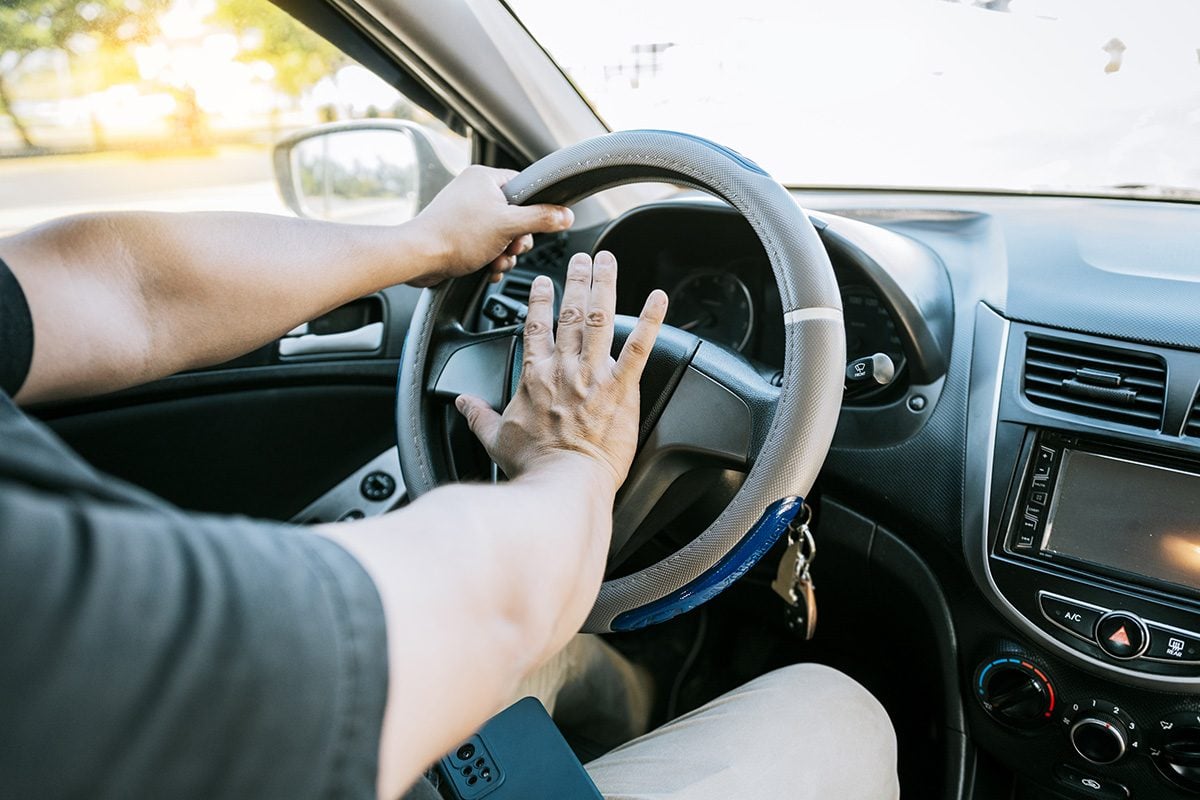
Every driver knows the sound. A quick tap behind you at a green light. A long, dramatic blast from three cars back. The angry double-honk that says, “I have opinions, and they are all loud.” Horns are one of the few ways drivers can communicate instantly, but they are also one of the easiest tools to misuse. That is why honking etiquette matters more than people think.
On paper, the answer sounds simple: the horn is there to warn, not to whine. In real life, though, the line gets blurry. Is a short beep at a distracted driver rude? Is leaning on the horn after someone cuts you off self-defense, emotional cardio, or road rage with a soundtrack? And when does an irritated honk stop being a harmless reaction and start becoming aggressive or even dangerous?
The truth is that honking by itself is not automatically road rage. Sometimes it is necessary. Sometimes it is annoying but harmless. Sometimes it is the opening act for behavior that has gone way past bad manners and into intimidation. If you want the cleanest way to think about it, try this: a horn is a safety tool first, a communication tool second, and a personal feelings megaphone never.
Why Cars Have Horns in the First Place
A horn exists to prevent a crash, alert another road user, or warn someone who may not see you. That is the boring answer, which also happens to be the correct one. In practical terms, that means the best honks are short, purposeful, and tied to an immediate traffic issue.
Think of a few common examples. A driver starts drifting into your lane. A car begins backing out while you are behind it. A pedestrian steps off the curb while looking at a phone. A driver at a fresh green light is still staring into the glowing abyss of their dashboard screen. In those moments, a brief honk makes sense. It communicates one thing: Heads up.
What a horn is not supposed to do is punish, shame, or “teach someone a lesson.” Once the danger has passed, the justification for honking gets weaker fast. If the other driver already completed the bad move and everyone is safe, leaning on the horn is usually not about safety anymore. It is about emotion. That is where etiquette begins to matter.
Aggressive Driving vs. Road Rage: Not the Same Thing
One reason people get confused is that aggressive driving and road rage are related, but they are not identical twins. They are more like awful cousins who show up to the same barbecue.
What aggressive driving usually looks like
Aggressive driving generally involves unsafe, deliberate driving behavior that creates risk for other people. That can include speeding in traffic, tailgating, unsafe lane changes, blocking a lane, cutting people off, refusing to let someone merge, brake-checking, or using the horn and headlights in a hostile way. The key idea is that the driver is acting impatiently, selfishly, or provocatively behind the wheel.
A lot of aggressive driving is still handled as traffic behavior. It is dangerous, but it often stays within the realm of moving violations, reckless choices, and bad judgment. In plain English: the driver is being a menace, but the behavior has not necessarily escalated into criminal violence.
What road rage really means
Road rage is what happens when that aggression hardens into intimidation, threat, assault, or violence. It is less about simple impatience and more about retaliation. Chasing another car, forcing someone off the road, intentionally ramming a vehicle, getting out of the car to confront someone, screaming threats, or using the vehicle as a weapon all push the situation into road-rage territory.
That distinction matters because many drivers casually use “road rage” to describe anything from a rude honk to a spicy merge. But not every bad driving moment is road rage. A sloppy lane change is not road rage. A quick, irritated beep is not automatically road rage. A prolonged horn blast while tailgating, flashing lights, gesturing, then swerving around someone to block them? That is starting to look very different.
So, Is Honking Road Rage?
Sometimes no. Sometimes yes. Usually it depends on purpose, intensity, and what happens next.
Honking that is generally reasonable
A short safety honk is normal. It is part warning, part communication. You are not threatening anyone. You are trying to avoid a problem or restore attention. A light tap at a green light after a brief pause is usually in this category too, especially in busy traffic. It may not win you a citizenship award, but it is not exactly a felony symphony either.
A quick honk can also be justified when another driver is moving into your space, rolling backward, failing to see you in a parking lot, or entering your lane without noticing you. In those cases, the horn is doing its job.
Honking that is rude but not necessarily road rage
Then there is the annoyance honk. This is the “Come on, buddy” honk. It is longer than it needs to be and a little more dramatic than the situation requires. It is not ideal. It can escalate tension. But if it ends there, it is often just rude or impatient rather than true road rage.
A lot of real-world driving falls into this messy middle. People are late. Traffic is crawling. Someone misses a turn arrow. Another driver camps in the left lane like they are renting it by the month. The horn comes out, attitude included. That behavior may be poor etiquette, but by itself it does not always cross the line.
Honking that starts looking like road rage
The line gets crossed when the horn becomes a tool of intimidation or retaliation. That usually means one or more of the following things are happening:
First, the honking is excessive. It is prolonged, repeated, or theatrical. The goal is no longer to warn. The goal is to punish, embarrass, or provoke.
Second, the honking is paired with threatening behavior. Tailgating. Revving forward. Blocking a lane. Flashing headlights. Gesturing. Screaming through the window. Following the other driver after the incident. Now the horn is part of a larger aggressive pattern.
Third, the danger is already over. If you keep honking long after the event has passed, you are probably not preventing anything. You are broadcasting anger.
Fourth, the driver is clearly trying to dominate or frighten another person. That is the biggest clue of all. Once fear, coercion, or retaliation enters the picture, the behavior is no longer just a manners problem.
Easy Rule of Thumb: Ask What the Honk Is For
If you are not sure whether a honk is appropriate, ask yourself one question: Am I trying to prevent harm, or am I trying to express harm?
If you are preventing harm, the honk is probably justified. If you are expressing fury, disappointment, wounded pride, or the belief that strangers need your personal traffic commentary, maybe keep your hand off the horn.
That rule also helps explain why the same horn can feel different in different moments. A short beep because a driver is merging into you is reasonable. The exact same beep, followed by swerving around them, glaring, gesturing, and riding their bumper for three miles, becomes part of something ugly.
Why Drivers Snap So Fast
Driving creates a weird emotional cocktail. You are enclosed, rushed, and mostly anonymous. You cannot hear tone of voice. You cannot ask for context. Every action gets interpreted through speed, space, and guesswork. Was that driver careless, distracted, exhausted, new, panicked, or just trying to get a sick kid to urgent care? You usually do not know, so your brain fills in the blank with whatever mood you brought into the car.
That is why the road is full of snap judgments. Someone hesitates for two seconds and suddenly they are “an idiot.” Someone merges late and now they are “disrespecting you personally.” The car becomes a rolling ego chamber. Add traffic, noise, schedule pressure, and the false sense of distance that comes from being sealed inside a vehicle, and ordinary frustration can mutate into aggressive behavior surprisingly quickly.
This is also why horn misuse is so common. It feels efficient. It feels righteous. It feels like the one button that says, “I object.” The problem is that the other driver rarely interprets it the way you intended. Your “wake up” may sound like “fight me.” Your “that was dangerous” may land as “I am challenging you.” On the road, audio nuance is not exactly thriving.
What Good Honking Etiquette Looks Like
Keep it short
A brief tap communicates urgency without turning the encounter into a public performance. The longer the horn lasts, the more likely it stops sounding like a warning and starts sounding like hostility.
Use it close to the danger
Honk when the risk is happening, not thirty seconds later as a delayed emotional review. Timely horn use helps. Revenge honking does not.
Do not pair it with aggressive driving
If you honk, then tailgate, swerve, block, gesture, or chase, the issue is no longer etiquette. It is escalation.
Respect vulnerable road users
Pedestrians, cyclists, and people near animals can be startled badly by unnecessary horn use. In some settings, loud honking can make a situation less safe, not more safe.
Skip the lesson-teaching mindset
You are not the road principal. You do not need to discipline the sedan in front of you. Focus on staying safe and moving on.
How to Respond When Someone Else Is Honking Aggressively
This is where pride becomes expensive. If another driver is blasting the horn, flashing lights, tailgating, or trying to goad you into reacting, do not give them the sequel they are asking for.
Do not brake-check. Do not roll down the window for a debate. Do not answer with your own deluxe horn concerto. Give the other driver space. Let them pass if it is safe. Avoid eye contact. Keep your doors locked. If you think you are being followed or threatened, drive to a public place or call police rather than heading home and turning your driveway into Act Three.
That advice may feel unsatisfying, because it means the rude person does not get corrected in real time. But the goal is not moral victory. The goal is getting everybody home with the same number of dents and criminal charges they started with.
Specific Scenarios: What Counts and What Doesn’t
The green light nudge
A brief tap after a reasonable pause is usually fine. Leaning on the horn half a millisecond after the light changes suggests you expected telepathic launch control.
The lane drift warning
Absolutely appropriate. Another driver is moving into your space and may not see you. This is textbook horn use.
The post-cutoff blast
If the other driver is still crowding your space, a quick warning may be fair. If they already completed the move and the danger is over, a long blast is mostly emotional spillover.
The parking lot meltdown
Parking lots are slow, crowded, and full of unpredictable movement. A tiny warning beep can help. Repeated honking because someone is taking too long to back out of a space is impatience wearing a clown nose.
The highway punishment honk
If you race up behind someone, sit on the horn, flash lights, and try to force them over, you are not “communicating.” You are using your vehicle and horn to intimidate. That is aggressive driving, and depending on the rest of the behavior, it may edge toward road rage.
The Bottom Line
Here is the cleanest answer: honking becomes road rage when it is used as part of intimidation, retaliation, or threatening conduct rather than as a brief warning for safety. The horn itself is not the whole story. The story is the intent, the duration, the context, and the behavior wrapped around it.
A short honk to prevent a collision? Fine. A polite nudge at a green light? Usually fine. A prolonged, repeated, angry blast paired with tailgating, gesturing, blocking, chasing, or confrontation? That is no longer simple horn use. That is aggression, and it can become road rage fast.
The best drivers treat the horn like a smoke alarm: use it when something needs attention now, not because you have feelings to process at 45 miles per hour. Your horn should say, “Watch out,” not “Prepare for my TED Talk on lane discipline.”
Real-World Experiences Related to Honking Etiquette and Road Rage
Anyone who drives regularly has seen how small moments turn big. A commuter sits through one green light because the lead driver is checking directions. The second car gives a quick tap. Fair enough. The third car, already irritated from a late start and bad coffee, lays on the horn like they are trying to summon rain. Suddenly nobody is thinking about the light anymore. Everyone is thinking about attitude. That is how a tiny delay becomes a tense social event.
Another common experience happens on crowded highways when someone wants to move faster than traffic allows. They come up behind a slower car in the left lane, flash headlights, honk, and start riding the bumper. In their mind, they are “just trying to get by.” To everyone else, they look like a rolling threat. Even if the first driver should move over, the aggressive horn-and-tailgate combo changes the mood from routine traffic friction to something much more dangerous.
City driving creates its own version of the problem. In dense downtown traffic, people use the horn for everything: delivery vans pausing, ride-share pickups, hesitant turns, blocked intersections, slow parking attempts, and the eternal mystery of the person who apparently needs all twelve business days to decide whether they are turning left. Many drivers get desensitized and start using the horn like punctuation. But constant horn use changes the emotional temperature of the street. People get defensive faster. Pedestrians get startled. Cyclists feel pressured. The whole environment becomes less cooperative.
New drivers often remember the first time they were honked at as if it happened under stadium lights. A teen driver misses a quick merge opportunity, hears a blast from behind, and panics. Instead of helping, the horn makes them freeze or rush. That is an overlooked part of honking etiquette: not every driver around you is calm, confident, and experienced. Sometimes your horn does not correct the problem. It magnifies it.
Parents with children in the car often describe another pattern. They are already distracted by snacks, questions, backpacks, and somebody announcing an emergency that turns out to be a dropped crayon. Then another driver cuts in and the urge to hit the horn hard is immediate. But many parents also say they stop themselves because they do not want to model anger as a driving skill. That instinct is smart. Kids notice not just how adults handle traffic, but how adults handle frustration.
Parking lots may be the most underrated stage for horn drama. A driver waits for a spot. Another driver hesitates backing out because pedestrians are walking by. The waiting driver honks. Now the backing driver feels rushed, the pedestrians feel awkward, and a simple parking maneuver becomes needlessly chaotic. In that environment, patience is often safer than noise.
Then there are the stories drivers tell later with a nervous laugh: “I almost lost it when that guy cut me off.” That phrase matters. Almost lost it. Most people do not begin a trip planning to be aggressive. They slide there one irritation at a time. A bad morning, traffic, heat, fatigue, one rude move, then another, and suddenly the horn feels like the easiest outlet. That is exactly why good etiquette matters. It gives drivers a small boundary before emotions get big. Sometimes the difference between normal frustration and genuine road rage is just one decision not to escalate.