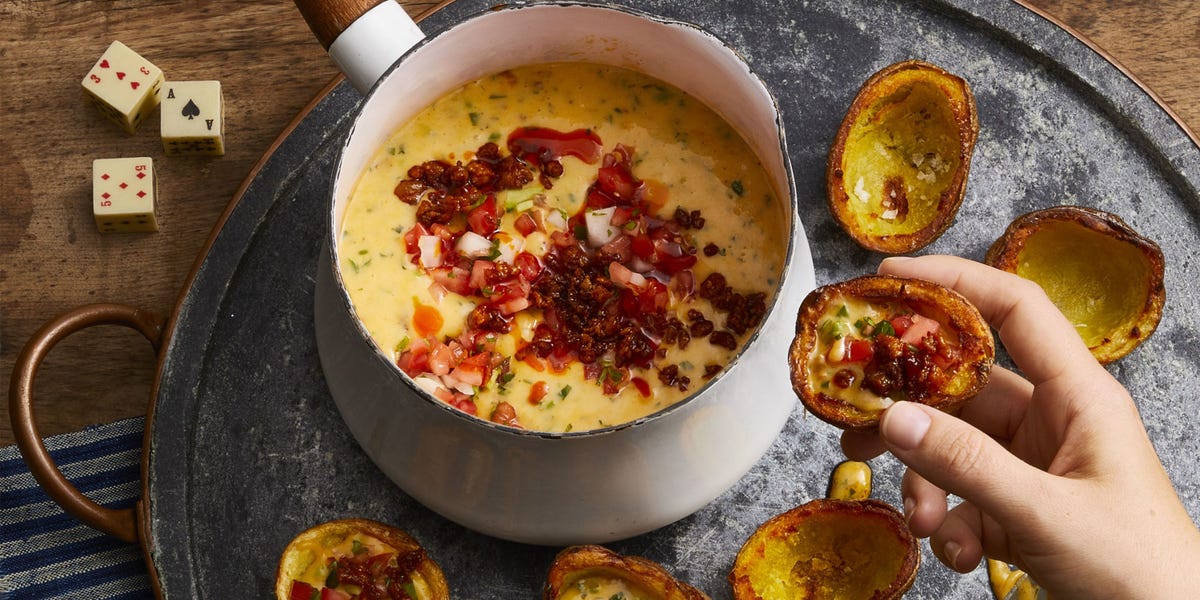
Some appetizers politely wait their turn. Chorizo queso potato skins do not. They arrive hot, crisp, cheesy, and unapologetically loaded, then disappear from the platter before anyone remembers where the napkins are.
This recipe combines three party-food champions: crunchy baked potato shells, warmly spiced Mexican chorizo, and smooth queso made with real cheese. Each bite has a crisp edge, a thin layer of fluffy potato, creamy cheese, savory sausage, and bright toppings that keep the richness from becoming too heavy.
The method is straightforward, but a few details separate excellent potato skins from floppy little cheese canoes. Choose russet potatoes, bake them without foil, leave enough potato inside the shells, crisp the empty skins before filling them, and cook the queso over gentle heat. Follow those rules and your appetizer will taste like sports-bar comfort food that went to culinary school.
Why This Is the Best Chorizo Queso Potato Skins Recipe
A great potato skin needs structure. Russet potatoes have sturdy skins and fluffy interiors, making them easy to hollow out without collapsing. Baking them uncovered allows moisture to escape rather than steaming the exterior. After the potatoes are scooped, the shells return to a hot oven with a light coating of oil. That second bake creates the crunch needed to support the filling.
The queso is equally important. Instead of simply scattering shredded cheese over the chorizo, this recipe turns Monterey Jack and cheddar into a creamy sauce. A small amount of cornstarch and evaporated milk helps the cheese melt smoothly and remain scoopable.
Mexican chorizo brings smoky chile flavor, garlic, vinegar, and plenty of savory depth. Fresh toppings such as scallions, cilantro, pico de gallo, lime, or pickled jalapeños provide acidity and crunch. It is a carefully engineered snack, although your guests will probably describe it with the more technical phrase, “Oh wow, give me another one.”
Ingredients for Chorizo Queso Potato Skins
This recipe makes 12 generous potato skins and serves approximately six people as an appetizer.
For the Crispy Potato Skins
- 6 medium russet potatoes, approximately 8 to 10 ounces each
- 2 tablespoons neutral oil or olive oil, divided
- 1 teaspoon kosher salt, plus more as needed
- 1/2 teaspoon smoked paprika
- 1/4 teaspoon garlic powder
- Freshly ground black pepper
For the Chorizo Queso Filling
- 12 ounces fresh Mexican pork chorizo, casings removed if necessary
- 1/2 small yellow onion, finely diced
- 1 small jalapeño, seeded and minced, optional
- 1 garlic clove, minced
- 8 ounces Monterey Jack cheese, freshly shredded
- 4 ounces sharp cheddar cheese, freshly shredded
- 1 tablespoon cornstarch
- 3/4 cup evaporated milk, plus more if needed
- 1 teaspoon hot sauce
- 1 teaspoon fresh lime juice
Optional Toppings
- Sour cream or Mexican crema
- Thinly sliced scallions
- Chopped fresh cilantro
- Pico de gallo or well-drained salsa
- Pickled jalapeño slices
- Diced avocado
- Lime wedges
How to Make Chorizo Queso Potato Skins
Step 1: Bake the Potatoes
Preheat the oven to 425°F. Scrub the russet potatoes thoroughly and dry them well. Pierce each potato several times with a fork, then rub the skins with approximately 1 tablespoon of oil and a light sprinkle of kosher salt.
Place the potatoes directly on the oven rack with a rimmed baking sheet on the rack below to catch any drips. Bake for 50 to 65 minutes, depending on their size, until a knife or skewer slides easily into the center.
Do not wrap the potatoes in foil. Foil traps steam, and steam is the sworn enemy of a crisp potato shell.
Step 2: Cook the Mexican Chorizo
While the potatoes bake, place a large skillet over medium heat. Add the fresh chorizo and cook, breaking it into small crumbles with a wooden spoon. Continue cooking until no raw meat remains and the chorizo reaches an internal temperature of 160°F.
Transfer the cooked chorizo to a paper-towel-lined plate, leaving approximately 1 teaspoon of fat in the skillet. Add the diced onion and jalapeño. Cook for 3 to 4 minutes, until softened, then stir in the garlic and cook for approximately 30 seconds.
Remove the skillet from the heat. Draining most of the rendered fat is important because an excessive amount can make the queso greasy and the potato skins soggy.
Step 3: Scoop Out the Potato Shells
Let the baked potatoes cool for 10 to 15 minutes, just until they are safe to handle. Cut each potato in half lengthwise. Use a spoon to scoop out the center, leaving roughly 1/4 inch of potato attached to the skin.
Do not scrape the shells paper-thin. A small layer of fluffy potato improves the texture and helps prevent tearing.
Save the removed potato for mashed potatoes, breakfast hash, soup, croquettes, or a midnight snack eaten directly from the storage container while standing in front of the refrigerator.
Step 4: Crisp the Empty Potato Skins
Arrange the shells on a rimmed baking sheet. Brush both sides lightly with the remaining oil. Mix the salt, smoked paprika, garlic powder, and several grinds of black pepper, then season the shells evenly.
Bake the potato skins cut-side down for 10 minutes. Flip them and bake cut-side up for another 8 to 10 minutes, until the edges are golden and the shells feel firm.
This second baking stage is not optional if you want genuinely crispy chorizo potato skins. Filling soft shells first is how appetizers become edible beanbags.
Step 5: Make the Creamy Queso
While the shells crisp, toss the shredded Monterey Jack and cheddar with the cornstarch in a medium bowl. Pour the evaporated milk into a saucepan and warm it over medium-low heat until steaming but not boiling.
Add the cheese one handful at a time, whisking until each addition melts before adding the next. Keep the heat low throughout the process.
Once the sauce is smooth, stir in the cooked onion mixture, hot sauce, lime juice, and approximately three-quarters of the cooked chorizo. If the queso is thicker than warm pudding, whisk in another tablespoon or two of evaporated milk.
Taste before adding salt. Chorizo and cheese are already salty, and the potato shells are seasoned. Your salt shaker does not need a heroic subplot.
Step 6: Fill and Finish the Potato Skins
Spoon the chorizo queso into the crisp shells, using approximately 1 1/2 to 2 tablespoons per piece. Sprinkle the reserved chorizo over the tops.
Return the filled skins to the oven for 5 to 7 minutes, until the filling is bubbling and the edges are deeply crisp.
Let the potato skins rest for 2 minutes, then add sour cream, scallions, cilantro, pico de gallo, pickled jalapeños, avocado, or any combination that makes the platter look festive. Serve immediately with lime wedges.
Expert Tips for Extra-Crispy, Creamy Results
Use Fresh Mexican Chorizo
Mexican chorizo is a raw, seasoned sausage that crumbles as it cooks. Spanish chorizo is usually cured and firm. Both are delicious, but they behave differently. For this recipe, fresh Mexican chorizo blends into the queso and distributes its chile-rich flavor through every bite.
Shred Cheese From a Block
Pre-shredded cheese is convenient, but its anti-caking coating can interfere with silky melting. Freshly grated Monterey Jack gives the queso a supple texture, while sharp cheddar supplies deeper flavor. Pepper Jack can replace part of the Monterey Jack for additional heat.
Keep Wet Toppings Under Control
Drain pico de gallo and salsa before spooning them over the potato skins. Add avocado and crema only after baking. A crisp shell can handle a little moisture, but it should not be asked to host a swimming pool.
Prepare the Components in Advance
The potatoes can be baked and scooped up to one day ahead. Refrigerate the shells and potato flesh separately. The chorizo mixture can also be cooked in advance.
Shortly before serving, crisp the shells, make or gently reheat the queso, assemble the potato skins, and finish them in the oven.
Chorizo Queso Potato Skin Variations
Extra-Spicy Potato Skins
Leave the seeds in the jalapeño, use Pepper Jack, add minced chipotle in adobo, or finish the skins with smoky hot sauce. Layering different kinds of heat creates more flavor than simply adding an irresponsible amount of cayenne.
Mild Chorizo Queso Potato Skins
Choose mild chorizo, omit the jalapeño, and replace sharp cheddar with mild cheddar. Serve pickled jalapeños and hot sauce on the side so heat-seekers can customize their portions.
Mini Potato Skin Bites
Use small russet potatoes and cut each half into two pieces after scooping. Smaller portions are easier to serve at a large party and deliver more crispy edge in every bite.
Vegetarian Queso Potato Skins
Replace the sausage with soy chorizo or a combination of sautéed mushrooms, black beans, and smoked paprika. Drain the filling well before adding it to the queso.
Storage and Reheating Instructions
Refrigerate leftover chorizo queso potato skins within two hours. Store them in a shallow airtight container for up to 3 to 4 days.
For the best texture, reheat the skins on a baking sheet in a 375°F oven for 10 to 15 minutes, or place them in an air fryer at 350°F for several minutes. Make sure the filling is hot throughout before serving.
The microwave works in an emergency, but it softens the shells. It is the correct appliance when speed matters more than crunch and you are willing to accept the emotional consequences.
To freeze the potato skins, cool them completely and arrange them in a single layer in the freezer. Once firm, transfer them to a freezer-safe container. Freeze them before adding sour cream, avocado, salsa, or other fresh toppings.
Kitchen Experience: What Really Happens When You Make These for a Crowd
The first practical lesson is that potato size matters more than people expect. A tray of evenly sized russets finishes at roughly the same time and produces tidy portions. A mixed bag containing three sensible potatoes and one geological specimen creates a scheduling problem.
Choose medium potatoes that feel heavy, have dry skins, and are similar in shape. Long, oval potatoes make especially convenient shells because they sit securely on a baking sheet and are easy to pick up.
The second lesson arrives during scooping. Warm potatoes are much easier to hollow out than completely cold ones, but freshly baked potatoes have the handling characteristics of delicious lava. Ten minutes of cooling is usually the sweet spot.
A small spoon with a slightly sharp edge gives better control than a large serving spoon. Work around the perimeter first, then lift out the center. When a shell tears, it is usually because too much flesh was removed near one edge. Leaving a 1/4-inch border may look generous, but it turns a fragile peel into a reliable appetizer.
The biggest improvement in a home kitchen comes from crisping the empty shells longer than instinct suggests. At first they may look ready while still bending slightly in the middle. Give them a few more minutes.
The surface should appear dry, the edges should darken, and the shell should hold its shape when lifted with tongs. That firmness matters once the warm queso is added. A properly crisped skin stays crunchy long enough for guests to enjoy it instead of folding like a taco with low self-esteem.
Chorizo also requires attention. Some brands release considerably more fat than others. Cooking it separately allows you to drain what you do not need and control the final texture.
Small crumbles spread through the cheese more evenly than large chunks, while a few reserved pieces on top make each potato skin look abundantly filled. The onion and jalapeño benefit from a quick sauté in a spoonful of the rendered fat, which captures the sausage flavor without turning the queso oily.
Queso rewards patience. High heat can make cheese tighten, separate, or become grainy. Low heat and gradual additions produce a glossy sauce that flows from the spoon but does not run out of the shell.
If the queso thickens while waiting, a splash of evaporated milk restores it. This is useful when guests are late, which guests traditionally are whenever hot appetizers are involved.
Finally, garnish strategically. A narrow drizzle of crema is easier to eat than a large spoonful. Drained pico adds freshness without soaking the potato. Scallions and cilantro provide color, while pickled jalapeños add acidity that cuts through the rich cheese and sausage.
Put half the garnishes on the platter and offer the rest in small bowls. That keeps picky eaters happy and lets spice enthusiasts construct potato skins that qualify as minor weather events.
Expect the first batch to vanish quickly. These are best served in waves rather than all at once, especially at a party. Keep crisped, unfilled shells warm in a low oven and assemble the next tray when the platter begins to look lonely.
The aroma of toasted potato, melted cheese, and chorizo tends to bring people back to the kitchen without an announcement. Consider that the appetizer equivalent of excellent marketing.
Conclusion
The best chorizo queso potato skins are built in layers: sturdy russet shells, a second bake for serious crunch, well-drained Mexican chorizo, smooth homemade queso, and fresh toppings added at the end. None of the steps is difficult, but each one protects the contrast that makes this appetizer memorable.
Serve the skins hot, keep extra lime and pickled jalapeños nearby, and make more than you think you need. A recipe that combines crispy potatoes, spicy sausage, and molten cheese is not known for producing leftovers.