For years, the shopping mall followed a familiar formula: department stores at both ends, smaller retailers in the middle, cinnamon-scented snacks near the escalator, and at least one decorative fountain collecting more coins than some startups collect funding. That formula is changing fast.
The next generation of malls will not be defined only by what they sell. They will compete on convenience, entertainment, personalization, accessibility, food, services, and the ability to make visitors forget they originally stopped by for one pair of socks. Industry research increasingly describes physical stores as places for discovery, community, product testing, fulfillment, and memorable experiences rather than simple transaction points.
Some of the technologies below are already operating in selected stores, stadiums, entertainment venues, and mixed-use developments. Others remain in pilot programs. Together, they offer a practical preview of the future of shopping mallsand suggest that tomorrow’s mall may feel like a combination of retail center, amusement park, neighborhood plaza, logistics hub, and very polite robot convention.
1. AI Shopping Concierges That Understand Normal Questions
Personal assistance without hunting for an employee
Instead of typing a store name into a directory, shoppers may soon ask a mall’s AI assistant a complete question: “Where can I find waterproof shoes under $120, pick up a birthday gift for a 10-year-old, and eat lunch somewhere with gluten-free options?”
The assistant could search participating retailers’ inventories, compare products, identify current promotions, create a walking route, and reserve items for fitting. It might also remember that a shopper prefers neutral colors, avoids wool, or would rather walk an extra three minutes than ride an escalator that sounds like it is reconsidering its career choices.
The National Retail Federation expects generative AI to support increasingly personalized shopping experiences and real-time virtual assistance. Deloitte has also reported that retailers are investing in AI for personalization, inventory planning, marketing, and customer service. AI agents are moving beyond answering questions toward comparing products, building carts, tracking prices, and completing authorized purchases.
Inside malls, these systems could appear in mobile apps, interactive kiosks, messaging services, digital directories, and retailer loyalty programs. The most useful versions will save time without becoming pushy digital salespeople that recommend twelve scented candles because you glanced at one in February.
2. Virtual Fitting Rooms and Smarter Mirrors
Trying on more without carrying an armful of clothes
Augmented reality fitting rooms are likely to become one of the most visible mall innovations. A camera-equipped mirror or store display can overlay different colors, patterns, accessories, cosmetics, or garments onto a shopper’s image. More advanced systems may estimate how fabric hangs, recommend coordinating pieces, and locate the correct size in another store or stockroom.
Google has already introduced AI-based virtual try-on tools that can generate images showing clothing on a shopper using an uploaded photo. Research continues to improve how these systems represent body shape, garment size, fabric behavior, and outfit combinations.
In a physical mall, virtual try-on will not necessarily eliminate the fitting room. It will work as a filter. A shopper might preview 20 jackets on a smart mirror, select three promising options, and physically try on only those. That reduces fitting-room lines, abandoned clothing piles, and the ancient retail mystery of how one shirt sleeve ended up completely inside another.
Beauty retailers can use similar technology for lipstick, hair color, eyewear, and skin-care demonstrations. Furniture and home stores can let customers place a life-size digital sofa in a model room or view it at home through a phone. The result is a shopping experience that connects physical products with digital visualization instead of forcing customers to rely on imagination and an optimistic return policy.
3. Checkout That Happens Wherever You Are
The traditional register loses its monopoly
Future mall stores may treat checkout as a service rather than a place. An employee could accept payment beside a fitting room, a shopper could scan products in an app, or a compact store could automatically identify selected items as the customer leaves.
Amazon’s Just Walk Out system demonstrated how cameras, sensors, computer vision, and payment credentials can remove the conventional checkout step. Amazon later shifted many larger grocery locations toward smart carts while continuing to position checkout-free technology for smaller stores and third-party venues. That distinction matters: not every innovation works equally well in every retail format.
A busy convenience shop, food outlet, or mall pop-up may benefit more from automated checkout than a luxury boutique where service is part of the purchase. Meanwhile, mobile point-of-sale systems can help almost any retailer reduce lines during holidays or product launches.
The likely future is not a mall with zero human cashiers. It is a mall with more ways to pay. Cash registers, self-checkout stations, mobile payment devices, app-based checkout, and automated systems will coexist. Consumers will choose the method that feels fastest and most comfortable, while retailers will discover that “frictionless” still requires careful handling of receipts, returns, privacy, errors, and customers who accidentally walked out carrying a display basket.
4. Shopping Carts That Track Products and Guide the Trip
A rolling computer with room for cereal
Smart carts combine cameras, weight sensors, barcode scanners, touchscreens, and payment technology. As shoppers place products in the cart, the system can maintain a running total, display a shopping list, locate items, apply eligible discounts, and allow payment without unloading everything at a register.
Amazon expanded its Dash Cart approach after using checkout-free systems in selected stores. The company has also offered the technology to outside grocers. Amazon-reported data from 2024 indicated strong repeat use and customer satisfaction among Dash Cart users, although independent tests have shown that smart carts can still struggle with awkward products, unreadable barcodes, and complex shopping behavior.
Mall-based supermarkets, warehouse-style retailers, home improvement stores, and large department stores are natural candidates for this technology. A future cart could guide a shopper to every item on a list, recommend a substitute when something is unavailable, and alert store employees when shelves need restocking.
The cart may also connect with the wider mall. After grocery checkout, its screen could direct the shopper to a reserved restaurant table, a pickup locker, or the parking section where the car is hiding among 900 nearly identical gray SUVs.
5. Automated Pickup Hubs and Mini Fulfillment Centers
The mall becomes a convenient delivery address
Buy online, pick up in storecommonly called BOPISwill continue evolving from a counter at the back of one retailer into a coordinated mall-wide service. Shopping centers may install shared locker banks where customers retrieve orders from multiple stores using a QR code or temporary PIN.
Temperature-controlled compartments could hold restaurant meals, groceries, flowers, cosmetics, or medicine. Return lockers could accept eligible products without requiring customers to stand in line. Some centers may add drive-through pickup lanes, curbside loading zones, or dedicated areas for delivery drivers.
Behind the storefronts, underused department store space can become a micro-fulfillment center. Employees and automated systems can prepare local online orders using inventory already stored at the mall. This shortens the final delivery distance and allows one property to serve in-person shoppers, pickup customers, and nearby households.
Retailers are investing heavily in AI-supported supply chain visibility and omnichannel operations as fulfillment costs rise. The mall’s locationoften near highways, transit routes, and dense neighborhoodsmakes it valuable not just as a showroom but as a distribution node.
For customers, the appeal is straightforward: place several orders during lunch, retrieve everything from one location after work, and avoid receiving four separate boxes large enough to furnish a small cardboard apartment.
6. Robots That Deliver, Clean, Scan, and Assist
Useful machines rather than science-fiction mascots
Retail robots are most likely to arrive through practical, repetitive jobs. Autonomous floor cleaners can operate during quiet periods. Inventory robots can scan shelves for missing products or incorrect prices. Delivery robots can move meals and packages between stores, pickup hubs, offices, hotels, apartments, and parking areas within a mixed-use development.
Delivery robots are already operating in controlled environments such as U.S. college campuses. Companies are using these locations because they have predictable routes, slower traffic, dense demand, and frequent food ordersall characteristics that can also exist in large shopping districts.
Customer-facing robots may provide directions, translate simple questions, carry bags, or connect visitors with a remote human representative. However, the successful robots will be the ones that solve a clear problem. A six-foot machine wandering through the food court merely to say “Welcome” is less innovation and more expensive furniture.
Malls will also need rules for safety, accessibility, maintenance, and human supervision. Robots must navigate children, strollers, wheelchairs, temporary kiosks, spilled drinks, and people who stop in the middle of a walkway to conduct a family meeting. That environment is far harder than a controlled warehouse, so gradual adoption is more realistic than a sudden robotic takeover.
7. Immersive Entertainment Replacing Empty Anchor Stores
Retailtainment becomes a major reason to visit
One of the clearest mall trends has little to do with faster transactions. Shopping centers are filling large spaces with escape rooms, interactive art, competitive games, indoor sports, themed dining, virtual reality, climbing gyms, children’s attractions, and entertainment based on popular media.
JLL reported in 2026 that 721 planned U.S. location-based entertainment venues represented approximately 16.5 million square feet of future demand. ICSC has similarly highlighted rapid growth in experiential retail and the transformation of malls into social destinations.
Netflix House illustrates the model. Its U.S. locations combine themed attractions, games, merchandise, photo opportunities, and food inspired by streaming titles. The objective is not simply to sell a product from a shelf. It is to create an outing that cannot be downloaded, delivered, or experienced through a standard product page.
Expect malls to host more rotating exhibits and limited-time experiences. One former anchor store might contain an interactive fantasy adventure this season and a sports simulation venue next year. Flexible design will allow landlords to refresh attractions before visitors become bored.
Traditional retailers benefit because entertainment generates traffic, extends visit duration, and gives families or groups more reasons to combine dining, shopping, and activities in one trip. In the future, asking “Are we going to the mall?” may sound less like a shopping question and more like planning a miniature vacation with parking validation.
8. Smarter Parking, EV Charging, and Arrival Services
The shopping experience begins before the entrance
Parking is often the least glamorous part of visiting a mall, which is precisely why it is ready for improvement. Connected parking systems can identify open spaces, direct drivers through an app or digital sign, reserve accessible parking, remember where a vehicle is located, and process payment automatically.
License-plate recognition may allow registered visitors to enter and exit without stopping at a gate. Sensors can direct electric vehicle drivers to working chargers rather than sending them on a low-battery scavenger hunt. Shopping centers can also coordinate curb space for rideshare vehicles, delivery robots, pickup orders, buses, bicycles, and autonomous vehicles.
Retailers are expanding fast-charging networks because customers can shop, eat, or exercise while their vehicles charge. Walmart, for example, has continued building a national charging network at retail locations, demonstrating how charging can become both an amenity and a reason to visit a property.
Malls have an advantage over isolated charging stations: they already offer restrooms, restaurants, seating, entertainment, and weather protection. Nobody dreams of spending 30 minutes beside a lonely charger behind an industrial park. A mall can turn that waiting period into usefuland potentially profitabletime.
9. Indoor Navigation Designed for Everyone
Better directions than “past the fountain, then maybe left”
Outdoor navigation is easy because GPS can usually locate a phone. Indoor navigation is harder, particularly in a multilevel mall filled with corridors, elevators, temporary displays, and stores that move without personally informing every visitor.
Future systems may combine Bluetooth beacons, Wi-Fi positioning, phone cameras, digital maps, and augmented reality. Shoppers could follow arrows displayed on their screens or receive audio directions through headphones. Routes might adapt for wheelchair access, elevators, quieter hallways, family restrooms, nursing rooms, or reduced walking distance.
Accessibility-focused navigation research is exploring smartphone guidance for people with visual impairments, including spoken instructions, obstacle awareness, and interfaces compatible with existing accessibility tools. Studies of augmented-reality navigation also suggest it can reduce wrong turns and cognitive effort in complicated indoor environments.
A smart mall app could go beyond directions. It might warn that an elevator is temporarily unavailable, identify a low-sensory shopping period, translate signs, locate seating, or guide a visitor to the nearest employee trained to provide assistance.
This is an important reminder that retail innovation is not only about making affluent, tech-savvy shoppers purchase faster. The best smart mall technologies will make complicated public spaces easier to use for older adults, tourists, parents, and people with disabilities.
10. Malls Becoming Flexible Mixed-Use Neighborhoods
Shopping becomes one piece of a much larger destination
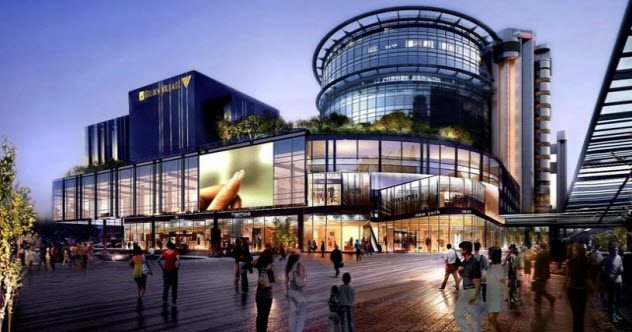
The most significant mall innovation may be architectural rather than electronic. Across the United States, aging shopping centers are being redesigned as mixed-use districts containing apartments, hotels, health clinics, offices, fitness facilities, grocery stores, entertainment venues, parks, public art, and outdoor dining.
ICSC describes modern shopping centers as “third places”social destinations outside home and work where people gather for food, events, services, and shared experiences. Major redevelopment projects increasingly emphasize walkable streets, public squares, green space, residential buildings, and flexible community areas.
Technology will help these districts operate more efficiently. Digital twins can create virtual models of buildings, allowing operators to study energy use, pedestrian flow, maintenance needs, emergency routes, and the performance of different spaces. Sensors can adjust lighting, heating, cooling, and ventilation according to occupancy. Flexible walls, modular fixtures, and short-term leases can turn vacant areas into seasonal markets, classrooms, clinics, art galleries, or startup showrooms.
This model reduces dependence on a few department store anchors. A resident may visit the property for a medical appointment, work from a shared office, meet friends for dinner, attend an outdoor concert, and pick up groceries without thinking of the trip as “going shopping.” Retail remains important, but it becomes part of daily life rather than the entire purpose of the destination.
What a Visit to the Next-Generation Mall May Feel Like
A realistic shopping experience from arrival to departure
Imagine visiting a renovated regional mall on a Saturday afternoon. Before leaving home, you open the mall app and tell its AI assistant that you need running shoes, a graduation gift, and dinner for four. You mention that one guest is vegetarian and another considers black pepper an extreme sport.
The assistant checks store inventory and recommends three shoe models within your budget. It reserves your size, suggests a gift from a local maker’s weekend market, and displays restaurant openings at 6:30 p.m. You approve the plan but decline the app’s suggestion to add a premium smoothie. Even advanced AI must learn boundaries.
As you approach the property, the parking system directs you to an open space near the athletic store. Your vehicle is electric, so the app offers a charging stall and estimates how much range will be added during the visit. The location is stored automatically, preventing the traditional end-of-day ritual of wandering through parking sections while repeatedly pressing the key fob.
Inside the athletic store, a smart display recognizes the reservation code on your phone. An employee brings out the selected shoes, while a pressure-sensitive mat and camera analyze basic fit and movement. The system recommends a half-size adjustment but leaves the final decision to a human associate, which is reassuring because algorithms do not develop blisters.
Next, you visit an apparel retailer. A smart mirror previews several jackets without requiring you to change clothes repeatedly. It also shows which sizes are available and suggests one that coordinates with clothing already in your loyalty profile. You physically try on the two best options, pay through a mobile device held by an employee, and choose to have the purchase delivered to a shared locker near the parking entrance.
The former department store at the center of the mall now contains an immersive attraction, an indoor climbing facility, several restaurants, and a flexible event hall. One member of your group tries an augmented-reality game while another attends a cooking demonstration. Children follow an interactive digital scavenger hunt that encourages them to visit public art installations rather than sprinting directly toward the candy store.
Later, the mall app guides everyone to dinner using the quietest accessible route. Digital signs display wait times, elevator status, event schedules, and transportation information. A small delivery robot moves sealed restaurant orders toward the pickup hub, cautiously navigating around shoppers and one toddler who appears determined to negotiate with it.
After dinner, you collect the jacket and graduation gift from a locker using a temporary QR code. The app confirms that the car has reached the requested charge level and leads you back to the correct entrance.
None of these moments is individually revolutionary. The real innovation comes from connecting them. Inventory, navigation, payment, parking, entertainment, dining, accessibility, fulfillment, and customer service work as one coordinated experience. Technology stays mostly in the background, appearing only when it removes a delay, provides useful information, or creates something enjoyable.
That distinction will determine which mall innovations survive. Shoppers rarely visit a property because it owns impressive sensors. They return because parking was painless, products were available, staff members were helpful, the family had fun, and nobody spent 25 minutes searching for the nearest restroom.
Conclusion: The Mall Is Evolving, Not Disappearing
The future of shopping malls will not be a simple contest between physical stores and e-commerce. Successful properties will combine the strengths of both. Digital tools offer speed, information, personalization, and convenience. Physical spaces offer human service, instant product access, social interaction, food, entertainment, and experiences that cannot be compressed into a shipping box.
AI shopping assistants, virtual fitting rooms, smart carts, automated pickup, robots, immersive attractions, EV charging, accessible navigation, and mixed-use redevelopment are already moving from demonstration stages into real-world retail. Adoption will vary because every technology must prove that it is useful, affordable, secure, inclusive, and less annoying than the problem it replaces.
The mall near you may not transform overnight. Changes will arrive store by store and service by service. One day, however, you may realize that the building once known mainly for department stores and food-court pizza has become a connected community destination where people shop, work, eat, exercise, play, charge their cars, see a doctor, attend an event, and still somehow leave carrying a candle they never planned to buy.
Editorial note: This forward-looking article is based on retail technologies, development projects, industry research, and pilot programs reported through July 2026. Availability and implementation will vary by shopping center, retailer, and region.