There are market selloffs, there are panic attacks, and then there are the kind of days that make grown traders stare at screens like they just saw a ghost ask for margin. Oil’s “1987 moment” belongs in that last category. The phrase captures a stretch in 2020 when crude stopped behaving like a normal commodity and started acting like a live wire: prices collapsed, fear outran spreadsheets, and the machinery of modern markets looked a little too modern for comfort.
If the reference sounds dramatic, that is because it is. Black Monday in 1987 became shorthand for a violent, confidence-shattering repricing that happened too fast for anyone’s soothing words to matter. In March and April 2020, oil delivered its own version of that experience. The trigger was not a single villain twirling a mustache over a barrel of crude. It was a brutal collision of collapsing demand, a Saudi-Russia price war, crowded positioning, expiring futures contracts, and the very unglamorous reality that oil has to go somewhere. Unlike stocks, crude is not just a ticker symbol. It is a physical thing. When too much of it shows up and nobody wants it, the market stops being elegant and starts looking like a garage with no empty shelf left.
What “Oil’s 1987 Moment” Really Means
The phrase does not mean oil repeated the exact script of October 1987. It means oil experienced the same kind of financial shock that changes the mood of a market in a hurry. Black Monday became legendary because the Dow’s plunge exposed how fragile confidence can be when selling turns mechanical, liquidity disappears, and everyone discovers at once that an exit is not the same thing as a doorway.
That is the useful comparison. In oil, the spring 2020 crash revealed a similar truth: energy markets are not just driven by geology, geopolitics, and spreadsheets from very serious people named Craig. They are also driven by animal spiritsfear, reflex, bravado, denial, and the ancient human belief that tomorrow will probably look a lot like yesterday right up until it absolutely does not.
In normal times, crude oil is priced through a mixture of global supply, expected demand, freight logistics, storage economics, and political risk. In stressed times, those fundamentals do not disappear. They simply get stampeded by urgent behavior. Producers keep pumping longer than consumers keep buying. Hedge funds and ETFs crowd into the same trades. Futures roll dates become landmines. Risk models behave beautifully until they meet reality, at which point they behave like folding chairs in a hurricane.
The Setup: A Demand Crash Walks Into a Price War
Before oil became historic for all the wrong reasons, the market was already wobbling. Early 2020 brought a sudden global demand shock as the pandemic slammed air travel, commuting, manufacturing, and general economic activity. That alone would have been painful enough. Less jet fuel, less gasoline, less diesel movement, less everything. If oil had feelings, this was not a confidence-building quarter.
Then came the second punch. In March 2020, OPEC+ talks broke down, Saudi Arabia and Russia stopped cooperating the way the market had hoped, and the result was an old-fashioned oil price war at exactly the wrong moment. That is a bit like deciding to host a water-balloon fight in the middle of a house fire. Instead of cutting output quickly to match weaker demand, major producers signaled more supply and price discounts. Traders understood the implication immediately: too much crude, too few buyers, and a timetable that was moving much faster than diplomacy.
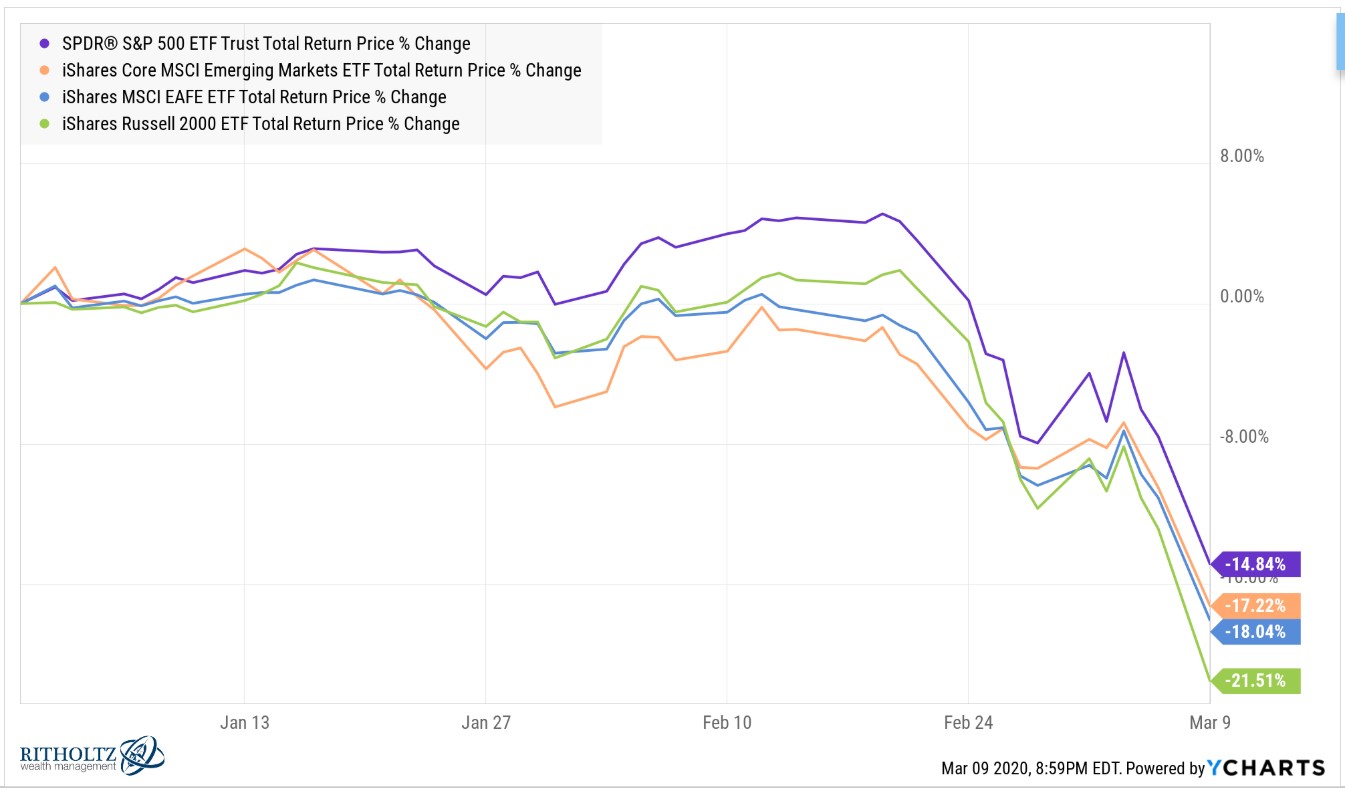
That combination detonated confidence. On March 9, 2020, oil prices cratered and global markets convulsed. Crude was not merely falling; it was sending a message. Cheap oil is usually treated like a tax cut for consumers, but not when it is falling because the world economy has hit the brakes. In those moments, lower prices stop looking like a gift and start looking like a distress flare.
Why Falling Oil Was Not “Good News” This Time
Economists often note that lower fuel costs can help households and businesses. That logic works when prices drift down because supply improves or because growth remains solid while energy becomes more efficient. It works much less well when demand is collapsing because planes are grounded, roads are empty, and factories are quiet enough to hear their own existential dread.
That was the difference in 2020. The oil crash was not a happy story about consumers saving a few bucks on a road trip. It was a flashing sign that the global economy was contracting so quickly that supply chains, labor markets, and financial markets were all repricing at once. Oil became both symptom and amplifier. It reflected the slowdown, and then it deepened the panic because investors understood what weak oil demand implied for everything from airline revenues to bank lending to jobs across energy-producing states.
Why the 1987 Comparison Fits So Well
The best way to understand the analogy is to focus on three shared features: speed, mechanics, and mood.
1. Speed
Black Monday was shocking because of how much damage arrived in a single session. Oil’s crash in March 2020 had that same cinematic violence. Prices did not slide politely lower over a quarter while analysts updated their deck colors from “cautious yellow” to “concerned orange.” They dropped hard and fast. That kind of movement changes behavior. Investors stop asking what something is worth and start asking who is still standing near the exit.
2. Mechanics
In 1987, portfolio insurance and automated selling strategies became part of the story because they intensified downward momentum in a market that was already fragile. Oil had its own mechanical element in 2020. Futures contracts, exchange rules, roll schedules, margin calls, and delivery obligations all mattered. This was not only a story about a commodity becoming cheaper. It was a story about what happens when too many market participants need to move at once through a structure that suddenly feels much narrower than advertised.
3. Mood
Both episodes were psychological breaks. Once confidence snaps, markets do not move in tidy proportion to fundamentals. They overshoot. They scramble. They become narrative machines. Every headline feels existential. Every bounce looks suspicious. Every confident forecast ages like milk left on a dashboard.
That is where “animal spirits” enters the room. Keynes used the term to describe the instincts and emotions that shape economic behavior beyond pure calculation. Oil in 2020 was a case study in that idea. Producers clung to volume. Traders ran from unwanted exposure. Investors tried to distinguish temporary chaos from permanent impairment. Consumers saw cheap gas, while energy towns saw layoffs and capital spending cuts. Same commodity, wildly different emotional realities.
From Collapse to Absurdity: When Oil Went Negative
March 9 was the dramatic opening act. April 20, 2020 was the scene everybody remembers. That was the day front-month WTI futures settled below zero, an event so bizarre it briefly made capitalism look like it had slipped on a banana peel. The headline number was stunning, but the explanation was more physical than mystical.
WTI is tied to delivery at Cushing, Oklahoma. By April, storage was filling, refiners had cut runs, demand had fallen apart, and time was running out for holders of the May contract who did not want to take delivery. Under ordinary conditions, traders can roll positions forward or exit without too much drama. In extraordinary conditions, ordinary exits become crowded. When buyers with storage capacity are scarce, the market can do something that sounds impossible until it happens: it can force sellers to pay someone else to take the obligation off their hands.
That is why negative prices mattered so much. They did not mean every barrel of oil in America was suddenly worth less than nothing in every context. They meant the expiring WTI futures contract at that moment reflected a desperate imbalance between immediate supply, storage capacity, and the urgency to get out. In plain English: the market was choking on barrels and paperwork at the same time.
Why Negative Prices Were More Than a Weird Headline
This was not just a trivia-night answer for future finance nerds. Negative WTI exposed how financial abstractions depend on physical systems. A futures market can look frictionless on a chart, but crude still needs tanks, pipelines, railcars, ships, refiners, and buyers. When one link in that chain gets jammed, the pricing system stops behaving the way textbooks promise. The absurd price was real, but so was the constraint behind it.
It also forced investors to relearn a basic lesson: owning “oil exposure” is not the same as owning a smooth macro thesis. Benchmarks matter. Contract structure matters. Storage matters. Time matters. A lot of investors discovered that commodity exposure comes with plumbing attached. That discovery was educational, though not in the fun field-trip sense.
Why U.S. Shale Felt the Pain So Sharply
America entered 2020 as an energy superpower, thanks in large part to the shale revolution. That boom transformed U.S. production, reshaped trade flows, and gave the market a new swing factor outside the traditional OPEC orbit. It also created a sector that depended on constant capital discipline, manageable debt loads, and prices high enough to justify drilling.
When crude collapsed, that model came under immediate pressure. Producers cut rigs, slashed capital expenditures, shut in wells, and braced for consolidation. The pain did not stay confined to stock tickers. It rolled through oilfield services, equipment suppliers, trucking, regional banks, municipal budgets, and labor markets in places where energy spending acts like local gravity.
This is why the “cheap oil helps everyone” argument felt incomplete. Yes, drivers benefit from lower gasoline prices eventually. But large parts of the U.S. economy are now integrated with energy production and energy finance. By 2020, lower oil was no longer a simple consumer windfall. It was also a corporate cash-flow problem, an employment shock, and a regional recession risk.
The Lasting Lesson: Oil Is Never Just About Oil
Oil’s 1987 moment reminds us that markets are systems, not isolated widgets. Energy prices can signal growth, inflation, geopolitics, financial stress, and infrastructure constraints all at once. They can make consumers smile and credit committees sweat. They can fall because supply improved, because demand collapsed, or because traders are all trying to solve different problems with the same contract at the same hour.
That is why the episode still matters. It changed how people think about commodity ETFs, storage economics, shale resilience, and the relationship between physical markets and financial markets. It also left behind a humbling truth: the modern market is full of elegant models, but when fear meets logistics, logistics usually wins.
So yes, oil had a 1987 moment. Not because history repeated itself line for line, but because the market revealed the same old vulnerability beneath a newer set of tools. Confidence can evaporate. Liquidity can vanish. Market structure can amplify stress. And human beings, bless their ambitious little spreadsheets, can still be surprised by the physical world.
Experiences From Oil’s 1987 Moment: What It Felt Like in Real Time
For investors watching from home in March and April 2020, the experience was surreal in a very specific way. First came the adrenaline of the opening drop, then the strange confidence that “markets are overreacting,” and finally the slow realization that this was not a routine correction with a dramatic soundtrack. You could watch oil plunge, stocks halt, bond yields sink, and financial television turn into a live theater performance of nervous blinking. Every asset class looked like it had gotten the same emergency text. Even people who never normally discussed crude futures suddenly had opinions about Saudi Arabia, Russia, and something called Cushing, Oklahoma, which is not usually the setting for mainstream panic.
For people working in the energy business, the experience was even less abstract. This was not just a chart going vertical in the wrong direction. It was budgets getting shredded, drilling plans going quiet, service contracts postponed, and executives speaking in that careful tone that usually means, “We are absolutely not panicking while we panic in a spreadsheet.” In oil-producing regions, you could feel the mood shift from concern to triage. Workers worried about hours, suppliers worried about invoices, and local businesses that depended on energy payrolls understood that when upstream spending slows, the aftershocks hit restaurants, machine shops, hotels, and tax receipts too.
Then came April 20, which felt like the market equivalent of hearing that gravity had been temporarily canceled. Negative oil prices were one of those moments that made smart people repeat the same sentence three different ways because their brains refused to accept it. Traders who understood the mechanics were still stunned by the speed. Casual observers thought it meant gas stations were about to pay drivers to fill up, which, sadly, was not how any of this worked. The public experience of that day was a mix of confusion, memes, and sudden amateur education in futures settlement. Finance had become performance art, and the audience was not sure whether to laugh, scream, or Google “working storage capacity.”
Consumers had their own version of the experience. In some places, gasoline got cheap enough to feel almost nostalgic, like the market was apologizing with pocket change. But cheap gas during lockdown was a strange gift. People were not driving much. Vacations were canceled. Commutes disappeared. The old consumer logic of lower fuel prices boosting spending did not quite land when daily life itself had been put in a holding pattern. So the emotional message of cheaper gasoline was not prosperity. It was dislocation. Prices were low because normal life was not normal.
Policy people, economists, and market historians experienced the period as a stress test of assumptions. They were watching not just the price of oil but the way financial architecture behaved under pressure. Could futures still converge with physical reality? Could storage hold? Could producers respond quickly enough? Could circuit breakers and margin systems slow panic without freezing the market? The episode became a real-time seminar in market plumbing, except the seminar was taught by chaos and nobody got to drop the course.
What lingers most from that period is not only the magnitude of the numbers, but the sensation of systems colliding. A health crisis slammed demand. A geopolitical dispute boosted supply risk. Financial products magnified pressure. Physical logistics set hard limits. Human psychology poured gasoline on the metaphorical fire while real gasoline sat around with too few places to go. That is what made oil’s 1987 moment unforgettable. It was not just a commodity crash. It was an experience of watching modern markets discover, all over again, that fear travels fast, storage is finite, and reality does not care how elegant the model looked last quarter.
Conclusion
Oil’s 1987 moment was a reminder that markets are never purely rational machines humming along on perfect information. They are human systems bolted onto physical systems, and both can fail in spectacular style when stress arrives too quickly. The 2020 oil crash combined pandemic demand destruction, producer brinkmanship, financial leverage, and storage bottlenecks into one unforgettable lesson. Prices did not simply fall; they broke the illusion that liquidity is always there and that markets can always absorb surprise with grace.
That is why the comparison still resonates. Black Monday remains the symbol of a sudden confidence shock in equities. The spring 2020 oil collapse became its commodity-market cousin: a moment when structure, psychology, and reality collided so hard that even seasoned market participants had to rethink what “normal” meant. If there is a moral here, it is both simple and deeply annoying: markets can stay weird longer than your model can stay smug.