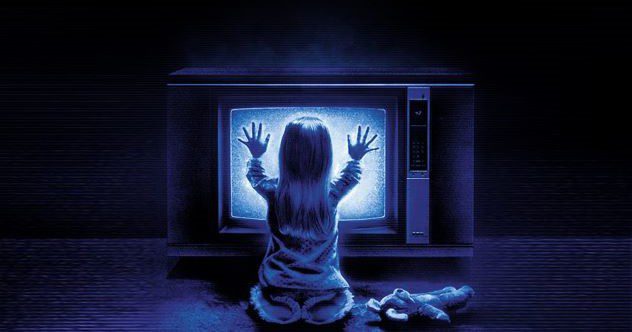
Movie sets are strange places even on a good day. Hundreds of people work around heavy equipment, artificial weather, live animals, elaborate stunts, pyrotechnics, and actors who may be asked to scream convincingly for the fifteenth time before lunch. When accidents, illnesses, and untimely deaths cluster around one production, Hollywood does what Hollywood does best: it turns reality into a story.
That is how the legend of the cursed film is born. A fire becomes a supernatural warning. A mechanical failure becomes an angry spirit. Separate tragedies occurring years apart are edited together as neatly as scenes in a movie trailer.
None of the films below has been scientifically proven to carry a supernatural curse. Some stories involve coincidence, some have been exaggerated through decades of retelling, and others concern documented failures in workplace safety. Still, these ten films believed to be cursed have accumulated legends almost as memorable as the movies themselves.
1. The Exorcist (1973)
Few productions were better prepared for rumors of demonic interference than The Exorcist. William Friedkin’s adaptation of William Peter Blatty’s novel follows a young girl apparently possessed by a malevolent entity, and the troubled production soon began resembling an unofficial sequel.
A fire destroyed much of the set representing the MacNeil family home, while the section used for Regan’s bedroom reportedly remained largely undamaged. The fire caused a lengthy delay. Ellen Burstyn and Linda Blair also suffered back injuries while filming effects sequences involving harnesses and forceful movements. The shoot expanded far beyond its original schedule, and several people connected with the production died before the film reached theaters.
A priest was eventually invited to bless the setnot exactly standard procedure for a studio picture, although it probably made the catering line feel safer. Friedkin also discussed the supposed curse during publicity, helping transform a difficult production into enduring horror mythology.
The unsettling facts are real, but the most likely causes were faulty equipment, dangerous practical effects, coincidence, and the ordinary risks of an unusually demanding film shoot. The supernatural explanation arrived later, wearing excellent marketing.
Documented production details were cross-checked against retrospective reporting from Entertainment Weekly and SYFY.
2. The Omen (1976)
If The Exorcist established the template for a cursed horror production, The Omen arrived with an entire suitcase of ominous coincidences.
Gregory Peck, screenwriter David Seltzer, and executive producer Mace Neufeld were reportedly involved in separate air-travel incidents connected with lightning strikes or frightening near misses. The production also considered using an aircraft that later crashed after the crew’s plans changed. An IRA bombing occurred near a hotel associated with members of the production, while other accidents were folded into the legend during later retellings.
These events sound terrifying when arranged in a single paragraph. Spread across months, countries, and hundreds of people, they look less like a coordinated supernatural campaign and more like a collection of unrelated dangers encountered by a large traveling production.
Still, a movie about the Antichrist will never receive the benefit of the doubt. When lightning strikes once, it is weather. When it appears several times in the publicity history of The Omen, somebody inevitably checks the child actor’s scalp for the number 666.
The production legends and air-travel incidents were compared with reporting from Mental Floss and other film-history accounts.
3. Poltergeist (1982)
The supposed Poltergeist curse is one of Hollywood’s most famous supernatural legends, partly because its tragedies affected several young cast members.
Dominique Dunne, who played Dana Freeling, was murdered by her former boyfriend only months after the film’s release. Heather O’Rourke, the child star remembered for saying “They’re here,” died in 1988 at age 12 after complications involving a congenital intestinal condition and septic shock. Actors Julian Beck and Will Sampson, who appeared in the sequels, also died during the franchise’s original run, though both had serious medical conditions.
The legend gained an especially macabre detail from the film’s swimming-pool sequence. Real human skeletons were used as props, a practice that was not unheard of in older productions because medical skeletons could be less expensive than convincing artificial replicas.
Fans later suggested that using human remains had angered the dead. It is a wonderfully tidy explanation for a ghost story and a painfully careless way to discuss real people. Dunne was a victim of intimate-partner violence. O’Rourke died from a medical emergency. Calling their deaths evidence of a curse can obscure the human realities behind them.
Accounts of the skeleton effects and the deaths of Dominique Dunne and Heather O’Rourke were checked against Vanity Fair, People, and Entertainment Weekly.
4. The Crow (1994)
The death of Brandon Lee during the making of The Crow is often placed on lists of cursed movie incidents. It should more accurately be remembered as a preventable firearms tragedy.
During filming in 1993, a revolver used as a prop contained a projectile lodged in its barrel from an improperly prepared dummy cartridge. When a blank round was later fired, the force propelled the obstruction from the barrel. Lee was struck in the abdomen and died at age 28.
The accident felt eerily connected to the movie because Lee’s character, Eric Draven, is murdered and then returns from the dead. Lee was also the son of Bruce Lee, whose early death had already inspired decades of rumors. Those parallels made supernatural explanations irresistible to some fans.
Yet the mechanical sequence that caused the shooting was investigated and understood. It did not require a curse, only a chain of unsafe decisions. The production eventually finished the movie using rewrites, a stunt double, and visual effects. Its success preserved Lee’s final performance, but it also ensured that the circumstances of his death would remain permanently attached to the film.
The circumstances of Lee’s death and the subsequent investigation were reviewed through reporting from The Washington Post and ABC News.
5. Twilight Zone: The Movie (1983)
Some so-called cursed productions are built from coincidences. The tragedy surrounding Twilight Zone: The Movie was captured by cameras and later examined in court.
On July 23, 1982, actor Vic Morrow and child actors Myca Dinh Le and Renee Shin-Yi Chen were filming a nighttime battle sequence. Special-effects explosions damaged a low-flying helicopter, which crashed onto the performers. All three were killed.
The accident led to criminal charges, a lengthy trial, civil litigation, and intense scrutiny of Hollywood’s treatment of child performers and hazardous stunts. Director John Landis and four other defendants were ultimately acquitted of involuntary manslaughter, but the disaster had a lasting effect on conversations about production safety.
Describing the movie as cursed can make the story seem mysterious. The documented circumstances are more disturbing because they were not mysterious. They involved identifiable hazards, warnings, pyrotechnics, a helicopter, late-night filming, and children working in a dangerous environment.
This is where the language of curses becomes especially risky. A supernatural legend can turn accountability into atmosphere. The victims deserve to be remembered as people, not spooky trivia exchanged during a horror marathon.
The crash, court proceedings, and safety concerns are documented extensively in the Los Angeles Times archives.
6. Rosemary’s Baby (1968)
Roman Polanski’s Rosemary’s Baby created one of cinema’s most influential stories about paranoia, pregnancy, and occult conspiracy. The misfortunes later associated with the film were largely experienced after production ended.
Composer Krzysztof Komeda died in 1969 after suffering injuries in a fall. Producer William Castle became seriously ill and reportedly wondered whether the film had brought something evil into his life. The darkest association came from the murder of Polanski’s pregnant wife, actress Sharon Tate, by members of the Manson Family in August 1969.
Tate did not star in Rosemary’s Baby, and her murder had no demonstrated connection to its story. However, the proximity of the crime to a movie about a pregnant woman targeted by a satanic group made the tragedy easy to absorb into the film’s legend.
The association remains emotionally powerful because humans naturally search for patterns, especially when reality seems too senseless to accept. Yet turning Tate’s murder into supporting evidence for a movie curse risks reducing a real victim to an eerie epilogue in someone else’s film history.
The development of the film’s “curse” mythology and the events linked to it were reviewed through Vanity Fair’s retrospective reporting.
7. The Conqueror (1956)
The Conqueror was already notorious for casting John Wayne as Genghis Khan. Its later reputation became far darker because much of the movie was filmed near St. George, Utah, downwind of nuclear weapons tests conducted at the Nevada Test Site.
Cast and crew members worked outdoors in desert locations where radioactive fallout had traveled after atmospheric testing. Dirt from the area was reportedly transported back to studio facilities for additional photography, which sounds like the worst souvenir decision in movie history.
A widely repeated count later claimed that 91 of approximately 220 cast and crew members developed cancer, with 46 dying from the disease. Wayne, Susan Hayward, Agnes Moorehead, director Dick Powell, and other participants were among those diagnosed with cancer during subsequent decades.
Those numbers are alarming, but they do not prove that working on the film directly caused every illness. Many participants had other risk factors, and epidemiologists cannot reconstruct each person’s precise exposure. The broader danger of nuclear fallout to communities throughout the American West, however, is well documented.
The “curse” of The Conqueror was therefore not ancient Mongolian revenge. It was a real environmental hazard created by nuclear testing, combined with limited public information about radiation exposure.
The cancer statistics frequently associated with the production were checked against Intermountain Histories, alongside modern research on atmospheric nuclear-test fallout.
8. Rebel Without a Cause (1955)
The three young stars at the center of Rebel Without a Cause became cultural icons. All three also died prematurely under tragic circumstances, creating what fans sometimes call the “Rebel curse.”
James Dean died in a car crash on September 30, 1955, less than a month before the movie’s release. Sal Mineo was murdered outside his Los Angeles residence in 1976. Natalie Wood drowned near Catalina Island in 1981, and questions surrounding the circumstances of her death have continued for decades.
Placed together, the deaths feel like the final act of an impossibly bleak drama. In reality, they occurred across a period of more than 25 years and had entirely separate causes.
The legend survives because the film itself is filled with alienated young people moving toward disaster. Dean, Mineo, and Wood appear so vulnerable on screen that viewers can feel as though the movie somehow predicted their futures.
It did not. What it captured was the emotional intensity that made all three performances unforgettable. Their later deaths changed the way audiences interpreted the film, adding a layer of grief that was never written into the screenplay.
Release timing and biographical details were checked through PBS, Yale University Library, History, Biography, and The Washington Post.
9. The Wizard of Oz (1939)
The Wizard of Oz looks cheerful enough to be prescribed as medicine. Behind the Technicolor fantasy, however, was a production shaped by dangerous materials and studio-era working practices.
Buddy Ebsen, originally cast as the Tin Man, became seriously ill after inhaling aluminum dust used in his makeup. He was replaced by Jack Haley, whose makeup was reformulated as a paste. Margaret Hamilton suffered burns to her face and hand when a fire effect malfunctioned during the Wicked Witch’s exit. Her stunt double, Betty Danko, was later injured in another effects accident.
Other stories about the production have grown less reliable over time. The famous claim that a background figure can be seen hanging in the forest has been debunked; the shape was a large bird on the set. Allegations about the treatment of performers have also been repeated with varying degrees of evidence.
The verifiable incidents are disturbing enough without embellishment. Early special-effects filmmaking relied on chemicals, open flames, heavy costumes, and safety standards that would be unacceptable today. The real curse was a production system in which performers were expected to endure serious risks while the cameras kept rolling.
Production injuries and casting changes are documented in the AFI Catalog and Turner Classic Movies’ historical materials.
10. The Passion of the Christ (2004)
Jim Caviezel’s experience playing Jesus in Mel Gibson’s The Passion of the Christ has become another frequently cited example of a cursed or spiritually charged production.
According to Caviezel’s interviews, he was struck by lightning while filming, endured extremely cold conditions, developed hypothermia and pneumonia, and suffered a separated shoulder during the crucifixion sequences. The heavy makeup, prosthetics, physical exertion, and lengthy outdoor shoots added to the punishment.
For believers, these experiences have sometimes been interpreted through a spiritual lensas either opposition to the film or evidence of divine protection. For skeptics, they demonstrate what happens when an actor spends prolonged periods outdoors in severe weather while performing physically intense scenes.
The lightning strike remains the detail everyone remembers, because “actor works long hours in terrible conditions” is a labor issue, while “actor playing Jesus is struck by lightning” practically writes its own movie poster.
Whatever interpretation viewers prefer, Caviezel’s injuries illustrate a recurring pattern in cursed-film mythology: extraordinary stories often begin with ordinary production risks that escalate until they seem symbolic.
Caviezel’s descriptions of the lightning strike and physical injuries come from his own published interviews.
Are Cursed Movie Productions Real?
Coincidence becomes more convincing when it has a theme
A large film may employ hundreds of cast members, crew members, contractors, drivers, stunt performers, and technicians. When later events involving all those people are included, the number of opportunities for illness, accidents, and tragedy becomes enormous.
Most curse legends also use selective editing. Misfortunes are counted, while the thousands of ordinary or successful experiences are ignored. A supporting actor’s illness may be included even if it occurs decades later, but a cast member who lives happily to age 95 rarely receives a paragraph titled “Evidence Against the Curse.”
Horror movies supply their own supernatural explanation
The subject of a film influences how people interpret events surrounding it. A fire on a romantic comedy is a production delay. A fire on a movie about demonic possession becomes a warning from beyond. A lightning strike during an ordinary historical drama is bad weather. A lightning strike during a biblical epic becomes symbolism.
Publicity departments have not always discouraged these interpretations. A rumored curse generates headlines, audience curiosity, documentaries, anniversary articles, and late-night conversations. Fear sells tickets, and apparently it also has excellent long-term search-engine performance.
“Cursed” should never replace “preventable”
The most important distinction is between unexplained coincidence and documented negligence. Calling a workplace accident supernatural may distract from the safety failures that allowed it to happen.
The deaths connected with The Crow and Twilight Zone: The Movie should not be romanticized as paranormal mysteries. The radiation concerns surrounding The Conqueror belong to the history of nuclear testing and public-health policy. The injuries on The Wizard of Oz show how dangerous studio practices once were.
Sometimes the frightening lesson is not that movie sets are haunted. It is that they are workplaces, and workplaces become dangerous when spectacle is valued more highly than safety.
The Cursed-Film Experience: Why These Stories Change the Way We Watch
Learning that a movie is supposedly cursed changes the viewing experience before the opening credits even appear. The audience is no longer watching only the story on screen. Every unusual shadow, difficult stunt, or frightened expression seems connected to an invisible second narrative unfolding behind the camera.
Before the movie: anticipation does half the haunting
Imagine preparing to watch The Exorcist after hearing about the set fire and the injuries. The bedroom scenes suddenly feel more sinister because viewers know that this part of the set reportedly survived. A rattling window that might otherwise seem like a clever effect begins to feel like evidence. The film has not changed, but the viewer’s expectations have.
This is a form of psychological priming. Once people are told to expect a pattern, they become better at finding one. Horror fans experience the cinematic equivalent of checking the basement after somebody mentions that the house makes strange noises. The basement has always been there. It simply becomes much more interesting at midnight.
During the movie: performance and reality begin to overlap
The effect is strongest when the real event resembles the fictional story. Brandon Lee’s death becomes almost impossible to separate emotionally from The Crow, a movie about a young man violently killed before returning from the grave. The deaths of the young Poltergeist performers seem connected to a franchise about children threatened by the dead. James Dean’s fatal crash appears to echo the reckless young characters he played.
These parallels can make the actors’ performances feel uncomfortably prophetic. A viewer may study a face for signs of the future, even though the performer could not possibly know what was coming. That knowledge creates dramatic irony outside the screenplay: the audience knows something the person on screen never did.
After the movie: curiosity becomes investigation
A cursed-film marathon rarely ends when the credits stop. Viewers search for interviews, production histories, court records, medical explanations, and fact checks. This research can be part of the fun, provided rumors are not treated as equal to documented evidence.
One useful approach is to divide every story into three categories: verified events, disputed claims, and obvious folklore. Brandon Lee’s fatal shooting is verified. The “hanging figure” in The Wizard of Oz is folklore contradicted by clearer footage. Claims that unrelated deaths prove supernatural intervention are interpretations, not facts.
The research process often reveals something more compelling than a curse. It uncovers obsolete special-effects methods, unsafe labor practices, environmental contamination, the evolution of stunt regulations, and the ways studios market frightening films. The ghost story becomes film history.
Creating a respectful cursed-movie night
For viewers planning a themed movie night, the strongest lineup balances entertainment with context. Start with a supernatural classic such as The Omen or Poltergeist, follow it with a production-history discussion, and finish with a film whose “curse” has a clearly documented explanation, such as The Wizard of Oz or The Conqueror.
Avoid presenting deaths as amusing trivia. Briefly explain who the victims were and distinguish accidents from legends. There is room for nervous laughter, dramatic lighting, and somebody pretending the television switched on by itself. There should also be room for empathy.
That balance produces the most meaningful experience. The audience can enjoy the delicious chill of Hollywood folklore while recognizing that the people behind these stories were not characters in a supernatural franchise. They were performers, technicians, children, family members, and workers whose lives deserve more than a spooky caption.
Conclusion
The legends surrounding these 10 films believed to be cursed reveal as much about audiences as they do about Hollywood. People dislike randomness, particularly when tragedy affects familiar faces. A curse transforms chaos into a story with a cause, a pattern, and sometimes even a villain.
Yet the facts are usually more complicated. Some productions experienced eerie coincidences. Others used hazardous materials or dangerous equipment. Several legends grew by connecting unrelated deaths across many years. In the most serious cases, supernatural language concealed failures that were entirely human and potentially preventable.
Enjoying cursed-movie stories does not require believing every rumor. The best approach is to keep the lights low, the popcorn nearby, and the standards of evidence surprisingly high. Hollywood already supplies the special effects; history does not need additional ones.