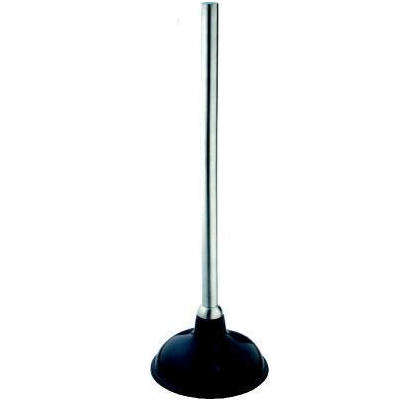
A toilet plunger is rarely invited into a bathroom for its looks. It usually arrives under less glamorous circumstances, performs emergency duty, and is then banished behind a cabinet door like a relative who told one embarrassing story too many. The Forma Toilet Plunger challenged that arrangement. With a brushed stainless-steel holder, a slim profile, and a discreet hideaway design, it treated a basic plumbing tool as part of the room rather than an object that needed witness protection.
Originally associated with the InterDesign Forma bathroom collection, the product appeared in black-and-brushed-steel and white-and-brushed-steel versions. Archived product pages now identify it as discontinued, so shoppers are more likely to encounter old stock, secondhand listings, or similarly styled replacements than a dependable supply of brand-new units. Even so, the design remains worth examining because it captures a useful idea: an effective toilet plunger should be accessible, sanitary, easy to store, and not visually ruin an otherwise polished bathroom.
What Is the Forma Toilet Plunger?
The Forma Toilet Plunger is a compact bathroom plunger paired with a cylindrical hideaway holder. Instead of leaving the rubber head exposed, the holder presents a clean stainless-steel exterior. The visible portion resembles a coordinated bath accessory, while the business end stays concealed until a clog decides to become the main character.
The Forma collection emphasized contemporary metal finishes and practical storage. Archived listings describe black-and-brushed-steel and white-and-brushed-steel versions, but the product is now discontinued. Buyers considering old stock or a secondhand unit should verify the included holder, color, condition, and plunger-head shape.
Core Design Elements
- Brushed stainless-steel hideaway holder
- Long handle that keeps hands away from bowl water
- Compact freestanding footprint for placement beside a toilet
- Neutral styling that coordinates with common metal fixtures
Why the Forma Design Still Matters
Bathroom tools must remain close enough for immediate use, yet few people want to stare at a rubber plunger while brushing their teeth. The Forma Toilet Plunger solved that conflict through concealment rather than removal.
Its covered caddy kept the tool beside the bowl, where household members and guests could find it before rising water became a floor-cleaning event. The brushed-metal cylinder also reduced visual clutter in small powder rooms and prevented the rubber head from resting directly on tile or vinyl. A holder does not guarantee sanitary storagemoisture still needs to drainbut it creates a controlled place for drips and gives the plunger a permanent, practical home.
How Well Does a Stylish Plunger Actually Work?
A handsome holder is useful, but performance depends on the rubber head, its flexibility, and its ability to form a seal over the toilet outlet. For toilets, a flange plunger is generally more effective than a flat cup plunger. The flange extends into the drain opening and helps contain pressure and suction inside the trapway; traditional cup plungers are better suited to flat sink, tub, and shower drains.
Before buying an older Forma unit, inspect photos carefully. Confirm that the head is intended for a toilet and can seat securely in your bowl. Modern low-flow and elongated toilets may have differently shaped outlets. A plunger that looks excellent but cannot seal is essentially a stainless-steel morale booster.
Know the Limits
Manual plungers work best on ordinary blockages caused by toilet paper and organic waste. They are not appropriate for toys, phones, wipes, hygiene products, or other solid objects that may be pushed deeper into the plumbing. If several fixtures back up together, sewage odors appear, or the toilet repeatedly clogs after clearing, call a professional because the obstruction may be in a branch line or main drain.
How to Use the Forma Toilet Plunger Correctly
Technique matters. The goal is to maintain a seal and move water through the trapway with controlled push-and-pull pressurenot to pump wildly while wearing the expression of someone defusing a bomb.
- Stop flushing. If water rises, close the tank flapper or turn the supply valve clockwise.
- Protect the area. Wear rubber gloves, place old towels around the toilet, and remove excess water if the bowl is close to overflowing.
- Keep enough water in the bowl. The rubber head should be submerged because water helps transfer force and maintain the seal.
- Insert the plunger at an angle. Let trapped air escape and the head fill with water to reduce splashing.
- Center and seal. Position the head over the outlet and press down gently until the rim or flange seals.
- Use controlled strokes. Push and pull firmly for 20 to 30 seconds without lifting the edge. The upward pull helps suction loosen the clog.
- Test cautiously. When the water drops normally, add a little water or perform one careful test flush.
- Escalate when needed. If several attempts fail, use a toilet auger or call a plumber.
Never plunge after adding a caustic chemical drain cleaner. Splashing can expose skin and eyes to corrosive liquid. A clog is unpleasant; a chemical burn is an aggressively unnecessary sequel.
Cleaning and Storing the Forma Toilet Plunger
A covered holder improves appearance, but sealing a wet plunger inside can trap moisture and odor. After use, rinse the rubber head in clean toilet water during a final flush, provided the bowl is draining normally. For deeper cleaning, follow the label directions on a suitable bathroom disinfectant. Never mix bleach with ammonia, acids, or other cleaners.
Let the head drain over the bowl and air-dry whenever possible. If the holder has limited ventilation, leave it slightly open temporarily and wipe out collected water. Use mild soap, water, and a soft cloth on brushed stainless steel, wiping with the grain and drying the surface to reduce spots.
Inspect older rubber for cracks, hardening, stickiness, deformation, or poor spring-back. A deteriorated head will struggle to seal regardless of how polished the holder looks.
Advantages and Drawbacks
Advantages
- Discreet appearance: The holder conceals the least photogenic part of the tool.
- Convenient placement: Its freestanding design keeps a plunger close to the toilet.
- Small footprint: The narrow vertical form works well in compact bathrooms.
- Coordinated finish: Brushed steel blends with faucets, towel bars, and cabinet hardware.
- Cleaner floor: The caddy catches residual drips and keeps the rubber head off the flooring.
Drawbacks
- Discontinued status: Availability, pricing, condition, and replacement parts are unpredictable.
- Potential ventilation limits: An enclosed holder requires careful drying and cleaning.
- Unknown rubber age: New-old-stock products may have lost flexibility during storage.
- Variable compatibility: The head may not seal effectively on every modern toilet outlet.
- Style can overshadow function: Buyers may admire the canister without verifying the head design.
How to Choose a Modern Alternative
Because the original Forma Toilet Plunger is discontinued, a comparable replacement may be more practical. Prioritize a flange, beehive, or toilet-specific head that seals curved outlets, including those in elongated and low-flow toilets. Then examine the holder: ventilation slots, an open back, drainage channels, or a removable drip tray will help the head dry.
The handle should feel rigid and comfortable under pressure, while smooth, removable components simplify cleaning. Stainless steel, matte black, white, and neutral finishes are easy to find, so matching the bathroom can remain part of the decision. Just rank seal quality, drying, and durability above color coordination. A beautiful plunger that cannot form a seal is merely an unusually confident bathroom ornament.
Realistic Ownership Experience: Living With a Forma-Style Plunger
The biggest day-to-day benefit of the Forma Toilet Plunger is not dramatic clog-clearing power. It is the absence of small annoyances. A basic exposed plunger tends to migrate. Someone hides it in a closet, another person moves it to the garage, and eventually a guest discovers the toilet is clogged while the only useful tool is three rooms away behind a vacuum cleaner. A Forma-style holder gives the plunger a permanent address.
In a compact guest bathroom, the brushed cylinder can sit beside the toilet without making the room look unfinished. From standing height, visitors see a narrow metal accessory rather than a wet rubber cup. That visual discretion is surprisingly important. Guests can identify the tool and handle a minor problem privately, which is kinder than forcing them to emerge from the bathroom and announce a plumbing situation to the entire dinner table.
The holder also changes cleanup behavior. When a plunger has no caddy, the temptation is to place it on a towel, in the tub, or directly on the floor while deciding what to do next. A dedicated holder provides an immediate landing place. The catch is that convenience can encourage people to put the plunger away too quickly. Returning it dripping wet creates the possibility of stale water, odor, and grime inside the canister. The best routine is to rinse it, let it drain over the bowl, wipe the handle, and allow extra drying time before fully enclosing it.
Using the tool during an ordinary paper clog should feel straightforward if the rubber remains flexible and fits the outlet. The first push should be gentle because the cup may contain air. Once the head fills with water and seals, controlled strokes feel more effective and produce less splash than frantic pumping. A successful clearing is often obvious: the water suddenly drops, the bowl makes a satisfying gulp, and everyone involved immediately develops the confidence of a licensed plumber.
An older Forma unit can deliver a different experience. Rubber ages even when a product looks unused. A head that has stiffened in storage may refuse to conform to the toilet opening. The user pushes harder, the seal breaks, and water moves mostly sideways. That is not necessarily a technique failure; it is often a material problem. For secondhand purchases, the condition of the rubber is more important than a spotless steel holder.
The stainless-steel exterior is generally easy to live with, but it rewards simple maintenance. Fingerprints, splash marks, and hard-water spots can dull the finish. A soft damp cloth followed by a dry wipe restores the clean look without turning bathroom care into a metallurgy course. Abrasive scrubbers are unnecessary and may leave permanent scratches.
Over time, the strongest impression is that thoughtful storage makes an unglamorous object easier to accept. The Forma Toilet Plunger does not transform plunging into a hobby, nor should any product attempt that level of lifestyle branding. It simply keeps the tool nearby, hides the rubber head, and helps a bathroom remain visually organized. For households that value a coordinated room, that modest improvement can be enough to make the design memorable long after the original product disappears from regular retail shelves.
Final Verdict
The Forma Toilet Plunger is a good example of design applied to an overlooked household necessity. Its brushed stainless-steel hideaway holder offers compact storage, visual discretion, and a cleaner alternative to leaving a rubber plunger on the floor. The concept remains smart, especially for guest bathrooms and small spaces where the tool must stay accessible.
However, the original model’s discontinued status changes the buying decision. Collectors and design-conscious shoppers may still enjoy a well-preserved unit, but practical buyers should compare it with modern toilet plungers that provide stronger outlet compatibility, better ventilation, removable drip trays, and readily available replacement parts. In other words, admire the Forma aestheticbut make sure the plunger can still do the one job that cannot be solved by good taste alone.
Note: Product availability and marketplace condition can change; verify the listing and toilet compatibility before purchase.