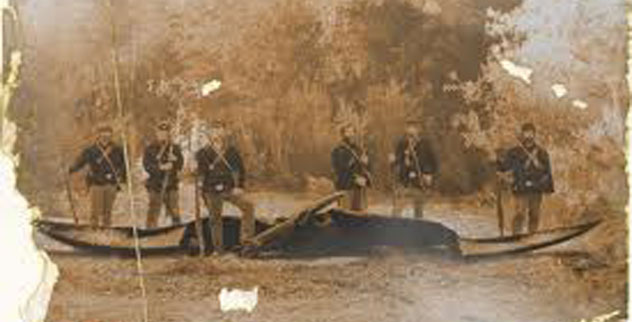
Cryptids occupy a wonderfully strange corner of popular culturaphs, urgent late-night phone calls, roadside museums, scientific investigations, and an impressive quantity of merchandise featuring glowing red eyes.
Bigfoot, the Loch Ness Monster, the Yeti, Mothman, and the chupacabra may be the headline acts, but cryptid folklore extends far beyond the usual celebrity monsters. Nearly every region has a story about something oversized, misplaced, unidentified, or inconveniently camera-shy. Some accounts began as traditional folklore. Others grew from newspaper reports, wildlife misidentifications, practical jokes, or sincere encounters with animals seen under terrible conditions.
The interesting question is not simply whether every cryptid exists. Most famous cryptids lack the physical evidence required for scientific recognition. The more revealing question is why these stories endureand what they teach us about wildlife, memory, local identity, and the human appetite for mystery.
What Is a Cryptid?
A cryptid is generally understood as an animal whose existence or continued survival is disputed or unverified. That definition matters because a cryptid is not automatically a ghost, demon, extraterrestrial, or supernatural spirit. Popular culture often tosses all unexplained beings into one oversized monster-shaped bucket, but traditional cryptozoology focuses primarily on creatures presented as physical animals. tozoology is the search for such animals, usually through eyewitness reports, photographs, tracks, hair, recordings, and local stories. However, it is not recognized as a conventional branch of zoology. Scientific zoology requires testable hypotheses, reproducible evidence, specimens or diagnostic material, and independent review. A footprint that disappears in the rain may be intriguing, but it cannot serve as a type specimenespecially if the foot that made it was purchased from a costume shop.
1. The Word “Cryptid” Is Surprisingly New
People have told stories about mysterious creatures for thousands of years, but the word cryptid is much younger. Merriam-Webster records its first known use in 1983. That means the term is younger than many arcade games, blockbuster movie franchises, and at least a few kitchen appliances still working in somebody’s basement. word became useful because it sounded more neutral than “monster.” A cryptid could be frightening, harmless, undiscovered, misidentified, or extinct-but-possibly-not. It did not need to breathe fire or guard a cursed treasure. It simply needed to be an alleged creature whose status remained unresolved.
This modern terminology can create the illusion that cryptids form one ancient, worldwide category. In reality, the stories grouped beneath the label come from very different cultures, eras, and belief systems. Bigfoot newspaper reports, Himalayan Yeti traditions, lake-monster sightings, and Indigenous creation narratives should not be treated as interchangeable episodes from the same television series.
2. Not Every Traditional Being Should Be Called a Cryptid
Online lists sometimes classify nearly every legendary being as a cryptid. That approach can flatten important cultural distinctions. Some traditional beings belong to sacred histories, moral teachings, ceremonial practices, or accounts of how landscapes and communities came into existence. Labeling them “mystery animals” may ignore their deeper meaning.
For example, the National Park Service presents the Nez Perce Heart of the Monster story as a creation account tied to the landscape and the origins of peoples in the region. It is not simply a report about a large zoological specimen waiting to be caught behind a tree. Similarly, the Library of Congress preserves folklore as cultural expression shaped by communities, storytellers, history, and beliefnot merely as a database of creatures to hunt. onsible cryptid enthusiasts therefore ask what a story means to the community that tells it. Curiosity is healthy. Treating living traditions as collectible monster trivia is considerably less charming.
3. The Modern Bigfoot Craze Was Boosted by a Small Newspaper Story
Stories of wild, humanlike beings existed long before the twentieth century, and the word Sasquatch has a history separate from the commercial Bigfoot phenomenon. However, the modern American Bigfoot craze received a major push in 1958 after a northern California newspaper published reports about enormous footprints found around a logging operation.
The story was initially presented with a playful tone, but readers became fascinated. The name “Big Foot” spread, more stories followed, and a regional mystery developed into a national legend. Decades later, relatives of logger Ray Wallace said he had created the famous tracks as a prank using carved wooden feet. That revelation did not end Bigfoot culture. By then, the creature had escaped the logging camp and moved permanently into movies, television, tourism, podcasts, and the national imagination. is a classic feature of folklore: disproving one piece of evidence rarely destroys the larger story. Believers may reject the confession, separate the hoaxed tracks from other reports, or argue that a prankster copied footprints made by a genuine animal. Bigfoot is remarkably skilled at surviving both winters and debunkings.
4. The FBI Looked at Alleged Bigfoot Hairbut Did Not Open a Monster Manhunt
The statement “The FBI investigated Bigfoot” sounds like the opening scene of a very expensive action movie. The reality was more modest. In the 1970s, Bigfoot researcher Peter Byrne contacted the FBI and requested help examining hairs attached to a small piece of skin. The bureau agreed to analyze the material as an exception to its normal forensic work.
The hairs were identified as belonging to the deer family. The correspondence was later released through the FBI Vault, creating one of the strangest official paper trails in American cryptid history. The FBI did not establish a forest command center, assign agents to follow oversized tracks, or issue a wanted poster describing a suspect as “very tall, extremely hairy, avoids interviews.” episode illustrates an important distinction: examining submitted material is not the same as confirming the claim attached to it. Laboratories test evidence, not dramatic backstories.
5. DNA Testing Has Connected Alleged Yeti Relics to Bears
The Yeti is commonly depicted in Western media as a white, ape-like snow creature. Himalayan traditions are more varied, and real animals may have contributed to at least some encounters. Bears standing upright, crossing snowfields, or leaving overlapping tracks can look surprisingly humanlike from a distance.
A genetic study led by researchers at the University at Buffalo examined nine samples attributed to Yetis, including hair, bone, skin, teeth, and fecal material. Eight came from Asian bears, including Himalayan and Tibetan brown bears and an Asian black bear. The remaining sample came from a dog. The research did more than test a legend: it also produced useful information about rare and poorly studied bear populations. is one of the best possible outcomes of investigating a cryptid claim. Even when the legendary creature is not confirmed, the investigation may improve knowledge about real wildlife that deserves attention and protection.
6. Some Chupacabra Sightings Have a Very Itchy Explanation
The chupacabra became widely known during the 1990s, first through reports from Puerto Rico and later through stories across the Americas. Early descriptions sometimes portrayed a strange upright creature with spines, while many later sightingsespecially in the southern United Statesdescribed a hairless, long-legged, doglike animal.
Wildlife specialists have repeatedly identified supposed chupacabras as coyotes, foxes, raccoons, or other mammals suffering from mange. Severe mange can cause extensive hair loss, thickened skin, weakness, and an unfamiliar silhouette. A sick coyote seen briefly at night can look less like a recognizable canid and more like nature accidentally designed a villain. Texas Parks and Wildlife materials specifically note that animals labeled as chupacabras frequently turn out to be familiar mammals affected by mange. explanation does not mean witnesses are lying. It demonstrates how disease can dramatically alter an animal’s appearance and how an unfamiliar label can spread faster than a veterinary diagnosis.
7. Scientists Have Searched Loch Ness Using Environmental DNA
Monster hunting no longer depends entirely on binoculars, sonar, and someone shouting, “What was that?” Environmental DNA, or eDNA, allows researchers to identify organisms through genetic material left behind in water, soil, or air. Animals constantly shed cells, mucus, scales, waste, hair, and other biological traces. Scientists can collect environmental samples and search them for recognizable DNA.
Researchers studying Loch Ness analyzed water collected from numerous locations and depths. They found no genetic evidence supporting a plesiosaur, shark, catfish, or sturgeon explanation. They did, however, find abundant eel DNA throughout the loch. The data could not determine the size of those eels, so an unusually large eel remained a possible explanation for some sightingsnot proof of a single gigantic monster, but certainly enough to keep the gift shops operational. rnment researchers in the United States use eDNA for serious conservation work, including detecting rare, endangered, invasive, and difficult-to-observe species. The same technology that adds scientific structure to a monster hunt can help locate threatened fish or amphibians without capturing them. Real “Sea Monsters” Show Why People Keep an Open Mind
Cryptid enthusiasts often mention the giant squid as proof that legendary monsters can become scientifically accepted animals. That comparison requires caution, but it is not completely unreasonable. Giant squid were known from damaged bodies, tentacles, and remains long before scientists recorded healthy individuals in their natural habitat. Even with physical specimens available, observing a living giant squid in the deep ocean was extraordinarily difficult.
NOAA-supported expeditions have helped record giant squid and other rarely observed deep-sea animals. The ocean’s depth, darkness, pressure, and enormous scale make direct observation challenging, and researchers continue to encounter unfamiliar species and behaviors. ver, the giant squid did not become accepted because enough sailors repeated exciting stories. Acceptance came from recoverable bodies, anatomical examination, photographs, DNA, and repeatable observations. The lesson is not that every monster story must be true. The lesson is that surprising animals can existand solid evidence is how they move from legend into zoology.
9. An Honest Eyewitness Can Still Be Mistaken
Cryptid debates are often framed as a choice between a truthful witness and a deliberate hoaxer. Human perception is more complicated. A person can sincerely report exactly what they remember while still misjudging distance, size, speed, color, or species.
Fog, darkness, stress, short viewing time, unfamiliar surroundings, obstructed vision, and prior expectations can all influence perception. Memory can also change as witnesses retell an event, encounter media coverage, compare stories, or learn what other people believe they saw. Research summarized by the National Academies shows that visual perception and memory have inherent limitations, even in high-stakes eyewitness situations. life encounters are especially vulnerable to scale errors. An animal standing beside an unknown object offers few reliable visual clues. A small creature nearby may appear larger than a large creature farther away. Add two seconds of moonlight, one startled observer, and a branch that resembles antlers, and the brain begins editing its own nature documentary.
10. Cryptids Can Become Powerful Symbols of Local Identity
A cryptid does not need scientific recognition to have a measurable cultural impact. Point Pleasant, West Virginia, has embraced Mothman, the winged figure associated with reports that began in November 1966. The town has a museum, a large metallic statue, themed attractions, and a festival that draws visitors interested in folklore and the unexplained.
The Smithsonian Center for Folklife and Cultural Heritage notes that the Mothman revival has encouraged local storytelling and pride of place. In this sense, Mothman is more than a debate about an unidentified bird, a mysterious figure, or an elaborate legend. It has become part of how the community presents itself to the world. Jersey has a similar relationship with the Jersey Devil, whose many origin stories are associated with the Pine Barrens. Even official state resources discuss the legend, demonstrating how fully a once-frightening creature can become part of regional culture. The monster may still screech in the wetlands, but it also helps sell T-shirts. Cryptid Stories Refuse to Disappear
Cryptids thrive because they live in the gap between what is known and what feels possible. Forests contain hidden valleys. Deep lakes distort distance. Oceans remain difficult to explore. Animals become sick, lost, unusually large, or active outside their expected range. Human beings are skilled storytellers and enthusiastic pattern findersparticularly when a mysterious noise occurs after midnight.
Technology may resolve individual cases, but it also creates new mysteries. Trail cameras capture animals at awkward angles. Compression turns birds into floating pixels. Artificially generated images make photographic evidence easier to fake. At the same time, DNA analysis, bioacoustics, camera traps, satellite imagery, and open scientific databases give investigators better tools than ever.
The best approach combines curiosity with discipline. Record the time and location. Photograph tracks with a scale. Preserve original files. Avoid contaminating hair or tissue samples. Compare the sighting with local wildlife. Consider ordinary explanations before announcing the discovery of a seven-foot swamp primate with excellent night vision.
Cryptid Experiences: A Weekend Between Folklore and the Forest
The following is a composite experience based on common cryptid tourism, museum visits, festivals, wildlife walks, and folklore events rather than a claim of one personal expedition.
A cryptid-themed weekend often begins in a place that looks completely ordinary. There may be a diner, a gas station, a riverfront, and a main street decorated with banners featuring a creature that local residents discuss with a mixture of affection, skepticism, and excellent comedic timing. The monster is rarely treated as a simple yes-or-no proposition. It is a story, a mascot, a family memory, a tourism campaign, and occasionally the reason somebody owns seventeen moth-shaped lamps.
The local museum is usually the best starting point. Displays may include newspaper clippings, witness statements, maps, alleged footprints, handmade models, and photographs that become less convincing the longer they are examined. Yet the value of the museum is not limited to proving a creature. Old reports reveal what residents worried about, how journalists described unusual events, and how a regional story changed as it traveled.
Listening to residents can be more memorable than studying the exhibits. One person may insist that an uncle encountered the creature beside a road. Another may say the entire legend began with an owl, a prank, or a reporter facing a slow news week. A third may shrug and explain that the annual festival pays for community projects, so the monster is welcome whether or not it has a valid scientific name.
After sunset, the experience changes. A guided walk through a forest, wetland, or former industrial site makes cryptid stories feel more plausiblenot because a monster appears, but because ordinary environments become unfamiliar in darkness. Deer make surprisingly heavy footsteps. Foxes produce cries that sound deeply inappropriate. Owls can seem enormous when they fly silently across a road. Raccoons reflecting a flashlight beam suddenly acquire the glowing eyes required by approximately half of American folklore.
The challenge is to observe without immediately labeling. A cracked branch is evidence that something broke a branch, not proof of a bipedal primate. Three distant calls may come from one animal moving through the trees rather than a coordinated pack of unknown predators. A dark shape crossing a trail might be mysterious for ten seconds and an opossum for the eleventh.
Keeping field notes makes the experience more rewarding. Write down the exact time, weather, distance, direction, and duration of anything unusual. Sketch the shape before discussing it with companions. Compare observations afterward. People are often surprised by how differently they remember the same brief event.
The weekend usually ends without a scientific breakthrough. No new species is named. No government agency arrives carrying specimen bags. Nevertheless, visitors leave with a better understanding of the landscape and the people who live there. They learn local history, notice real wildlife, and see how stories gather details as they pass from one speaker to another.
That may be the most valuable cryptid experience of all. Searching for a legendary creature encourages people to look carefully at places they might otherwise ignore. The monster draws attention, but the forest, lake, town, and storytelling community provide the real discovery.
Conclusion
Cryptids are not merely monsters waiting to be confirmed or debunked. They are cultural puzzles built from wildlife encounters, regional history, traditional narratives, media attention, human perception, and the occasional pair of carved wooden feet.
Scientific skepticism does not require mocking witnesses or abandoning wonder. It means asking what evidence would distinguish an unknown animal from a known one, a mistaken observation, or a manufactured story. At the same time, appreciating folklore does not require believing every report literally. A legend can be meaningful even when it does not describe a species that could be displayed in a natural history museum.
So keep looking into the woodscarefully, respectfully, and preferably with a flashlight. The shadow beside the trail is probably a stump. Then again, the stump has been moving for the last five minutes.