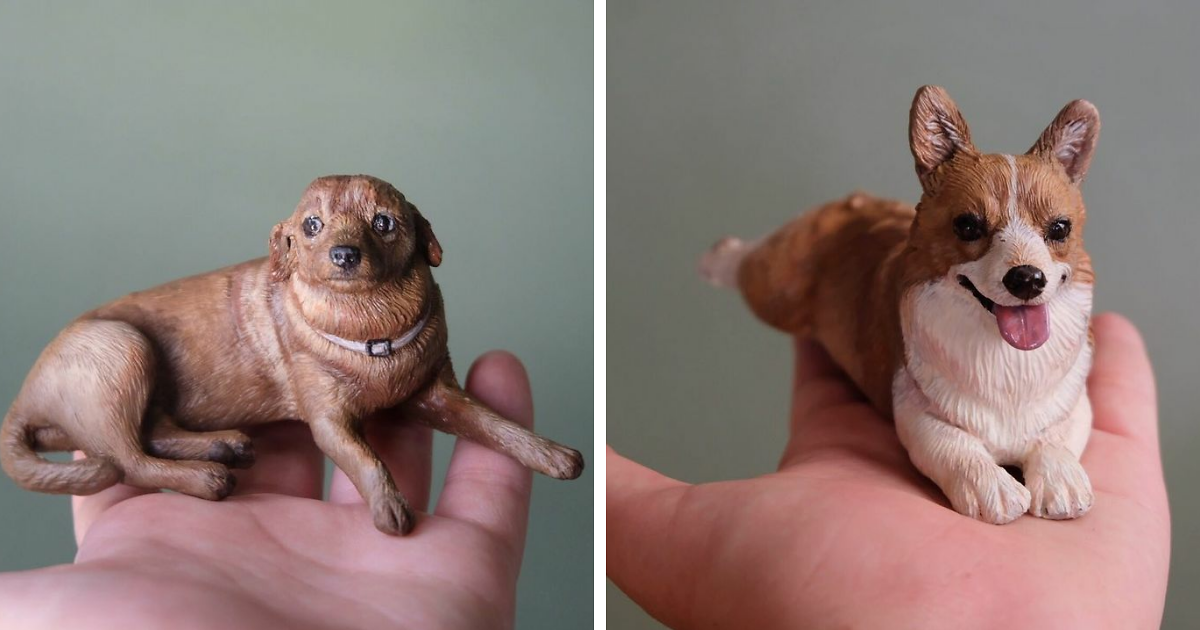
Some people fill their shelves with books. Others collect plants, sneakers, or coffee mugs featuring increasingly questionable jokes. I seem to have filled mine with tiny dogs and cats that never need feeding, never shed on the furniture, and never wake me at 4 a.m. by knocking something important onto the floor.
This collection of polymer clay dog and cat sculptures began as a simple experiment. I wanted to see whether a small lump of clay could capture the crooked ears, serious eyebrows, fluffy cheeks, and wonderfully strange personalities that make pets so memorable. Thirty sculptures later, my workspace looks like a miniature animal shelter run by someone with an alarming number of sculpting tools.
Each piece was shaped, textured, cured, painted, and photographed by hand. Some sculptures are realistic portraits, while others lean toward playful caricature. A few look calm and dignified. Several appear to be planning a snack-related crime. Together, they document my progress as an artist and my ongoing attempt to answer one important question: how much personality can fit inside a sculpture that is smaller than a coffee cup?
How Tiny Dogs and Cats Took Over My Worktable
My first polymer clay pet was not exactly a masterpiece. It had four legs, two ears, and the general emotional expression of a potato receiving disappointing news. Still, something about it felt alive. The head tilted slightly to one side, one ear stood higher than the other, and the oversized paws gave it an awkward charm that made me want to try again.
That second attempt led to a third. Soon, I was studying photographs of different breeds, observing real pets, and making notes about muzzle length, eye placement, ear shape, coat direction, and posture. I learned that recognizable animal sculpture is not created by adding more and more fur lines. It starts with proportion, silhouette, and gesture.
A dog with a raised head, forward ears, and balanced posture communicates something very different from one with a lowered body and tucked tail. A cat’s mood can change completely when its ears rotate sideways or its tail curls tightly around its paws. Animal behavior organizations similarly emphasize that ears, eyes, tails, facial expressions, and overall posture work together as a communication system. That principle became one of the most useful lessons in my sculpting process: pose creates personality before texture is added.
From Polymer Clay to Pet Personality
Beginning With Simple Shapes
Every sculpture begins with shapes that are almost embarrassingly basic. A head may start as an egg, a chest as a rounded triangle, and a muzzle as a small oval. Legs are tapered cylinders. Ears are flattened cones or folded sheets. At this stage, the animal looks less like a beloved pet and more like something assembled from dinner rolls.
That simplicity is useful. Working from large forms to small details keeps the proportions readable and prevents me from spending 20 minutes perfecting a nose attached to a head that is much too large. Sculptors commonly block out figures with basic three-dimensional forms before refining them, while foil or wire armatures can support larger figures and reduce the amount of clay required.
Conditioning and Building the Clay
Before sculpting, I condition the polymer clay by warming, pressing, folding, and rolling it until it becomes flexible and consistent. Proper conditioning makes the material easier to shape and helps reduce cracks, weak areas, and rough surfaces. For larger bodies, I sometimes create a tightly compressed aluminum-foil core, then cover it with a controlled layer of clay.
I build slowly, checking the sculpture from the front, side, back, and above. A figure can look perfect from one angle and mysteriously resemble a furry beanbag from another. Turning the piece constantly helps keep the body balanced and prevents the face from drifting sideways while I am distracted by whisker holes.
Polymer clay manufacturers and experienced clay educators consistently recommend conditioning the material, protecting the work surface, following the temperature instructions for the specific brand, and checking oven accuracy during curing.
Fur, Eyes, Noses, and Other Tiny Decisions
Fur texture is added in layers rather than scratched randomly across the body. Short-haired animals need subtle directional marks that follow the underlying anatomy. Long-haired cats and fluffy dogs require deeper grooves, overlapping locks, and softer transitions around the neck, cheeks, legs, and tail.
The eyes receive special attention because a fraction of an inch can change the entire expression. Eyes placed too high may make the sculpture look surprised. Eyes placed too close together can create accidental cartoon villain energy. Small highlights, slightly lifted eyelids, and tiny differences in direction help the face feel alert rather than frozen.
After curing, I may refine rough areas with fine wet-and-dry sandpaper, add controlled color with acrylic paint or pigments, and apply a compatible finish only where it improves the effect. A glossy nose or eye can look lively, while leaving the fur matte creates a more natural contrast. Well-conditioned clay and gradual sanding with finer grits are widely recommended for achieving smoother polymer clay surfaces.
A Tour of the Collection: 30 Polymer Clay Pets
1. The Curious Beagle
This little beagle began with the head tilt. The long ears followed naturally, and suddenly the sculpture looked as though it had heard the word “treat” from three rooms away.
2. The Serious Tuxedo Cat
With a white chest, neat paws, and an expression of formal disapproval, this cat appears ready to inspect my work and reduce my annual performance rating.
3. The Sleepy Golden Retriever
I softened the eyelids and lowered the head over the front paws to capture that heavy, peaceful moment immediately before a dog begins dreaming about running.
4. The Orange Cat With Opinions
This sculpture has round cheeks, alert eyes, and a slightly open mouth. It seems to be explaining why breakfast should have been served nine minutes earlier.
5. The Tiny French Bulldog
The broad chest, compact body, facial folds, and upright ears made this piece a lesson in exaggerating breed characteristics without turning the dog into a cartoon.
6. The Elegant Siamese
Long lines, large ears, almond-shaped eyes, and carefully blended color points give this cat a graceful appearance, although its stare remains wonderfully judgmental.
7. The Muddy-Looking Terrier
Uneven fur texture and energetic posture helped create a dog that looks as if it has just discovered a garden bed that absolutely needed rearranging.
8. The Round British Shorthair
This sculpture is built around soft circles: round head, round cheeks, rounded paws, and a body that suggests physical activity has been thoughtfully declined.
9. The Border Collie Waiting for Work
Forward ears, focused eyes, and a ready stance give this dog a sense of concentration. It appears prepared to organize every other sculpture on the shelf.
10. The Cat in a Cardboard Box
The box required nearly as much measuring as the cat. Naturally, the finished feline looks pleased with the box and completely uninterested in everything else.
11. The Fluffy Pomeranian
Layered clay and radiating texture create the illusion of a coat that is approximately 80 percent fluff and 20 percent extremely confident dog.
12. The Shy Gray Kitten
A lowered head, close paws, and sideways glance make this one of the quieter figures in the collection. Its expression changes subtly depending on the viewing angle.
13. The Dachshund With a Big Mission
Its long body and short legs create an instantly readable silhouette. The raised tail suggests that this dog is traveling somewhere important, probably toward a sandwich.
14. The Maine Coon Portrait
The ear tufts, square muzzle, heavy ruff, and layered tail made this one of the most detailed cats. It also required heroic patience and several breaks for coffee.
15. The Happy Mixed-Breed Dog
This sculpture was designed around expression rather than breed. The open mouth, relaxed ears, and slightly uneven markings give it the friendliness of a rescued companion.
16. The Black Cat in a Stretch
The extended front legs and raised back capture a familiar morning stretch. Highlights were kept minimal so the body shape remained visible without turning the coat gray.
17. The Corgi From Behind
Some artistic subjects choose themselves. This cheerful corgi became a study in short legs, a fluffy rear view, and the powerful visual comedy of excellent proportions.
18. The Calico Cat Washing a Paw
The raised paw created a delicate balance problem, while the patches required careful color planning. The final pose feels private, casual, and unmistakably feline.
19. The Wrinkled Pug
Rather than carving every wrinkle deeply, I used shallow folds and painted shadows. This preserved the soft face while keeping the expression readable.
20. The White Cat With Blue Eyes
White clay reveals every speck of dust known to humanity. After repeated cleaning and smoothing, the finished sculpture finally achieved the calm, luminous effect I wanted.
21. The German Shepherd on Alert
The strong chest, sloped back, tall ears, and focused head position create a watchful pose. Small changes to the eyebrows made the dog look attentive rather than aggressive.
22. The Cat Loaf
No visible legs were required, only a compact oval body, tucked paws, and the mysterious confidence of a cat that has transformed itself into baked goods.
23. The Shaggy Sheepdog
Long fur can easily hide the anatomy, so the body was fully shaped before texture was added. The result feels fluffy without collapsing into a decorative mop.
24. The Kitten Chasing Its Tail
This circular composition has more movement than most pieces in the collection. Curved paws, twisted shoulders, and a lifted tail guide the eye around the sculpture.
25. The Chihuahua in a Sweater
The sweater gave me an excuse to add miniature knit texture. The dog’s enormous ears and cautious expression suggest it appreciates the warmth but distrusts the fashion industry.
26. The Relaxed Labrador
A broad muzzle, loose posture, and gently curved tail make this figure feel dependable and comfortable, like a dog that has never encountered a stranger.
27. The Persian Cat
The short muzzle and enormous coat required restraint. Too much facial flattening looked unnatural, while too much fur texture made the expression disappear completely.
28. The Puppy With an Oversized Ball
The toy creates a sense of scale and tells a story instantly. The puppy looks proud, even though the ball is clearly too large for any practical plan.
29. The Senior Cat Portrait
Softer posture, subtle facial asymmetry, and muted coat colors give this sculpture a gentler presence. It became one of the most emotional pieces in the group.
30. The Dog-and-Cat Friendship Scene
The final sculpture brings both animals together. Their bodies lean toward each other without becoming perfectly symmetrical, creating a quiet ending for the collection.
The Real Experience Behind Making This Collection
Creating 30 polymer clay dog and cat sculptures changed the way I look at animals. Before beginning the collection, I noticed obvious features: a fluffy tail, a spotted coat, unusually large ears. After spending hours translating pets into miniature three-dimensional forms, I began noticing weight distribution, muscle direction, eyelid shape, and the tiny adjustments animals make before moving.
I also learned that observation is not the same as copying. A photograph freezes one fraction of a second, but a sculpture must communicate the whole animal. When I work from a reference image, I ask what happened immediately before the photograph and what might happen next. Is the dog preparing to jump? Is the cat relaxed, annoyed, curious, or pretending not to care? That imagined motion helps me choose the curve of the spine, the direction of the paws, and the angle of the head.
The collection taught me patience in an unusually direct way. Polymer clay records almost everything: fingerprints, lint, tool marks, accidental dents, and the moment when I pick up the sculpture by the one part that was finally perfect. There is no dramatic shortcut. I clean the surface, repair the shape, and try again. Some pieces have been rebuilt so many times that the original version exists only as a blurry photograph and a valuable personal warning.
Curing was another important part of the learning process. I began using an oven thermometer, covering light-colored pieces to reduce direct heat exposure, and following the instructions for the particular clay line rather than relying on one universal time. Reliable polymer clay guidance stresses that insufficient curing can leave work weak, while excessive or uncontrolled heat can cause discoloration or burning. Art-safety organizations also recommend reading product labels, using materials as directed, and choosing properly evaluated supplies.
Photography created a completely different challenge. A sculpture that looks expressive in my hand can appear flat when photographed under a ceiling light. I started using a simple background, diffused side lighting, a small reflector, and close-up shots that show texture without making every grain of dust look like a boulder. I also include an occasional hand-held or tabletop photograph so viewers can understand the scale.
Product-photography guides recommend planning several views, using close-ups for small details, maintaining consistent backgrounds, diffusing light, and including at least one image that communicates scale. Those ideas helped me make the 30 photographs feel like a connected collection rather than evidence from 30 unrelated crime scenes.
The most rewarding experiences, however, came from people recognizing their own pets in the sculptures. One person might see the cautious expression of an older rescue dog. Another notices the exact way a cat folds its paws underneath its chest. Even when a sculpture is not a commissioned portrait, familiar gestures can create an emotional connection.
That connection is why I continue making these small animals. Polymer clay is versatile enough to imitate soft fur, smooth noses, glossy eyes, knitted sweaters, wooden boxes, and dozens of coat patterns. Artists value the material partly because it can produce a wide range of surfaces and effects while remaining accessible for detailed small-scale work.
Every sculpture still includes a surprise. Sometimes a dog’s personality appears as soon as I attach the ears. Sometimes a cat remains stubbornly lifeless until one eyelid is adjusted. Occasionally, a piece refuses to cooperate at all and must spend a quiet evening facing the wall while both of us reconsider our choices.
Looking across the finished collection, I do not see 30 perfect sculptures. I see 30 lessons in anatomy, color, balance, patience, photography, and storytelling. The early pieces are simpler, the later ones more controlled, but each marks a stage in the same creative journey. Together, they remind me that progress rarely arrives as one spectacular breakthrough. More often, it appears as a slightly better paw, a more convincing ear, or a tiny clay cat that finally looks as though it might knock itself off the shelf.
Why I Will Keep Making Tiny Pets
Dog and cat sculptures may be small, but they can hold surprisingly large stories. A tilted head can suggest curiosity. A tucked paw can communicate comfort. A faded collar, bent ear, unusual marking, or familiar sleeping pose can preserve the details that make one animal different from every other animal in the world.
This collection began as an exercise in polymer clay sculpting and became a celebration of companionship. It also proved that an ordinary worktable, a few sculpting tools, and several blocks of clay can gradually become an entire miniature world.
I still have more breeds, poses, coat patterns, and expressions to explore. There will almost certainly be more fingerprints to remove, more ears to reattach, and more tiny animals staring at me while I work. That seems like a fair arrangement. They remain quiet, I keep sculpting, and none of us has to clean a litter box.
Note: Match the numbered titles and captions to the final order of the 30 photographs before publication, and replace any description that does not reflect the corresponding sculpture.