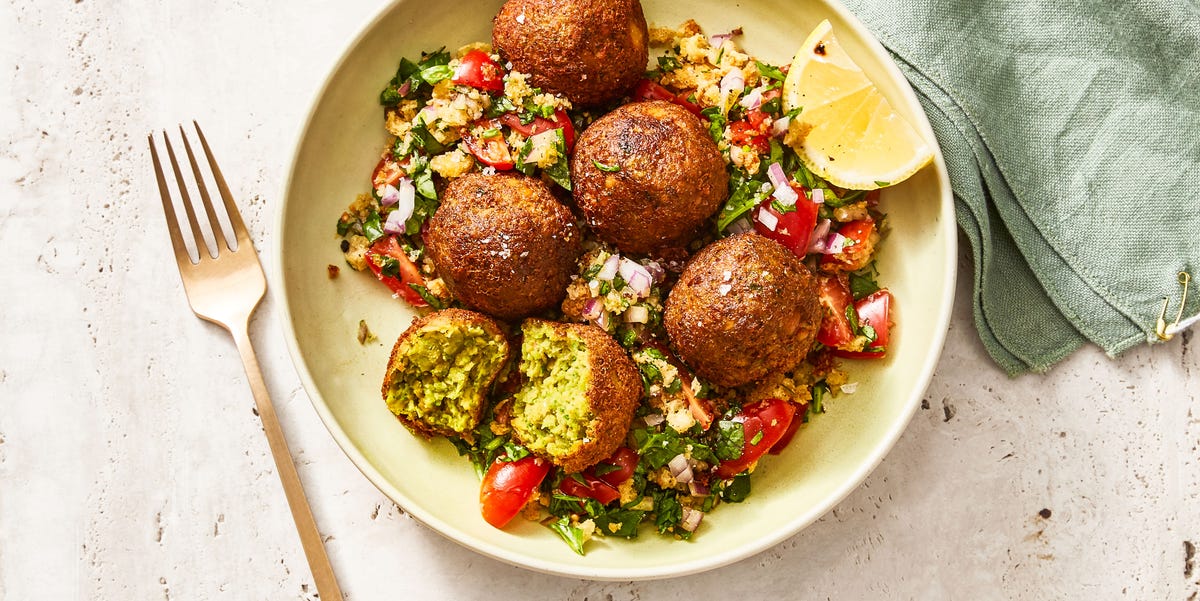
This falafel chopped salad delivers evicy tomatoes; crunchy romaine; bright herbs; and a creamy lemon-tahini dressing that somehow tastes indulgent and refreshing at the same time. It is colorful, filling, naturally plant-based, and far more exciting than the sad desk salads that appear to have been assembled during a power outage.
The key is treating each component with care. The falafel should be deeply browned outside but tender and herb-filled inside. The vegetables should be chopped into small, fork-friendly pieces. Finally, the dressing needs enough lemon and water to keep the tahini creamy rather than turning it into sesame-flavored wall plaster.
Why This Is the Best Falafel Chopped Salad
A great falafel salad is not simply a pile of lettuce with three falafel balls dropped on top. It is a carefully balanced meal built around contrasting temperatures, textures, and flavors.
This version combines warm, savory falafel with chilled vegetables, briny pickles, fresh mint, parsley, and a garlicky tahini dressing. Every bite contains something crisp, creamy, acidic, and aromatic. Chopping the vegetables into similarly sized pieces also makes the salad easier to toss and eat. No one has to wrestle a lettuce leaf the size of a bath towel.
What Makes the Falafel Work
Classic falafel gets its distinctive texture from dried chickpeas that have been soaked until hydrated but not cooked. Canned chickpeas contain significantly more moisture and tend to produce softer patties that require extra binders. They can be useful for shortcuts, but soaked dried chickpeas create a lighter, more pleasantly coarse interior.
The chickpeas are pulsed with onion, garlic, fresh herbs, cumin, and coriander until the mixture resembles coarse crumbs. It should hold together when squeezed without becoming a smooth paste. Fresh parsley and cilantro provide both flavor and the attractive green interior associated with herb-forward falafel.
Falafel Chopped Salad Recipe at a Glance
- Prep time: 35 minutes, plus overnight soaking
- Cook time: 15 minutes
- Total active time: About 50 minutes
- Yield: 4 generous main-course servings
- Diet: Vegan and dairy-free; naturally gluten-free without pita chips
Ingredients You Will Need
For the Homemade Falafel
- 1 1/4 cups dried chickpeas, sorted and rinsed
- 1/2 teaspoon baking soda, for soaking
- 1 packed cup fresh parsley leaves and tender stems
- 1/2 packed cup fresh cilantro leaves and tender stems
- 1/2 cup roughly chopped yellow onion
- 3 garlic cloves, peeled
- 1 small jalapeño, seeded if desired
- 1 teaspoon ground cumin
- 1 teaspoon ground coriander
- 1 teaspoon kosher salt
- 1/2 teaspoon freshly ground black pepper
- 1/2 teaspoon baking powder
- 1 tablespoon sesame seeds
- 1 to 2 tablespoons chickpea flour, only if needed
- Neutral cooking oil, for frying or brushing
For the Chopped Salad
- 2 romaine hearts, finely chopped
- 1 large English cucumber, diced
- 2 cups cherry tomatoes, quartered
- 4 radishes, thinly sliced or diced
- 1/3 cup finely diced red onion
- 1/2 cup chopped flat-leaf parsley
- 1/4 cup chopped fresh mint
- 1/2 cup diced pickled turnips or dill pickles
- 1/2 cup crumbled pita chips, optional
- 1/3 cup crumbled feta, optional for a non-vegan version
For the Lemon-Tahini Dressing
- 1/3 cup well-stirred tahini
- 1/4 cup fresh lemon juice
- 1 small garlic clove, finely grated
- 1 tablespoon extra-virgin olive oil
- 1 teaspoon maple syrup or honey
- 1/2 teaspoon kosher salt
- 1/4 teaspoon ground cumin
- 4 to 7 tablespoons ice-cold water
How to Make Falafel Chopped Salad
Step 1: Soak the Chickpeas
Place the dried chickpeas in a large bowl and cover them with at least three inches of cool water. Stir in the baking soda. The chickpeas will expand considerably, so use a bowl large enough to avoid waking up to a countertop bean migration.
Soak for 18 to 24 hours. Drain, rinse thoroughly, and spread the chickpeas over a clean kitchen towel. Pat them as dry as possible. Excess surface moisture can make the mixture loose and may cause splattering during frying.
Step 2: Make the Falafel Mixture
Add the parsley, cilantro, onion, garlic, and jalapeño to a food processor. Pulse several times until finely chopped. Add the drained chickpeas, cumin, coriander, salt, and pepper.
Pulse in short bursts, scraping down the bowl as necessary. Stop when the mixture resembles coarse couscous and holds together when pressed in your palm. Do not run the machine continuously or turn the mixture into hummus. Falafel and hummus may be close relatives, but they have very different career goals.
Transfer the mixture to a bowl, cover, and refrigerate for 30 to 60 minutes. This rest allows the moisture to distribute evenly and makes shaping easier.
Step 3: Prepare the Tahini Dressing
Whisk together the tahini, lemon juice, garlic, olive oil, maple syrup, salt, and cumin. The sauce will probably tighten and look grainy at first. This is normal.
Add the ice-cold water one tablespoon at a time, whisking continuously. After several tablespoons, the dressing will become pale, creamy, and smooth. Continue adding water until it is thin enough to drizzle but thick enough to coat the vegetables. Taste and adjust with more lemon or salt.
Tahini commonly thickens when lemon juice or a small amount of water is first added, then loosens as additional water is incorporated. Patience and steady whisking are more useful than panic. : Chop the Vegetables
Rinse the romaine, cucumber, tomatoes, radishes, parsley, and mint under running water, then dry them thoroughly. The FDA recommends washing produce under plain running water rather than using soap or household detergents. vegetables into small, relatively uniform pieces. Add the romaine, cucumber, tomatoes, radishes, red onion, parsley, mint, and pickles to a large serving bowl. Keep the pita chips separate until serving so they remain crisp.
Step 5: Shape the Falafel
Remove the chilled falafel mixture from the refrigerator. Stir in the baking powder and sesame seeds immediately before shaping.
Scoop approximately two tablespoons of mixture at a time and gently compress it into balls or thick patties. Patties are easier to pan-fry and provide more browned surface area. Avoid packing them too tightly, which can make the centers dense.
Test one falafel before shaping the entire batch. If it falls apart immediately, mix one tablespoon of chickpea flour into the remaining mixture. Add a second tablespoon only when necessary. Too much flour can produce falafel with the personality of a hockey puck.
Three Ways to Cook the Falafel
Option 1: Frying for the Crispiest Falafel
Pour approximately two inches of neutral oil into a heavy saucepan or Dutch oven. Heat it to 350°F. Carefully add five or six falafel, leaving enough space for the oil temperature to remain steady.
Fry for 3 to 4 minutes, turning when necessary, until deeply golden brown. Transfer to a wire rack or paper-towel-lined plate and season lightly with salt while hot. Repeat with the remaining falafel.
Maintaining a steady oil temperature is essential. Oil that is too cool can make the falafel greasy, while excessively hot oil may brown the exterior before the center is ready. Frying in small batches also reduces crowding and temperature loss. 2: Baking for Easier Cleanup
Heat the oven to 425°F. Coat a rimmed baking sheet generously with oil or line it with parchment and brush the falafel patties on both sides.
Bake for 20 to 25 minutes, flipping after approximately 12 minutes, until browned and firm. Baked falafel will not develop quite the same all-over crust as fried falafel, but the patties still become flavorful and pleasantly crisp when their surfaces are well oiled. 3: Air-Frying for a Crisp Middle Ground
Preheat the air fryer to 375°F. Lightly brush or spray the falafel with oil and arrange them in a single layer. Air-fry for 12 to 15 minutes, turning halfway through, until brown and crisp. Cooking time may vary according to the size of the patties and the power of the appliance.
How to Assemble the Salad
Give the chopped vegetables a quick toss. Add about half of the lemon-tahini dressing and toss again until everything is lightly coated.
Divide the salad among four bowls. Arrange three or four warm falafel over each portion. Drizzle with additional tahini dressing and finish with pita chips, feta, sesame seeds, extra herbs, or a squeeze of lemon.
Serve immediately while the falafel are still warm and crisp. The combination of tomato, cucumber, herbs, lemon, olive oil, and tahini reflects the fresh accompaniments commonly paired with falafel in salads, bowls, and pita sandwiches.
Expert Tips for Better Falafel Salad
Dry the Chickpeas Thoroughly
Water is the enemy of both shaping and crisping. After draining the soaked chickpeas, pat them dry before processing. The herbs should also be washed and dried rather than added while dripping wet.
Use Pulses, Not One Long Blend
Short pulses give you control over texture. A properly processed mixture contains tiny visible pieces of chickpea and herbs. A smooth purée creates heavier falafel and can become sticky.
Season the Vegetables Separately When Necessary
If your tomatoes are especially juicy, lightly salt them and let them drain for 10 minutes before adding them to the salad. This concentrates their flavor and prevents the bottom of the bowl from becoming tomato soup.
Do Not Dress the Salad Too Early
Tahini dressing is thicker than a vinaigrette and can weigh down romaine if the salad sits for too long. Dress it shortly before serving and reserve some sauce for drizzling over the falafel.
Always Cook a Test Falafel
A single test piece reveals whether the mixture needs more salt, chickpea flour, or chilling time. Fixing one falafel is easy. Watching 16 falafel disintegrate into hot oil is a cooking lesson delivered with unnecessary drama.
Ingredient Substitutions and Variations
Herbs: Replace some cilantro with additional parsley when cilantro is not your favorite. Mint can also be added to the falafel mixture for a cooler herbal flavor.
Heat: Use jalapeño, serrano pepper, cayenne, or Aleppo-style pepper. Leave the chile out entirely for a mild salad.
Greens: Romaine offers reliable crunch, but shredded cabbage, kale, arugula, or mixed greens also work. Massage kale with a spoonful of dressing before adding the remaining ingredients.
Extra vegetables: Add diced bell pepper, shredded carrot, roasted eggplant, avocado, or thinly sliced cabbage.
Briny additions: Pickled turnips are especially good, though dill pickles, pepperoncini, olives, or pickled red onions provide a similar acidic pop.
Grain-bowl version: Spoon the salad over quinoa, bulgur, farro, or brown rice. Add hummus and warm pita to turn it into a full Mediterranean-style bowl.
Deconstructed shortcut: When there is no time to soak chickpeas, season canned chickpeas with cumin, coriander, garlic, and olive oil, then roast them until crisp. They will not duplicate falafel, but they capture a similar flavor profile with less preparation.
Make-Ahead and Storage Instructions
For meal prep, store the falafel, vegetables, dressing, and pita chips in separate containers. Keeping the components apart preserves their textures and prevents the lettuce from becoming soggy.
The uncooked falafel mixture can be prepared earlier in the day and refrigerated before baking powder is added. Cooked falafel can be refrigerated in a sealed container for 3 to 4 days. Reheat them in a 375°F oven or air fryer until hot and crisp. USDA guidance recommends reheating leftovers to 165°F. ped vegetables are best within two days, particularly after the tomatoes have been cut. Store the dressing separately for up to five days and whisk in a splash of cold water if it thickens in the refrigerator.
Cooked falafel may also be frozen. Let them cool completely, freeze them in a single layer, and then transfer them to a freezer-safe container. Reheat from frozen in the oven or air fryer rather than thawing them on the counter.
What to Serve With Falafel Chopped Salad
This salad is substantial enough to serve as dinner, but a few additions can transform it into a generous spread:
- Warm pita bread or pita chips
- Classic hummus or roasted red pepper hummus
- Baba ganoush or roasted eggplant dip
- Marinated olives and pickled vegetables
- Lentil soup
- Tabbouleh with parsley, mint, tomato, and bulgur
- Grilled chicken, shrimp, or lamb for guests who want meat
My Experience Making Falafel Chopped Salad
My first attempt at homemade falafel was a reminder that confidence and competence are not always invited to the same dinner. I soaked the chickpeas correctly, added a heroic amount of parsley, and assumed the food processor would handle the rest. Then I let the machine run until the mixture was smooth enough to qualify as green hummus.
The resulting falafel looked promising before cooking. Once they entered the oil, however, several broke apart and became a chickpea constellation. They tasted fine, but serving them required a slotted spoon and an optimistic description such as “deconstructed falafel crunch.”
That experience taught me that texture matters more than perfect shaping. The mixture should appear crumbly but become cohesive when squeezed. Using the pulse button instead of letting the processor run continuously made the largest improvement. Chilling the mixture also helped, as did cooking one small test patty before committing the entire batch.
The second lesson involved salad proportions. During an early trial, I used too much romaine and too few tomatoes, cucumbers, and herbs. Technically, it was falafel salad. Emotionally, it was lettuce wearing a tahini hat.
A proper chopped salad needs an almost democratic distribution of ingredients. Each forkful should contain crisp lettuce, juicy tomato, cucumber, onion, herbs, and something briny. Cutting everything into pieces of roughly the same size makes an enormous difference. Large tomato wedges and long cucumber slices may look attractive on a platter, but they are awkward in a tossed salad.
I also learned to treat the dressing as both a salad component and a falafel sauce. Tossing the vegetables with a moderate amount seasons every bite, while a final drizzle over the warm patties creates those creamy, lemony pockets that make the dish satisfying. Pouring all the dressing into the bowl at once can overwhelm the vegetables and soften the falafel too quickly.
Another successful experiment was adding pickled turnips. Their sharp, salty flavor cuts through tahini and fried falafel beautifully. Dill pickles work when pickled turnips are unavailable, while pickled red onions add color and a gentler acidity. Pita chips should always be added at the final moment. Add them early, and they turn into damp pieces of bread contemplating their former glory.
For weeknight dinners, I usually bake or air-fry the falafel. Frying produces the most dramatic crunch, but it also requires monitoring oil temperature and cleaning the stovetop afterward. Baking is easier and works particularly well when the falafel are shaped into flatter patties and brushed generously with oil. The air fryer offers a useful compromise: crisp surfaces, limited oil, and no saucepan full of used cooking fat.
For guests, I prepare the vegetables, tahini dressing, and falafel mixture in advance. Shortly before eating, I cook the falafel and let everyone assemble individual bowls. This keeps the hot ingredients hot, the cold ingredients cold, and the person who dislikes onions from conducting a forensic investigation of the communal salad.
The biggest surprise has been how well the dish satisfies different appetites. It feels bright and vegetable-forward, yet the chickpeas and tahini make it substantial. People can add pita, hummus, feta, grains, hot sauce, or extra pickles without changing the basic recipe. That flexibility makes falafel chopped salad useful for family dinners, meal prep, casual parties, and lunches that need to remain exciting for more than eight minutes.
Final Thoughts
The best falafel chopped salad succeeds because it refuses to choose between comfort food and fresh food. It delivers golden, spice-scented falafel alongside crisp vegetables, fragrant herbs, tangy pickles, and creamy lemon-tahini dressing.
Start with dried chickpeas, keep the falafel mixture coarse, dry the vegetables thoroughly, and cook one test patty before preparing the full batch. Once those details are handled, the recipe is forgiving, customizable, and difficult to stop eating. Keep a warm pita nearby for dressing cleanup; spoons work too, but pita has better public relations.