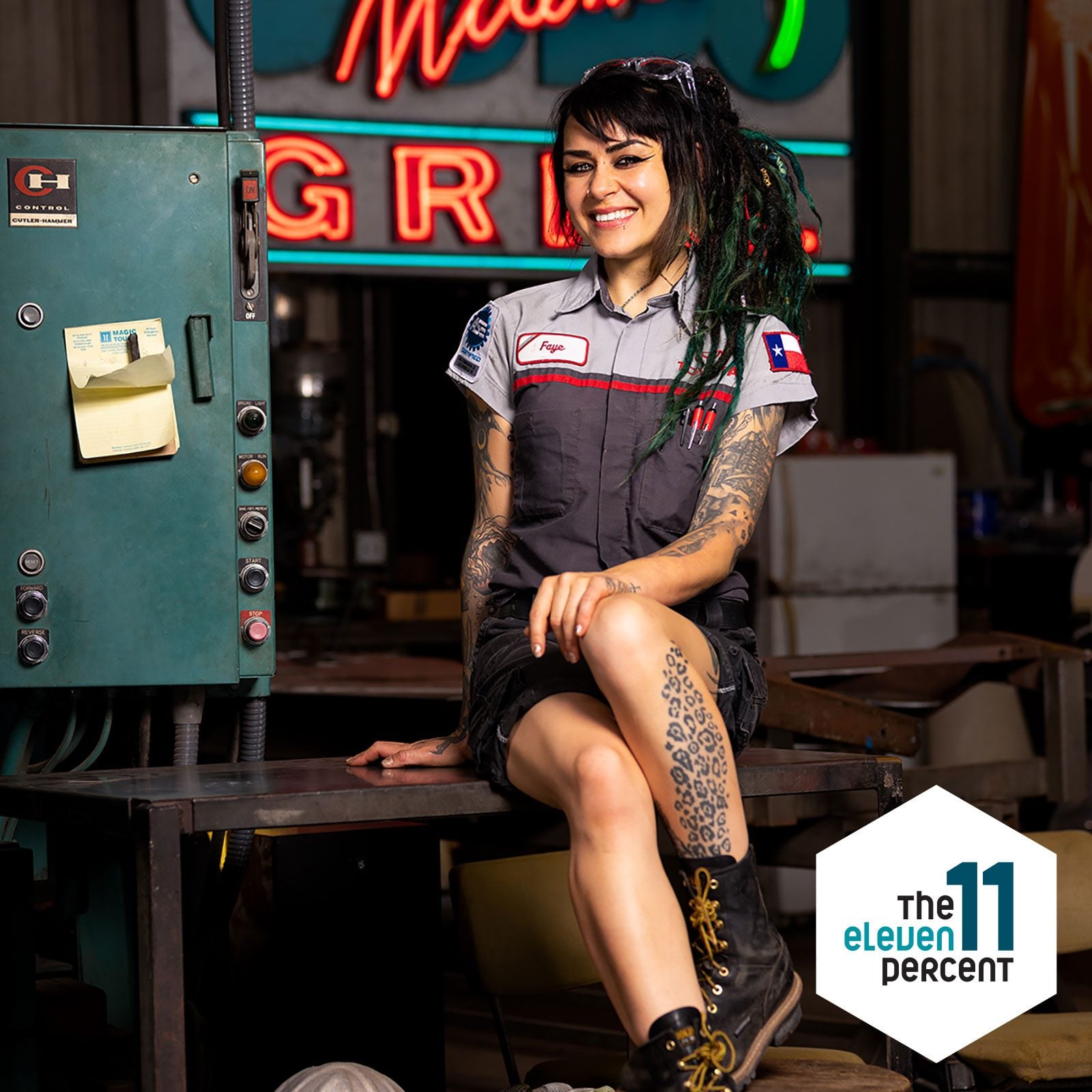
In a world where car trouble can turn even the calmest adult into a hood-staring philosopher, Faye Hadley has built a career around making the garage feel less mysterious, less intimidating, and a whole lot more empowering. She is not just an ASE Certified Master Technician. She is a Toyota Master Diagnostic Technician, Supra specialist, educator, shdern automotive repair.
The title “The Eleven Percent” captures something bigger than a biography. It points to the small but mighty group of women working in automotive service, repair, diagnostics, fabrication, and performance. For decades, the repair bay has been framed as a male-dominated space. Faye Hadley did not simply walk into that space; she brought tools, training, personality, and a mission. She proved that the person holding the scan tool does not need to match anyone’s old stereotype of a mechanic.
Her story is especially compelling because it does not follow the usual “grew up in a shop and never left” path. Hadley studied psychology at Harvard, worked in mental health, and then made a sharp turn into automotive work because she wanted a hands-on career where problems could be diagnosed, repaired, tested, and understood. In other words, she traded therapy notes for torque specs. Honestly, both require patience, listening skills, and the ability to identify strange noises.
Who Is Faye Hadley?
Faye Hadley is best known to many viewers as a co-host of All Girls Garage and as a featured mechanic on Motor MythBusters. To automotive fans, she is also the founder of Pistons & PixieDust, a boutique automotive repair business focused on dealership-quality maintenance, Toyota, Lexus, Scion vehicles, and custom Supra work.
Her credentials are not decorative stickers on a toolbox. Hadley is recognized as an ASE Master Certified Automotive Technician and Toyota Master Diagnostic Technician. Those titles matter because modern automotive repair is not guesswork. Today’s vehicles are rolling networks of computers, sensors, modules, electrical systems, emissions components, safety technologies, and mechanical assemblies. Fixing them well requires more than enthusiasm. It requires discipline, continuous education, and a willingness to admit that the car is usually smarter than your first theory.
From Psychology to Pistons
One of the most fascinating parts of Faye Hadley’s career is her transition from psychology to automotive technology. At first glance, the two fields may seem unrelated. But look closer and they share an important foundation: diagnosis.
A therapist listens carefully, recognizes patterns, asks better questions, and looks for the root cause beneath visible symptoms. A great automotive technician does something surprisingly similar. The car says, “I have a check engine light.” The technician asks, “When did it start? Is it intermittent? What data supports the complaint? What changed recently?” The patient may be a Toyota Supra instead of a person, but the problem-solving mindset is familiar.
Hadley’s background helped shape her teaching style. She does not talk down to beginners. She explains. She breaks complicated repair topics into approachable steps. That is why her DIY automotive videos and hands-on workshops have resonated with drivers who want to understand their vehicles rather than feel helpless every time the dashboard lights up like a tiny Las Vegas strip.
What Does ASE Certified Master Technician Mean?
The phrase “ASE Certified Master Technician” sounds impressive because it is. ASE stands for the National Institute for Automotive Service Excellence, an organization that tests and certifies automotive professionals across many areas of repair. For automobile Master status, technicians typically need to pass a series of core exams covering major systems such as engine repair, automatic transmission, manual drivetrain, suspension and steering, brakes, electrical systems, heating and air conditioning, and engine performance.
That broad knowledge base matters because cars rarely fail in neat little boxes. A drivability issue may involve fuel trim data, ignition timing, vacuum leaks, sensor behavior, wiring faults, or a mechanical problem hiding behind electronic symptoms. A brake complaint may involve hydraulics, friction materials, ABS diagnostics, suspension wear, or a customer description that begins with, “It makes a noise, but only on Tuesdays.”
Being ASE certified does not mean a technician knows everything forever. Automotive technology evolves constantly. Hybrids, electric vehicles, advanced driver assistance systems, turbocharged engines, direct injection, adaptive cruise control, and network communication all demand ongoing learning. Hadley’s career stands out because it shows certification as a foundation, not a finish line.
Why “The Eleven Percent” Matters
The phrase “The Eleven Percent” reflects the reality that women remain underrepresented in the automotive technician workforce. Depending on how job categories are counted, women represent only a small portion of technicians and mechanics in the United States. That matters because the automotive industry needs skilled workers, fresh perspectives, and more pathways for people who may not see themselves represented in the shop.
Representation is not just about inspiration posters or feel-good hashtags. It affects who applies to technical schools, who feels welcome in a shop, who stays in the trade, and who becomes a mentor. When young women see someone like Faye Hadley diagnosing vehicles, building Supras, teaching workshops, and hosting automotive television, the message changes from “Is this for me?” to “Where do I start?”
That shift is powerful. A skilled trade can offer independence, creativity, problem-solving, entrepreneurship, and a career that does not require sitting behind a desk for eight hours pretending not to check the clock. For many people, automotive work is satisfying because the results are tangible. A broken vehicle comes in. A working vehicle leaves. There is beauty in that.
Faye Hadley and the Power of Automotive Education
Hadley’s popularity is not built only on credentials. It is built on communication. Through Pistons & PixieDust, YouTube tutorials, workshops, and television appearances, she has made automotive knowledge feel accessible. That is a big deal because many drivers are nervous around repair shops. They worry about being overcharged, misunderstood, dismissed, or buried under jargon.
Faye’s content often focuses on empowerment. She encourages vehicle owners to learn basic maintenance, ask better questions, recognize warning signs, and understand what technicians are actually doing. That does not mean everyone needs to rebuild an engine in the driveway. Your neighbors may have opinions. But knowing how to check fluids, understand service intervals, read tire wear, and communicate symptoms clearly can save money and reduce stress.
Teaching Without Intimidation
A great automotive educator does not make beginners feel foolish. Hadley’s style is approachable because she remembers what it felt like to start. She has spoken openly about learning the trade from the ground up, making mistakes, asking questions, and building confidence through experience. That honesty matters. It reminds new technicians that mastery is not magic. It is repetition, curiosity, humility, and occasionally dropping a 10mm socket into another dimension.
Her hands-on workshops for women are especially important because they create learning environments where participants can ask questions freely. In many traditional shop settings, beginners may feel pressure to pretend they already know more than they do. A supportive workshop changes that dynamic. It turns uncertainty into practice.
All Girls Garage and Visibility in the Trade
All Girls Garage helped expand Faye Hadley’s audience by putting knowledgeable women technicians at the center of automotive repair television. The show covers maintenance, upgrades, performance projects, fabrication, and complex repairs in a way that blends education with entertainment. It also quietly challenges a tired assumption: that automotive expertise has a gender.
Seeing women perform serious technical work on screen is more than symbolic. Media shapes expectations. If every mechanic shown on television looks the same, viewers absorb that image. When shows like All Girls Garage highlight women diagnosing, welding, building, and explaining, the visual vocabulary of the industry expands.
Hadley’s presence on Motor MythBusters adds another layer. The show combines experimentation, automotive myths, testing, and mechanical problem-solving. It gives her room to demonstrate not just repair ability but analytical thinking. That is exactly what strong technicians do every day: form a hypothesis, test it, measure results, adjust the plan, and try not to celebrate too early because the intermittent fault may be hiding until after lunch.
Pistons & PixieDust: A Brand With Personality
Pistons & PixieDust is a memorable name because it combines grit and charm. It says, “Yes, we can diagnose your Toyota, and no, the shop does not have to feel like a dungeon with fluorescent lighting and suspicious coffee.” The business reflects Hadley’s blend of technical seriousness and creative identity.
The shop’s focus on Toyota, Lexus, Scion, and custom Supra builds aligns with Hadley’s personal passion for Toyota platforms, especially the Supra. Enthusiasts know that restoring and modifying older performance cars requires patience, parts knowledge, fabrication awareness, electrical troubleshooting, and a tolerance for surprises. A project car is basically a financial planner’s nightmare wearing wheels. But for the right person, it is also deeply rewarding.
Hadley’s own 1989 Toyota Supra has become part of her public story. The car represents more than a build. It represents persistence. Restorations rarely go smoothly. Parts fail, machine work disappoints, timelines stretch, and the phrase “while I’m in there” becomes dangerous. Yet that process is where many technicians develop real depth. The vehicle teaches through resistance.
Why Faye Hadley Connects With Modern Drivers
Drivers today are dealing with more complex vehicles than ever. Even basic maintenance can feel confusing when cars include electronic parking brakes, oil-life monitors, direct-injection engines, turbo systems, hybrid batteries, and advanced safety sensors. At the same time, repair costs have climbed, and many shops are facing technician shortages.
That is where educators like Hadley become valuable. She bridges the gap between professional automotive repair and everyday car ownership. Her work tells drivers: you do not have to know everything, but you can know enough to be confident. You can learn what questions to ask. You can understand why a repair costs what it costs. You can recognize when a technician is explaining clearly and when someone is trying to sell you blinker fluid with a straight face.
Lessons From Faye Hadley’s Career
1. Career Changes Can Be Intelligent, Not Reckless
Hadley’s move from psychology to automotive repair might sound dramatic, but it reflects a thoughtful pursuit of meaningful work. Many people stay in careers because they are afraid to start over. Her story shows that changing direction is not failure. Sometimes it is alignment.
2. Credentials and Personality Can Work Together
Technical fields sometimes act as though professionalism means removing personality. Faye Hadley proves the opposite. She brings humor, warmth, chickens, makeup, Toyota knowledge, and serious diagnostic skill into one public identity. That combination makes her memorable and trustworthy.
3. Representation Builds the Next Generation
When women see other women thriving in automotive work, the trade becomes more visible as an option. That does not mean every woman needs to become a mechanic. It means no one should avoid the field simply because they have never seen someone like themselves succeed there.
4. Teaching Is Part of Mastery
The best technicians do more than fix cars. They communicate clearly with customers, apprentices, and communities. Hadley’s impact comes from sharing knowledge, not guarding it. In an industry that needs new talent, that teaching mindset is essential.
The Future of Women in Automotive Repair
The automotive industry has a workforce challenge. Vehicles are becoming more advanced, older vehicles remain on the road longer, and repair shops need skilled technicians who can handle both mechanical and digital diagnostics. Recruiting more women is not a public relations project. It is a practical solution.
To attract and retain more women, shops and schools need to do more than say “everyone is welcome.” They need visible career paths, fair pay structures, tool support, respectful training environments, clean facilities, strong mentorship, and zero tolerance for harassment disguised as “shop culture.” The industry cannot complain about a technician shortage while making the workplace uncomfortable for half the population.
Faye Hadley’s success shows what is possible when skill, visibility, education, and authenticity meet. She is not important because she is a woman technician only. She is important because she is an excellent technician who happens to make the industry more welcoming for others.
Real-World Experiences Related to The Eleven Percent
Spend enough time around repair shops, car clubs, technical schools, or DIY garages, and you will notice something interesting: confidence often arrives after the first successful repair. Before that moment, many beginners see cars as sealed metal mysteries. After replacing a battery, diagnosing a misfire, changing brake pads, or finding a blown fuse, the mystery starts to shrink. The machine becomes readable.
That experience connects directly to the message behind “The Eleven Percent.” Many women who enter automotive spaces describe the same early barrier: not lack of interest, but lack of invitation. They liked cars, helped family members, watched repairs, or wanted to learn, yet rarely saw a clear path into the field. A figure like Faye Hadley matters because she turns the invitation into something visible. She shows the work, explains the process, and makes the garage feel like a classroom instead of a clubhouse.
Imagine a first-time workshop attendee learning how to inspect brake components. At first, the rotor, caliper, pads, slide pins, and brake hose may seem like random metal shapes. Then someone explains how hydraulic pressure moves the caliper piston, how friction material contacts the rotor, how uneven wear can reveal a sticking pin, and why brake fluid condition matters. Suddenly the system makes sense. That moment is powerful. It replaces fear with understanding.
The same thing happens in diagnostics. A check engine light can feel like a threat. But when a beginner learns that a scan tool provides data, not a final answer, the process becomes less scary. A code for an oxygen sensor does not automatically mean “replace the oxygen sensor.” It means the system detected a condition that needs testing. That distinction is where real technicians live. They verify before replacing parts. They observe before assuming. They know that the most expensive tool in the shop is not always the scan tool; sometimes it is patience.
Faye Hadley’s public work reflects these real shop-floor lessons. She encourages curiosity instead of panic. She treats automotive knowledge as something people can learn step by step. That approach is especially meaningful for drivers who have felt dismissed at repair counters or talked over in technical conversations. A good educator gives people vocabulary. Once a driver can say, “The vibration happens under braking at highway speed,” instead of “My car feels weird,” the entire repair conversation improves.
There is also an entrepreneurial lesson here. Hadley did not build a career by fitting neatly into one box. She combined repair work, Toyota expertise, teaching, video content, television, workshops, and personal branding. That multi-lane career path reflects the future of skilled trades. A modern technician may be a diagnostician, educator, business owner, content creator, mentor, and community builder all at once.
For young technicians, especially women, the takeaway is clear: you do not have to enter the industry already knowing everything. You need curiosity, persistence, training, and a willingness to keep learning. You need to ask questions, practice fundamentals, build your tool collection wisely, and find mentors who correct you without crushing your confidence. You also need to remember that everyone starts somewhere. Even master technicians once had a first oil change, a first electrical diagram, a first comeback, and a first moment of wondering whether the bolt was reverse-threaded or just personally offended.
The bigger experience is cultural. Every time a woman succeeds in a bay, teaches a class, opens a shop, passes ASE exams, or mentors another beginner, the “eleven percent” becomes less like a limitation and more like a starting line. Faye Hadley’s story is not only about one technician. It is about widening the garage door for the next person walking in with questions, ambition, and maybe a slightly overconfident project car.
Conclusion
Faye Hadley’s journey from Harvard psychology graduate to ASE Certified Master Technician is more than an unusual career pivot. It is a case study in courage, skill-building, and the power of making technical knowledge accessible. Through Pistons & PixieDust, All Girls Garage, Motor MythBusters, hands-on workshops, and DIY education, she has become a trusted voice in a field that still needs more diverse talent.
“The Eleven Percent” is not just about how few women work in automotive repair. It is about the enormous opportunity waiting when more people are invited into the trade. Hadley’s career reminds us that cars do not care who fixes them. They care whether the diagnosis is right, the repair is done well, and someone remembered to tighten the drain plug. Skill wins. Curiosity wins. And when representation meets real expertise, the whole industry gets better.
Note: This article is written in original language for web publication and synthesizes publicly available biographical and automotive industry information without copying source text.