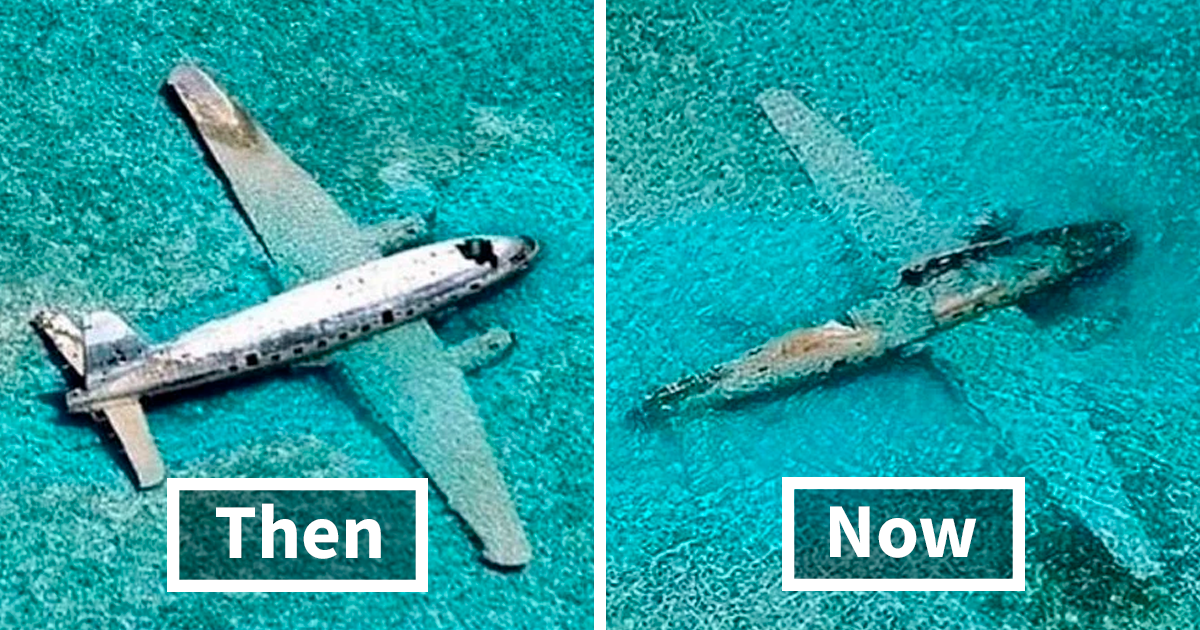
Time is a dramatic editor. It can turn a muddy field into a glowing downtown skyline, a quiet street into a six-lane traffic puzzle, and a once-tiny child into an adult who now complains about back pain after sleeping “slightly wrong.” That is exactly why “then and now” pictures have become such an irresistible corner of the internet. They do not simply show old photos next to new ones. They create a tiny emotional earthquake: here is what existed, here is what replaced it, and here we are, blinking at the difference.
The online fascination with “then and now” photos has grown because these images do something that words often struggle to accomplish. They make change visible. A single comparison can reveal decades of architecture, family history, cultural shifts, environmental transformation, fashion mistakes, technological leaps, and yes, the brutal betrayal of hairlines. Whether the subject is a childhood photo recreated years later, a city block revisited after a century, or a landmark captured from the exact same camera angle, the appeal is universal. We love seeing proof that nothing stays frozen, even when memory tries its hardest to convince us otherwise.
Collections like “People Are Sharing ‘Then And Now’ Pics On This Page To Show How Time Changes Things” work because they transform everyday scrolling into a miniature time machine. One moment you are casually browsing; the next, you are emotionally invested in an old storefront, a family couch, a rescued dog, or a bridge that somehow looks younger than all of us. These photos are funny, nostalgic, strange, and sometimes quietly devastating. They remind us that progress is not always neat, loss is not always obvious at first, and the past has a way of showing up wearing better lighting.
Why “Then And Now” Pictures Are So Addictive
There is a reason people pause on before-and-after photos longer than they intend to. The human brain likes patterns, contrast, and stories that can be understood quickly. A “then and now” image gives us all three. The “then” photo sets the mystery: What changed? Who stayed? What disappeared? The “now” photo delivers the answer, often with a little emotional punch.
Unlike a regular historical image, a re-created photo invites comparison. You are not just looking at an old building; you are measuring it against what stands there today. You are not just seeing a family photo from 1998; you are watching people return to the same pose with adult bodies, newer shoes, and expressions that say, “Why did we agree to sit on the floor again?” The format is simple, but the effect is powerful.
These comparisons also feel honest. Time does not flatter everything. Some changes are inspiring: restored theaters, cleaner rivers, rebuilt neighborhoods, children growing into confident adults. Others are sobering: demolished landmarks, vanished forests, abandoned homes, or once-busy streets that now feel empty. That mix of joy and melancholy is what makes “then and now” photos more than internet decoration. They are visual essays, but thankfully without footnotes that ruin the mood.
The Rise of Online Communities Built Around Time Travel
The popularity of “then and now” pictures did not appear from nowhere. Online communities dedicated to rephotography and historical comparison have given users a place to share these transformations with people who understand the thrill of matching a doorway, a mountain, or a weirdly specific fence post across decades. One of the most recognizable examples is the Reddit community “Old Photos In Real Life,” where users compare past and present locations through photography.
What makes these communities special is the detective work. A successful rephotograph often requires more than standing in roughly the right place and hoping the magic happens. People study shadows, rooflines, curb shapes, windows, hills, tree lines, and street signs. They use old postcards, family albums, local archives, Google Maps, public records, and sometimes the sacred power of stubbornness. When they get the angle right, the result feels almost supernatural: two moments in time suddenly click into alignment.
This is also why “40 new pics” style collections perform so well. They gather the most eye-catching examples in one place, making it easy for readers to jump from one tiny time capsule to another. A wartime street may become a café district. A childhood bedroom may turn into a home office. A puppy may become a majestic senior dog with the same guilty expression. Each photo tells a complete story in seconds, but the best ones leave you thinking about them for much longer.
What These Photos Reveal About Cities
Urban “then and now” photos are among the most dramatic because cities are professional shape-shifters. Roads widen. Tram lines disappear. Gas stations become apartment towers. Small businesses get replaced by glassy buildings with names like “The Meridian” or “The Lofts at Something That Used to Be Interesting.”
In many city comparisons, the biggest change is density. A quiet avenue once lined with low buildings may now be packed with high-rises, traffic signals, bike lanes, delivery trucks, and people staring into phones while crossing the street as if protected by invisible technology angels. These photos show progress, but they also raise questions: What was gained? What was lost? Who benefited from the transformation? Who was pushed out?
Historical city photos can also reveal changes in transportation. Horses, streetcars, early automobiles, buses, bicycles, scooters, and ride-share vehicles all leave their marks on the same streets. When a “then” picture shows a dusty road and the “now” image shows a polished downtown corridor, the contrast is not just visual. It is social. It tells us how people moved, worked, shopped, gathered, and imagined the future.
That is the hidden strength of these comparisons. They are not only about nostalgia. They help ordinary viewers understand urban history without requiring a lecture hall, a textbook, or the kind of academic vocabulary that makes everyone suddenly need coffee.
Family Recreations: The Funniest Kind of Emotional Damage
Some of the most shared “then and now” images involve families recreating old photos. These are usually hilarious because everyone commits to the original pose with heroic seriousness. Adult siblings squeeze into bathtubs, parents re-create awkward vacation poses, grown children wear updated versions of tiny outfits, and someone always ends up looking both embarrassed and proud.
Family recreations work because they combine absurdity with tenderness. On the surface, they are funny. Underneath, they are about continuity. The couch may be different, the wallpaper may be gone, and the baby in the photo may now have a mortgage, but the relationship remains visible. The joke is the pose; the emotional hook is the bond.
These images also expose how memory works. Families often remember the big events: weddings, graduations, holidays, hospital visits, first homes. But old photos preserve the smaller details too: the ugly lamp everyone forgot, the cereal box on the counter, the dog sleeping under the table, the haircut that should have been stopped by a responsible adult. When the photo is recreated years later, those details come roaring back.
In a strange way, family “then and now” pictures make aging feel less like a loss and more like a shared prank. Everybody changes. Everybody gets older. But when people can laugh at the difference together, time becomes a little less intimidating.
Nature, Climate, and the Serious Side of Rephotography
Not every “then and now” image is cute or funny. Some of the most important repeat photography projects are used to document environmental change. Scientists and public agencies have used repeat photography to show glacier retreat, shifting vegetation, erosion, river movement, and other long-term changes in natural landscapes.
These images matter because environmental change can be difficult to understand when described only in numbers. A chart may show rising temperatures or shrinking ice mass, but a photo comparison makes the change immediate. When viewers see a glacier filling a valley in an older image and then see bare rock in the modern version, the message becomes harder to ignore.
That is the power of visual evidence. It does not replace science, but it helps people feel the scale of what science is measuring. “Then and now” environmental photography turns slow change into something visible at human speed. The same technique can apply to forests, coastlines, deserts, wetlands, and neighborhoods affected by storms, fires, or development.
In these cases, the images are not just nostalgic. They are warnings. They ask us to pay attention before the “now” photo becomes another “then” photo that future viewers study with regret.
Old Photos Are More Than Aesthetic Content
It is easy to treat old pictures as charming internet material: sepia tones, vintage cars, dramatic hats, and people standing very stiffly because apparently smiling used to be illegal. But archival photographs are also historical records. Institutions such as museums, libraries, universities, and public archives preserve photographs because they capture details that written records may miss.
A photograph can show how a street was arranged, how workers dressed, how families gathered, how communities celebrated, or how buildings looked before renovation or demolition. In large public collections, historical images help researchers, students, artists, journalists, genealogists, and local residents understand the past more clearly.
The internet has made this process more democratic. People no longer need to be professional historians to explore archives or compare old images with modern scenes. Digitized collections allow users to discover photographs from different eras and locations, while social platforms let people share their own family and neighborhood histories. The result is a huge, messy, fascinating public conversation about change.
Of course, not every old photo tells the whole truth. Cameras point in one direction and ignore another. Some communities were photographed heavily, while others were overlooked or misrepresented. That is why modern “then and now” projects are strongest when they include context, curiosity, and respect. The goal is not just to say, “Wow, things looked different.” The better question is, “Why did they change, and who remembers what happened?”
The Small Details Make the Biggest Impact
The best “then and now” pictures often succeed because of tiny details. A building may have changed completely, but one doorway remains. A tree that was a sapling in the old photo may tower over the street today. A child may stand in the same spot as an adult, still tilting their head the same way. A family dog may be replaced by a new dog sitting in the same corner, continuing the sacred household tradition of looking suspiciously innocent.
These details create emotional continuity. They tell us that even when the world changes, certain patterns survive. People still gather in front of landmarks. Children still make silly faces. Couples still pose awkwardly because nobody knows what to do with their hands. Travelers still take photos of the same famous views, just with better cameras and worse attention spans.
Small details also make viewers feel like detectives. Spotting what stayed the same is half the fun. It turns passive scrolling into active observation. Readers compare bricks, windows, road curves, body language, clothing, and furniture. This is why these posts generate so much engagement: people do not just look; they participate.
Why Nostalgia Feels So Good
Nostalgia gets a bad reputation as a soft, sentimental emotion, but it is more useful than people think. Looking back can help us understand who we are, where we came from, and what has shaped us. “Then and now” photos are especially effective because they do not trap us in the past. They place the past and present side by side.
That side-by-side structure is important. It lets viewers feel nostalgia without completely disappearing into it. The old image says, “Remember this?” The new image says, “And here is what happened next.” Together, they create a fuller story. The result can be comforting, funny, bittersweet, or motivating.
For many readers, these pictures also bring personal memories to the surface. A photo of an old shopping mall may remind someone of weekend trips with friends. A re-created childhood photo may bring back family traditions. A street comparison may remind someone of a neighborhood before rent, traffic, or time changed its personality. Nostalgia is not just about missing the past. It is often about recognizing how much life has happened.
What Makes a Great “Then And Now” Photo?
1. The Same Angle
The closer the modern photographer gets to the original viewpoint, the stronger the effect. A matching angle makes the two images feel connected, almost as if time folded in half.
2. A Clear Subject
The best comparisons have a focal point: a building, a person, a street, a landscape, a pet, or a recognizable object. Without a clear subject, the viewer has to work too hard, and internet attention spans are already hanging by a thread.
3. Visible Change
Change does not have to be extreme, but it should be noticeable. Growth, decay, restoration, aging, modernization, or disappearance all create visual tension.
4. Emotional Context
A great “then and now” photo gives viewers a reason to care. Maybe the place was rebuilt after disaster. Maybe the people in the image are family members. Maybe the photo shows a beloved pet growing old. Context turns comparison into story.
5. A Little Surprise
The most memorable examples contain something unexpected: a landmark hidden in plain sight, a person making the same expression decades later, or a place that changed less than anyone expected. Surprise is the seasoning. Without it, the dish is just old bricks.
Experience Section: What “Then And Now” Photos Teach Us In Real Life
There is something almost magical about returning to a place after many years and realizing that both you and the place have changed. Maybe it is your childhood street, your old school, a grandparents’ house, or the park where you once believed the slide was dangerously tall and heroic. You stand there as an adult, looking around, and everything feels smaller. The building did not shrink. You grew. Rude, but true.
That experience is the real-life version of a “then and now” photo. The old image exists in your mind, slightly edited by memory. The new image is right in front of you, refusing to match perfectly. The corner store has a different sign. The huge tree is gone. The house has new paint. The playground equipment has been replaced by something safer, cleaner, and frankly less thrilling. You may feel happy, sad, amused, or strangely protective of a place you had not thought about in years.
Many people have had this feeling while flipping through family albums. You see yourself as a child standing beside someone you love, and suddenly the past becomes physical. The clothes, the furniture, the wallpaper, the old car in the drivewayeverything becomes evidence. Then you look at a recent photo and notice what time has done. Faces have changed. Some people are missing. New people have arrived. The family has expanded, shifted, healed, argued, reunited, moved, and somehow kept going.
This is why recreating old photos can be so meaningful. It gives people a reason to gather, laugh, and remember without turning the moment into a formal ceremony. A grown son sitting on his father’s lap like he did at age three is ridiculous, yes. It is also moving. Adult siblings recreating a beach photo from childhood may look silly, but the act says something deeper: we were here together then, and we are here together now.
Even places can feel like relatives in these comparisons. A diner where teenagers once met after school may now be a pharmacy. A movie theater may become a gym. A quiet field may become a subdivision full of identical mailboxes standing in formation like tiny suburban soldiers. Change can feel exciting when it brings life and opportunity, but it can sting when it erases personality. “Then and now” photos help people process that tension.
They also encourage us to take more pictures today. Not just perfect vacation shots or carefully arranged social media photos, but ordinary images: the kitchen during breakfast, the street after rain, the messy bedroom, the family car, the favorite coffee shop, the view from the bus stop. These things may seem boring now, but time has a strange way of turning ordinary details into treasures. Twenty years from now, someone may look at today’s “nothing special” photo and say, “I can’t believe it used to look like that.”
In that sense, every photo is a future “then.” The trick is remembering that while we are busy living inside the “now.”
Conclusion: Time Changes Everything, But Photos Help Us Keep Up
“Then and now” pictures are popular because they give shape to something we all feel but cannot always explain. Time moves constantly, quietly, and without asking for permission. Buildings rise and fall. Families grow and change. Landscapes shift. Cities reinvent themselves. Pets age. Children become adults. Adults become people who make alarming noises when standing up from chairs.
But photos let us pause the blur. They give us a way to compare, remember, laugh, grieve, and appreciate the strange speed of life. A good “then and now” picture is not just a visual trick. It is a reminder that change is the one thing every person, place, and generation has in common.
So the next time you see a collection of 40 new “then and now” pics, do not be surprised if you lose more time than planned. You are not just looking at old images and new images. You are watching history perform a side-by-side revealand honestly, history has pretty good dramatic timing.