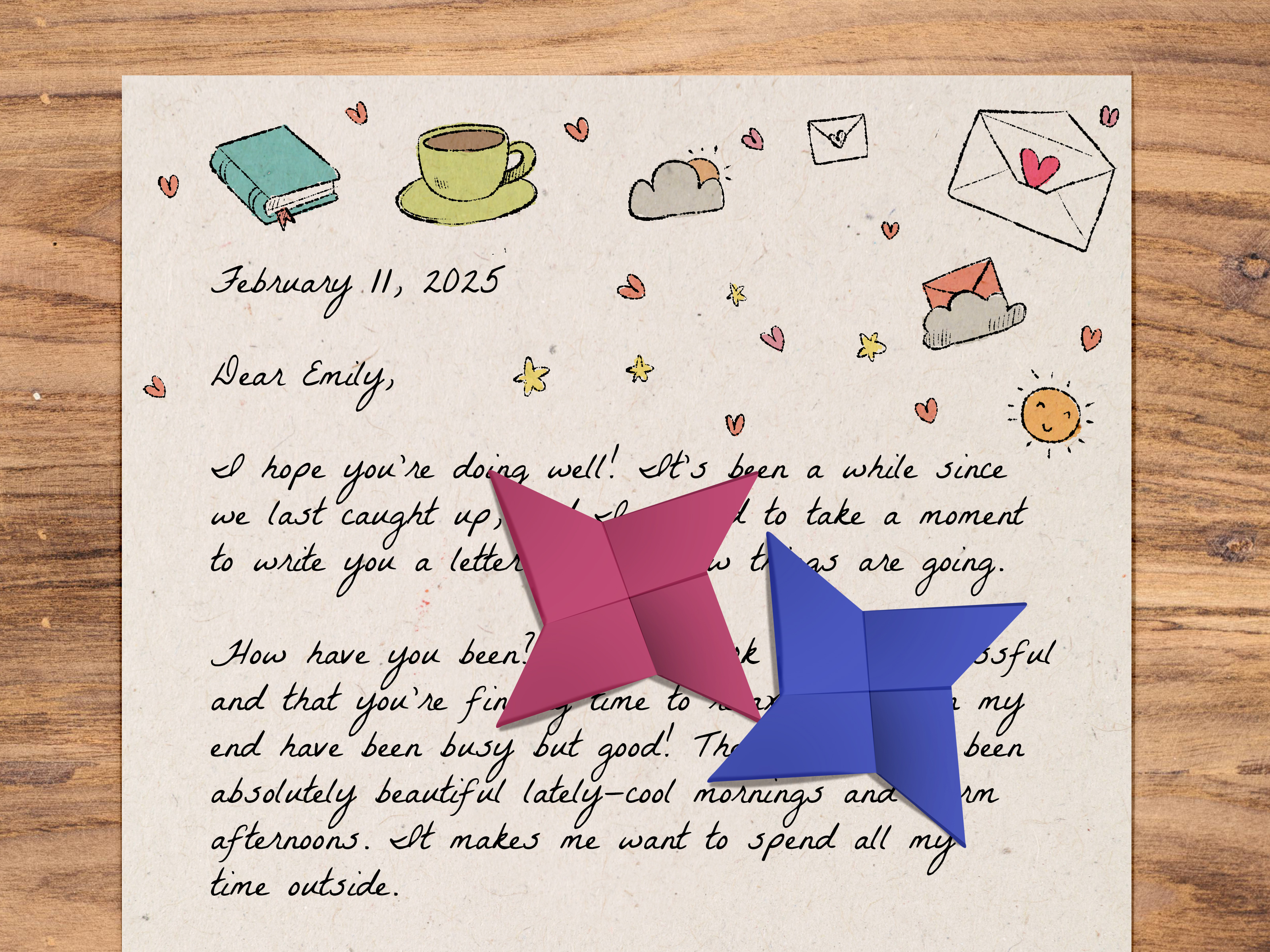
A friendly letter is the paper-and-ink version of showing up at someone’s door with coffee: personal, thoughtful, and pleasantly unexpected. Text messages are convenient, emails are fast, and social media can tell everyone what you ate for lunch. A letter, however, speaks directly to one person and says, “I spent real time thinking about you.”
Fortunately, learning how to write a friendly letter does not require a quill pen, sealing wax, or a dramatic desk beside a rain-streaked window. You simply need a clear format, a conversational voice, and something genuine to say. This guide explains the parts of a friendly letter, proper formatting, writing steps, envelope etiquette, useful examples, and practical lessons that make personal correspondence feel natural rather than stiff.
What Is a Friendly Letter?
A friendly letter, sometimes called a personal or informal letter, is written to someone you know personally. The recipient might be a friend, relative, former teacher, neighbor, classmate, pen pal, or anyone with whom you have a warm relationship.
Unlike a business letter, a friendly letter does not need an inside address, subject line, formal title, or boardroom vocabulary. Its purpose may be to share news, express appreciation, reconnect, celebrate an achievement, offer encouragement, apologize, or simply say hello.
Personal-letter formats can vary according to context, but most include a heading or date, an opening, a body, and a closing. Many classroom guides divide these elements into five familiar parts: heading, greeting, body, closing, and signature.
The Five Parts of a Friendly Letter
1. The Heading
The heading normally contains the date. You may also include your mailing address when the recipient does not already have it or may want to send a reply.
In traditional personal-letter formatting, the heading appears in the upper-right corner. In a modern block-style letter, it may be aligned with the left margin. Either choice is acceptable as long as the placement is neat and consistent.
For a more complete heading, use:
Spell out the month rather than using a date such as 8/4/26. A written date is easier to understand and less likely to resemble a mysterious locker combination.
2. The Greeting or Salutation
The greeting begins your conversation with the reader. Start with Dear, Hi, or another natural expression, followed by the recipient’s name.
A comma traditionally follows the greeting in an informal letter. Choose a name that matches your real relationship with the recipient. “Dear Mrs. Hernandez” may suit a former teacher, while “Hi, Aunt Rosa!” feels more natural for a favorite relative.
Friendly greetings include:
- Dear Jordan,
- Hi, Grandpa!
- Hello, Nina,
- My dear friend,
- Dear Coach Williams,
3. The Body
The body contains your actual message. It can be one paragraph or several pages, depending on your purpose and how much news you have accumulated since your last conversation.
Begin with a warm opening, develop your main message, and finish by inviting a response or mentioning what comes next. Good personal letters share relevant news, respond to earlier conversations, ask about the recipient, and avoid including private information that could cause embarrassment if the letter were seen by someone else.
A simple three-part body works well:
- Opening: Ask how the reader is doing or explain why you are writing.
- Middle: Share your news, story, memory, thanks, or invitation.
- Ending: Ask a question, mention future plans, or encourage the reader to reply.
4. The Complimentary Closing
The closing signals that your letter is ending. Place it below the body, followed by a comma.
Choose a closing that fits both the relationship and the message:
- Love,
- With love,
- Your friend,
- Best wishes,
- Warmly,
- Take care,
- Thinking of you,
- Until next time,
- Sincerely,
“Love” may be perfect for your grandmother and somewhat startling for a plumber you met once. Let context guide you.
5. The Signature
Write your name beneath the closing. A handwritten signature gives a printed or typed letter a personal finishing touch.
You may use only your first name when the recipient knows you well. Include your full name when writing to someone who may know several people named Daniel or when reconnecting after a long period.
Friendly Letter Format at a Glance
How to Write a Friendly Letter Step by Step
Step 1: Decide Why You Are Writing
Before staring heroically at a blank page, identify your purpose in one sentence. For example:
- I want to thank my aunt for hosting me.
- I want to reconnect with a childhood friend.
- I want to encourage a classmate who moved away.
- I want to tell my grandparents about my first week at college.
Your letter may cover several subjects, but one central purpose keeps it from becoming a pile of unrelated updates wearing a postage stamp.
Step 2: Picture the Recipient
Think about the person who will read the letter. What does that person already know? What would interest them? Which memories, jokes, or details would make the message feel personal?
Writing for a specific audience helps determine your tone, vocabulary, examples, and level of detail. Even an informal letter becomes clearer when the writer considers the reader’s interests and expectations.
Step 3: Make a Small List of Ideas
Jot down three to five possible points before drafting. Useful friendly-letter prompts include a recent reminder of the recipient, a favorite shared memory, something you appreciate about the person, or an experience you wish they had witnessed.
Your notes might look like this:
- Ask about her new job.
- Describe the family camping trip.
- Mention Dad dropping the marshmallows in the fire.
- Invite her to Thanksgiving dinner.
Step 4: Write Like a Real Person
Use the language you would naturally use in a thoughtful conversation. Contractions such as I’m, you’re, and we’ve are welcome. So are light jokes, familiar expressions, and affectionate nicknames when appropriate.
Avoid turning a friendly letter into an annual corporate report:
Stiff: “I am writing to inform you that my recent vacation was satisfactory.”
Natural: “Our vacation was wonderful, except for the squirrel that stole half our breakfast.”
Step 5: Include Specific Details
Specific details make a letter memorable. Instead of writing, “School is going well,” explain that you joined the debate team, survived a chemistry presentation, or discovered that your professor uses five different colors of chalk.
Names, places, sensory details, short anecdotes, and shared references give your reader something vivid to imagine. They also show that the letter was written for that person rather than copied from a greeting-card assembly line.
Step 6: Ask Questions
A friendly letter should feel like one half of a conversation. Ask open-ended questions that make replying easy:
- How is your new apartment coming along?
- Did your tomato plants survive the heat?
- Which book did you choose for your reading group?
- Are you still thinking about visiting in October?
Questions show interest and prevent the letter from sounding like a personal press release.
Step 7: Revise and Proofread
First review the overall message. Make sure the ideas are organized, the purpose is clear, and no important explanation is missing. Then proofread for spelling, punctuation, grammar, repeated words, and names.
Reading the letter aloud can reveal awkward sentences and abrupt shifts. Setting the draft aside briefly can also make errors easier to notice. Spell-checking tools are useful, but they may not catch a correctly spelled wrong word, such as writing “I hope your cat feels butter” instead of “better.”
How Long Should a Friendly Letter Be?
There is no required length. A short thank-you letter may contain three or four meaningful sentences, while a letter to a distant friend may fill several pages.
Write enough to accomplish your purpose without padding the message. One thoughtful page is better than four pages of weather reports, grocery updates, and an exhaustive review of every sandwich you have recently encountered.
Use separate paragraphs when changing subjects. Short paragraphs improve readability, especially when the letter is typed or sent electronically.
Handwritten, Typed, or Emailed?
Choose Handwriting for Warmth
A handwritten letter feels especially personal because the reader can see the writer’s individual marks, corrections, and style. Etiquette authorities continue to recommend handwritten notes for meaningful thanks, personal gifts, major favors, condolences, and other occasions where warmth matters.
Your handwriting does not need to resemble elegant calligraphy. It only needs to be readable. Slow down, leave comfortable spacing, and use dark ink that does not vanish into decorative paper.
Choose Typing for Length or Accessibility
A typed letter is sensible when handwriting is painful, difficult to read, or impractical for a long message. Select a readable font, use generous margins, and sign the printed letter by hand when possible.
Choose Email When Speed Matters
Email works well for quick updates, overseas communication, or situations requiring a prompt response. Retain the basic qualities of a friendly letter: a greeting, organized paragraphs, a warm closing, and personal details.
A digital message can be friendly, but handwritten correspondence often carries greater emotional weight because the recipient can hold it, save it, and rediscover it years later.
How to Address the Envelope
Place the recipient’s name and delivery address clearly in the center of the envelope. Put your return address in the upper-left corner and the correct postage in the upper-right corner. USPS guidance emphasizes writing or printing the delivery address clearly so mail-processing equipment and postal employees can read it.
Use the recipient’s preferred name and title. For an informal letter to a close friend, a familiar name is perfectly acceptable. Check the street number, apartment number, city, state abbreviation, and ZIP Code before mailing. A beautiful letter sent to the wrong apartment becomes a very thoughtful gift for a confused stranger.
Friendly Letter Sample to a Friend
Friendly Thank-You Letter Sample
Friendly Letter Sample for a Former Teacher
Common Friendly Letter Mistakes
Making the Letter Too Generic
“Hope you are well. I am well. Everything is fine” technically communicates information, but so does the display on a household thermostat. Include a memory, story, question, or observation that belongs specifically to your relationship.
Writing Only About Yourself
Share your news, but also respond to the recipient’s life. Ask questions and mention details from previous conversations.
Forcing Humor
A little humor creates warmth, but every sentence does not need a punch line. Avoid jokes about sensitive topics, private insecurities, or situations the recipient may not find amusing.
Sending a Letter Written in Anger
Written words can be reread, saved, photographed, and shared. Put an angry letter aside before sending it. Return later when you can express the issue honestly without using the envelope as a tiny delivery system for emotional explosives. Personal-letter guidance commonly recommends delaying correspondence written in anger because permanent wording can damage relationships.
Choosing the Wrong Closing
The closing should match the tone of the letter. “Respectfully” may feel distant in a note to your best friend, while “Hugs and kisses” could be spectacularly inappropriate in a letter to your former principal.
Skipping the Final Check
Verify the recipient’s name, your return address, the mailing address, and any dates or plans mentioned in the body. Correcting “Saturday, August 15” before mailing is easier than waiting alone at a restaurant on Sunday.
Friendly Letter Checklist
- Include the date.
- Use a greeting that suits your relationship.
- Explain why you are writing.
- Organize different subjects into paragraphs.
- Add specific stories, details, or shared memories.
- Ask about the recipient.
- Choose an appropriate closing.
- Sign your name clearly.
- Proofread the entire letter.
- Confirm the envelope address and postage.
Practical Experiences: What Letter Writing Teaches You
The first lesson many people learn when returning to friendly letter writing is that the beginning feels harder than the rest. A blank sheet of paper seems unusually judgmental. Once the writer stops searching for a brilliant opening and begins with something simple“I thought of you yesterday” or “Thank you for your wonderful visit”the message usually starts moving.
A useful experience is drafting the body before writing the opening. Suppose you want to tell a former roommate about a new job, a recent move, and a shared friend’s wedding. Write those details first. After the main ideas are on the page, create a greeting that leads naturally into them. This approach removes the pressure to invent a perfect first sentence while your thoughts are still forming.
Writers also discover that ordinary details often become the most enjoyable parts of a letter. Major announcements are important, but small moments create personality. A reader may appreciate hearing about a promotion, yet remember the story about the writer arriving at the interview with two different socks. Personal correspondence comes alive through details that would never appear in a formal update.
Another practical lesson involves handwriting. People who have not written more than a shopping list in years may experience a tired hand after half a page. The solution is not to declare handwriting extinct. Use a comfortable pen, avoid gripping it like it owes you money, and take breaks. For longer letters, typing the body and adding a handwritten greeting or closing preserves a personal touch without causing finger rebellion.
Choosing stationery can also affect the experience. Elaborate paper is unnecessary. A clean sheet, simple notecard, or plain writing pad works beautifully. The message matters more than whether the border contains watercolor lemons. Still, paper that reflects your personality can make the activity more inviting and turn the finished letter into a keepsake.
Many writers find that letters encourage more careful thinking than instant messages. A text can be sent within seconds, occasionally before wisdom has entered the room. A letter creates a natural pause. You choose what matters, arrange your thoughts, and consider how the words may feel to the recipient. That slower process often produces greater sincerity.
Receiving replies offers another lesson: questions matter. A letter ending with “Well, that is all my news” gives the recipient little direction. A letter that asks about a garden, new baby, school project, vacation, or career change opens several possible paths for an answer. The best correspondence creates continuity rather than treating each message as an isolated performance.
Letter writing can also strengthen relationships across age differences. Children often enjoy receiving mail addressed directly to them, even when they live in the same town as the sender. Older relatives may value a physical letter they can reread and display. A short note from a grandchild, student, niece, or neighbor can carry more emotional significance than its word count suggests.
Finally, friendly letters teach that polish and perfection are not the same thing. A crossed-out word, slightly crooked line, or imperfect signature may make a handwritten message feel more human. Proofread enough to protect clarity, but do not edit away every trace of personality. The goal is not to produce a museum artifact. The goal is to make another person feel remembered.
Conclusion
Learning how to write a friendly letter is mostly about combining familiar structure with genuine human connection. Add the date, greet the reader, organize your message, choose a warm closing, and sign your name. Within that simple framework, you can be thoughtful, funny, encouraging, nostalgic, or delightfully ordinary.
The strongest friendly letters sound like the writer while keeping the recipient at the center. They contain meaningful details, invite conversation, and communicate something that rapid digital messages often lose: deliberate attention. You do not need perfect stationery or literary genius. You need one person, one message, and a few quiet minutes to put your thoughts into words.
Note: The names, addresses, and situations in the sample letters are fictional. This guide was synthesized from established personal-correspondence, writing, education, etiquette, and U.S. postal guidance.