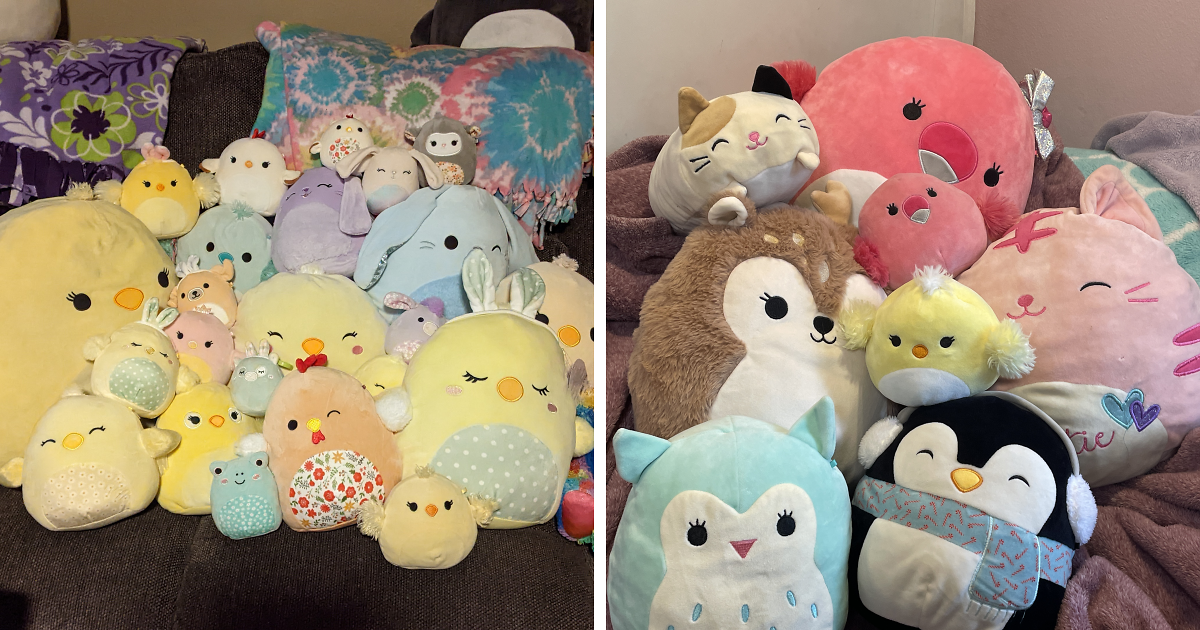
There are two kinds of people in this world: people who see a Squishmallow and think, “That is a cute plush toy,” and people who see one and immediately begin calculating whether there is enough room on the bed for just one more.
If you belong to the second group, welcome. Your couch may have disappeared beneath a herd of cows, axolotls, mushrooms, frogs, dragons, Bigfoots, and suspiciously cheerful pieces of fruit, but you are among friends.
Squishmallows have become far more than soft stuffed animals. Since the brand debuted in 2017, the collection has expanded from a tiny original lineup into thousands of unique designs. Along the way, social media, limited releases, licensed collaborations, character biographies, and the simple pleasure of hugging something shaped approximately like a marshmallow with eyes turned Squishmallow collecting into a hobby enjoyed by children, teenagers, and adults alike.
So, Pandas, consider this your invitation: open the closet, clear the bed, photograph the plush mountain, and show us your Squishmallows collection. Before you do, however, let us explore why these squishy characters are so collectible, how fans build their collections, and how to keep the hobby fun without accidentally turning your bedroom into a warehouse.
How Squishmallows Became a Collecting Phenomenon
Squishmallows were introduced in 2017 by Kellytoy with only a small group of characters. The idea was refreshingly simple. Take an extremely soft plush, give it a rounded shape, create a friendly face, and attach a personality to it.
Simple, apparently, was exactly what people wanted.
As the line expanded, collectors gained more choices in animals, fantasy creatures, foods, seasonal characters, colors, sizes, and licensed designs. Jazwares, which acquired Kellytoy in 2020, continued expanding the brand. Today, the official Squishmallows lineup includes more than 3,000 unique styles.
Social Media Turned Squish Hunting Into Entertainment
The biggest acceleration came during the early 2020s. Collectors began showing their finds on TikTok, Instagram, Reddit, YouTube, and other social platforms. A shopping trip to Walgreens or Target could suddenly become an adventure.
Videos showed collectors walking into stores, spotting a sought-after character on a shelf, and reacting as though they had discovered buried pirate treasure.
That excitement was contagious.
Watching someone find the Squishmallow they had searched for during six previous shopping trips made other fans want to begin hunting too. Social media transformed collecting from a private hobby into a shared experience involving collection tours, new-release alerts, trades, unboxings, wish lists, and shelf reorganizations of almost architectural complexity.
Adults Joined the Squishmallow Squad
Another interesting part of the Squishmallows story is the number of adult collectors.
Buying toys for yourself as an adult is no longer particularly unusual. The broader “kidult” market has grown significantly, with adults purchasing plush toys, building sets, action figures, trading cards, and other collectibles for nostalgia, relaxation, decoration, or simply because having fun does not mysteriously become illegal when you turn 18.
Squishmallows fit perfectly into that trend. They are decorative enough for a bedroom or office, collectible enough to provide a satisfying hunt, and soft enough to become legitimate couch companions.
What Makes Squishmallows So Collectible?
A Squishmallow is not merely “purple owl number 47.” Characters normally have names, personalities, interests, and short biographies. That tiny piece of storytelling matters more than it might seem.
Characters Have Their Own Personalities
One Squishmallow may dream about becoming a chef. Another might enjoy science, gardening, skateboarding, music, books, or traveling.
Collectors often discover characters whose bios remind them of themselves, family members, friends, pets, or favorite hobbies. Suddenly the purchase becomes personal.
You did not buy another stuffed mushroom.
You adopted Malcolm.
Entirely different situation.
There Is a Theme for Almost Everyone
Some collectors focus on cows. Others collect frogs, mushrooms, axolotls, Bigfoots, sea creatures, cats, bats, dragons, or food-themed characters.
There are also seasonal Squishmallows for Halloween, Christmas, Easter, and Valentine’s Day. Licensed collaborations have connected the brand with major entertainment properties including Pokémon, Disney, Harry Potter, Star Wars, Hello Kitty, and others.
As a result, someone who previously had zero interest in plush collecting may suddenly encounter a Squishmallow version of a favorite character and discover that the plush-to-bedroom ratio in their home is about to change dramatically.
How to Build a Squishmallows Collection Without Losing Your Floor
The easiest method of collecting is also the most dangerous financially: buy every Squishmallow that makes you say “awww.”
A more sustainable approach is to create some rules.
Choose a Collection Theme
Instead of trying to own everything, consider specializing.
You might collect only cows, ocean animals, pastel characters, Halloween designs, Pokémon Squishmallows, or characters in one particular size.
A focused collection often looks more intentional, makes shopping easier, and prevents your living space from becoming something firefighters would describe as “mostly plush.”
Pick Sizes That Fit Your Space
One reason Squishmallows appeal to collectors is their variety of sizes. Tiny versions and clips can fit on desks, shelves, backpacks, and display racks, while larger Squishmallows can function as pillows or major decorative pieces.
Large Squishmallows are wonderfully huggable but consume space at an impressive rate. Ten tiny Squishmallows can occupy a neat shelf. Ten enormous Squishmallows may require negotiations with your landlord.
Before purchasing another giant plush, ask one practical question: where is this going to live?
Create a Squishmallow Budget
Collecting gets expensive when every store visit becomes a rescue mission.
Try setting a monthly hobby budget. You could also keep a wish list and wait several days before buying something that was not already on it.
This separates the characters you genuinely love from the ones your brain wanted because a shiny “NEW” sign was nearby.
Rare Squishmallows and the Thrill of the Hunt
Scarcity has always added excitement to collecting. Certain Squishmallows become harder to find because of limited releases, exclusives, older production runs, unusual variations, or sudden popularity among fans.
The hunt can be incredibly entertaining. You visit a store expecting detergent and toothpaste and somehow find the character you have wanted for months.
Congratulations. You have forgotten the toothpaste.
However, rarity can also produce aggressive resale prices. Highly demanded collectibles sometimes appear on secondary marketplaces for several times their original retail cost.
Collectors should remember that an asking price is not necessarily a market value. Someone can list a plush for $2,000. That does not mean another human being has actually paid $2,000 for it.
Collect What You Love, Not What Someone Says Will Be Valuable
Collectibles are unpredictable investments. Popularity changes, characters return, new editions appear, and resale demand rises or falls.
If you purchase Squishmallows primarily because you enjoy them, you still own something you like even if its resale value never increases.
If you buy 47 identical frogs because someone on social media promised they would finance your retirement, you may eventually become the proud manager of a frog warehouse.
Watch Out for Counterfeit Squishmallows
Popularity inevitably attracts imitation products. Counterfeit Squishmallows have become enough of a concern that the company behind the brand has pursued legal action involving sellers accused of offering unauthorized copies.
When buying online, especially from unfamiliar marketplaces or individual sellers, examine listings carefully.
Authentic products should have appropriate Squishmallows branding and product tags, and official listings frequently tell buyers to look for the Original Squishmallows seal. Suspicious stitching, unusual fabric, misspelled branding, inaccurate character details, or prices dramatically below normal retail levels can all justify additional caution.
For valuable purchases, established retailers and the official Squishmallows store provide more confidence than a mysterious listing titled “100% ORIGINAL SUPER RARE SQUISH PLUSH DEFINITELY REAL TRUST ME.”
Displaying a Squishmallows Collection
Eventually every collector confronts the same mathematical problem:
Number of Squishmallows > Number of available shelves.
This is where creativity begins.
Use Shelves for Smaller Squishmallows
Bookshelves and cube organizers work well because characters can be grouped by color, species, season, or size.
Color organization creates particularly satisfying displays. A shelf transitioning from pink to purple to blue can turn a large collection into room decor rather than what appears to be a plush evacuation center.
Try Plush Nets and Corner Storage
Plush hammocks or nets make use of unused wall corners while keeping Squishmallows visible.
Just install them securely. Fifty plush toys unexpectedly descending onto you at 2 a.m. is technically harmless, but your nervous system may disagree.
Rotate Your Collection
Collectors with limited room can store part of the collection and rotate displays seasonally.
Bring out bats and pumpkins for Halloween, winter characters during the holidays, pastel designs for spring, and favorites whenever you feel like changing the room.
Rotation also makes older Squishmallows feel new again.
How to Care for Squishmallows
Display collectibles attract dust, while cuddle Squishmallows encounter an entirely different list of hazards involving snacks, pets, coffee, makeup, and children holding mysterious sticky substances.
Official Squishmallows guidance published by Jazwares has recommended washing traditional plush in cold water and tumble-drying on low heat, while avoiding ironing. Because product construction can vary, collectors should always check the specific care label attached to their Squishmallow before cleaning it.
For minor marks, gentle spot cleaning may prevent unnecessary full washes. Keeping display pieces away from prolonged direct sunlight can also help preserve their appearance.
If shape becomes compressed after extensive cuddling, gentle fluffing and redistributing the filling by hand can help restore the familiar marshmallow silhouette.
The Best Part of Collecting Is the Community
A collection becomes much more interesting when people can share it.
Squishmallow communities trade recommendations, celebrate new finds, identify mystery characters, compare displays, and help other collectors locate releases.
For younger collectors, parents should supervise online buying and trading. Anyone arranging a transaction with strangers should also use reputable platforms and sensible safety precautions.
But at its best, collecting creates easy conversations between people who might otherwise have never met.
Someone posts a photograph containing 200 plush toys.
Instead of asking, “Why?” another collector zooms in and replies, “WAIT. IS THAT CONNOR?”
Friendship achieved.
Hey Pandas, Show Us Your Squishmallows
Now we reach the important part.
We want to see your collection.
Maybe you own three carefully selected Squishmallows. Maybe you have 300 and are currently sitting inside a small plush kingdom. Both count.
Show us your oldest Squishmallow, your newest addition, your rarest find, the character you spent months searching for, or the completely ordinary one you would never sell because it has somehow become part of the family.
Tell us how your collection started. Was your first Squishmallow a gift? An impulse purchase? A character you spotted at Walgreens? Did you promise yourself you would buy only one?
Everyone loves that last story.
It is almost never true.
What Collecting Squishmallows Actually Feels Like: A Collector-Style Experience
One of the funniest things about Squishmallow collecting is how casually it can begin.
Imagine walking into a store for completely responsible adult purchases: shampoo, batteries, maybe paper towels. Somewhere between household cleaning products and seasonal decorations, you notice a soft round cow staring at you from a shelf.
You squeeze it.
This is mistake number one.
It is absurdly soft. You look at the tag and discover the cow has a name and personality. It costs less than dinner at a restaurant, so you throw it into the cart.
You go home with one Squishmallow.
For several days, everything remains normal.
Then you see another one.
This one is a frog. Obviously the cow cannot spend its entire life without a friend, so the frog comes home too.
Within a month, you understand terminology you previously did not know existed. You recognize squads. You notice store exclusives. You discover that characters appear in multiple sizes. You begin examining shelves more carefully whenever you enter a retailer.
The strangest part is that collecting changes ordinary shopping trips. Finding a desired Squishmallow unexpectedly creates a tiny burst of excitement in an otherwise routine day.
A collector may spend weeks casually checking stores without success. Then, on a random Tuesday when they are not even seriously searching, there it is.
The legendary mushroom. The elusive cow. The seasonal bat. The exact axolotl that has occupied a screenshot folder on their phone for three months.
That moment explains much of the hobby.
There is also satisfaction in arranging the collection afterward. You try organizing by species. That works until the Bigfoots refuse to cooperate aesthetically. Then you organize by color. Then size. Then season.
Eventually you realize collection organization is not a task with a final solution. It is an activity.
Another familiar experience is attachment to the least valuable character in your collection.
Maybe you own an exclusive Squishmallow that other collectors constantly admire, yet your favorite is still the slightly flattened five-year-old plush sitting on your bed because someone special gave it to you.
That is an important reminder about collecting.
Rarity creates excitement, but memories create value.
There can also be a wonderful social side. A friend learns you collect cows and texts you when a new one appears at a local store. Someone gives you a Squishmallow because its biography reminds them of you. Collectors exchange photographs of newly reorganized shelves as though they have completed major home renovations.
And, yes, collections occasionally become ridiculous.
You may discover that you have accidentally assigned an entire chair to plush toys. Visitors may ask whether they are allowed to move them. Your family may begin referring to one room as “the Squishmallow room.”
But hobbies are allowed to be a little ridiculous.
If arranging colorful plush animals makes a room happier, creates friendships, gives you something entertaining to search for, or simply provides a comfortable object to hug after a long day, the collection is doing its job.
The trick is keeping ownership intentional. Keep the characters you enjoy. Trade or donate ones you no longer connect with. Ignore pressure to own every release. A collection should create more happiness than stress.
And if you happen to photograph all of them together, prepare yourself.
You may finally discover exactly how many Squishmallows you own.
Some numbers are better left mysterious.
Conclusion: Every Squishmallows Collection Has a Story
The success of Squishmallows comes from an unusually effective combination of simplicity and personality. They are soft enough to be comforting, varied enough to collect, recognizable enough to form a community around, and inexpensive enough at normal retail prices that many people can begin a collection with a single favorite character.
There is no correct way to collect them. A carefully curated shelf of six can be every bit as meaningful as a room filled with hundreds.
So forget comparisons, resale rankings, and imaginary rules about what makes a collection impressive. Keep the Squishmallows that make you smile.
And now, Pandas, it is your turn.
Line them up. Build the plush pyramid. Take the group photo before the pyramid collapses. Show us your collection and tell us which Squishmallow you would save first if you could keep only one.
Note: The factual background in this article was synthesized from official Squishmallows and Jazwares materials and reporting or industry coverage from major U.S.-based sources including The Toy Association, Associated Press, TIME, Forbes, Business Insider, The Washington Post, TODAY, Good Housekeeping, Parents, PEOPLE, and public-radio reporting.