Pine is affordable, attractive, easy to cut, and available almost everywhere. Unfortunately, it also has the staining temperament of a cat near an empty food bowl. Its uneven density, resinous knots, and porous earlywood can turn a promising furniture project into a patchwork of dark clouds and pale streaks.
The good news is that the right stainand the right preparationcan make pine look warm, refined, rustic, modern, or convincingly expensive. The best stains for pine in 2025 include thick gel formulas that limit uneven absorption, penetrating oil stains for rich traditional color, fast-drying products for weekend projects, and weather-resistant exterior stains for decks, fences, and outdoor furniture.
This guide evaluates eight strong options using pine-specific performance, ease of application, color control, drying behavior, intended location, and compatibility with protective topcoats. Because every pine board behaves differently, the final rule is simple: test first, stain second, celebrate third.
Why Is Pine So Difficult to Stain Evenly?
Pine is a softwood with alternating areas of softer earlywood and denser latewood. The softer fibers can absorb a large amount of liquid stain, while harder sections accept much less. Knots and resin pockets create additional resistance. The result may be blotching, dark end grain, uneven stripes, and color that looks completely different from the sample displayed on the can.
Wood-finishing manufacturers routinely recommend pre-stain conditioner for soft and porous woods such as pine. Conditioner partially fills highly absorbent pores so the stain is accepted more uniformly. It does not make every board identical, but it can prevent your tabletop from resembling a weather radar map.
Gel stains can also help because their thick consistency keeps more color near the surface instead of allowing it to rush deeply into thirsty areas. General Finishes specifically recommends gel or water-based stains for difficult-to-stain species such as pine and maple.
Quick Comparison of the Best Pine Stains
| Product | Best For | Base | Location |
|---|---|---|---|
| General Finishes Oil Based Gel Stain | Best overall | Oil-based gel | Interior |
| Minwax Wood Finish | Classic wood tones | Penetrating oil | Interior |
| Varathane Premium Fast Dry Wood Stain | Fast projects | Oil-based | Interior |
| SamaN Water-Based Wood Stain | Low-odor indoor work | Water-based | Interior |
| Minwax Water-Based Semi-Transparent Stain | Creative colors | Water-based | Interior |
| Ready Seal Exterior Stain and Sealer | Outdoor pine furniture | Oil-based | Exterior |
| DEFY Extreme Semi-Transparent Wood Stain | UV-exposed pine | Water-based | Exterior |
| Cabot Solid Color Acrylic Stain + Sealer | Weathered or imperfect pine | Acrylic | Exterior |
1. General Finishes Oil Based Gel Stain: Best Overall
General Finishes Oil Based Gel Stain is one of the safest choices when the goal is rich, even color on unpredictable pine. Its thick consistency reduces uncontrolled penetration, giving the user more time to distribute pigment across soft grain, hard grain, and knotty areas.
This stain is especially useful for pine furniture, cabinets, shelves, doors, and vertical surfaces. Because it does not run like a thin liquid stain, it is easier to control on chair legs, cabinet frames, and carved details. Colors such as Antique Walnut, Java, and New Pine can create anything from a warm natural finish to a deep brown furniture look.
Advantages
It offers excellent color control, resists dripping, and can produce a more uniform appearance than conventional penetrating stains. General Finishes identifies its gel stain as a suitable option for hard-to-stain woods, including pine.
Limitations
Gel stain must be applied thinly and wiped carefully. Leaving a heavy film can cause slow drying, tackiness, or adhesion problems under a topcoat. Allow generous drying time, particularly in humid weather or when using dark colors.
Best choice for: Pine furniture, bookcases, cabinets, doors, and projects where blotch control matters more than speed.
2. Minwax Wood Finish: Best for Traditional Wood Tones
Minwax Wood Finish remains a practical choice for DIYers who want familiar colors, broad availability, and the deeper appearance associated with an oil-based penetrating stain. The line includes traditional shades such as Provincial, Early American, Special Walnut, Dark Walnut, and Ipswich Pine.
The formula penetrates bare wood and emphasizes the natural grain. Minwax lists it for unfinished furniture, cabinets, doors, trim, molding, and floors, with dozens of available colors.
Advantages
The color selection is extensive, supplies are easy to find, and the stain can create a warm, classic appearance. It is also straightforward to touch up when used on small interior projects.
Limitations
On raw pine, this stain should not be treated as a pour-it-on-and-hope product. Sand consistently, apply an oil-compatible pre-stain conditioner, and wipe away all unabsorbed stain. Minwax warns against letting excess stain dry on the surface because it may later peel beneath the finish.
Best choice for: Interior pine tables, trim, shelving, and traditional furniture in brown or amber wood tones.
3. Varathane Premium Fast Dry Wood Stain: Best Fast-Drying Option
Varathane Premium Fast Dry Wood Stain is designed for users who want strong color without turning one shelf into a weeklong emotional journey. Its fast-drying formula makes it suitable for furniture, cabinets, doors, trim, paneling, and other interior pine projects.
The product is formulated to produce noticeable color efficiently, and its shade range includes natural browns, grays, black, white, and warmer pine-friendly tones. Rust-Oleum describes the line as a fast-drying stain intended to bring out natural wood grain.
Advantages
It is convenient for small projects, same-day staining schedules, and situations where a slow oil stain would create delays. A single controlled coat can provide substantial color.
Limitations
Speed leaves less room for daydreaming. Work in manageable sections, maintain a wet edge, and wipe excess stain according to the label. On pine, conditioning the surface and testing the color remain essential because a fast formula cannot negotiate peace between uneven grain zones by itself.
Best choice for: Weekend projects, small furniture, picture frames, shelves, and homeowners who need a shorter turnaround.
4. SamaN Water-Based Wood Stain: Best Low-Odor Choice
SamaN Water-Based Wood Stain is a good match for indoor workshops, apartments, craft rooms, and other locations where strong solvent odor would be unwelcome. It offers a broad range of colors that can be mixed, allowing users to create natural wood shades as well as more decorative finishes.
The manufacturer offers approximately 40 mixable colors and promotes the stain for furniture and interior woodworking.
Advantages
Cleanup is easier than with traditional oil stains, odor is generally lower, and the color range encourages experimentation. It works particularly well when the goal is a contemporary, lighter-toned finish rather than a heavily ambered appearance.
Limitations
Water-based products can dry quickly, so overlapping strokes may become visible if the application is hesitant. Pine should be sanded uniformly, and a compatible water-based conditioner may be useful. Keep the application thin and move with the grain.
Best choice for: Indoor pine décor, children’s furniture, craft projects, and workspaces where easier cleanup is a priority.
5. Minwax Water-Based Semi-Transparent Color Stain: Best for Color Variety
Not every pine project needs to pretend it grew up as walnut. Minwax Water-Based Semi-Transparent Color Stain is designed for projects that benefit from customizable shades, quicker drying, and a more modern color palette.
The stain preserves visible grain while offering traditional browns, neutral shades, and decorative colors. Minwax recommends its water-based pre-stain conditioner on soft woods to improve color uniformity and help control grain raising.
Advantages
It is useful for color-matching décor, creating muted contemporary finishes, or adding blue, gray, white, or green tones without completely hiding the wood. Soap-and-water cleanup is another welcome benefit.
Limitations
The quick drying time means large tabletops require planning. Divide broad surfaces into logical sections, avoid repeatedly brushing partially dried stain, and test the finished sample under the room’s actual lighting.
Best choice for: Decorative shelves, cabinets, accent furniture, wall panels, and modern pine projects requiring a custom color.
6. Ready Seal Exterior Wood Stain and Sealer: Best for Outdoor Pine Furniture
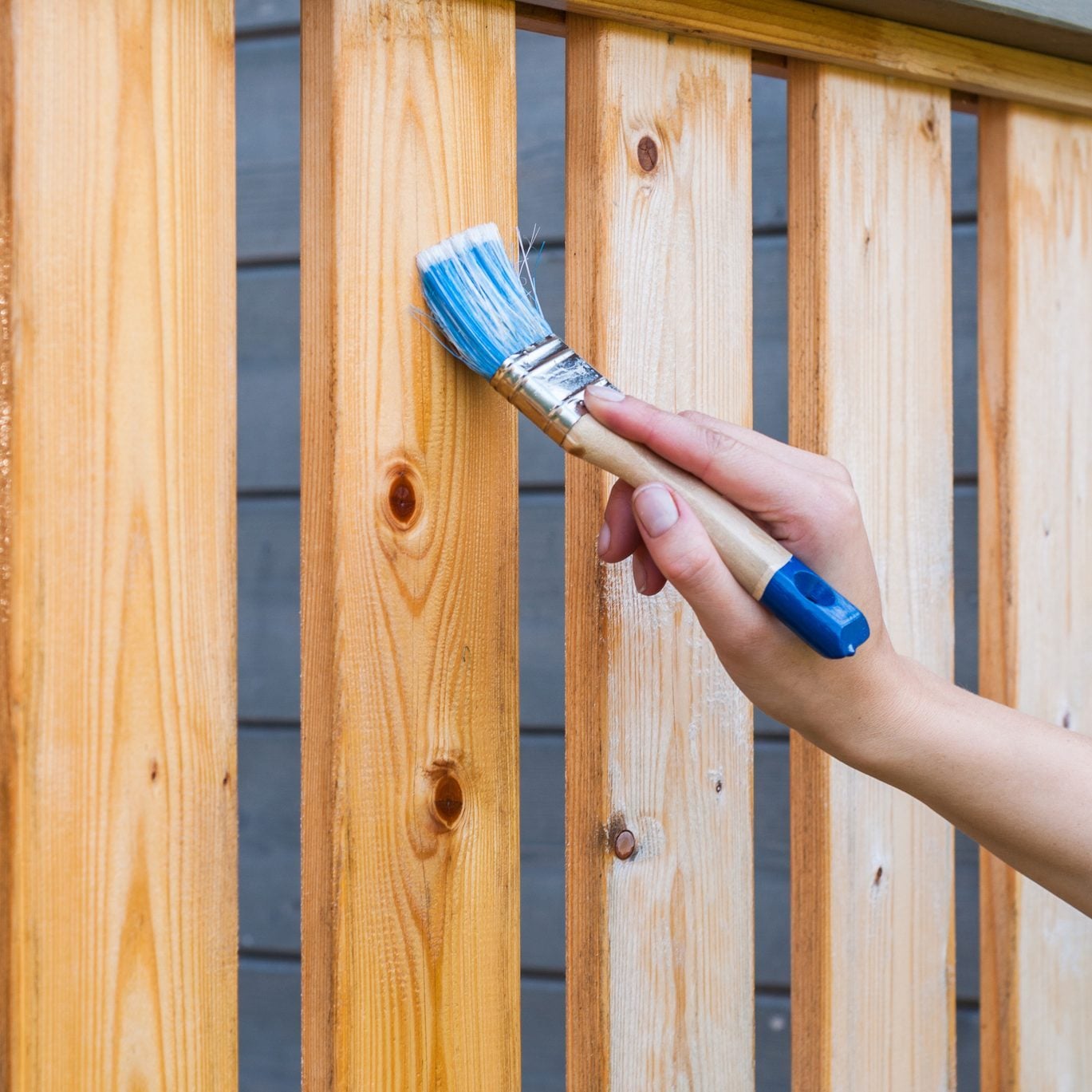
Ready Seal is a popular option for pressure-treated pine fences, pergolas, benches, planters, and outdoor furniture. Its penetrating oil formula combines color with weather protection, making it useful when the goal is a natural, semi-transparent exterior finish.
Unlike a thick surface coating, a penetrating exterior stain allows the texture and grain of pine to remain visible. This can be particularly attractive on new or lightly weathered boards that do not need defects hidden.
Advantages
The product is known for application flexibility and a forgiving, natural-looking finish. It can be a practical choice for DIYers who are nervous about lap marks on fences or large outdoor structures.
Limitations
Exterior pine must be dry, clean, and sufficiently weathered or prepared to absorb stain. Newly pressure-treated lumber may contain too much moisture for immediate staining. Darker shades can also become significantly warmer in direct sunlight.
Best choice for: Pine fences, pergolas, outdoor chairs, garden structures, and pressure-treated lumber in good condition.
7. DEFY Extreme Semi-Transparent Wood Stain: Best for UV Exposure
DEFY Extreme Semi-Transparent Wood Stain is a water-based exterior option for pine exposed to strong sunlight, moisture, and seasonal weather changes. It is designed to color the wood while leaving the grain visible.
The manufacturer identifies the product for multiple wood species, including pressure-treated lumber and pine.
Advantages
Its semi-transparent appearance works well on newer pine where the grain still deserves to be seen. Water-based cleanup is convenient, and the formula is a sensible alternative for users who do not want an oil-heavy exterior coating.
Limitations
Preparation determines performance. Old coatings, mill glaze, dirt, mildew, and gray surface fibers must be removed. Applying a premium stain over poorly prepared boards is like wearing formal shoes in a swamp: technically possible, strategically questionable.
Best choice for: Sunny decks, exposed fences, pine railings, and outdoor structures where UV resistance is important.
8. Cabot Solid Color Acrylic Stain + Sealer: Best for Weathered Pine
When pine is older, patched, heavily weathered, or visually inconsistent, a transparent stain may emphasize every defect. Cabot Solid Color Acrylic Stain + Sealer provides an opaque finish that resembles paint while remaining formulated specifically for wood.
Cabot describes the product as a solid-color acrylic stain and sealer that delivers a paint-like appearance on exterior wood.
Advantages
It helps unify mismatched boards, repaired areas, discoloration, and unattractive grain. Solid stain also provides stronger color coverage than transparent or semi-transparent products, making it suitable for older fences and siding.
Limitations
The grain remains texturally visible, but most natural color variation is hidden. Surface preparation is critical because solid finishes can peel when applied over dirt, moisture, failing coatings, or unstable wood fibers.
Best choice for: Weathered pine siding, fences, outdoor structures, and older wood that needs visual camouflage.
How to Choose the Right Stain for Pine
Match the Product to the Location
Interior stains are intended mainly to add color and usually require a separate protective finish. Exterior stains are formulated to address sunlight, rain, temperature changes, and biological growth. Never assume that an attractive interior furniture stain will survive on an uncovered deck.
Decide How Much Grain You Want to See
Transparent and semi-transparent stains preserve the natural character of pine but reveal defects. Solid stains hide discoloration and repairs while sacrificing much of the natural color variation. Gel stain sits somewhere in the middle, offering strong color control without behaving exactly like paint.
Consider the Final Undertone
Pine naturally leans yellow or amber, and many oil-based finishes warm it further. A brown stain may therefore appear more orange on pine than it does on oak. Neutral walnut, beige, taupe, and restrained brown shades tend to look more contemporary than aggressive orange or red finishes.
Evaluate Drying Time Honestly
A fast-drying stain is convenient on a small shelf but challenging on a dining table. Slow-drying gel stain gives more working time but may test the patience of anyone who planned to finish the project before dinner. Choose a formula that matches both the project size and your application speed.
How to Stain Pine Without Blotches
- Prepare a sample. Use an offcut from the same batch of pine whenever possible.
- Sand consistently. Follow the stain manufacturer’s grit recommendation and sand with the grain.
- Remove dust. Vacuum the surface and wipe it with a suitable clean cloth.
- Apply compatible conditioner. Match oil-based conditioner with an oil-based penetrating stain and water-based conditioner with water-based stain.
- Stir the stain. Pigments settle, and shaking may create bubbles in some products.
- Apply in manageable sections. Keep a wet edge and avoid random stopping points.
- Wipe off excess. Do not leave a thick, wet film unless the manufacturer specifically instructs otherwise.
- Allow full drying. Cool temperatures and high humidity can dramatically extend drying time.
- Add the appropriate topcoat. Interior tables and cabinets usually need protection from scratches, spills, and cleaning.
Practical Experiences That Make Pine Staining Easier
Across furniture refinishing, DIY shelving, trim installation, and outdoor pine projects, the most useful lessons are rarely glamorous. They involve scrap boards, clean rags, patient drying, and the willingness to stop before a small mistake becomes a full-table disaster.
The Sample Board Is Part of the Project
A stain color shown online or printed on a label is only a starting point. The same walnut stain can look chocolate brown on one pine board, orange-brown on another, and almost black near a knot. Sand a sample exactly as you will sand the final piece. Apply the same conditioner, stain, number of coats, and topcoat. A bare stain sample is incomplete because polyurethane, varnish, or another clear finish may deepen the color.
View the sample in the room where the finished piece will live. Warm bulbs can amplify yellow tones, while cool daylight may make a gray-brown stain appear flatter. A sample that looks elegant in the garage can become unexpectedly orange in the dining room.
More Sanding Is Not Always Better
A common impulse is to sand pine until it feels like glass. However, extremely fine sanding may burnish the soft fibers and reduce stain absorption. Inconsistent sanding is even worse: areas sanded with different grits can accept color differently. Follow the product directions and use the same final grit across the entire visible surface.
End grain deserves special treatment because it absorbs stain aggressively. Sand it to a finer grit than the face grain or apply conditioner carefully to prevent ends from becoming dramatically darker. This small step can make a homemade shelf look much more professional.
Conditioner Helps, but It Changes the Color
Pre-stain conditioner usually makes pine more even by reducing absorption in highly porous areas. It may also make the final color lighter. That is not a failure; it is the trade-off for improved uniformity. Choose a slightly deeper stain color or apply a second controlled coat only when the label permits it.
Timing matters. Some conditioners specify a limited window for applying stain. Waiting too long may reduce penetration, while staining too early may create an overly pale result. Treat the instructions as part of the formula rather than optional reading material placed on the can for decoration.
Thin Coats Beat Heroic Coats
One thick coat does not automatically produce a richer finish. Excess stain left on the surface may remain tacky, smear beneath the topcoat, or peel later. Darkening pine is generally safer through controlled coats, compatible toners, or a carefully chosen gel stain.
This is especially important around knots. Resinous areas may resist absorption, tempting the user to pile on more product. That extra stain often sits on the surface instead of bonding properly. Wipe it back, allow adequate drying, and evaluate the color before making another pass.
Know When Solid Stain Is the Smarter Choice
Old pine fencing and siding can contain new replacement boards, gray weathered boards, filler, knots, and previous stain remnants. A semi-transparent finish may highlight every difference. When the wood is structurally sound but visually chaotic, solid-color stain can produce a cleaner and more intentional result.
For newer furniture-grade pine, gel or conditioned penetrating stain usually preserves more character. For weathered exterior pine, greater opacity may deliver better visual consistency. The best stain is not the one with the fanciest label; it is the one that suits the actual condition of the wood.
Final Verdict
General Finishes Oil Based Gel Stain is the best overall stain for pine when even interior color is the main objective. Its thick formula provides valuable control on a wood species famous for absorbing liquid stain unevenly. Minwax Wood Finish is a dependable choice for traditional tones, while Varathane Premium Fast Dry suits smaller projects with tight schedules.
For lower odor and easier cleanup, SamaN and Minwax water-based stains provide versatile indoor options. Outdoor pine requires a purpose-built exterior product: Ready Seal works well for natural-looking outdoor structures, DEFY Extreme is a strong semi-transparent choice for exposed wood, and Cabot Solid Color Acrylic Stain + Sealer can rescue weathered pine that has seen things no fence should have to discuss.
Regardless of the product, preparation remains the real expert secret. Sand evenly, test the complete finish, use conditioner when appropriate, remove excess stain, and allow each layer to dry fully. Pine may be unpredictable, but with a disciplined process, it can deliver a finish that looks far more luxurious than its lumber-yard price suggests.