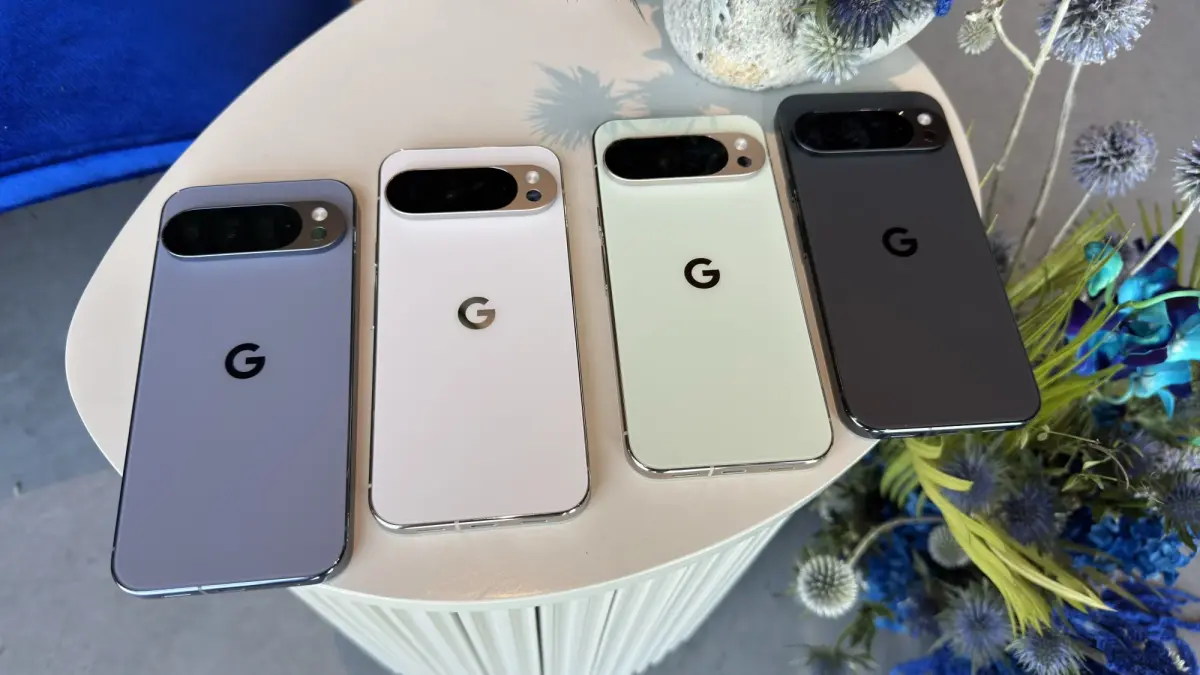
Google’s 2025 hardware showcase was not merely a parade of shiny rectangles. It was a carefully staged argument that artificial intelligence should stop behaving like a separate app and start quietly helping across your phone, watch, earbuds, camera, calendar, and daily routine.
Held in New York City on August 20, 2025, the Made by Google event celebrated the tenth generation of Pixel phones. The presentation, hosted by Jimmy Fallon and joined by guests including Stephen Curry, Lando Norris, and the Jonas Brothers, introduced four Pixel 10 smartphones, the Pixel Watch 4, Pixel Buds 2a, updated Pixel Buds Pro 2 features, Pixelsnap magnetic accessories, and a truckload of Gemini-powered tools.
This live-blog-style recap covers the confirmed announcements, launch prices, release dates, important specifications, and the bigger strategy hiding beneath all those polished product demos.
Made by Google 2025: The Biggest Announcements at a Glance
- Google unveiled the Pixel 10, Pixel 10 Pro, Pixel 10 Pro XL, and Pixel 10 Pro Fold.
- Every Pixel 10 model uses the new Tensor G5 processor and runs Gemini Nano on the device.
- The standard Pixel 10 gained a dedicated 5x telephoto camera.
- Magic Cue can surface relevant information from supported apps when it may be useful.
- Pixelsnap brings built-in Qi2 magnetic charging to the entire Pixel 10 family.
- Pixel Watch 4 adds a brighter display, longer battery life, satellite emergency communication, and a repairable design.
- Pixel Buds 2a become the first A-series Pixel earbuds with active noise cancellation.
Live Blog Update: Google Opens With the Tenth Generation of Pixel
The event began by framing Pixel 10 as a milestone. Google has spent a decade evolving Pixel from an enthusiast-focused Android phone into a complete hardware platform tied closely to Gemini, Fitbit, Google Photos, Maps, Gmail, and the broader Android ecosystem.
Rather than announcing one phone in several storage sizes and calling it a day, Google introduced a four-device family. The lineup includes the accessible Pixel 10, compact Pixel 10 Pro, larger Pixel 10 Pro XL, and book-style Pixel 10 Pro Fold. All four receive seven years of operating-system updates, security patches, and Pixel feature releases.
Pixel 10 Finally Gets a Telephoto Camera
The standard Pixel 10 starts at $799 in the United States. Its most meaningful hardware upgrade is a third rear camera: a 5x telephoto lens capable of Super Res Zoom up to 20x. That makes the base model far more flexible for concerts, wildlife, portraits, school performances, and any other situation where walking closer would be inconvenient, inappropriate, or likely to get you escorted away.
The phone retains a 6.3-inch form factor and includes 12GB of RAM. Its rear camera system combines a 48-megapixel main camera, a 13-megapixel ultrawide camera, and a 10.8-megapixel telephoto camera. Google also offers the phone in Indigo, Frost, Lemongrass, and Obsidian finishes.
Pixel 10 Pro and Pro XL Focus on Cameras and Displays
The Pixel 10 Pro starts at $999, while the Pixel 10 Pro XL starts at $1,199. The smaller Pro uses a 6.3-inch display, giving buyers access to Google’s premium camera system without requiring pockets originally designed for carrying paperback novels. The Pro XL increases the screen to 6.8 inches and includes faster wired and wireless charging.
Both Pro phones offer 16GB of RAM and a triple-camera array led by a 50-megapixel main sensor, a 48-megapixel ultrawide camera, and a 48-megapixel 5x telephoto camera. Pro Res Zoom extends digitally assisted magnification to 100x. Google also bundled one year of Google AI Pro with the Pro, Pro XL, and Pro Fold at launch.
Live Blog Update: Tensor G5 Powers the Entire Pixel 10 Family
Every Pixel 10 phone is built around Tensor G5, Google’s first smartphone processor manufactured by TSMC using a 3-nanometer process. Google said its central processor is approximately 34 percent faster on average than Tensor G4, while its Tensor Processing Unit delivers up to 60 percent more AI performance.
The important part is not simply that apps should open faster. Tensor G5 was co-designed with Google DeepMind to run the latest Gemini Nano model locally. That allows more AI tasks to happen directly on the phone, reducing delays and helping sensitive information remain on the device.
Google’s pitch is essentially this: benchmark charts are nice, but a processor becomes genuinely useful when it saves you from digging through six apps to answer one text message.
Live Blog Update: Magic Cue Makes AI Proactive
Magic Cue was one of the event’s most important software announcements. Instead of waiting for a user to open Gemini and type a detailed prompt, Magic Cue can recognize context and suggest relevant information or actions inside supported apps.
Suppose a friend messages you asking when your flight lands. Magic Cue may find the itinerary in Gmail and surface the arrival information in the conversation. If someone asks for photographs from a recent trip, it can help locate the relevant images. Suggestions may appear in apps such as Messages, Phone, Maps, Weather, shopping services, and selected third-party chat apps. Access can be managed or disabled by the user.
This is a more ambitious use of mobile AI than generating a picture of a cowboy hamster. The goal is to reduce the tiny administrative chores that collectively eat an alarming amount of the day.
Gemini Live Can See What You See
Gemini Live received deeper visual assistance. Users can point the Pixel 10 camera at an object or share their screen while discussing a problem. Gemini can highlight relevant parts of the scene and provide visual guidance, which could help with identifying controls, organizing a room, understanding an unfamiliar appliance, or deciding which cable actually belongs in which port.
Voice Translate Preserves the Speaker’s Voice
Voice Translate can translate phone conversations in real time while recreating characteristics of each caller’s voice. The processing happens on the Pixel 10 itself, and the person on the other end does not need to own a Pixel. The result is intended to feel less robotic than conventional translated speech while keeping the conversation private.
Camera Coach Helps Before You Press the Shutter
Camera Coach analyzes the scene in the viewfinder and offers step-by-step suggestions. It may recommend changing the angle, moving closer, adjusting the framing, or selecting a different camera mode. It is essentially the patient photography friend who gives useful advice without grabbing your phone and sighing dramatically.
Google also demonstrated conversational editing in Google Photos. A user can describe an adjustment such as improving the lighting, removing a distraction, or reframing the image, and Gemini interprets the request instead of forcing the user to hunt through editing menus.
Live Blog Update: Pixelsnap Brings Magnetic Qi2 Charging to Pixel
The entire Pixel 10 lineup supports Qi2 magnetic wireless charging through a system Google calls Pixelsnap. Built-in magnets align the phone correctly with compatible chargers and accessories, eliminating the bedtime ritual of nudging a phone around a charging pad until it finally acknowledges the laws of electricity.
Pixel 10, Pixel 10 Pro, and Pixel 10 Pro Fold support wireless charging at up to 15 watts with compatible Qi2 equipment. Pixel 10 Pro XL reaches up to 25 watts. Google introduced a Pixelsnap Charger, a charger with a detachable stand, a magnetic ring stand, compatible cases, and a 67-watt dual-port USB-C power adapter. The phones can also work with many existing magnetic accessories designed around the Qi2 or MagSafe ecosystem.
Live Blog Update: Pixel 10 Pro Fold Becomes More Durable
The Pixel 10 Pro Fold starts at $1,799 and features a 6.4-inch outer display plus an 8-inch folding display. Its redesigned gearless hinge is rated as twice as durable as the hinge on the Pixel 9 Pro Fold, while both screens can reach 3,000 nits of peak brightness.
More importantly, the phone carries an IP68 water- and dust-resistance rating. At launch, it was the first foldable smartphone to achieve full IP68 protection, addressing one of the category’s biggest practical weaknesses. Sand and folding screens have historically mixed about as well as orange juice and toothpaste.
The Pro Fold includes a larger 5,015mAh battery, Qi2 charging, a 48-megapixel primary camera, and foldable-specific tools such as Instant View. When the phone is open, Instant View displays a newly captured photo beside the camera interface so the user can quickly check the result and retake it before the moment disappears.
Google opened preorders on August 20, but the Pixel 10 Pro Fold reached stores on October 9, 2025, later than the three conventional Pixel 10 models.
Live Blog Update: Pixel Watch 4 Gets a Serious Redesign
Pixel Watch 4 is available in 41mm and 45mm sizes, starting at $349.99. Although it preserves the familiar circular shape, Google rebuilt major parts of the watch around a domed Actua 360 display. The screen reaches 3,000 nits, offers slimmer bezels, and provides more usable display area than the previous generation.
The 41mm version is rated for up to 30 hours of regular use, while the 45mm model reaches up to 40 hours. A 15-minute charge can provide up to 15 hours of battery life. Internally, the watch combines Qualcomm’s Snapdragon W5 Gen 2 with a separate machine-learning coprocessor to handle background tasks more efficiently.
A Pixel Watch That Can Be Repaired
Unlike earlier generations, Pixel Watch 4 was designed so its battery and display can be replaced. Google partnered with iFixit to offer components, and the watch can be opened with ordinary precision tools. That may not generate the loudest applause during a celebrity-filled product launch, but it could matter far more after several years of ownership.
Gemini, Satellite SOS, and Health Coaching
Users can raise their wrist and begin speaking to Gemini without pressing a button. The watch also introduces satellite-based emergency communication for situations without cellular or Wi-Fi coverage. Fitbit features include improved activity recognition, sleep tracking, skin-temperature data, dual-frequency GPS, and a Gemini-powered personal health coach designed to provide individualized fitness and wellness guidance.
Google also continued expanding safety tools such as Loss of Pulse Detection, which can contact emergency services when the watch detects a loss of pulse and the wearer does not respond. Availability varies by country and regulatory approval.
Live Blog Update: Pixel Buds 2a Add Active Noise Cancellation
Pixel Buds 2a cost $129 and are the first earbuds in Google’s A-series to include active noise cancellation. They use the Tensor A1 audio processor, Silent Seal 1.5, and a twist-to-adjust stabilizer intended to improve comfort and fit.
Google rates the earbuds for up to seven hours of listening with noise cancellation enabled. Gemini can be accessed hands-free, allowing users to request directions, manage messages, or ask questions without reaching for a phone. Pixel Buds 2a became available on October 9, 2025.
Pixel Buds Pro 2 also received software improvements, including Adaptive Audio, loud-noise protection, better Gemini Live performance in noisy environments, and head gestures for accepting calls or dismissing message replies. Google added a Moonstone color while keeping the $229 price.
Made by Google 2025 U.S. Prices and Release Dates
| Product | Launch Price | Original U.S. Release Date |
|---|---|---|
| Pixel 10 | $799 | August 28, 2025 |
| Pixel 10 Pro | $999 | August 28, 2025 |
| Pixel 10 Pro XL | $1,199 | August 28, 2025 |
| Pixel 10 Pro Fold | $1,799 | October 9, 2025 |
| Pixel Watch 4 | $349.99 | October 9, 2025 |
| Pixel Buds 2a | $129 | October 9, 2025 |
| Pixel Buds Pro 2 | $229 | Moonstone version: August 28, 2025 |
The Pixel 10, Pixel 10 Pro, and Pixel 10 Pro XL shipped on August 28, while the Fold, Watch 4, and Buds 2a followed on October 9.
What the Made by Google 2025 Announcements Really Mean
Google Wants AI to Become an Operating Layer
Magic Cue illustrates Google’s broader ambition. Gemini is no longer being presented only as a chatbot that lives in a dedicated window. It is becoming an intelligence layer connecting messages, email, calendars, photos, phone calls, maps, cameras, and wearables.
The challenge will be trust. Proactive assistance is useful only when it is accurate, timely, understandable, and easy to control. A suggestion that appears at the right moment feels magical. One that confidently retrieves the wrong dinner reservation feels like an intern who has consumed three energy drinks.
The Base Pixel Is More Competitive
Adding a 5x telephoto camera to the standard Pixel 10 narrows the practical gap between Google’s entry flagship and its Pro models. Buyers still receive better sensors, more memory, brighter displays, and advanced zoom on the Pro phones, but the $799 model now covers a much wider range of photography situations.
Repairability Is Becoming a Real Product Feature
The repairable Pixel Watch 4 and more durable Pixel 10 Pro Fold suggest that Google is paying greater attention to product longevity. Seven years of software support means more when batteries, displays, and vulnerable mechanical parts are designed to survive or be replaced.
The Ecosystem Is the Product
Google’s strongest message was not about any single specification. Pixel 10 can retrieve information for a message, Pixel Watch 4 can provide health context and emergency communication, Pixel Buds can offer hands-free Gemini access, and Pixelsnap connects the hardware to a broader charging system. Each device is useful alone, but Google clearly wants the combination to be harder to leave.
Extended Experience: What Living With the Pixel 10 Ecosystem May Feel Like
The most noticeable Pixel 10 experience is unlikely to come from one spectacular feature. It will come from dozens of small interactions becoming slightly faster. Imagine receiving a message asking when your flight arrives. Instead of minimizing Messages, opening Gmail, searching for the airline, memorizing the arrival time, returning to the conversation, and discovering you have already forgotten the terminal, Magic Cue can place the relevant information near the reply field.
That sounds minor, because it is minor. It is also exactly the kind of task people perform repeatedly. The Pixel 10 strategy treats those tiny interruptions as the real enemy. Saving 20 seconds once is unremarkable. Saving 20 seconds several dozen times per week begins to feel like the phone is finally doing some of the paperwork.
The standard Pixel 10’s telephoto camera could produce a similarly practical improvement. A parent seated at the back of an auditorium, a traveler photographing architectural details, or a pet owner attempting to document a squirrel before the dog notices it can frame distant subjects without immediately regretting the decision to skip the Pro model. The smaller camera sensors mean image quality will still vary in difficult lighting, but the additional focal length changes what the base phone can capture.
Pixelsnap may be even easier to appreciate. Magnetic alignment removes uncertainty from wireless charging. Attach the phone to a stand on a desk, and it becomes a small information display. Snap on a ring stand during a flight, and the phone can remain upright on the tray table instead of leaning against a cup, a wallet, and pure optimism. Compatibility with the wider Qi2 accessory market also gives Pixel owners more choices than a proprietary system would.
Pixel Watch 4 creates the clearest sense of continuity. A user can begin a Gemini request on the wrist, track a workout through Fitbit, receive navigation prompts, and leave the phone behind during a run. Satellite emergency support provides an additional layer of reassurance for hikers and travelers, although it should supplement sensible preparation rather than replace it. A smartwatch is clever; it is not a wilderness survival wizard.
The improved battery life matters because wearable features are useful only when the watch is actually being worn. Faster charging makes it easier to top up the battery while showering or preparing breakfast, while the repairable construction offers some confidence that a damaged screen will not automatically turn the entire device into expensive electronic confetti.
Pixel Buds 2a complete the experience at a more approachable price. Active noise cancellation can make commuting, office work, and air travel less exhausting. Gemini access through the earbuds means a user can ask for directions, summarize a message, or create a reminder while carrying groceries. The interaction feels most valuable when it prevents another phone check, not when it performs a flashy demonstration designed for a keynote stage.
There will still be friction. AI suggestions can be wrong. Voice Translate may struggle with noisy rooms, unusual accents, or overlapping speech. Camera Coach may provide advice that an experienced photographer already knows. Battery claims depend heavily on display brightness, connectivity, navigation, and camera use. The Pixel 10 Pro Fold remains expensive even after becoming tougher, and the Pro XL’s $1,199 starting price enters serious laptop territory.
Nevertheless, the combined experience reveals Google’s direction. The company is trying to make Pixel feel less like a collection of apps and more like a coordinated assistant distributed across several devices. The success of that vision will depend not on how often Gemini appears, but on how often it helps without demanding attention. The best AI feature may ultimately be the one that completes a task so naturally that nobody pauses to call it AI.
Conclusion
Made by Google 2025 was one of Google’s most complete ecosystem launches. Pixel 10 brought a telephoto camera to the standard flagship, the Pro models emphasized premium photography and on-device AI, and the Pro Fold paired a stronger hinge with groundbreaking IP68 protection. Tensor G5 supplied the foundation for Magic Cue, Voice Translate, Gemini Live, Camera Coach, and conversational photo editing.
Pixel Watch 4 delivered equally meaningful improvements through its brighter screen, longer battery life, satellite communication, health coaching, and repairable construction. Pixel Buds 2a made active noise cancellation more affordable, while Pixelsnap finally gave Pixel phones a built-in magnetic charging system.
The hardware is important, but Google’s larger bet is clear: the next stage of the smartphone will be defined less by isolated apps and more by assistance that moves across devices and appears at the right moment. Whether that future feels wonderfully convenient or occasionally overeager will depend on execution, privacy controls, and the accuracy of Gemini’s suggestions.